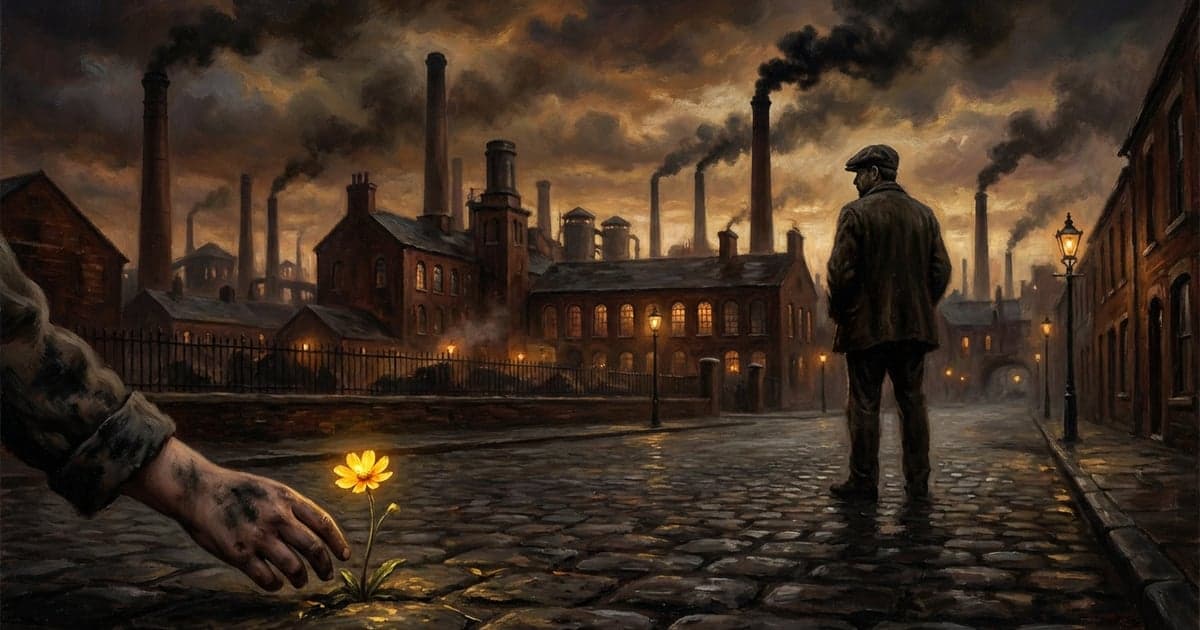
Chapter 08
Inside the Courtroom of Death
A Sight “You know the Old Bailey well, no doubt?” said one of the oldest of clerks to Jerry the messenger. “Ye-es, sir,” returned Jerry, in something of a dogged manner. “I do know the Bailey.” “Just so. And you know Mr. Lorry.” “I know Mr. Lorry, sir, much better than I know the Bailey. Much better,” said Jerry, not unlike a reluctant witness at the establishment in question, “than I, as a honest tradesman, wish to know the Bailey.” “Very well. Find the door where the witnesses go in, and show the door-keeper this note for Mr. Lorry. He…
Public-domain chapter text, formatted for reading.
Master this chapter. Complete your experience
Purchase the complete book to access all chapters and support classic literature
Available in paperback, hardcover, and e-book formats
Now let's explore the literary elements.
Key Quotes & Analysis
"Ye-es, sir,” returned Jerry, in something of a dogged manner."
Context: From the opening of the chapter
Jerry's reluctant, dogged manner reveals how ordinary people navigate uncomfortable situations with authority. His hesitation shows the natural human instinct to resist being drawn into dangerous or morally questionable circumstances.
In Today's Words:
A delivery worker reluctantly agrees to enter a high-security government building, knowing the assignment feels wrong but unable to refuse their supervisor's direct orders. That is how it feels when institutions treat your survival as someone else's paperwork problem. That is how it feels when institutions treat your survival as someone else's paperwork problem.
"If he’s found Guilty, you mean to say?"
Context: A key line from the middle of the chapter
Jerry's careful qualification shows how people seek reassurance when confronted with extreme violence. His need to confirm the conditional nature of the punishment reveals our psychological defense against accepting society's capacity for brutality.
In Today's Words:
A bystander at a protest asks police if they'll really use force, hoping the threat isn't serious and seeking some guarantee of restraint. Ground it in the scene: who holds power, who absorbs risk, and what changes if you name it early. Ground it in the scene: who holds power, who absorbs risk, and what.
"What’s _he_ got to do with the case?"
Context: A key line from the middle of the chapter
The stranger's curiosity about Mr. Lorry reflects how people try to make sense of confusing situations by identifying connections. When faced with uncertainty, humans naturally seek patterns and relationships to understand their environment.
In Today's Words:
A courtroom observer wonders why a well-dressed businessman is taking notes during a criminal trial, trying to piece together the connections. Ground it in the scene: who holds power, who absorbs risk, and what changes if you name it early. Ground it in the scene: who holds power, who absorbs risk, and what changes if.
"What have _you_ got to do with it, then, if a person may inquire?"
Context: A key line from the middle of the chapter
The stranger's probing question demonstrates how people deflect uncomfortable scrutiny by turning it back on others. This defensive response shows our instinct to avoid explaining our own presence in morally ambiguous situations.
In Today's Words:
When questioned about their role at a controversial event, someone immediately asks their questioner the same thing, deflecting attention from themselves. Ground it in the scene: who holds power, who absorbs risk, and what changes if you name it early. Ground it in the scene: who holds power, who absorbs risk, and what changes if.
Thematic Threads
Class
In This Chapter
The wealthy pay admission to watch working-class suffering as entertainment, treating justice like theater with premium seating
Development
Expanded from earlier hints about privilege to show how class determines who watches versus who suffers
In Your Life:
You might see this when wealthy people treat others' struggles as entertainment or learning experiences rather than real hardship
Human Nature
In This Chapter
The crowd's 'Ogreish' fascination with potential torture reveals how ordinary people can become bloodthirsty spectators
Development
Introduced here as a dark examination of what people become when suffering is normalized
In Your Life:
You might catch yourself drawn to others' drama or downfall, feeling entertained by what should concern you
Identity
In This Chapter
Darnay maintains dignity and composure despite facing the most savage punishment, showing character under extreme pressure
Development
Builds on themes of who we are versus what others expect, now tested under life-or-death stakes
In Your Life:
You might face moments where maintaining your values matters more than pleasing the crowd or avoiding conflict
Corruption
In This Chapter
The justice system itself has become corrupted into a profit-making entertainment venue rather than seeking truth
Development
Introduced here as institutional rather than personal corruption
In Your Life:
You might work in systems that have lost their original purpose and now serve other interests instead
Compassion
In This Chapter
Two figures watch with obvious sympathy rather than bloodlust, showing humanity can survive even in cruel environments
Development
Introduced as a counterpoint to the crowd's cruelty
In Your Life:
You might be the person who chooses empathy when everyone else is choosing entertainment or judgment
You now have the context. Time to form your own thoughts.
Discussion Questions
This is not a test. Five prompts guide you through the chapter, from how it opens to how it closes, so you notice context and rhythm rather than facts to memorize. Sit with each question in your own words. When you see "One way to read it," treat it as a starting point, not the only answer.
- 1
How does Jerry's reluctance to enter the Old Bailey reflect the moral discomfort ordinary people feel when forced to participate in corrupt systems?
analysis • mediumOne way to read it
Jerry's dogged manner and repeated emphasis that he knows Mr. Lorry better than the Bailey shows his instinctive recognition that the courthouse represents something morally dangerous he'd rather avoid.
- 2
What does the crowd's eager anticipation of Charles Darnay's potential torture reveal about how entertainment and violence intersect in society?
analysis • deepOne way to read it
The paid admission to trials and the crowd's 'Ogreish' fascination with suffering shows how societies can normalize extreme cruelty by framing it as spectacle or justice.
- 3
Why might Dickens describe the mysterious father and daughter as witnesses 'against' Darnay when they clearly show compassion for him?
analysis • deepOne way to read it
This contradiction suggests that legal categories don't always align with human emotions, and that people can be forced into positions that conflict with their moral instincts.
- 4
How does Darnay's composed behavior in the face of potential torture demonstrate a form of resistance against dehumanizing systems?
reflection • mediumOne way to read it
By maintaining his dignity and self-possession, Darnay refuses to let the system reduce him to a spectacle, asserting his humanity despite the crowd's desire to see him as entertainment.
- 5
In what ways do you see modern parallels to the Old Bailey's transformation of justice into entertainment?
application • mediumOne way to read it
Modern media coverage of trials, public fascination with criminal cases, and social media's tendency to turn legal proceedings into viral content all echo this dynamic.
Critical Thinking Exercise
Spot the Spectacle
Think of a recent news story, social media controversy, or workplace drama where people gathered to watch someone else's crisis unfold. Write down what the crowd was really there for versus what they claimed to care about. Then identify who, if anyone, showed genuine compassion instead of just consuming the drama.
Consider:
- •Notice the difference between people seeking information versus entertainment
- •Pay attention to who profits when personal struggles become public spectacle
- •Consider how you can be the compassionate witness rather than part of the bloodthirsty crowd
Journaling Prompt
Write about a time when you felt like you were on trial—facing judgment from people who seemed more interested in your downfall than in fairness. How did you maintain your dignity, and what did you learn about choosing your real audience?
Coming Up Next...
Chapter 9: Justice on Trial
The trial begins in earnest as the prosecution presents its case against Charles Darnay. But not everything will go according to plan, unexpected developments await that could change everything.