Chapter 05
The Wine-Shop
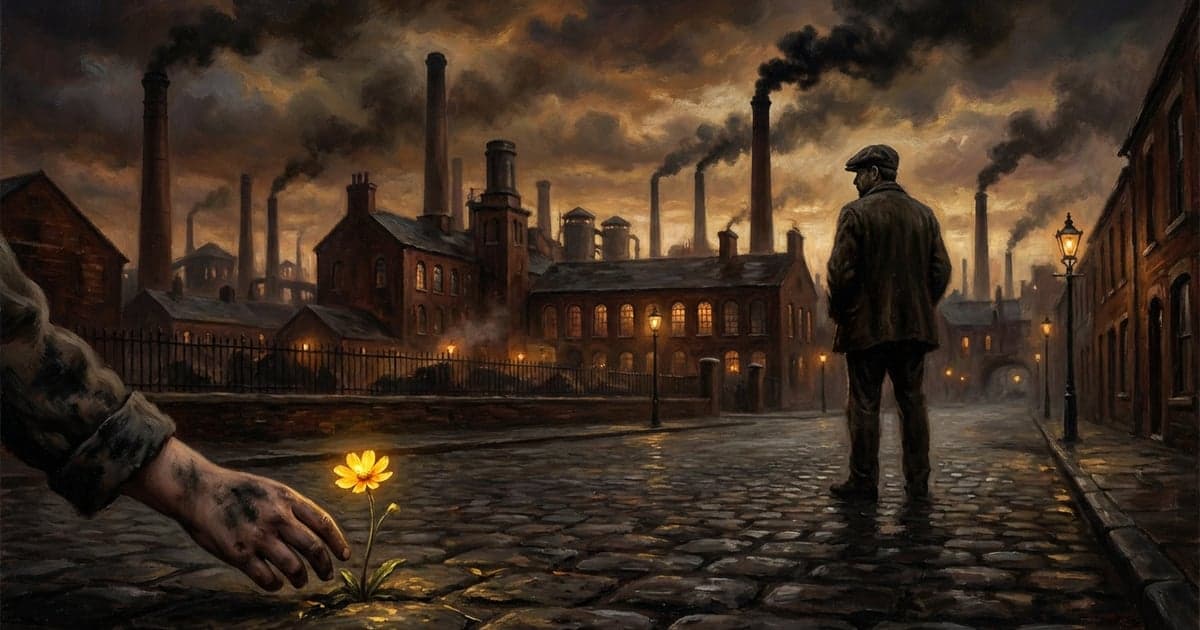
The Wine-shop A large cask of wine had been dropped and broken, in the street. The accident had happened in getting it out of a cart; the cask had tumbled out with a run, the hoops had burst, and it lay on the stones just outside the door of the wine-shop, shattered like a walnut-shell. All the people within reach had suspended their business, or their idleness, to run to the spot and drink the wine. The rough, irregular stones of the street, pointing every way, and designed, one might have thought, expressly to lame all living creatures that approached…
Public-domain chapter text, formatted for reading.
Master this chapter. Complete your experience
Purchase the complete book to access all chapters and support classic literature
Available in paperback, hardcover, and e-book formats
Now let's explore the literary elements.
Key Quotes & Analysis
"Its abiding place was in all things fitted to it."
Context: A key line from the opening of the chapter
The narrator describes how hunger permeates every aspect of the Saint Antoine district, becoming the defining characteristic of the environment itself. This shows how systemic poverty shapes not just individual lives but entire communities.
In Today's Words:
Poverty had made itself at home everywhere, fitting perfectly into every corner of their world, from empty shop shelves to the hollow faces of children who looked older than their years. The pattern repeats whenever rank decides who must stay calm while everyone else panics.
"Are you a subject for the mad hospital?"
Context: A key line from the middle of the chapter
Defarge's harsh question to the man writing 'BLOOD' reveals the tension between revolutionary sentiment and the need for caution. His reaction shows how dangerous political expression has become under the current regime.
In Today's Words:
Are you completely out of your mind? Do you want to end up in the asylum for writing something like that where everyone can see it?. Ground it in the scene: who holds power, who absorbs risk, and what changes if you name it early.
"God help him, who should be with him!"
Context: A key line from the closing third of the chapter
This quote appears to be misattributed in the key quotes list, as it doesn't match the chapter text provided. The sentiment suggests concern for someone's wellbeing in a dire situation.
In Today's Words:
Heaven help whoever has to deal with him in this condition, because they're going to need all the strength they can get. That is how it feels when institutions treat your survival as someone else's. You see the same squeeze when a manager passes blame down and the person with no exit absorbs the cost.
"Yes,” was the grim reply of Monsieur Defarge."
Context: A key line from the closing third of the chapter
This quote also appears to be misattributed, but suggests Defarge's grim acknowledgment of a harsh reality. His response indicates the serious nature of whatever situation is being discussed.
In Today's Words:
That's exactly right, and there's nothing pleasant about it, Defarge replied with a dark expression that said everything about how bad things really were. Ground it in the scene: who holds power, who absorbs risk, and what changes if you name it early. Ground it in the scene: who holds power, who absorbs risk, and.
Thematic Threads
Class
In This Chapter
Stark contrast between the starving masses of Saint Antoine and the comfortable world of Lorry and Lucie entering this poverty
Development
Evolved from abstract discussion of social tensions to visceral depiction of actual hunger and desperation
In Your Life:
You might see this when you move between different economic circles and feel the tension of not quite belonging in either.
Identity
In This Chapter
The revolutionary 'Jacques' using code names to hide their true identities while planning rebellion
Development
Builds on earlier themes of hidden identities, now showing how crisis forces people to create new personas
In Your Life:
You might recognize this when you find yourself becoming a different person in certain groups or situations.
Communication
In This Chapter
Madame Defarge's subtle coughs and gestures, the 'Jacques' code names, and the secret watching through door cracks
Development
Introduced here as underground communication systems born from oppression
In Your Life:
You might notice this in any situation where people can't speak directly, toxic workplaces, difficult families, or tense relationships.
Transformation
In This Chapter
The journey upward through the building mirrors a descent into horror, ending with the revelation of the broken shoemaker
Development
Continues the resurrection theme but shows how some resurrections are incomplete or damaged
In Your Life:
You might experience this when trying to help someone who's been deeply damaged, progress isn't always what you expect.
Power
In This Chapter
Defarge controls access to the prisoner and uses him as a tool to inspire revolutionaries
Development
Shows how even oppressed people can manipulate others, building on themes of hidden influence
In Your Life:
You might see this when someone uses their pain or trauma as a way to control or manipulate others.
You now have the context. Time to form your own thoughts.
Discussion Questions
This is not a test. Five prompts guide you through the chapter, from how it opens to how it closes, so you notice context and rhythm rather than facts to memorize. Sit with each question in your own words. When you see "One way to read it," treat it as a starting point, not the only answer.
- 1
What does the scene of people desperately drinking spilled wine from muddy streets reveal about the social conditions in Saint Antoine?
analysis • mediumOne way to read it
It demonstrates the extreme poverty and hunger that drives people to desperate measures, showing how basic necessities have become luxuries for the common people.
- 2
How does Dickens use the symbolism of red wine staining hands and faces to foreshadow future events?
analysis • deepOne way to read it
The red stains prefigure the bloodshed of the French Revolution, with the narrator explicitly stating that 'wine too would be spilled on the street-stones' in the future.
- 3
What role does Madame Defarge's subtle communication system of coughs and eyebrow movements play in the wine-shop?
analysis • mediumOne way to read it
It shows the need for secret communication in a surveillance state and establishes her as a key figure in revolutionary planning who operates through careful observation and coded signals.
- 4
How might the experience of witnessing extreme poverty and desperation change someone's perspective on social justice?
application • mediumOne way to read it
Seeing such conditions firsthand could motivate people to work for systemic change and help them understand how inequality affects real human lives.
- 5
What does the contrast between the momentary joy during the wine spill and the return to 'gloom' afterward suggest about the people's situation?
reflection • deepOne way to read it
It shows that their suffering is so constant that even brief moments of relief highlight how desperate their normal existence is, making their poverty seem even more tragic.
Critical Thinking Exercise
Identify the Pressure Cooker
Think of a situation in your life where people bond over shared complaints or hardships—your workplace, family, friend group, or online community. Map out the warning signs: Is there secret language? Are leaders showing you 'evidence' to fuel anger? Is the group's identity built on having enemies rather than shared goals?
Consider:
- •Look for whether the bonding creates something positive or just feeds on negativity
- •Notice if conversations always circle back to the same grievances and enemies
- •Consider whether you feel energized by solutions or by the shared anger
Journaling Prompt
Write about a time when you got caught up in group anger or complaint sessions. How did it end? What would you do differently now to recognize the pattern earlier?
Coming Up Next...
Chapter 6: The Broken Man
The reunion between father and daughter will test whether love can bridge eighteen years of separation and psychological destruction. What has prison done to Dr. Manette's mind, and can he even recognize the child he lost?