Chapter 13
The Aristocrat's Chocolate and a Child's Death
Monseigneur in Town Monseigneur, one of the great lords in power at the Court, held his fortnightly reception in his grand hotel in Paris. Monseigneur was in his inner room, his sanctuary of sanctuaries, the Holiest of Holiests to the crowd of worshippers in the suite of rooms without. Monseigneur was about to take his chocolate. Monseigneur could swallow a great many things with ease, and was by some few sullen minds supposed to be rather rapidly swallowing France; but, his morning’s chocolate could not so much as get into the throat of Monseigneur, without the aid of four strong…
Public-domain chapter text, formatted for reading.
Master this chapter. Complete your experience
Purchase the complete book to access all chapters and support classic literature
Available in paperback, hardcover, and e-book formats
Now let's explore the literary elements.
Key Quotes & Analysis
"Excuse me, Monsieur the Marquis--it is a pity--yes."
Context: A key line from the closing third of the chapter
The Marquis's dismissive response reveals how the powerful deflect responsibility by reframing victims as inconveniences. His concern for his horses over human life exposes the moral inversion that occurs when wealth insulates people from consequences.
In Today's Words:
A CEO whose company's safety violations killed workers might say 'How do I know what damage this has done to our stock price?' The focus shifts from human cost to personal inconvenience, revealing how power corrupts basic empathy. You see the same squeeze when a manager passes blame down and the person with no exit.
"How do I know what injury you have done my horses."
Context: A key line from the closing third of the chapter
This callous prioritization of property over human life demonstrates how extreme privilege warps moral reasoning. The Marquis genuinely sees his horses as more valuable than the dead child, illustrating the dehumanization that systemic inequality creates.
In Today's Words:
A wealthy driver who hits a pedestrian might worry more about damage to their luxury car than the person they injured. When material possessions become more valued than human life, moral bankruptcy follows. That is how it feels when institutions treat your survival as someone else's paperwork problem.
"I know all, I know all,” said the last comer."
Context: A key line from the closing third of the chapter
This cryptic declaration suggests hidden knowledge and brewing resistance among the oppressed. The speaker's confidence implies that the aristocrats' crimes are being documented and remembered, foreshadowing the revolution's systematic justice.
In Today's Words:
A whistleblower confronting corrupt executives might say 'I have all the evidence, every cover-up, every victim.' Knowledge becomes power when the oppressed finally organize to hold the powerful accountable. You see the same squeeze when a manager passes blame down and the person with no exit absorbs the cost.
"It has died in a moment without pain."
Context: A key line from the closing third of the chapter
This attempt at consolation reveals how people try to find meaning in senseless tragedy. The speaker offers the only comfort possible in a system where justice is absent, that suffering was brief.
In Today's Words:
After a preventable workplace death, someone might say 'At least it was quick, they didn't suffer.' When systemic failures kill, people grasp for any small mercy in an otherwise meaningless loss. That is how it feels when institutions treat your survival as someone else's paperwork problem.
Thematic Threads
Class
In This Chapter
Extreme wealth creates literal physical distance from humanity - servants, carriages, ceremonies that prevent real human contact
Development
Building from earlier glimpses of inequality to show the psychological corruption wealth creates
In Your Life:
You might see this in managers who never work alongside their teams or family members who've gained success but lost touch with their roots
Power
In This Chapter
The Marquis wields power without accountability, threatening to crush opposition while facing no real consequences
Development
Introduced here as unchecked aristocratic authority that will drive the coming revolution
In Your Life:
You encounter this with supervisors, landlords, or officials who make decisions affecting your life but face no consequences themselves
Dehumanization
In This Chapter
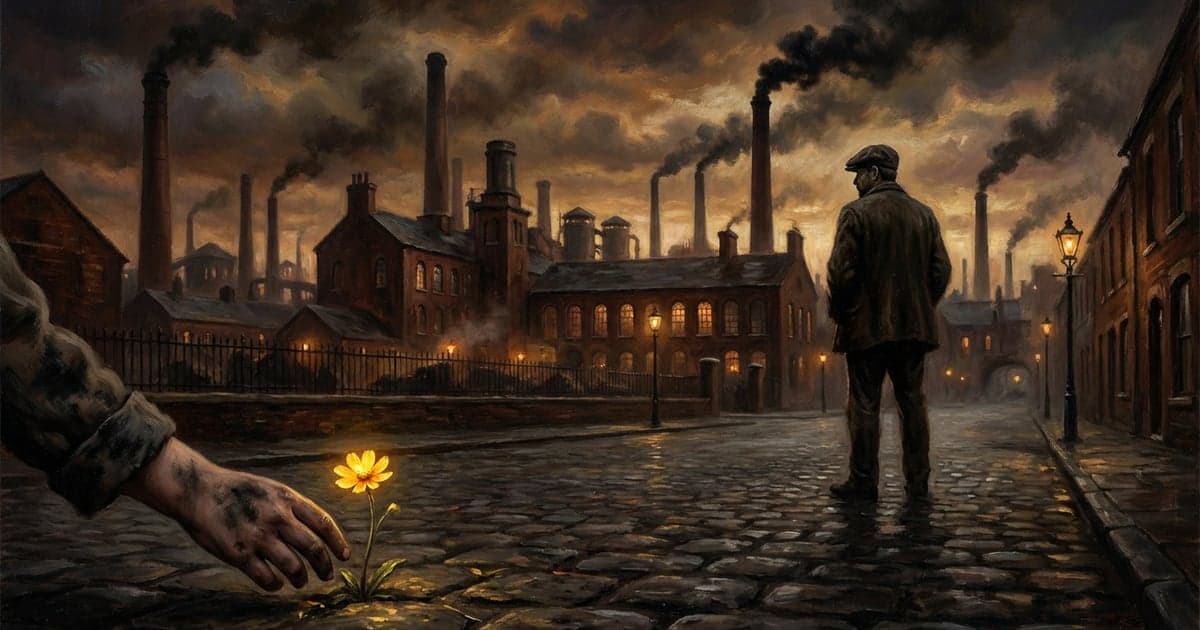
The child becomes just an obstacle, the grieving father just a nuisance to be paid off with coins
Development
Introduced here showing how systematic inequality strips away human recognition
In Your Life:
You might experience this in healthcare systems, bureaucracies, or workplaces where you're treated as a number rather than a person
Resistance
In This Chapter
The thrown coin and the knitting woman's unflinching stare represent different forms of defiance against power
Development
Building toward organized revolution by showing individual acts of resistance
In Your Life:
You show this resistance when you refuse to be intimidated by authority figures or when you document unfair treatment
Recognition
In This Chapter
Only the knitting woman truly 'sees' the Marquis for what he is, while others look away in fear or deference
Development
Developing the theme of who has the courage to see and name truth
In Your Life:
You practice this when you're the one willing to call out problematic behavior others ignore or when you refuse to pretend dysfunction is normal
You now have the context. Time to form your own thoughts.
Discussion Questions
This is not a test. Five prompts guide you through the chapter, from how it opens to how it closes, so you notice context and rhythm rather than facts to memorize. Sit with each question in your own words. When you see "One way to read it," treat it as a starting point, not the only answer.
- 1
How does the elaborate chocolate ceremony reveal the aristocracy's disconnection from reality and productive work?
analysis • mediumOne way to read it
The four-servant ritual shows how extreme wealth creates artificial complexity around simple tasks, insulating the powerful from basic human experiences and useful labor.
- 2
What does the Marquis's concern for his horses over the dead child reveal about how extreme inequality corrupts moral reasoning?
analysis • deepOne way to read it
It demonstrates how systemic privilege can invert basic human values, making property more precious than life when wealth insulates people from consequences.
- 3
How might the 'knitting woman's' steady gaze at the Marquis foreshadow future events in the novel?
application • mediumOne way to read it
Her unflinching stare suggests the oppressed are watching and remembering, likely building toward organized resistance against aristocratic cruelty.
- 4
In what ways do you see similar disconnection between powerful institutions and the people affected by their decisions today?
reflection • deepOne way to read it
Corporate executives making decisions that harm workers or consumers while remaining insulated from consequences mirror the aristocrats' dangerous detachment from reality.
- 5
Why might Dickens have chosen to show aristocratic excess and street-level tragedy in the same chapter?
analysis • mediumOne way to read it
The juxtaposition emphasizes how the aristocrats' wasteful luxury directly connects to the suffering of ordinary people, making inequality's human cost undeniable.
Critical Thinking Exercise
Map Your Power Dynamics
Draw two columns: 'Where I Have Power Over Others' and 'Where Others Have Power Over Me.' In each situation, identify what keeps the powerful person connected to or disconnected from the consequences of their decisions. Look for patterns in your own life where distance might be creating blind spots.
Consider:
- •Consider both formal power (job titles, authority) and informal power (influence, resources, knowledge)
- •Notice whether feedback flows freely in both directions or gets blocked by hierarchy, geography, or social barriers
- •Think about times when you've been surprised by the impact of your decisions - what kept you from seeing it coming?
Journaling Prompt
Write about a time when you had power over someone else's situation but didn't fully understand the impact until later. What would you do differently now? How can you build better feedback systems into your life?
Coming Up Next...
Chapter 14: The Marquis Meets His People
The Marquis returns to his country estate, where family secrets and past sins wait in the shadows. His cold reception of his nephew reveals fractures even within the aristocratic family itself The Marquis travels through his countryside estate in his luxurious carriage, passing through a village where his tenants live in crushing poverty. The contrast is stark, while he worries about sunset light on.