Wide Reads
Literature MattersLife IndexEducators
Sign in
Where to Begin

Return to the Heights — Wuthering Heights

Wuthering Heights - Return to the Heights

Emily Brontë

Wuthering Heights

Return to the Heights

Home›Books›Wuthering Heights›Chapter 32: Return to the Heights
Previous
32 of 34
Next

Analysis by the Wide Reads editorial team·Reviewed against the source text·Updated November 28, 2025

Summary

Return to the Heights

Wuthering Heights by Emily Brontë

0:000:00
Listen to Next Chapter

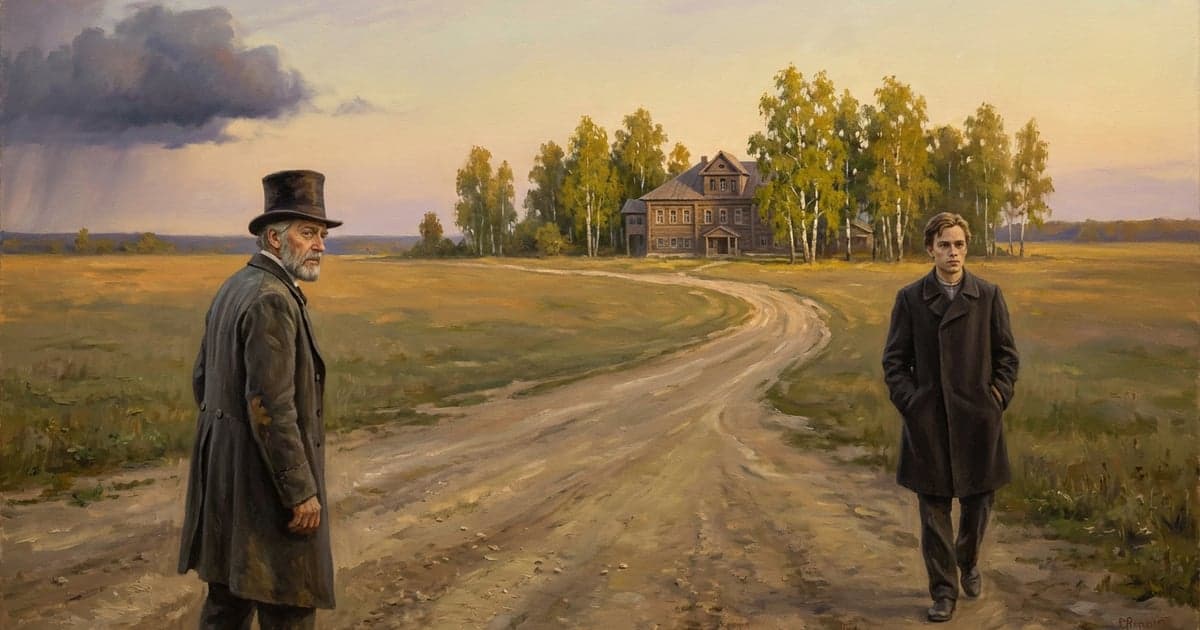
September 1802: Lockwood, hunting nearby, impulsively visits the Grange, then walks to the Heights at moonrise. Open doors, flowers, and firelight greet him. Through a window he sees Catherine drilling Hareton in reading, slapping his inattention, then kissing him as reward before Joseph's curses from the kitchen.

Nelly, now housekeeper at the Heights, tells him Heathcliff died three months ago. After Lockwood left for London she came for Catherine's sake and smuggled in books, but Catherine grew restless and taunted Hareton until his gun burst wounded him. On Easter Monday, frost bound them indoors; she broke his pipe, declared she wanted him as cousin, kissed his cheek, and gave him a book to learn from. They became allies over a picture volume.

Nelly hopes for their New Year's wedding. Lockwood settles rent with her, hears Joseph's wrath and the changed household, and slips away jealous of their happiness. The flashback ends with intimacy growing despite interruptions.

In this chapter: Terms Characters Key Quotes Themes Modern Story

Why This Matters

Connect literature to life

Skill: Recognizing Emotional Patterns

Contempt can turn to repair when the person enforcing it loses the will to punish. Lockwood returns in 1802, hears Nelly's flashback of Heathcliff dead and Catherine teaching Hareton to read in the paneled bed, and slips away jealous of their growing intimacy. Watch for turning points when a destroyer's attention falters and the oppressed begin reclaiming skill and tenderness.

Coming Up in Chapter 33

Earnshaw remains unable to work, staying close to home while mysterious activities unfold in the garden. A young girl persuades her cousin to clear ground for new plants from the Grange, hinting at fresh beginnings and carefully laid plans that will reshape the future of both estates.

Share it with friends

PreviousPrevious ChapterNextNext Chapter
Original text
4,066 wordscomplete

Chapter 32

Return to the Heights

1802.—This September I was invited to devastate the moors of a friend in the north, and on my journey to his abode, I unexpectedly came within fifteen miles of Gimmerton. The ostler at a roadside public-house was holding a pail of water to refresh my horses, when a cart of very green oats, newly reaped, passed by, and he remarked,—“Yon’s frough Gimmerton, nah! They’re allas three wick’ after other folk wi’ ther harvest.” “Gimmerton?” I repeated—my residence in that locality had already grown dim and dreamy. “Ah! I know. How far is it from this?” “Happen fourteen mile o’er th’…

Public-domain chapter text, formatted for reading.

Master this chapter. Complete your experience

Purchase the complete book to access all chapters and support classic literature

Buy at Powell'sBuy on Amazon

Available in paperback, hardcover, and e-book formats

Now let's explore the literary elements.

Key Quotes & Analysis

"In winter nothing more dreary, in summer nothing more divine, than those glens shut in by hills"

— Lockwood

Context: Returning to the moorland

The landscape mirrors the novel's shifting mood.

In Today's Words:

Some places hit different depending on the season. Winter makes everything look dead and hopeless, but summer transforms the same spot into paradise. It's like how your perspective on life changes based on what you're going through. The construction sites Heath works look brutal in bad weather but beautiful when things are going right.

"Ah! you have not heard of Heathcliff’s death, I see"

— Nelly

Context: Rent business at the Heights

The tyrant is gone before the full story unfolds.

In Today's Words:

You haven't heard that the boss died, have you? Sometimes the person who made everyone's life hell just disappears from the picture before you even realize how much they controlled everything. Heath would understand that feeling when toxic people finally leave your workplace or neighborhood for good.

"I want—that I’m glad—that I should like you to be my cousin now"

— Catherine

Context: Easter Monday by the hearth

She names the thaw in plain words.

In Today's Words:

I want us to be family now, to actually care about each other. Sometimes after years of conflict, people finally admit they want connection instead of fighting. It happens in families, at work, even in politics when former enemies realize they're better off working together than staying bitter.

"I shall envy no one on their wedding day: there won’t be a happier woman than myself in England!"

— Nelly

Context: Closing hope for Catherine and Hareton

Nelly reads their union as redemption.

In Today's Words:

I'll be the happiest person alive watching them get married. There's nothing better than seeing two people you care about finally find happiness together after going through hell. It's like watching your kids or friends overcome their struggles and build something beautiful despite all the obstacles they faced.

Thematic Threads

The Power of Place

In This Chapter

The moors and Gimmerton landscape hold deep emotional significance that draws Lockwood back despite time and distance

Development

Physical environments become repositories of memory and emotion, shaping our identity even when we try to leave them behind

In Your Life:

Think about places that still affect you - your childhood home, where you had your first heartbreak, where you felt most alive. These locations hold power over us because they're where we became who we are.

Time and Memory

In This Chapter

Lockwood's memories of Gimmerton had grown 'dim and dreamy' until suddenly confronted with the reality of return

Development

Distance can make intense experiences feel unreal, but proximity instantly reactivates dormant emotions and memories

In Your Life:

Notice how certain songs, smells, or places can instantly transport you back to who you were years ago, complete with all those old feelings.

You now have the context. Time to form your own thoughts.

Discussion Questions

This is not a test. Five prompts guide you through the chapter, from how it opens to how it closes, so you notice context and rhythm rather than facts to memorize. Sit with each question in your own words. When you see "One way to read it," treat it as a starting point, not the only answer.

  1. 1

    September 1802: Lockwood finds open doors, flowers, and firelight at the Heights, then sees Catherine drilling Hareton in reading and kissing him as reward before Joseph's curses. What changed in his absence?

    ▶One way to read it

    Hostility softened into domestic instruction and affection. The house looks inhabited rather than merely defended.

    analysis • surface
  2. 2

    Nelly tells him Heathcliff died three months ago; she came for Catherine's sake and smuggled in books, but Catherine taunted Hareton until his gun burst wounded him. What path led from mockery to alliance?

    ▶One way to read it

    Restlessness and injury broke the old cruelty. Catherine's need for connection finally turned toward Hareton instead of only against him.

    analysis • medium
  3. 3

    On Easter Monday frost bound them indoors; she broke his pipe, declared she wanted him as cousin, kissed his cheek, and gave him a book to learn from. Why Easter?

    ▶One way to read it

    Resurrection imagery fits new beginning. Forced proximity turned into chosen kinship and shared study.

    application • medium
  4. 4

    Nelly hopes for their New Year's wedding; Lockwood slips away jealous of their happiness. Why might he feel jealous?

    ▶One way to read it

    He entered as bored outsider and leaves confronted with live tenderness. Their bond exposes his own emptiness on the moors.

    application • deep
  5. 5

    Lockwood settles rent with Nelly, now housekeeper at the Heights instead of the Grange. How have the estates swapped emotional centers?

    ▶One way to read it

    Life moved back toward Wuthering Heights with Cathy and Hareton. The Grange recedes as the moor house becomes site of possible healing.

    reflection • deep

Critical Thinking Exercise

20-25 minutes

Mapping Your Emotional Geography

Think about a place from your past that still holds emotional charge for you - positive or negative. Write about why you think this location has such power over your memory and feelings. Consider: What happened there? How has your relationship to this place changed over time? If you returned there now, what do you think you'd be seeking?

Consider:

  • •Places often hold multiple layers of meaning and memory
  • •Our relationship to locations changes as we grow and heal
  • •Sometimes we're drawn back to places where we left parts of ourselves
  • •Physical environments can trigger emotional states we thought we'd moved past

Journaling Prompt

Write about a time when you felt unexpectedly pulled back to a person, place, or situation from your past. What were you telling yourself about why you wanted to return? What do you think you were really seeking? How did the actual experience compare to what you expected or hoped for?

Coming Up Next...

Chapter 33

Earnshaw remains unable to work, staying close to home while mysterious activities unfold in the garden. A young girl persuades her cousin to clear ground for new plants from the Grange, hinting at fresh beginnings and carefully laid plans that will reshape the future of both estates.

Continue to Chapter 33
Previous
Chapter 31
Contents
Next
Chapter 33
Keep exploring

Continue Exploring

Study guides, teaching tools, themes, and the full library.More ways to read Wuthering Heights: study guides, teaching tools, and the wider library.

  • Wuthering Heights Study Guide
  • Teaching Resources
  • Essential Life Index
  • Browse by Theme
  • All Books

What this chapter teaches

Theme analyses that draw on this chapter and apply it to modern life.

  • Breaking Cycles of Intergenerational TraumaExplore how young Cathy and Hareton in Wuthering Heights refuse to perpetuate the hatred they inherited, showing the courage required to break...
  • Recognizing Destructive Love vs. Healthy PassionExplore the chapters in Wuthering Heights that reveal the crucial difference between intense love that enhances life and obsessive attachment that...
Love & RelationshipsIdentity & Self-DiscoverySocial Class & Status

You Might Also Like

Jane Eyre cover

Jane Eyre

Charlotte Brontë

Explores love & romance

Anna Karenina cover

Anna Karenina

Leo Tolstoy

Explores love & romance

Madame Bovary cover

Madame Bovary

Gustave Flaubert

Explores love & romance

The Mill on the Floss cover

The Mill on the Floss

George Eliot

Explores suffering & resilience

Browse all 106+ books

Share This Chapter

Know someone who'd enjoy this? Spread the wisdom!

TwitterFacebookLinkedInEmail

Go further with Prestige

Unlock study guides and downloads, early access, and exclusive content — and support free access for everyone.

Subscribe to PrestigeCreate free account
Intelligence Amplifier
Intelligence Amplifier™Powering Wide Reads

Exploring human-AI collaboration through books, essays, and philosophical dialogues. Classic literature transformed into navigational maps for modern life.

2025 Books

→ The Amplified Human Spirit→ The Alarming Rise of Stupidity Amplified→ San Francisco: The AI Capital of the World
Visit intelligenceamplifier.org
hello@widereads.com

WideReads Originals

→ You Are Not Lost→ The Last Chapter First→ The Lit of Love→ Wealth and Poverty→ Wisdom for the Wounded
Arvintech
arvintechAmplify your Mind
Visit at arvintech.com

Navigate

  • Home
  • Library
  • Essential Life Index
  • How It Works
  • Subscribe
  • Account
  • About
  • Contact
  • Authors
  • Suggest a Book
  • Landings

Made For You

  • Trending
  • Students
  • Educators
  • Families
  • Readers
  • Literary Analysis
  • Finding Purpose
  • Letting Go
  • Recovering from a Breakup
  • Corruption
  • Gaslighting in the Classics

Newsletter

Weekly insights from the classics. Amplify Your Mind.

Legal

  • Privacy Policy
  • Terms of Service
  • Editorial Standards
  • Cookie Policy
  • Accessibility

Why Public Domain?

We focus on public domain classics because these timeless works belong to everyone. No paywalls, no restrictions—just wisdom that has stood the test of centuries, freely accessible to all readers.

Public domain books have shaped humanity's understanding of love, justice, ambition, and the human condition. By amplifying these works, we help preserve and share literature that truly belongs to the world.

A Pilgrimage

Powell's City of Books

Portland, Oregon

If you ever find yourself in Portland, walk to the corner of Burnside and 10th. The building takes up an entire city block. Inside is over a million books, new and used on the same shelf, organized by color-coded rooms with names like the Rose Room and the Pearl Room. You can lose an afternoon. You can lose a weekend. You will find a book you have been looking for your whole life, and three you did not know existed.

It is a pilgrimage. We cannot find a bookstore like it anywhere on earth. If you read the classics, and you ever get the chance, go. It belongs on every reader's bucket list.

Visit powells.com

We are not in any way affiliated with Powell's. We are just a very big fan.

© 2026 Wide Reads™. All Rights Reserved.

Intelligence Amplifier™ and Wide Reads™ are proprietary trademarks of Arvin Lioanag.

Copyright Protection: All original content, analyses, discussion questions, pedagogical frameworks, and methodology are protected by U.S. and international copyright law. Unauthorized reproduction, distribution, web scraping, or use for AI training is strictly prohibited. See our Copyright Notice for details.

Disclaimer: The information provided on this website is for general informational and educational purposes only and does not constitute professional, legal, financial, or technical advice. While we strive to ensure accuracy and relevance, we make no warranties regarding completeness, reliability, or suitability. Any reliance on such information is at your own risk. We are not liable for any losses or damages arising from use of this site. By using this site, you agree to these terms.