Wide Reads
Literature MattersLife IndexEducators
Sign in
Where to Begin

Chapter 31 — Wuthering Heights

Wuthering Heights - Chapter 31

Emily Brontë

Wuthering Heights

Chapter 31

Home›Books›Wuthering Heights›Chapter 31
Previous
31 of 34
Next

Analysis by the Wide Reads editorial team·Reviewed against the source text·Updated November 28, 2025

Summary

Chapter 31

Wuthering Heights by Emily Brontë

0:000:00
Listen to Next Chapter

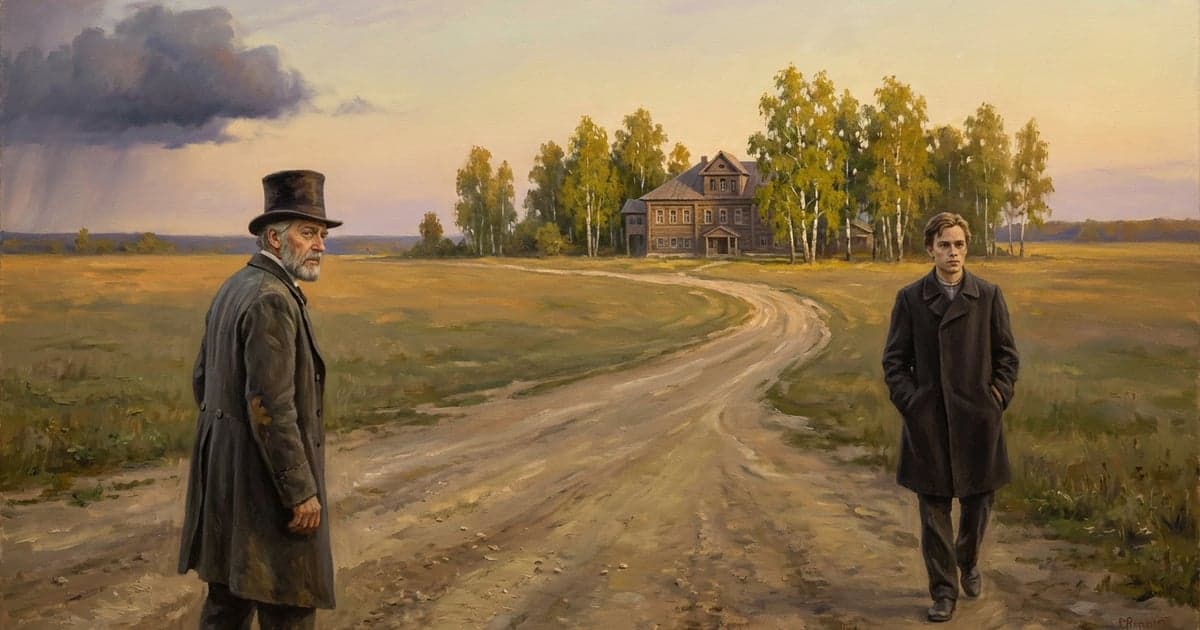
On a bright frosty morning Lockwood rides to the Heights with a note from Nelly. Hareton, handsome but rough, unchains the gate and watches him. Catherine, sulky in the kitchen, exposes the dropped letter; Hareton seizes it for Heathcliff, then flings it to her. She reads, weeps, and mourns the Grange hills and her pony Minny.

She tells Lockwood Heathcliff destroyed her books. She found Hareton's hidden Latin, Greek, and poetry and mocked his blunders aloud. Lockwood says every learner stumbles at the threshold; she calls the books consecrated to her and hates hearing them mangled. Hareton throws the volumes into her lap, then burns them when she torments him further, sacrificing the study that Catherine had inspired.

Heathcliff returns, sees Catherine in Hareton's face, and sighs that he can hardly bear to look at him. Lockwood announces he will leave Thrushcross Grange after his twelve months and settle rent. Heathcliff sends Catherine to eat with Joseph; Lockwood leaves a cheerless house, thinking how dreary life there remains.

In this chapter: Terms Characters Key Quotes Themes Modern Story

Why This Matters

Connect literature to life

Skill: Reading Social Dynamics

Pride that burns bridges leaves you dependent on the people you humiliated. Lockwood rides to the Heights with Nelly's note; Hareton unchains the gate but will not host, Catherine mocks his illiteracy, and Heathcliff orders her to eat with Joseph while Lockwood leaves thinking how dreary life there remains. Map who holds keys, food, and literacy in a closed system before you assume charm can reopen a door.

Coming Up in Chapter 32

Lockwood unexpectedly returns to the Yorkshire moors after months away, shocked to find how much the household at Wuthering Heights has changed in his absence. What he learns about Catherine, Hareton, and Heathcliff will overturn every assumption he carried away from his first winter visit.

Share it with friends

PreviousPrevious ChapterNextNext Chapter
Original text
2,085 wordscomplete

Chapter 31

On a bright frosty morning Lockwood rides to the Heights with a not...

Yesterday was bright, calm, and frosty. I went to the Heights as I proposed: my housekeeper entreated me to bear a little note from her to her young lady, and I did not refuse, for the worthy woman was not conscious of anything odd in her request. The front door stood open, but the jealous gate was fastened, as at my last visit; I knocked and invoked Earnshaw from among the garden-beds; he unchained it, and I entered. The fellow is as handsome a rustic as need be seen. I took particular notice of him this time; but then he…

Public-domain chapter text, formatted for reading.

Master this chapter. Complete your experience

Purchase the complete book to access all chapters and support classic literature

Buy at Powell'sBuy on Amazon

Available in paperback, hardcover, and e-book formats

Now let's explore the literary elements.

Key Quotes & Analysis

"She’s a beauty, it is true; but not an angel"

— Lockwood

Context: First impression of Catherine

Lockwood sees charm without grace under stress.

In Today's Words:

Lockwood admits she's attractive but not perfect. Sometimes people look good on the surface but show their true colors when things get tough. Like coworkers who seem nice until there's workplace drama or pressure. Beauty doesn't guarantee someone will handle stress with grace or treat others well when it matters.

"I should like to be riding Minny down there! I should like to be climbing up there! Oh! I’m tired—I’m _stalled_, Hareton!"

— Catherine

Context: After reading Nelly's letter

Homesickness breaks through her sullen mask.

In Today's Words:

Catherine feels trapped and homesick, wanting to escape her current situation. She's exhausted from being stuck somewhere that doesn't feel like home. Like when you're working a job that drains you and all you want is to go back to familiar places and people who understand you completely.

"How dreary life gets over in that house!"

— Lockwood

Context: Riding away from the Heights

The chapter closes on stagnant misery.

In Today's Words:

Lockwood reflects on how depressing and lifeless that household feels. Some places just drain your energy with their toxic atmosphere. Like workplaces where everyone's miserable, or homes where people can't move past old grudges. The negativity becomes overwhelming and you just want to get away from it all.

"Mr. Heathcliff never reads; so he took it into his head to destroy my books."

— Catherine

Context: Explaining her bookless life

Heathcliff strips her last civil refuge.

In Today's Words:

Catherine explains how Heathcliff destroyed her books because he doesn't read. When someone feels threatened by your interests or education, they might try to tear down what matters to you. Like partners who resent your hobbies or bosses who undermine employees they see as too smart or independent.

Thematic Threads

Social Class and Power

In This Chapter

Hareton works as a laborer on property that should be his, while Catherine treats him like a servant despite being trapped in the same house

Development

Class distinctions persist even when circumstances have changed - both are prisoners, but they still maintain old hierarchies

In Your Life:

Notice how people cling to status markers even when their actual situations are similar - education, job titles, or family background can create artificial distances between people in the same boat

Isolation and Communication

In This Chapter

Catherine refuses basic politeness and rejects attempts at connection, even from people trying to help her

Development

Isolation becomes self-reinforcing - the more hostile she becomes, the more alone she ends up

In Your Life:

When you're going through hard times, notice if you're pushing away people who want to help - sometimes our protective instincts work against our actual needs

The Aftermath of Obsessive Love

In This Chapter

The toxic relationships of the previous generation have created this atmosphere of hostility and mistrust

Development

Heathcliff's revenge has poisoned the entire household, affecting even those who weren't part of the original conflict

In Your Life:

Family drama and toxic relationships create ripple effects that impact everyone around them, sometimes for years

You now have the context. Time to form your own thoughts.

Discussion Questions

This is not a test. Five prompts guide you through the chapter, from how it opens to how it closes, so you notice context and rhythm rather than facts to memorize. Sit with each question in your own words. When you see "One way to read it," treat it as a starting point, not the only answer.

  1. 1

    Lockwood brings a note from Nelly; Hareton unchains the gate, handsome but rough, and Catherine sulky in the kitchen exposes the dropped letter. What triangle greets him?

    ▶One way to read it

    Three young people and Heathcliff's shadow. Hareton serves the gate; Cathy mourns the Grange; Linton's letter still connects her to lost life.

    analysis • surface
  2. 2

    Catherine found Hareton's hidden Latin, Greek, and poetry and mocked his blunders aloud; he throws the volumes into her lap, then burns them when she torments him further. What does he sacrifice?

    ▶One way to read it

    The study Catherine inspired. Shame and rage destroy the very improvement she accidentally awakened.

    analysis • medium
  3. 3

    Lockwood says every learner stumbles at the threshold; Catherine calls the books consecrated to her and hates hearing them mangled. Why can't she forgive his mistakes?

    ▶One way to read it

    Books stand for her lost education and home. Hareton's rough reading feels like theft of the one superiority she has left.

    application • medium
  4. 4

    Heathcliff returns, sees Catherine in Hareton's face, and sighs that he can hardly bear to look at him. What ghost haunts that resemblance?

    ▶One way to read it

    The first Catherine in Earnshaw features. Hareton is living reminder of love and revenge intertwined.

    application • deep
  5. 5

    Lockwood announces he will leave the Grange after twelve months. What picture of the Heights does he carry away?

    ▶One way to read it

    Cheerless cycle of degradation without visible exit. He sees cruelty continuing but not yet the thaw Lockwood will find in 1802.

    reflection • deep

Critical Thinking Exercise

15 minutes

Mapping Your Own Defensive Patterns

Think about a time when you were going through a difficult period (job loss, relationship ending, family conflict). How did you treat people who tried to help or connect with you during that time? Were there moments when you pushed away support because you felt too vulnerable or angry?

Consider:

  • •What emotions were driving your behavior?
  • •Did your defensive actions make the situation better or worse?
  • •How might things have been different if you'd responded differently?
  • •What patterns do you see in how you handle stress and vulnerability?

Journaling Prompt

Write about a current relationship or situation where you might be more defensive than necessary. What would it look like to lower your guard slightly while still protecting yourself appropriately?

Coming Up Next...

Chapter 32: Return to the Heights

Lockwood unexpectedly returns to the Yorkshire moors after months away, shocked to find how much the household at Wuthering Heights has changed in his absence. What he learns about Catherine, Hareton, and Heathcliff will overturn every assumption he carried away from his first winter visit.

Continue to Chapter 32
Previous
Chapter 30: The Bitter Harvest
Contents
Next
Return to the Heights
Keep exploring

Continue Exploring

Study guides, teaching tools, themes, and the full library.More ways to read Wuthering Heights: study guides, teaching tools, and the wider library.

  • Wuthering Heights Study Guide
  • Teaching Resources
  • Essential Life Index
  • Browse by Theme
  • All Books

What this chapter teaches

Theme analyses that draw on this chapter and apply it to modern life.

  • Breaking Cycles of Intergenerational TraumaExplore how young Cathy and Hareton in Wuthering Heights refuse to perpetuate the hatred they inherited, showing the courage required to break...
Love & RelationshipsIdentity & Self-DiscoverySocial Class & Status

You Might Also Like

Jane Eyre cover

Jane Eyre

Charlotte Brontë

Explores love & romance

Anna Karenina cover

Anna Karenina

Leo Tolstoy

Explores love & romance

Madame Bovary cover

Madame Bovary

Gustave Flaubert

Explores love & romance

The Mill on the Floss cover

The Mill on the Floss

George Eliot

Explores suffering & resilience

Browse all 106+ books

Share This Chapter

Know someone who'd enjoy this? Spread the wisdom!

TwitterFacebookLinkedInEmail

Go further with Prestige

Unlock study guides and downloads, early access, and exclusive content — and support free access for everyone.

Subscribe to PrestigeCreate free account
Intelligence Amplifier
Intelligence Amplifier™Powering Wide Reads

Exploring human-AI collaboration through books, essays, and philosophical dialogues. Classic literature transformed into navigational maps for modern life.

2025 Books

→ The Amplified Human Spirit→ The Alarming Rise of Stupidity Amplified→ San Francisco: The AI Capital of the World
Visit intelligenceamplifier.org
hello@widereads.com

WideReads Originals

→ You Are Not Lost→ The Last Chapter First→ The Lit of Love→ Wealth and Poverty→ Wisdom for the Wounded
Arvintech
arvintechAmplify your Mind
Visit at arvintech.com

Navigate

  • Home
  • Library
  • Essential Life Index
  • How It Works
  • Subscribe
  • Account
  • About
  • Contact
  • Authors
  • Suggest a Book
  • Landings

Made For You

  • Trending
  • Students
  • Educators
  • Families
  • Readers
  • Literary Analysis
  • Finding Purpose
  • Letting Go
  • Recovering from a Breakup
  • Corruption
  • Gaslighting in the Classics

Newsletter

Weekly insights from the classics. Amplify Your Mind.

Legal

  • Privacy Policy
  • Terms of Service
  • Editorial Standards
  • Cookie Policy
  • Accessibility

Why Public Domain?

We focus on public domain classics because these timeless works belong to everyone. No paywalls, no restrictions—just wisdom that has stood the test of centuries, freely accessible to all readers.

Public domain books have shaped humanity's understanding of love, justice, ambition, and the human condition. By amplifying these works, we help preserve and share literature that truly belongs to the world.

A Pilgrimage

Powell's City of Books

Portland, Oregon

If you ever find yourself in Portland, walk to the corner of Burnside and 10th. The building takes up an entire city block. Inside is over a million books, new and used on the same shelf, organized by color-coded rooms with names like the Rose Room and the Pearl Room. You can lose an afternoon. You can lose a weekend. You will find a book you have been looking for your whole life, and three you did not know existed.

It is a pilgrimage. We cannot find a bookstore like it anywhere on earth. If you read the classics, and you ever get the chance, go. It belongs on every reader's bucket list.

Visit powells.com

We are not in any way affiliated with Powell's. We are just a very big fan.

© 2026 Wide Reads™. All Rights Reserved.

Intelligence Amplifier™ and Wide Reads™ are proprietary trademarks of Arvin Lioanag.

Copyright Protection: All original content, analyses, discussion questions, pedagogical frameworks, and methodology are protected by U.S. and international copyright law. Unauthorized reproduction, distribution, web scraping, or use for AI training is strictly prohibited. See our Copyright Notice for details.

Disclaimer: The information provided on this website is for general informational and educational purposes only and does not constitute professional, legal, financial, or technical advice. While we strive to ensure accuracy and relevance, we make no warranties regarding completeness, reliability, or suitability. Any reliance on such information is at your own risk. We are not liable for any losses or damages arising from use of this site. By using this site, you agree to these terms.