Wide Reads
Literature MattersLife IndexEducators
Sign in
Where to Begin
Washington Square - The Brilliant Doctor's Hidden Wounds

Henry James

Washington Square

The Brilliant Doctor's Hidden Wounds

Home›Books›Washington Square›Chapter 1
1 of 35
Next

Summary

Dr. Austin Sloper represents the pinnacle of 19th-century New York medical society—brilliant, wealthy, and respected. He built his reputation on being both scholarly and practical, never relying on empty theories but always providing real remedies. His marriage to the beautiful and wealthy Catherine Harrington seemed to complete his perfect life. But tragedy strikes with devastating precision: his promising young son dies at three despite all his medical knowledge, followed two years later by his wife's death shortly after giving birth to a daughter. These losses reveal the cruel irony of a healer who cannot heal his own family. The weight of these failures transforms him, leaving him with 'unexpended authority' that he will direct toward his surviving daughter, Catherine. James establishes the central tension that will drive the entire novel: a father whose professional competence contrasts sharply with his personal failures, and whose disappointment in his daughter stems not from who she is, but from who she represents—a living reminder of his losses and limitations. The chapter masterfully sets up how past trauma shapes present relationships, showing how even the most accomplished people can be haunted by their inability to control what matters most.

Coming Up in Chapter 2

When Catherine turns ten, Dr. Sloper makes a decision that will reshape their household dynamics by inviting his sister, Mrs. Penniman, to join them—a choice that promises to complicate an already strained father-daughter relationship.

Share it with friends

Next Chapter
GO ADS FREE — JOIN US
Original text
complete·1,378 words
D

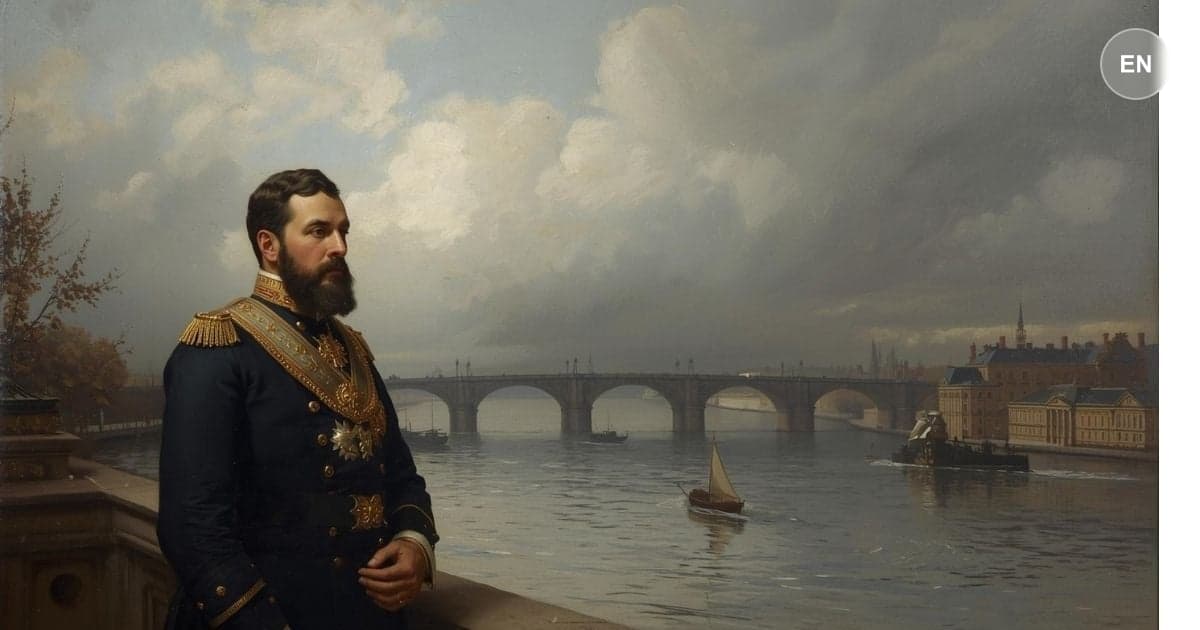
URING a portion of the first half of the present century, and more particularly during the latter part of it, there flourished and practised in the city of New York a physician who enjoyed perhaps an exceptional share of the consideration which, in the United States, has always been bestowed upon distinguished members of the medical profession. This profession in America has constantly been held in honour, and more successfully than elsewhere has put forward a claim to the epithet of “liberal.” In a country in which, to play a social part, you must either earn your income or make believe that you earn it, the healing art has appeared in a high degree to combine two recognised sources of credit. It belongs to the realm of the practical, which in the United States is a great recommendation; and it is touched by the light of science—a merit appreciated in a community in which the love of knowledge has not always been accompanied by leisure and opportunity. It was an element in Dr. Sloper’s reputation that his learning and his skill were very evenly balanced; he was what you might call a scholarly doctor, and yet there was nothing abstract in his remedies—he always ordered you to take something. Though he was felt to be extremely thorough, he was not uncomfortably theoretic, and if he sometimes explained matters rather more minutely than might seem of use to the patient, he never went so far (like some practitioners one has heard of) as to trust to the explanation alone, but always left behind him an inscrutable prescription. There were some doctors that left the prescription without offering any explanation at all; and he did not belong to that class either, which was, after all, the most vulgar. It will be seen that I am describing a clever man; and this is really the reason why Dr. Sloper had become a local celebrity. At the time at which we are chiefly concerned with him, he was some fifty years of age, and his popularity was at its height. He was very witty, and he passed in the best society of New York for a man of the world—which, indeed, he was, in a very sufficient degree. I hasten to add, to anticipate possible misconception, that he was not the least of a charlatan. He was a thoroughly honest man—honest in a degree of which he had perhaps lacked the opportunity to give the complete measure; and, putting aside the great good-nature of the circle in which he practised, which was rather fond of boasting that it possessed the “brightest” doctor in the country, he daily justified his claim to the talents attributed to him by the popular voice. He was an observer, even a philosopher, and to be bright was so natural to him, and (as the popular voice said) came so easily, that he never aimed at mere effect, and had none of the little tricks and pretensions of second-rate reputations. It must be confessed that fortune had favoured him, and that he had found the path to prosperity very soft to his tread. He had married at the age of twenty-seven, for love, a very charming girl, Miss Catherine Harrington, of New York, who, in addition to her charms, had brought him a solid dowry. Mrs. Sloper was amiable, graceful, accomplished, elegant, and in 1820 she had been one of the pretty girls of the small but promising capital which clustered about the Battery and overlooked the Bay, and of which the uppermost boundary was indicated by the grassy waysides of Canal Street. Even at the age of twenty-seven Austin Sloper had made his mark sufficiently to mitigate the anomaly of his having been chosen among a dozen suitors by a young woman of high fashion, who had ten thousand dollars of income and the most charming eyes in the island of Manhattan. These eyes, and some of their accompaniments, were for about five years a source of extreme satisfaction to the young physician, who was both a devoted and a very happy husband. The fact of his having married a rich woman made no difference in the line he had traced for himself, and he cultivated his profession with as definite a purpose as if he still had no other resources than his fraction of the modest patrimony which on his father’s death he had shared with his brothers and sisters. This purpose had not been preponderantly to make money—it had been rather to learn something and to do something. To learn something interesting, and to do something useful—this was, roughly speaking, the programme he had sketched, and of which the accident of his wife having an income appeared to him in no degree to modify the validity. He was fond of his practice, and of exercising a skill of which he was agreeably conscious, and it was so patent a truth that if he were not a doctor there was nothing else he could be, that a doctor he persisted in being, in the best possible conditions. Of course his easy domestic situation saved him a good deal of drudgery, and his wife’s affiliation to the “best people” brought him a good many of those patients whose symptoms are, if not more interesting in themselves than those of the lower orders, at least more consistently displayed. He desired experience, and in the course of twenty years he got a great deal. It must be added that it came to him in some forms which, whatever might have been their intrinsic value, made it the reverse of welcome. His first child, a little boy of extraordinary promise, as the Doctor, who was not addicted to easy enthusiasms, firmly believed, died at three years of age, in spite of everything that the mother’s tenderness and the father’s science could invent to save him. Two years later Mrs. Sloper gave birth to a second infant—an infant of a sex which rendered the poor child, to the Doctor’s sense, an inadequate substitute for his lamented first-born, of whom he had promised himself to make an admirable man. The little girl was a disappointment; but this was not the worst. A week after her birth the young mother, who, as the phrase is, had been doing well, suddenly betrayed alarming symptoms, and before another week had elapsed Austin Sloper was a widower.

1 / 2

Master this chapter. Complete your experience

Purchase the complete book to access all chapters and support classic literature

Read Free on GutenbergBuy at Powell'sBuy on Amazon

As an Amazon Associate, we earn a small commission from qualifying purchases at no additional cost to you.

Available in paperback, hardcover, and e-book formats

GO ADS FREE — JOIN US

Why This Matters

Connect literature to life

Skill: Reading Displaced Authority

This chapter teaches how to recognize when someone uses professional competence to mask personal failure and control others.

Practice This Today

This week, notice when someone uses their job expertise to shut down conversations about feelings or relationships—it often signals they're struggling with something they can't fix.

GO ADS FREE — JOIN US

Now let's explore the literary elements.

Key Quotes & Analysis

"In a country in which, to play a social part, you must either earn your income or make believe that you earn it"

— Narrator

Context: Explaining why doctors were so respected in America

James captures the American ideal that status comes from work, not birth. Even if you inherited money, you had to pretend you earned it to be socially acceptable. This shows how different America was from Europe's aristocratic system.

In Today's Words:

In America, you have to work for respect - or at least act like you do.

"He was what you might call a scholarly doctor, and yet there was nothing abstract in his remedies—he always ordered you to take something"

— Narrator

Context: Describing what made Dr. Sloper special as a physician

This shows Dr. Sloper's perfect balance of intelligence and practicality. He wasn't just book-smart or just a folk healer - he combined both. This competence makes his personal failures even more tragic.

In Today's Words:

He was smart but not useless - he actually knew how to fix things.

"His learning and his skill were very evenly balanced"

— Narrator

Context: Explaining Dr. Sloper's reputation

This balance between knowledge and ability is what made him exceptional. The tragedy is that this perfect professional balance couldn't help him with his personal losses, setting up the central irony of his character.

In Today's Words:

He had both book smarts and street smarts.

Thematic Threads

Authority

In This Chapter

Dr. Sloper's medical authority transforms into domestic tyranny after his professional skills fail to save his family

Development

Introduced here

In Your Life:

You might see this when a boss who's great at their job becomes controlling in personal relationships after experiencing loss.

Loss

In This Chapter

The death of his son and wife creates the emotional wound that will drive all of Sloper's future behavior toward Catherine

Development

Introduced here

In Your Life:

You might recognize how past losses can unconsciously shape how you treat the people still in your life.

Expectations

In This Chapter

Sloper's disappointment in Catherine stems from what she represents—his failures—rather than who she actually is

Development

Introduced here

In Your Life:

You might catch yourself judging someone based on what they remind you of rather than seeing them clearly.

Control

In This Chapter

Unable to control death and disease in his personal life, Sloper redirects his need for control toward his surviving daughter

Development

Introduced here

In Your Life:

You might notice yourself becoming more controlling in areas where you feel powerless in others.

Identity

In This Chapter

Sloper's entire sense of self is built on being the competent healer, making his family's deaths an identity crisis

Development

Introduced here

In Your Life:

You might see how tying your worth too closely to professional success can make personal failures feel devastating.

GO ADS FREE — JOIN US

You now have the context. Time to form your own thoughts.

Discussion Questions

  1. 1

    What professional accomplishments made Dr. Sloper respected in New York society, and what personal tragedies shattered his sense of control?

    analysis • surface
  2. 2

    Why does James describe Sloper's authority as 'unexpended'—what does this suggest about how he'll treat his surviving daughter?

    analysis • medium
  3. 3

    Where have you seen someone use their professional expertise to mask or compensate for personal failures or grief?

    application • medium
  4. 4

    If you worked with or lived with someone like Dr. Sloper—brilliant but controlling due to hidden pain—how would you protect yourself while still showing compassion?

    application • deep
  5. 5

    What does Sloper's story reveal about the dangerous illusion that professional competence equals life mastery?

    reflection • deep

Critical Thinking Exercise

10 minutes

Map the Competence Trap

Think of someone you know who excels professionally but struggles with relationships or personal issues. Without naming them, map out how their work success might be both helping and hurting their personal life. Consider: What does their expertise give them? What does it prevent them from facing? How might their professional identity be limiting their emotional growth?

Consider:

  • •Professional skills that don't transfer to relationships (fixing vs. listening, commanding vs. collaborating)
  • •How work success can become an escape from dealing with personal pain or failure
  • •The difference between being respected for your expertise and being loved for who you are

Journaling Prompt

Write about a time when your own competence or expertise got in the way of connecting with someone you cared about. What would you do differently now?

Coming Up Next...

Chapter 2: The Aunt Who Stayed Forever

When Catherine turns ten, Dr. Sloper makes a decision that will reshape their household dynamics by inviting his sister, Mrs. Penniman, to join them—a choice that promises to complicate an already strained father-daughter relationship.

Continue to Chapter 2
Contents
Next
The Aunt Who Stayed Forever

Continue Exploring

Washington Square Study GuideTeaching ResourcesEssential Life IndexBrowse by ThemeAll Books
Social Class & StatusLove & RelationshipsMoral Dilemmas & Ethics

You Might Also Like

Jane Eyre cover

Jane Eyre

Charlotte Brontë

Explores personal growth

Great Expectations cover

Great Expectations

Charles Dickens

Explores personal growth

The Strange Case of Dr Jekyll and Mr Hyde cover

The Strange Case of Dr Jekyll and Mr Hyde

Robert Louis Stevenson

Explores personal growth

Don Quixote cover

Don Quixote

Miguel de Cervantes Saavedra

Explores personal growth

Browse all 47+ books

Share This Chapter

Know someone who'd enjoy this? Spread the wisdom!

TwitterFacebookLinkedInEmail

Read ad-free with Prestige

Get rid of ads, unlock study guides and downloads, and support free access for everyone.

Subscribe to PrestigeCreate free account
Intelligence Amplifier
Intelligence Amplifier™Powering Wide Reads

Exploring human-AI collaboration through books, essays, and philosophical dialogues. Classic literature transformed into navigational maps for modern life.

2025 Books

→ The Amplified Human Spirit→ The Alarming Rise of Stupidity Amplified→ San Francisco: The AI Capital of the World
Visit intelligenceamplifier.org
hello@widereads.com

WideReads Originals

→ You Are Not Lost→ The Last Chapter First→ The Lit of Love→ Wealth and Poverty→ 10 Paradoxes in the Classics · coming soon
Arvintech
arvintechAmplify your Mind
Visit at arvintech.com

Navigate

  • Home
  • Library
  • Essential Life Index
  • How It Works
  • Subscribe
  • Account
  • About
  • Contact
  • Authors
  • Suggest a Book
  • Landings

Made For You

  • Students
  • Educators
  • Families
  • Readers
  • Literary Analysis
  • Finding Purpose
  • Letting Go
  • Recovering from a Breakup
  • Corruption
  • Gaslighting in the Classics

Newsletter

Weekly insights from the classics. Amplify Your Mind.

Legal

  • Privacy Policy
  • Terms of Service
  • Cookie Policy
  • Accessibility

Why Public Domain?

We focus on public domain classics because these timeless works belong to everyone. No paywalls, no restrictions—just wisdom that has stood the test of centuries, freely accessible to all readers.

Public domain books have shaped humanity's understanding of love, justice, ambition, and the human condition. By amplifying these works, we help preserve and share literature that truly belongs to the world.

A Pilgrimage

Powell's City of Books

Portland, Oregon

If you ever find yourself in Portland, walk to the corner of Burnside and 10th. The building takes up an entire city block. Inside is over a million books, new and used on the same shelf, organized by color-coded rooms with names like the Rose Room and the Pearl Room. You can lose an afternoon. You can lose a weekend. You will find a book you have been looking for your whole life, and three you did not know existed.

It is a pilgrimage. We cannot find a bookstore like it anywhere on earth. If you read the classics, and you ever get the chance, go. It belongs on every reader's bucket list.

Visit powells.com

We are not in any way affiliated with Powell's. We are just a very big fan.

© 2026 Wide Reads™. All Rights Reserved.

Intelligence Amplifier™ and Wide Reads™ are proprietary trademarks of Arvin Lioanag.

Copyright Protection: All original content, analyses, discussion questions, pedagogical frameworks, and methodology are protected by U.S. and international copyright law. Unauthorized reproduction, distribution, web scraping, or use for AI training is strictly prohibited. See our Copyright Notice for details.

Disclaimer: The information provided on this website is for general informational and educational purposes only and does not constitute professional, legal, financial, or technical advice. While we strive to ensure accuracy and relevance, we make no warranties regarding completeness, reliability, or suitability. Any reliance on such information is at your own risk. We are not liable for any losses or damages arising from use of this site. By using this site, you agree to these terms.