Chapter 14
Jim Witnesses Silver's True Nature
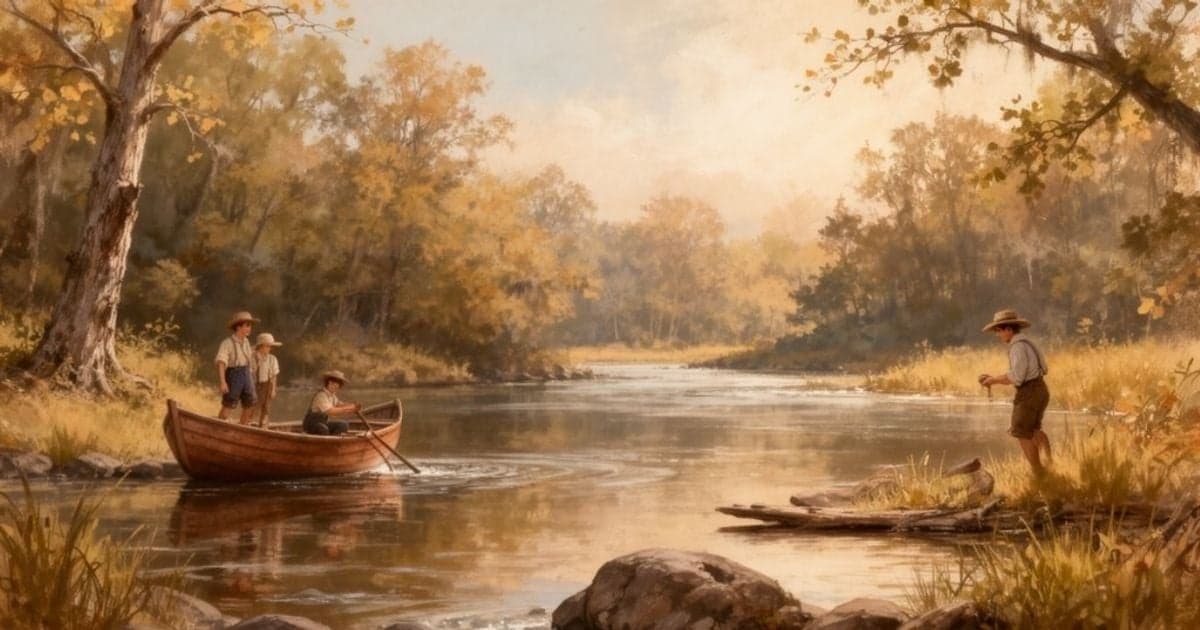
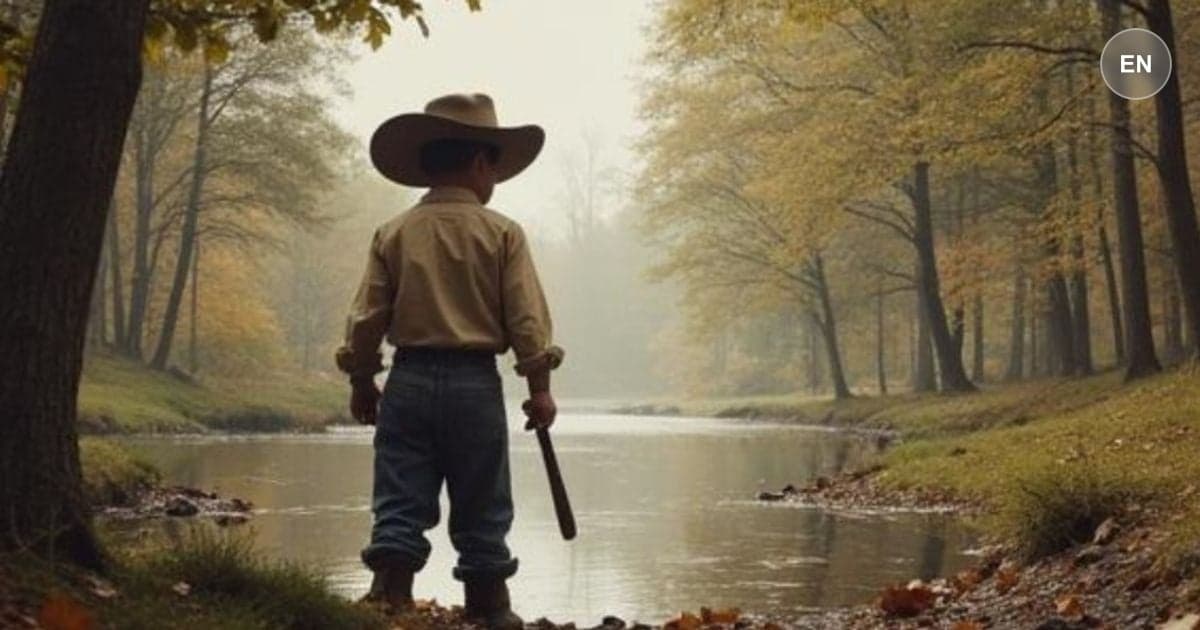
The First Blow I was so pleased at having given the slip to Long John that I began to enjoy myself and look around me with some interest on the strange land that I was in. I had crossed a marshy tract full of willows, bulrushes, and odd, outlandish, swampy trees; and I had now come out upon the skirts of an open piece of undulating, sandy country, about a mile long, dotted with a few pines and a great number of contorted trees, not unlike the oak in growth, but pale in the foliage, like willows. On the far…
Public-domain chapter text, formatted for reading.
Master this chapter. Complete your experience
Purchase the complete book to access all chapters and support classic literature
Available in paperback, hardcover, and e-book formats
Now let's explore the literary elements.
Key Quotes & Analysis
"I now felt for the first time the joy of exploration."
Context: A pivotal line from the opening of the chapter
Jim's declaration of exploratory joy arrives just before the chapter strips that joy away entirely, making it a moment of dramatic irony the reader feels acutely in hindsight. The line captures how quickly innocence can be undone, since the same island that thrills him with birds and flowering plants will soon show him a cold-blooded murder.
In Today's Words:
There is a particular kind of excitement that comes when you step somewhere unfamiliar and feel, briefly, that the world belongs entirely to you. Jim feels exactly that here, wandering freely among strange trees and wildlife, unaware that the island is about to teach him something far darker than wonder.
"Hands off, if you like, John Silver,” said the other."
Context: A pivotal line from the middle of the chapter
This line actually belongs to Tom, not Silver, and it reveals a man who refuses to be intimidated even while facing someone he knows is dangerous. Tom's willingness to name Silver's guilt openly, calling it a black conscience, shows that moral clarity can coexist with physical fear.
In Today's Words:
Tom is essentially saying that Silver's jumpiness gives him away, that only someone carrying real guilt would flinch at an outstretched hand from a friend. He is not threatening Silver; he is holding up a mirror, and Silver's reaction confirms everything Tom suspected about what kind of man he is dealing with.
"Whether he were injured much or little, none could ever tell."
Context: A pivotal line from the closing third of the chapter
This line is spoken by Jim as narrator, not Israel Hands, and it underscores the irreversible finality of what Silver has done. The uncertainty about the degree of Tom's injury is almost beside the point, since Silver gives Tom no time to recover regardless, revealing a ruthlessness that goes beyond anger into something calculated.
In Today's Words:
Jim is noting that the exact medical damage from the crutch blow never mattered, because Silver moved immediately to ensure Tom could not survive. The detail highlights how Silver operates: he does not leave outcomes to chance, and once he decides someone is a threat, he eliminates that threat completely and without hesitation.
"Indeed, could anyone be more entirely lost than I?"
Context: A pivotal line from the closing third of the chapter
Jim's rhetorical question marks the moment his situation shifts from frightening to genuinely hopeless in his own mind, as every option he considers leads back to death. The question is not self-pity but a rapid, panicked audit of his circumstances, showing a boy trying to think clearly while his world collapses around him.
In Today's Words:
Jim is running through his options and finding that each one closes off the next: going back to the boats means facing killers, staying hidden means starvation, and his very absence will signal to the mutineers that he saw something he was not supposed to see.
Thematic Threads
Class
In This Chapter
Silver appeals to Tom based on working-class solidarity, suggesting they should stick together against the gentlemen
Development
Evolved from earlier hints about class tensions to direct manipulation using class loyalty
In Your Life:
You might face pressure to compromise your values because 'people like us have to stick together.'
Identity
In This Chapter
Tom's identity as an honest sailor proves stronger than his friendship with Silver or fear of death
Development
Builds on Jim's earlier identity struggles, now showing how identity gets tested under extreme pressure
In Your Life:
Your core identity gets tested when following it might cost you relationships or opportunities.
Violence
In This Chapter
Silver's casual, efficient murder shows violence as a tool rather than passion, cold and calculated
Development
Introduced here as the reality behind the adventure story's romantic violence
In Your Life:
You might encounter people who use intimidation or harm as casual problem-solving tools.
Innocence
In This Chapter
Jim loses his innocence by witnessing real evil, not just hearing about it but seeing murder firsthand
Development
Culmination of Jim's gradual awakening to adult realities throughout earlier chapters
In Your Life:
You might face moments when you realize someone you trusted is capable of genuine harm.
Survival
In This Chapter
Jim must now navigate deadly danger alone, using only his wits and what he's learned
Development
Evolved from earlier themes of dependence to complete self-reliance under life-threatening pressure
In Your Life:
You might find yourself in situations where no one else can help and you must rely entirely on yourself.
You now have the context. Time to form your own thoughts.
Discussion Questions
This is not a test. Five prompts guide you through the chapter, from how it opens to how it closes, so you notice context and rhythm rather than facts to memorize. Sit with each question in your own words. When you see "One way to read it," treat it as a starting point, not the only answer.
- 1
What specific details in the chapter show that Silver is calm and calculating during the murder of Tom, while Tom himself is visibly frightened and emotional?
analysis • surfaceOne way to read it
Silver stands motionless when the death scream echoes across the marsh, watching Tom 'like a snake about to spring,' while Tom leaps at the sound and speaks in a shaking, hoarse voice. After killing Tom, Silver casually cleans his knife on a wisp of grass and blows a whistle, showing no remorse or agitation.
- 2
Silver tells Tom 'it's to save your neck that I'm a-speaking' before the murder. What does this appeal reveal about how Silver uses friendship and loyalty as tools of manipulation?
analysis • mediumOne way to read it
Silver frames his attempt to recruit Tom into the mutiny as an act of personal care, claiming he values Tom like 'gold dust.' This manipulative framing disguises a threat as a favor, pressuring Tom to comply by making refusal seem ungrateful. The fact that Silver kills Tom moments later proves the offer of friendship was entirely conditional on obedience.
- 3
Tom turns his back on Silver and walks away after calling him a murderer. If you were in Tom's position knowing Silver had already killed Alan, would turning your back have been brave or reckless? Use details from the chapter to support your reasoning.
application • mediumOne way to read it
Tom's gesture is both brave and reckless. It is brave because he openly defies Silver and refuses to compromise his duty even facing certain danger. It is reckless because Jim's account shows Silver is agile and armed, and Tom had just heard Alan's death scream, giving him clear evidence that Silver would not hesitate to kill.
- 4
After witnessing the murder, Jim asks himself whether his absence from the boats would itself be 'evidence of his alarm, and therefore of his fatal knowledge.' How does this reasoning trap Jim and force him to think like someone already guilty of something?
application • deepOne way to read it
Jim realizes that returning to the boats is as dangerous as staying hidden, because the mutineers will interpret his fear as proof he witnessed the crime. This forces Jim into the position of an accidental conspirator, where innocent behavior looks suspicious. His loss of any safe option mirrors the moral trap Silver tried to set for Tom, where refusing to join the mutiny was itself a death sentence.
- 5
The chapter summary describes this as Jim's 'violent loss of innocence.' Looking at Jim's own words and reactions throughout the chapter, do you think witnessing Silver's murder of Tom changes Jim permanently, or does it only change what he knows rather than who he is?
reflection • deepOne way to read it
The chapter suggests a permanent change. Jim begins the chapter feeling 'the joy of exploration' and marveling at snakes and flowering plants, but ends it running in a 'kind of frenzy,' convinced he will die either by starvation or at the hands of murderers. His inner voice shifts from curiosity to survival calculation, and he can no longer see Silver as a complicated figure but only as a 'monster,' suggesting his understanding of human nature has been irreversibly darkened.
Critical Thinking Exercise
Map Your Non-Negotiables
Tom knew instantly where his line was - he didn't have to think about whether to betray his duty. Create your own 'values map' by listing 3-5 principles you would never compromise, even under extreme pressure. For each one, write a brief example of what that looks like in your daily life.
Consider:
- •Think about values that feel automatic to you - the ones where you don't even debate
- •Consider both personal relationships and work situations where these might be tested
- •Remember that knowing your lines before the crisis makes the choice clearer in the moment
Journaling Prompt
Write about a time when you had to choose between safety/comfort and doing what you believed was right. What helped you make that decision? What would you do differently now?
Coming Up Next...
Chapter 15: Meeting the Castaway
As Jim flees in terror through the unfamiliar island, he's about to encounter someone unexpected who will change everything about his understanding of Treasure Island, and his chances of survival. The opening of The Man of the Island . Meeting the Castaway opens with a threat Jim cannot ignore...