Wide Reads
Literature MattersLife IndexEducators
Sign in
Where to Begin
Thus Spoke Zarathustra - The Cripples and Revenge

Friedrich Nietzsche

Thus Spoke Zarathustra

The Cripples and Revenge

Home›Books›Thus Spoke Zarathustra›Chapter 42
Previous
42 of 80
Next

Summary

Zarathustra encounters a group of disabled beggars who challenge him to prove his worth by healing their physical ailments. But Zarathustra refuses, explaining that removing someone's hump might also remove their spirit, or that giving sight to the blind might only show them more ugliness in the world. He sees a deeper problem: people who are spiritually crippled—those who have become nothing but 'a big ear' or 'a big mouth,' obsessed with one aspect of themselves while neglecting everything else. These 'reversed cripples' represent modern people who define themselves entirely by their jobs, their grievances, or their single talents. But Zarathustra's real revelation comes when he discusses the concept of revenge. He explains that humans are tormented by the phrase 'it was'—the unchangeable past. We cannot will backwards, cannot undo what happened, and this powerlessness fills us with rage. This rage becomes the 'spirit of revenge'—the need to blame, punish, and make others suffer because we cannot change our own past pain. This spirit of revenge has poisoned human thinking, making us believe that suffering requires punishment, that everything deserves to perish because everything causes pain. Zarathustra suggests that true freedom comes not from revenge but from creative will—the ability to say 'but thus would I have it' about our past, transforming our story from victimhood to authorship. The chapter ends with a hunchback questioning why Zarathustra speaks differently to different audiences, hinting at the complexity of truth-telling.

Coming Up in Chapter 43

The hunchback's final question about Zarathustra speaking differently to different people opens a deeper inquiry into the nature of teaching and truth. What does it mean to adapt wisdom to your audience, and when does that become deception?

Share it with friends

Previous ChapterNext Chapter
GO ADS FREE — JOIN US
Original text
complete·1,542 words
W

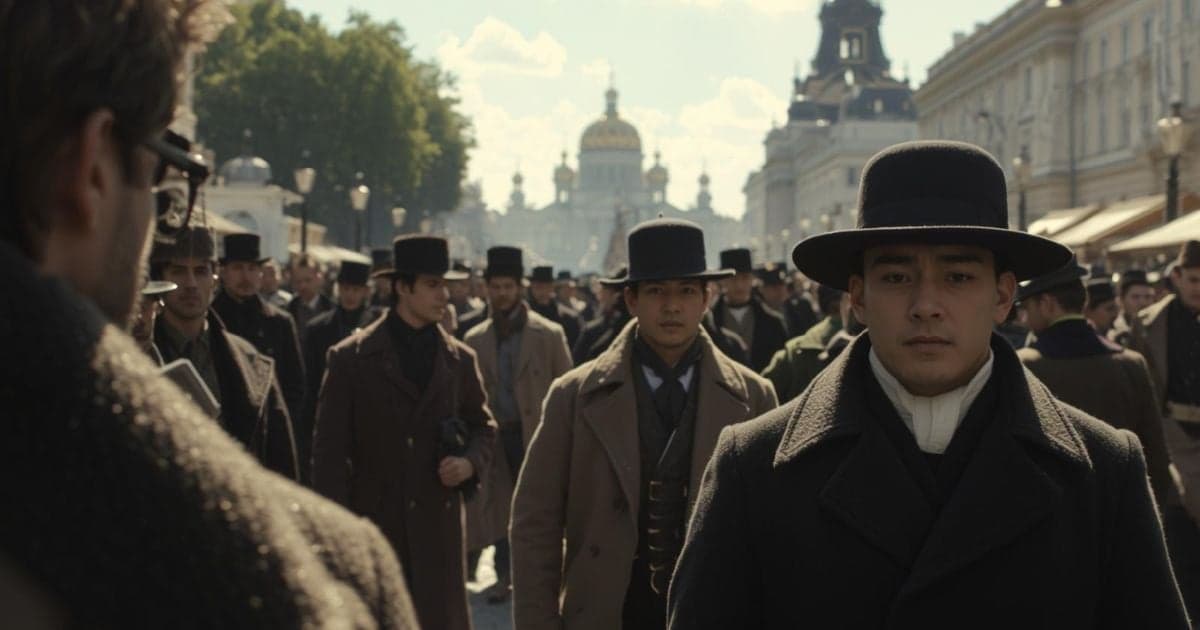
hen Zarathustra went one day over the great bridge, then did the cripples and beggars surround him, and a hunchback spake thus unto him:

“Behold, Zarathustra! Even the people learn from thee, and acquire faith in thy teaching: but for them to believe fully in thee, one thing is still needful—thou must first of all convince us cripples! Here hast thou now a fine selection, and verily, an opportunity with more than one forelock! The blind canst thou heal, and make the lame run; and from him who hath too much behind, couldst thou well, also, take away a little;—that, I think, would be the right method to make the cripples believe in Zarathustra!”

1 / 10

Master this chapter. Complete your experience

Purchase the complete book to access all chapters and support classic literature

Read Free on GutenbergBuy at Powell'sBuy on Amazon

As an Amazon Associate, we earn a small commission from qualifying purchases at no additional cost to you.

Available in paperback, hardcover, and e-book formats

GO ADS FREE — JOIN US

Why This Matters

Connect literature to life

Skill: Detecting the Revenge Spirit

This chapter teaches how to recognize when someone's anger comes from trying to will backwards rather than move forward.

Practice This Today

This week, notice when conversations shift from 'how do I handle this' to 'why did this happen to me'—that's usually when the revenge spirit takes over.

GO ADS FREE — JOIN US

Now let's explore the literary elements.

Key Quotes & Analysis

"When one taketh his hump from the hunchback, then doth one take from him his spirit"

— Zarathustra

Context: When the disabled beggars demand he heal them to prove his worth

This reveals Zarathustra's belief that our struggles and limitations often shape our character and strength. Removing someone's burden might also remove what made them resilient and unique.

In Today's Words:

If you take away someone's struggle, you might take away what makes them strong

"The spirit of revenge: that hath hitherto been man's best contemplation"

— Zarathustra

Context: While explaining humanity's obsession with punishment and blame

This identifies revenge as humanity's dominant way of thinking about justice and meaning. We've built entire systems around making others pay for our pain rather than healing ourselves.

In Today's Words:

Getting even has been humanity's favorite way of making sense of the world

"That time doth not run backwards—that is his wrath"

— Zarathustra

Context: Explaining why humans are filled with rage and resentment

This gets to the heart of human frustration - we're tormented by our powerlessness over the past. This inability to change 'what was' is the source of much human anger and the desire for revenge.

In Today's Words:

We're angry because we can't go back and fix what went wrong

Thematic Threads

Identity

In This Chapter

Zarathustra critiques 'reversed cripples'—people who become nothing but their single defining feature, whether physical or professional

Development

Builds on earlier themes about self-creation, showing how people trap themselves in narrow identities

In Your Life:

You might recognize this when you realize you've become 'just' your job title, your illness, or your grievance

Class

In This Chapter

The beggars demand Zarathustra prove his worth through miraculous healing, expecting him to perform for their validation

Development

Continues exploration of how different classes make demands on each other and expect certain performances

In Your Life:

This appears when people expect you to prove your value through what you can do for them

Personal Growth

In This Chapter

Zarathustra refuses to 'heal' because removing someone's burden might also remove their unique spirit and strength

Development

Deepens the theme that growth comes through struggle, not through having obstacles removed

In Your Life:

You see this when you realize your biggest challenges also created your greatest strengths

Social Expectations

In This Chapter

The hunchback questions why Zarathustra speaks differently to different audiences, challenging expectations of consistent messaging

Development

Introduced here—the complexity of truth-telling in different contexts

In Your Life:

This shows up when you're criticized for adapting your communication style to different situations

Human Relationships

In This Chapter

The spirit of revenge poisons relationships by making people punish others for past hurts they didn't cause

Development

Expands on earlier relationship themes by showing how past pain creates present conflict

In Your Life:

You might notice this when you're angry at your partner for something an ex did to you

GO ADS FREE — JOIN US

You now have the context. Time to form your own thoughts.

Discussion Questions

  1. 1

    Why does Zarathustra refuse to heal the physical disabilities of the beggars, and what does he mean when he says removing someone's hump might also remove their spirit?

    analysis • surface
  2. 2

    What is the 'spirit of revenge' and how does our inability to change the past ('it was') create this destructive pattern in human behavior?

    analysis • medium
  3. 3

    Where do you see the 'spirit of revenge' playing out in your workplace, family, or community - people making others pay for old hurts they can't undo?

    application • medium
  4. 4

    How can someone transform from saying 'it was' (victim of the past) to 'thus I will it' (author of their future) when dealing with unchangeable painful experiences?

    application • deep
  5. 5

    What does this chapter reveal about why humans often punish the wrong people for the right reasons, and how might recognizing this pattern change how we respond to our own pain?

    reflection • deep

Critical Thinking Exercise

10 minutes

Track Your Revenge Responses

For the next few days, notice when you feel angry or want someone to 'pay' for something. Write down three instances where you caught yourself operating from 'it was' (trying to settle old scores) versus 'thus I will it' (creating something new). For each situation, identify what unchangeable past event was driving your reaction and what you actually wanted to create moving forward.

Consider:

  • •Pay attention to small daily irritations - they often reveal bigger patterns of revenge thinking
  • •Notice the difference between responding to what's happening now versus reacting to old wounds
  • •Consider how your desire for others to suffer connects to your own unprocessed pain

Journaling Prompt

Write about a time when you made someone else pay for pain that someone completely different caused you. What were you really trying to control, and how might you handle similar situations differently now?

Coming Up Next...

Chapter 43: The Dangerous Middle Ground

The hunchback's final question about Zarathustra speaking differently to different people opens a deeper inquiry into the nature of teaching and truth. What does it mean to adapt wisdom to your audience, and when does that become deception?

Continue to Chapter 43
Previous
The Soothsayer's Vision of Despair
Contents
Next
The Dangerous Middle Ground

Continue Exploring

Thus Spoke Zarathustra Study GuideTeaching ResourcesEssential Life IndexBrowse by ThemeAll Books
Identity & Self-DiscoveryMoral Dilemmas & EthicsPower & Corruption

You Might Also Like

Crime and Punishment cover

Crime and Punishment

Fyodor Dostoevsky

Explores identity & self

The Brothers Karamazov cover

The Brothers Karamazov

Fyodor Dostoevsky

Explores identity & self

The Book of Job cover

The Book of Job

Anonymous

Explores identity & self

Ecclesiastes cover

Ecclesiastes

Anonymous

Explores identity & self

Browse all 47+ books

Share This Chapter

Know someone who'd enjoy this? Spread the wisdom!

TwitterFacebookLinkedInEmail

Read ad-free with Prestige

Get rid of ads, unlock study guides and downloads, and support free access for everyone.

Subscribe to PrestigeCreate free account
Intelligence Amplifier
Intelligence Amplifier™Powering Wide Reads

Exploring human-AI collaboration through books, essays, and philosophical dialogues. Classic literature transformed into navigational maps for modern life.

2025 Books

→ The Amplified Human Spirit→ The Alarming Rise of Stupidity Amplified→ San Francisco: The AI Capital of the World
Visit intelligenceamplifier.org
hello@widereads.com

WideReads Originals

→ You Are Not Lost→ The Last Chapter First→ The Lit of Love→ Wealth and Poverty→ 10 Paradoxes in the Classics · coming soon
Arvintech
arvintechAmplify your Mind
Visit at arvintech.com

Navigate

  • Home
  • Library
  • Essential Life Index
  • How It Works
  • Subscribe
  • Account
  • About
  • Contact
  • Authors
  • Suggest a Book
  • Landings

Made For You

  • Students
  • Educators
  • Families
  • Readers
  • Literary Analysis
  • Finding Purpose
  • Letting Go
  • Recovering from a Breakup
  • Corruption
  • Gaslighting in the Classics

Newsletter

Weekly insights from the classics. Amplify Your Mind.

Legal

  • Privacy Policy
  • Terms of Service
  • Cookie Policy
  • Accessibility

Why Public Domain?

We focus on public domain classics because these timeless works belong to everyone. No paywalls, no restrictions—just wisdom that has stood the test of centuries, freely accessible to all readers.

Public domain books have shaped humanity's understanding of love, justice, ambition, and the human condition. By amplifying these works, we help preserve and share literature that truly belongs to the world.

A Pilgrimage

Powell's City of Books

Portland, Oregon

If you ever find yourself in Portland, walk to the corner of Burnside and 10th. The building takes up an entire city block. Inside is over a million books, new and used on the same shelf, organized by color-coded rooms with names like the Rose Room and the Pearl Room. You can lose an afternoon. You can lose a weekend. You will find a book you have been looking for your whole life, and three you did not know existed.

It is a pilgrimage. We cannot find a bookstore like it anywhere on earth. If you read the classics, and you ever get the chance, go. It belongs on every reader's bucket list.

Visit powells.com

We are not in any way affiliated with Powell's. We are just a very big fan.

© 2026 Wide Reads™. All Rights Reserved.

Intelligence Amplifier™ and Wide Reads™ are proprietary trademarks of Arvin Lioanag.

Copyright Protection: All original content, analyses, discussion questions, pedagogical frameworks, and methodology are protected by U.S. and international copyright law. Unauthorized reproduction, distribution, web scraping, or use for AI training is strictly prohibited. See our Copyright Notice for details.

Disclaimer: The information provided on this website is for general informational and educational purposes only and does not constitute professional, legal, financial, or technical advice. While we strive to ensure accuracy and relevance, we make no warranties regarding completeness, reliability, or suitability. Any reliance on such information is at your own risk. We are not liable for any losses or damages arising from use of this site. By using this site, you agree to these terms.