Chapter 02
The Prison Door and the Rose
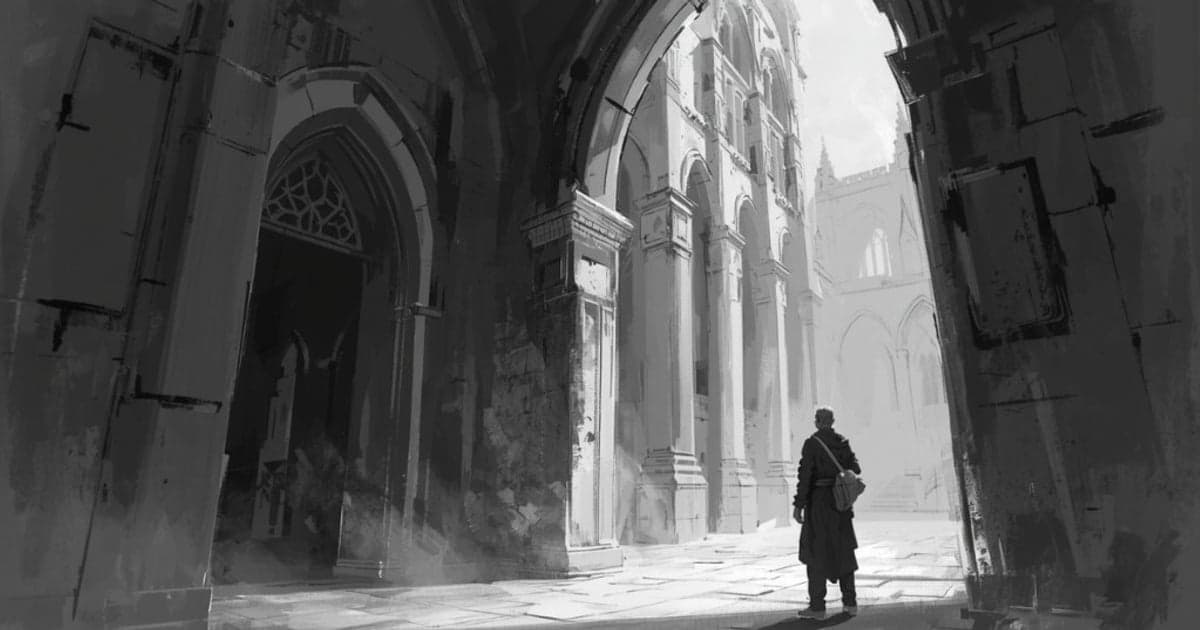
THE PRISON-DOOR. [Illustration] A throng of bearded men, in sad-colored garments, and gray, steeple-crowned hats, intermixed with women, some wearing hoods and others bareheaded, was assembled in front of a wooden edifice, the door of which was heavily timbered with oak, and studded with iron spikes. The founders of a new colony, whatever Utopia of human virtue and happiness they might originally project, have invariably recognized it among their earliest practical necessities to allot a portion of the virgin soil as a cemetery, and another portion as the site of a prison. In accordance with this rule, it may safely…
Public-domain chapter text, formatted for reading.
Master this chapter. Complete your experience
Purchase the complete book to access all chapters and support classic literature
Available in paperback, hardcover, and e-book formats
Now let's explore the literary elements.
Key Quotes & Analysis
"founders of a new colony, whatever Utopia of human virtue and happiness they might originally project, have invariably recognized it among their earliest practical necessities to allot a portion of the virgin soil as a cemetery, and another portion as the site of a prison."
Context: Opening meditation on Boston's prison beside the graveyard
Even idealistic settlements plan for death and punishment before they plan for joy.
In Today's Words:
Every hopeful new town still zones land for graves and jails before it builds parks. When a startup or neighborhood sells a perfect vision on day one, watch what they fund first: compliance teams, surveillance tools, and policies for removing people who embarrass the brand. That ordering tells you where power really lives.
"Like all that pertains to crime, it seemed never to have known a youthful era."
Context: The jail already looks ancient though it is only decades old
Punishment institutions age quickly because judgment is exhausting work for a society.
In Today's Words:
Punishment systems look exhausted from day one, as if they never had an innocent beginning. When a company, school, or church builds its identity around catching rule-breakers, the whole culture feels older and harsher while the mission statement still talks about care, belonging, and redemption.
"But on one side of the portal, and rooted almost at the threshold, was a wild rose-bush, covered, in this month of June, with its delicate gems, which might be imagined to offer their fragrance and fragile beauty to the prisoner as he went in, and to the condemned criminal as he came forth to his doom, in token that the deep heart of Nature could pity and be kind to him."
Context: The rose beside the prison door
Beauty persists beside punishment, offering mercy the building withholds.
In Today's Words:
A wild rose still bloomed beside the prison threshold, offering fragrance to people walking in and out under judgment. Today that looks like the friend who stays kind beside the pile-on, or small mercy surviving in the margins of a system built only for spectacle.
"It may serve, let us hope, to symbolize some sweet moral blossom, that may be found along the track, or relieve the darkening close of a tale of human frailty and sorrow."
Context: Hawthorne plucks a rose for the reader before the main story
He promises that grace may appear inside a narrative built on shame.
In Today's Words:
The narrator hopes the rose foreshadows some small kindness inside a tale about human weakness and grief. That is useful when you are trapped in public shame: look for one humane detail that keeps the outcome from feeling entirely closed, hopeless, or beyond any repair.
Thematic Threads
Social Expectations
In This Chapter
The Puritan community's impossible standard of moral perfection creates the need for punishment institutions
Development
Introduced here
In Your Life:
You might see this in workplaces that demand 'excellence' while creating cultures of fear and blame.
Class
In This Chapter
The prison represents institutional power to define who belongs and who gets cast out
Development
Introduced here
In Your Life:
You might see this in how certain neighborhoods, schools, or jobs become markers of who's 'acceptable' in society.
Identity
In This Chapter
The community defines itself by what it punishes—their identity depends on having outsiders
Development
Introduced here
In Your Life:
You might see this in groups that bond by criticizing others rather than building something positive together.
Human Relationships
In This Chapter
The rose by the prison door suggests that compassion and beauty can coexist with judgment
Development
Introduced here
In Your Life:
You might see this in how you can maintain kindness toward someone even when you disagree with their choices.
You now have the context. Time to form your own thoughts.
Discussion Questions
This is not a test. Five prompts guide you through the chapter, from how it opens to how it closes, so you notice context and rhythm rather than facts to memorize. Sit with each question in your own words. When you see "One way to read it," treat it as a starting point, not the only answer.
- 1
What two buildings does Hawthorne say every new settlement builds first?
analysis • surfaceOne way to read it
A cemetery and a prison—proof that even idealistic communities plan for death and punishment from the start.
- 2
What grows beside the prison door and why does it matter?
analysis • mediumOne way to read it
A wild rose bush offers fragrance to prisoners entering and condemned leaving—a fragile beauty persisting beside punishment.
- 3
How does the crowd gathered outside the prison set the novel's tone?
application • mediumOne way to read it
Puritan Boston expects public judgment. The scene announces that sin will be displayed, not privately managed.
- 4
Why might Hawthorne link the rose bush to Ann Hutchinson?
application • deepOne way to read it
Both suggest mercy and dissent within a harsh order—nature and history offering sympathy the institution withholds.
- 5
When have you noticed a community building systems of judgment before systems of care?
reflection • deepOne way to read it
The prison door scene shows how societies formalize punishment early—and how small acts of beauty can still survive beside it.
Critical Thinking Exercise
Map Your Institution's Prison-and-Rose Pattern
Think of an organization you're part of - workplace, family, school, church, community group. Map out their stated ideals versus their actual enforcement mechanisms. Then identify where the 'roses' grow - the people or practices that offer genuine compassion despite the harsh systems.
Consider:
- •Notice how the gap between ideals and reality creates pressure for enforcement
- •Look for people who manage to offer grace while still maintaining standards
- •Consider how you might contribute to the roses rather than strengthen the prison
Journaling Prompt
Write about a time when you were judged harshly by an institution that claimed to care about you. How did that experience shape your understanding of the gap between ideals and reality?
Coming Up Next...
Chapter 3: Public Shame and Private Strength
The crowd has gathered for a reason - someone is about to emerge from that prison door. The marketplace awaits, and with it, a public spectacle that will reveal the true nature of Puritan justice and community judgment..