Chapter 20
Signs and Omens Before the Storm
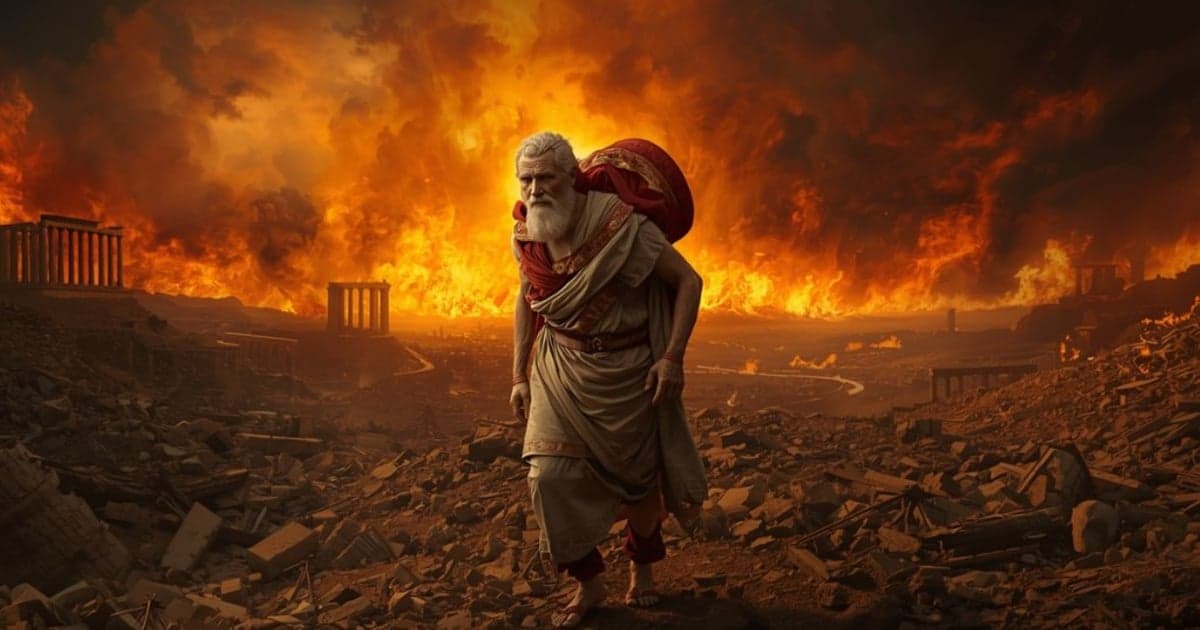
ULYSSES CANNOT SLEEP—PENELOPE’S PRAYER TO DIANA—THE TWO SIGNS FROM HEAVEN—EUMAEUS AND PHILOETIUS ARRIVE—THE SUITORS DINE—CTESIPPUS THROWS AN OX’S FOOT AT ULYSSES—THEOCLYMENUS FORETELLS DISASTER AND LEAVES THE HOUSE. Ulysses slept in the cloister upon an undressed bullock’s hide, on the top of which he threw several skins of the sheep the suitors had eaten, and Eurynome156 threw a cloak over him after he had laid himself down. There, then, Ulysses lay wakefully brooding upon the way in which he should kill the suitors; and by and by, the women who had been in the habit of misconducting themselves with them, left…
Public-domain chapter text, formatted for reading.
Master this chapter. Complete your experience
Purchase the complete book to access all chapters and support classic literature
Available in paperback, hardcover, and e-book formats
Now let's explore the literary elements.
Key Quotes & Analysis
"Heart, be still, you had worse than this to bear on the day when the terrible Cyclops ate your brave companions; yet you bore it in silence till your cunning got you safe out of the cave, though you made sure of being killed."
Context: Talking himself down from immediate violence in the night
He uses memory as a regulatory tool, converting trauma into discipline rather than allowing it to trigger reckless action.
In Today's Words:
Ulysses coaches himself like a veteran under flashback pressure. He recalls worse pain survived through patience and strategy, not impulse. Omar can apply this directly on brutal road days: talk your nervous system down with evidence from prior survival, then choose the action that preserves tomorrow's objective.
"give me a sign out of the mouth of some one or other of those who are now waking within the house, and let me have another sign of some kind from outside."
Context: Praying for dual confirmation before the decisive day
He requests converging signals, inner and outer, showing disciplined decision-making rather than blind fatalism.
In Today's Words:
Ulysses does not ask for vague comfort, he asks for two independent confirmations before acting. That is operational wisdom, cross-check before commitment. Omar can borrow this in logistics or conflict, seek one internal indicator and one external indicator so decisions are anchored in corroboration, not adrenaline.
"let this be the very last day that the suitors dine in the house of Ulysses."
Context: Speaking after Zeus thunders while she grinds alone before dawn
A laboring voice from below the power hierarchy confirms the omen, linking justice with exhausted workers rather than elite rhetoric.
In Today's Words:
The omen arrives through an overworked woman finishing last at the mill, not through nobles at the table. Her prayer turns household labor into political witness. Omar should remember this on freight lanes: frontline workers often name the truth first because they absorb system abuse most directly.
"There is a shroud of darkness drawn over you from head to foot, your cheeks are wet with tears; the air is alive with wailing voices; the walls and roof-beams drip blood"
Context: Prophesying doom to the laughing suitors at dinner
The vision externalizes moral reality already present; denial does not cancel judgment, it only removes the chance to repent.
In Today's Words:
Theoclymenus describes catastrophe in sensory detail, but the suitors laugh to protect their status script. Omar can read this as a warning about group denial, when systems are collapsing, people often mock the messenger to avoid changing behavior. That laughter is not confidence, it is fear in costume.
Thematic Threads
Recognition
In This Chapter
Loyal servants immediately sense something familiar in disguised Ulysses while enemies reveal their cruelty
Development
Evolved from earlier disguise themes—now authenticity breaks through despite appearances
In Your Life:
Under pressure, you can often sense who's genuinely on your side versus who's just going through motions
Divine Support
In This Chapter
Zeus sends thunder and omens confirming Ulysses has divine backing for his mission
Development
Builds on earlier divine interventions—now reaching crescendo before final battle
In Your Life:
Sometimes the universe seems to align when you're finally ready to take necessary action
Class Contempt
In This Chapter
Suitors mock and abuse the disguised beggar, throwing food at him with cruel laughter
Development
Intensified from earlier class tensions—now reaching peak cruelty before comeuppance
In Your Life:
People who abuse those they see as beneath them often reveal their own insecurity and weakness
Loyalty Under Pressure
In This Chapter
Servants declare they would die for their true master despite years of absence
Development
Culmination of loyalty themes—true allegiance tested by extreme circumstances
In Your Life:
Crisis situations reveal who will actually stand by you when it costs them something
Prophetic Warning
In This Chapter
Theoclymenus sees visions of doom but suitors laugh off his warnings about impending death
Development
New element—clear warning ignored due to arrogance
In Your Life:
When people are invested in destructive behavior, they often dismiss clear warnings about consequences
You now have the context. Time to form your own thoughts.
Discussion Questions
This is not a test. Five prompts guide you through the chapter, from how it opens to how it closes, so you notice context and rhythm rather than facts to memorize. Sit with each question in your own words. When you see "One way to read it," treat it as a starting point, not the only answer.
- 1
What function does Ulysses' self-talk serve in Book 20 beyond character depth?
analysis • surfaceOne way to read it
It is a practical emotional regulation protocol that preserves mission timing under provocation.
- 2
Why are the two requested signs, thunder and household voice, structurally important together?
analysis • mediumOne way to read it
They combine transcendent confirmation with grounded social witness, creating dual legitimacy for the coming action.
- 3
How does the chapter distinguish loyal servants from disloyal ones without explicit declarations at first?
application • mediumOne way to read it
It shows behavior under ordinary interaction, respect, grief, and work ethic, which reveals allegiance more reliably than speeches.
- 4
How do modern organizations replicate the suitors' reaction to Theoclymenus' warning?
application • deepOne way to read it
Groups under threat often weaponize mockery to preserve denial, punishing signal-bearers instead of correcting risk conditions.
- 5
When have you seen forced laughter signal fear rather than confidence?
reflection • deepOne way to read it
Strong responses identify settings where public joking masked private foreboding just before a predictable consequence arrived.
Critical Thinking Exercise
Map Your Support Network Under Pressure
Think of a current challenging situation you're facing or might face soon. Draw three circles: Inner (people who'd help without question), Middle (people who might help depending on circumstances), and Outer (people who seem supportive but probably wouldn't act). Place the people in your life in these circles based on their likely behavior under real pressure, not their current words.
Consider:
- •Consider past behavior during your difficult times, not just current friendliness
- •Notice who asks what they can do versus who asks what's happening
- •Remember that some quiet people are more reliable than vocal supporters
Journaling Prompt
Write about a time when pressure revealed someone's true character - either disappointing you or surprising you with their loyalty. What did you learn about reading people from that experience?
Coming Up Next...
Chapter 21: The Contest of the Bow
The bow contest opens and each suitor fails where only one man can succeed. Before the first arrow flies, Ulysses will reveal himself to the two servants who stayed loyal, sealing the final alliance for the reckoning..