Wide Reads
Literature MattersLife IndexEducators
Sign in
Where to Begin

When Trust Breaks and Magic Transforms — The Odyssey

The Odyssey - When Trust Breaks and Magic Transforms

Homer

The Odyssey

When Trust Breaks and Magic Transforms

Home›Books›The Odyssey›Chapter 10: When Trust Breaks and Magic Transforms
Previous
10 of 24
Next

Analysis by the Wide Reads editorial team·Reviewed against the source text·Updated December 2, 2025

Summary

When Trust Breaks and Magic Transforms

The Odyssey by Homer

0:000:00
Listen to Next Chapter

Book ten is a brutal lesson in how close success can feel before mistrust, predation, and dependency reset the board. Odysseus reaches Aeolus, receives generous hosting, and departs with an engineered weather advantage, all hostile winds sealed in a leather bag while a single favorable current drives the fleet toward Ithaca. For nine days the system works. They reach visual range of home fires. Then fatigue and information asymmetry break trust. Odysseus, who has steered without rest, falls asleep; his crew interprets the sealed bag as hidden gold, opens it, and releases a storm that erases near-arrival in minutes. Returned to Aeolus, Odysseus asks for re-assistance, but the wind-king now reads him as cosmically rejected and expels him. The narrative pivots from disappointment to massacre at the Laestrygonian harbor, where geography itself becomes a trap, steep cliffs, narrow mouth, still water, clustered moorings. Only Odysseus, who kept his own ship outside, can cut free and escape while giants spear men and crush vessels with thrown rock. Survivors then reach Circe's island physically and psychologically depleted. Reconnaissance reveals smoke and architecture; split deployment sends Eurylochus's unit to contact. Circe receives them with song, food, and pharmacological coercion, converting men into swine while preserving consciousness, a grotesque image of agency trapped inside degraded form. Eurylochus reports in terror; Odysseus advances alone despite warning, is intercepted by Hermes, and receives both antidote and tactics: accept invitation, resist spell, threaten decisively, require oath before intimacy. He executes this sequence, compels restoration of his men, and secures temporary sanctuary. Yet sanctuary drifts into stasis, a full year of meat, wine, and suspended mission until the crew finally demands forward movement. Circe then discloses the next hard requirement, the way home now runs through Hades and consultation with Teiresias. Even departure carries cost, with Elpenor's drunken fall and unburied death prefiguring unresolved duties ahead. Book ten therefore charts systemic fragility: leadership strain, team suspicion, catastrophic ambush, coercive hospitality, negotiated alliance, and renewed mandate. Its core warning is that navigation is never merely geographic. You can be one sleep away from sabotage, one harbor away from annihilation, and one dangerous ally away from the only map left.

In this chapter: Terms Characters Key Quotes Themes Modern Story

Why This Matters

Connect literature to life

Skill: Managing Near-Home Risk

Teams are often most dangerous to themselves when relief feels one step away. Odysseus loses homefall through crew suspicion, then survives only by adapting quickly across cascading threats. Before final milestones, over-communicate constraints and assign explicit no-touch controls.

Coming Up in Chapter 11

Odysseus must descend to the realm of the dead to speak with ghosts and learn his fate. In the underworld, he'll encounter fallen comrades, legendary heroes, and the spirits of those he's wronged, confronting both his past and his future.


Share it with friends

PreviousPrevious ChapterNextNext Chapter
Original text
5,688 wordscomplete

Chapter 10

When Trust Breaks and Magic Transforms

AEOLUS, THE LAESTRYGONES, CIRCE. “Thence we went on to the Aeolian island where lives Aeolus son of Hippotas, dear to the immortal gods. It is an island that floats (as it were) upon the sea,83 iron bound with a wall that girds it. Now, Aeolus has six daughters and six lusty sons, so he made the sons marry the daughters, and they all live with their dear father and mother, feasting and enjoying every conceivable kind of luxury. All day long the atmosphere of the house is loaded with the savour of roasting meats till it groans again, yard and…

Public-domain chapter text, formatted for reading.

Master this chapter. Complete your experience

Purchase the complete book to access all chapters and support classic literature

Buy at Powell'sBuy on Amazon

Available in paperback, hardcover, and e-book formats

Now let's explore the literary elements.

Key Quotes & Analysis

"He put the sack in the ship and bound the mouth so tightly with a silver thread that not even a breath of a side-wind could blow from any quarter."

— Narrator

Context: Aeolus secures the hostile winds before departure

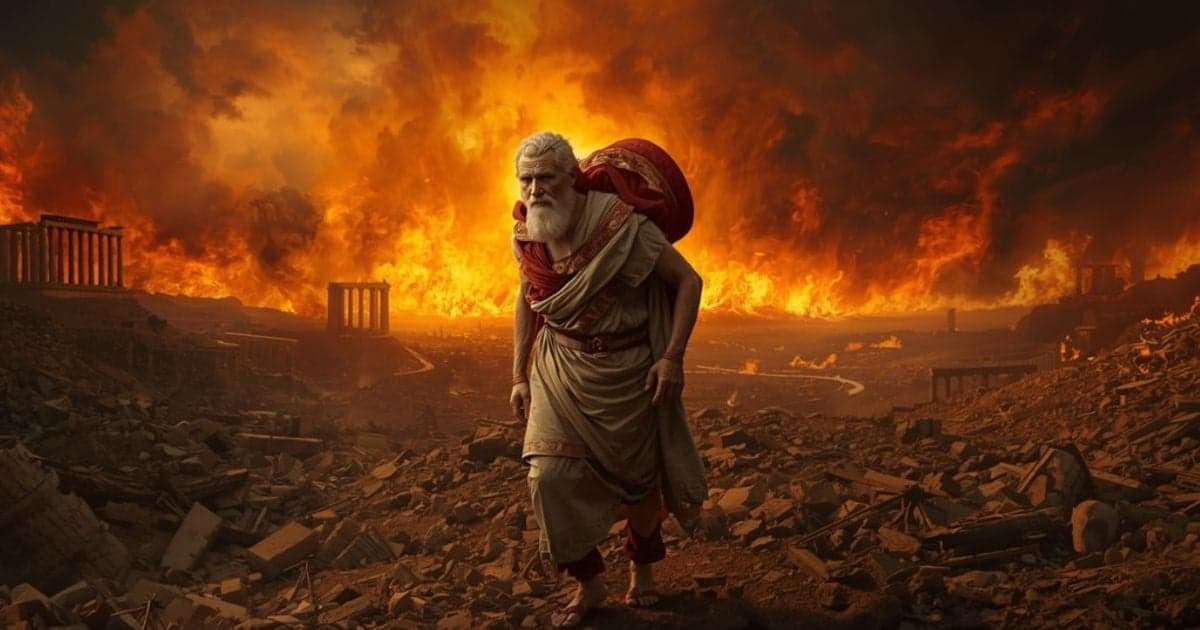
The image captures a high-trust technical intervention that works perfectly until internal suspicion breaks containment.

In Today's Words:

Aeolus delivers a precise solution, hostile winds isolated, favorable wind preserved, route stabilized. The system fails only when insiders violate restraint. Many operations collapse not from bad design but from mistrust among people closest to the controls, especially when leadership communication leaves room for paranoid speculation.

"Thus they talked and evil counsels prevailed."

— Narrator

Context: Crew rumor shifts into collective sabotage while Odysseus sleeps

A single sentence marks the pivot from near-home to renewed exile, proving disasters often begin as shared narratives, not external attack.

In Today's Words:

The men do not fail because they lack strength. They fail because rumor hardens into consensus faster than verification. Group drift toward the worst interpretation can overpower years of sacrifice in one conversation. Organizational collapse frequently starts in informal talk where fear is mistaken for insight.

"Vilest of mankind, get you gone at once out of the island; him whom heaven hates will I in no wise help."

— Aeolus

Context: Aeolus rejects Odysseus after the wind-bag disaster

Trust, once broken under extraordinary assistance, may not be renegotiable, especially when partners reframe failure as cursed pattern.

In Today's Words:

Aeolus initially gave rare support, then withdraws absolutely after the mission reversal. Fair or unfair, he reclassifies Odysseus as untouchable risk. In modern systems, one catastrophic trust breach can close doors that competence alone cannot reopen, especially with stakeholders guarding reputation exposure. The same pattern shows up wherever people confuse endurance with passivity or let

"Take this herb, which is one of great virtue, and keep it about you when you go to Circe’s house, it will be a talisman to you against every kind of mischief."

— Mercury/Hermes

Context: Hermes equips Odysseus before the Circe confrontation

Divine aid appears as concrete preparation, tools plus instructions, not magical exemption from risk.

In Today's Words:

Hermes does not remove danger; he provides capability and protocol. Odysseus still must walk into the house, resist pressure, and negotiate terms. Durable rescue usually arrives as actionable guidance, not replacement of agency. Preparation changes odds, but execution under stress still decides outcomes. The same pattern shows up wherever people confuse endurance with passivity or

Thematic Threads

Trust

In This Chapter

The crew's fatal mistrust of Odysseus destroys their chance at home, while Odysseus must learn to work with the dangerous Circe

Development

Evolved from earlier themes of loyalty—now showing how trust breaks down under pressure

In Your Life:

You might see this when your own family or coworkers start questioning your motives right when things are going well.

Leadership

In This Chapter

Odysseus faces the impossible choice between transparency and effectiveness, learning leadership sometimes means working with enemies

Development

Deepened from earlier chapters—now showing leadership's isolation and moral complexity

In Your Life:

You might recognize this when you have information others don't and must decide how much to share without losing effectiveness.

Class

In This Chapter

The crew assumes Odysseus is hoarding wealth, reflecting working-class suspicion of those who seem to have inside access

Development

Continued exploration of how class differences create mistrust and sabotage

In Your Life:

You might experience this when trying to advance—others assuming you're 'getting above yourself' or hiding opportunities.

Consequences

In This Chapter

One moment of mistrust costs them everything—most of the crew dies, and those who survive face years more wandering

Development

Building on earlier consequences theme—now showing how some mistakes are permanent

In Your Life:

You might face this when a single act of betrayal or poor judgment destroys something that took years to build.

Survival

In This Chapter

Odysseus adapts to work with Circe, the dangerous sorceress, because survival requires pragmatic alliances

Development

Evolved from physical survival to psychological and strategic survival

In Your Life:

You might need this when you must work with difficult or untrustworthy people because they have something you need to succeed.

You now have the context. Time to form your own thoughts.

Discussion Questions

This is not a test. Five prompts guide you through the chapter, from how it opens to how it closes, so you notice context and rhythm rather than facts to memorize. Sit with each question in your own words. When you see "One way to read it," treat it as a starting point, not the only answer.

  1. 1

    Why does the wind-bag failure matter more than simple disobedience?

    ▶One way to read it

    It reveals structural mistrust in the crew, which destroys not only one route but also future access to high-value allies like Aeolus.

    analysis • surface
  2. 2

    How does harbor geometry contribute to the Laestrygonian catastrophe?

    ▶One way to read it

    Clustered ships inside a narrow, cliff-lined basin become trapped targets, while Odysseus survives by keeping maneuver room outside.

    analysis • medium
  3. 3

    What does Hermes's intervention suggest about the relationship between help and agency?

    ▶One way to read it

    Effective help provides tools and sequence, but Odysseus still must take risk, apply strategy, and negotiate boundaries himself.

    application • medium
  4. 4

    Where in modern logistics or operations do teams become most vulnerable to internal sabotage?

    ▶One way to read it

    At final-mile transitions, handoffs, and fatigue peaks where hidden resentment and low transparency make control breaches feel justified.

    application • deep
  5. 5

    Describe a time when your team was close to finishing and then imploded. What warning signs were present earlier?

    ▶One way to read it

    Strong answers identify rumor loops, unclear ownership, exhaustion, and unspoken fairness fears that should have triggered preventive communication.

    reflection • deep

Critical Thinking Exercise

10 minutes

Map Your Trust Network

Think of a current goal or opportunity you're working toward. Draw three circles: people who would celebrate your success, people who might feel threatened by it, and people who are neutral. For each person in the 'threatened' circle, write one specific action you could take to address their concerns before they become sabotage.

Consider:

  • •Consider why certain people might feel left behind by your success
  • •Think about what information you're keeping to yourself that might breed suspicion
  • •Identify which relationships are worth preserving and which might need boundaries

Journaling Prompt

Write about a time when someone close to you undermined your progress right when you were about to succeed. What were they really afraid of, and how might you handle a similar situation differently now?

Coming Up Next...

Chapter 11: Journey to the Land of the Dead

Odysseus must descend to the realm of the dead to speak with ghosts and learn his fate. In the underworld, he'll encounter fallen comrades, legendary heroes, and the spirits of those he's wronged, confronting both his past and his future.
Continue to Chapter 11
Previous
The Cyclops Cave: When Curiosity Costs Everything
Contents
Next
Journey to the Land of the Dead
Keep exploring

Continue Exploring

Study guides, teaching tools, themes, and the full library.More ways to read The Odyssey: study guides, teaching tools, and the wider library.

  • The Odyssey Study Guide
  • Teaching Resources
  • Essential Life Index
  • Browse by Theme
  • All Books

What this chapter teaches

Theme analyses that draw on this chapter and apply it to modern life.

  • Cunning Over ForceOdysseus is not the strongest hero — he is the cleverest. How intelligence, patience, and strategy defeat what strength alone cannot.
  • Staying Yourself Under PressureIdentity through disguise and temptation: how Odysseus remains himself when Circe, Calypso, and twenty years of pressure try to transform him.
  • The Long Way HomeTen years of trying. What perseverance looks like in Homer

You Might Also Like

The Iliad cover

The Iliad

Homer

Also by Homer

The Book of Job cover

The Book of Job

Anonymous

Explores personal growth

The Aeneid cover

The Aeneid

Virgil

Explores identity & self

Dark Night of the Soul cover

Dark Night of the Soul

Saint John of the Cross

Explores personal growth

Browse all 106+ books

Share This Chapter

Know someone who'd enjoy this? Spread the wisdom!

TwitterFacebookLinkedInEmail

Go further with Prestige

Unlock study guides and downloads, early access, and exclusive content — and support free access for everyone.

Subscribe to PrestigeCreate free account
Intelligence Amplifier
Intelligence Amplifier™Powering Wide Reads

Exploring human-AI collaboration through books, essays, and philosophical dialogues. Classic literature transformed into navigational maps for modern life.

2025 Books

→ The Amplified Human Spirit→ The Alarming Rise of Stupidity Amplified→ San Francisco: The AI Capital of the World
Visit intelligenceamplifier.org
hello@widereads.com

WideReads Originals

→ You Are Not Lost→ The Last Chapter First→ The Lit of Love→ Wealth and Poverty→ Wisdom for the Wounded
Arvintech
arvintechAmplify your Mind
Visit at arvintech.com

Navigate

  • Home
  • Library
  • Essential Life Index
  • How It Works
  • Subscribe
  • Account
  • About
  • Contact
  • Authors
  • Suggest a Book
  • Landings

Made For You

  • Trending
  • Students
  • Educators
  • Families
  • Readers
  • Literary Analysis
  • Finding Purpose
  • Letting Go
  • Recovering from a Breakup
  • Corruption
  • Gaslighting in the Classics

Newsletter

Weekly insights from the classics. Amplify Your Mind.

Legal

  • Privacy Policy
  • Terms of Service
  • Editorial Standards
  • Cookie Policy
  • Accessibility

Why Public Domain?

We focus on public domain classics because these timeless works belong to everyone. No paywalls, no restrictions—just wisdom that has stood the test of centuries, freely accessible to all readers.

Public domain books have shaped humanity's understanding of love, justice, ambition, and the human condition. By amplifying these works, we help preserve and share literature that truly belongs to the world.

A Pilgrimage

Powell's City of Books

Portland, Oregon

If you ever find yourself in Portland, walk to the corner of Burnside and 10th. The building takes up an entire city block. Inside is over a million books, new and used on the same shelf, organized by color-coded rooms with names like the Rose Room and the Pearl Room. You can lose an afternoon. You can lose a weekend. You will find a book you have been looking for your whole life, and three you did not know existed.

It is a pilgrimage. We cannot find a bookstore like it anywhere on earth. If you read the classics, and you ever get the chance, go. It belongs on every reader's bucket list.

Visit powells.com

We are not in any way affiliated with Powell's. We are just a very big fan.

© 2026 Wide Reads™. All Rights Reserved.

Intelligence Amplifier™ and Wide Reads™ are proprietary trademarks of Arvin Lioanag.

Copyright Protection: All original content, analyses, discussion questions, pedagogical frameworks, and methodology are protected by U.S. and international copyright law. Unauthorized reproduction, distribution, web scraping, or use for AI training is strictly prohibited. See our Copyright Notice for details.

Disclaimer: The information provided on this website is for general informational and educational purposes only and does not constitute professional, legal, financial, or technical advice. While we strive to ensure accuracy and relevance, we make no warranties regarding completeness, reliability, or suitability. Any reliance on such information is at your own risk. We are not liable for any losses or damages arising from use of this site. By using this site, you agree to these terms.