Chapter 10
The Dinner Party Goes Wrong
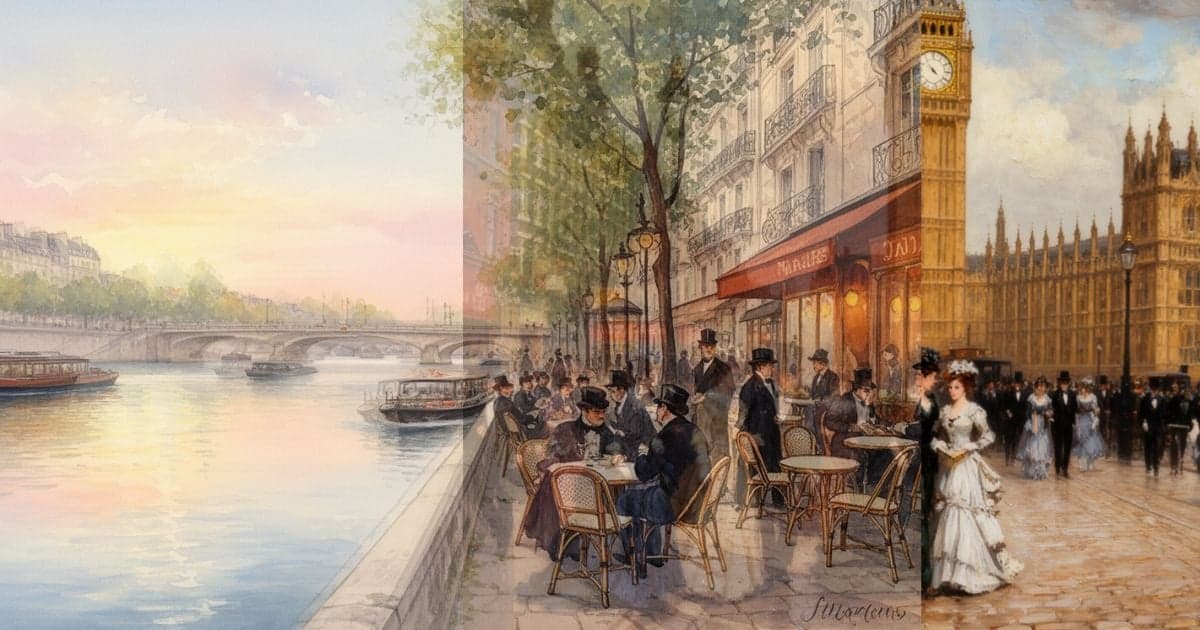
One on the top of the other the rest of the company followed the Ablewhites, till we had the whole tale of them complete. Including the family, they were twenty-four in all. It was a noble sight to see, when they were settled in their places round the dinner-table, and the Rector of Frizinghall (with beautiful elocution) rose and said grace. There is no need to worry you with a list of the guests. You will meet none of them a second time—in my part of the story, at any rate—with the exception of two. Those two sat on either…
Public-domain chapter text, formatted for reading.
Master this chapter. Complete your experience
Purchase the complete book to access all chapters and support classic literature
Available in paperback, hardcover, and e-book formats
Now let's explore the literary elements.
Key Quotes & Analysis
"There is no need to worry you with a list of the guests."
Context: A pivotal line from the opening of the chapter
Betteredge dismisses most dinner guests as irrelevant to his narrative, showing his practical storytelling approach. This reveals his confidence in determining what matters for the reader's understanding of events.
In Today's Words:
Don't worry about remembering all the dinner guests. Most of them won't matter to this story anyway, except for two people who actually said something important about Rachel's diamond that evening. That is the same pressure when There is no need to worry forces someone to choose between the official story and what they actually.
"Godfrey to say, between the corks and the carving) meant love."
Context: A pivotal line from the middle of the chapter
The fragmented quote captures Betteredge eavesdropping on Godfrey's private philosophical conversation while serving dinner. His partial hearing reflects his divided attention between duties and curiosity about the guests' behavior.
In Today's Words:
While I was busy opening wine bottles and carving meat, I caught bits of Godfrey's conversation where he was explaining to his dinner companion that religion basically means love. That is the same pressure when Godfrey to say, between the corks forces someone to choose between the official story and what they actually witnessed.
"In my opinion it is,” answered Mr. Murthwaite. “I can’t doubt, after what you have told me, that the restoration of the Moonstone to its place on the forehead of the Indian idol, is the motive and the justification of that sacrifice of caste which I alluded to just now"
Context: A pivotal line from the closing third of the chapter
This quote appears to be misplaced from another chapter, as Murthwaite doesn't make this statement during the dinner party described. The content about idol restoration and caste sacrifice doesn't match the dinner conversation context.
In Today's Words:
Murthwaite believes the Indian jugglers are willing to break their caste rules because they're determined to return the Moonstone to its original place on their religious statue's forehead. That is the same pressure when In my opinion it is,” answered forces someone to choose between the official story and what they actually witnessed.
"It’s a lonely country between this and the station."
Context: A pivotal line from the closing third of the chapter
This quote also seems misplaced from the dinner party chapter, referring to travel between locations rather than the social disaster unfolding at the table. The isolation mentioned doesn't fit the crowded dinner setting.
In Today's Words:
The area between here and the train station is pretty isolated, without many people around if someone needed help or ran into trouble during the journey. That is the same pressure when It’s a lonely country between this forces someone to choose between the official story and what they actually witnessed.
Thematic Threads
Hidden Consequences
In This Chapter
The Moonstone appears to be a generous gift but brings mortal danger from the Brahmins who will kill to reclaim it
Development
Builds on earlier hints about the diamond's dark history, now revealing the immediate physical threat
In Your Life:
You might see this when job promotions come with impossible expectations, or when family help comes with emotional strings attached.
Social Performance
In This Chapter
The birthday dinner becomes a carefully orchestrated disaster where everyone tries to maintain politeness despite underlying tensions
Development
Continues the theme of maintaining appearances while real problems fester beneath the surface
In Your Life:
You experience this at family gatherings where everyone pretends everything is fine while avoiding the elephant in the room.
Cultural Blindness
In This Chapter
The English guests treat the diamond as mere jewelry, completely ignorant of its sacred significance to the Brahmins
Development
Introduced here as a major source of conflict and misunderstanding
In Your Life:
You might see this when making assumptions about others' values or backgrounds without understanding their full context.
Expert Knowledge vs. Ignorance
In This Chapter
Murthwaite understands the true danger while everyone else remains clueless about the Brahmins' real purpose
Development
Builds on earlier themes about who has real knowledge versus who just thinks they do
In Your Life:
You encounter this when medical specialists try to explain serious conditions while you're still thinking it's minor.
Good Intentions Gone Wrong
In This Chapter
Dr. Candy's scientific enthusiasm and social awkwardness create discomfort rather than the intellectual stimulation he intended
Development
Introduced here as a pattern of how trying to help can backfire
In Your Life:
You see this when offering advice that makes someone feel worse, or when trying to cheer someone up actually minimizes their pain.
You now have the context. Time to form your own thoughts.
Discussion Questions
This is not a test. Five prompts guide you through the chapter, from how it opens to how it closes, so you notice context and rhythm rather than facts to memorize. Sit with each question in your own words. When you see "One way to read it," treat it as a starting point, not the only answer.
- 1
How does Betteredge describe the dinner guests' arrangement around Rachel, and what makes her the 'centre-point' of attention?
analysis • surfaceOne way to read it
Rachel sits as 'queen of the day' with twenty-four guests arranged around her, wearing the Moonstone as a brooch that Franklin fashioned from silver wire. Everyone stares at the diamond's 'prodigious size and beauty.'
- 2
What does Mr. Candy's mortifying exchange with Mrs. Threadgall reveal about his character and social awareness?
analysis • mediumOne way to read it
Candy's offer to help the 'Professor' visit medical exhibits, not realizing he's been dead ten years, shows his tendency to 'plunge headlong into talk with strangers' without reading social cues first.
- 3
How might Franklin's inappropriate dinner topics compare to someone today dominating conversations with controversial political views?
application • mediumOne way to read it
Like Franklin discussing married women's admirations or abstract bull-breeding philosophy, modern dinner guests can alienate others by forcing personal agendas into polite conversation, missing social boundaries.
- 4
When Murthwaite warns Rachel about taking the diamond to India, what choice does this create for the family's future safety?
application • deepOne way to read it
The family must decide whether to keep a valuable but dangerous religious artifact, knowing that 'dressed as you are now, your life would not be worth five minutes' purchase' in certain Indian temples.
- 5
What does Betteredge's belief that 'the cursed Diamond must have cast a blight on the whole company' suggest about blame and responsibility?
reflection • deepOne way to read it
Betteredge prefers blaming supernatural forces rather than examining how people's own social failures and hidden tensions created the evening's disasters, avoiding uncomfortable personal accountability.
Critical Thinking Exercise
Map the Hidden Costs
Think of a significant gift, opportunity, or favor you've recently received or given. Create a simple chart with two columns: 'Visible Benefits' and 'Hidden Costs/Responsibilities.' Fill in everything you can think of, including emotional, time, and relationship costs. Then identify what questions you should have asked beforehand.
Consider:
- •Consider not just financial costs, but time, energy, and relationship obligations
- •Think about how accepting this gift might change others' expectations of you
- •Examine whether the giver fully understood what they were asking of you
Journaling Prompt
Write about a time when a well-meaning gift or favor created unexpected complications in your life. What warning signs did you miss, and what would you do differently now?
Coming Up Next...
Chapter 11: The Diamond Vanishes at Dawn
As the guests finally depart and the household settles for the night, the real drama is about to begin. With the dangerous Brahmins now knowing exactly where the Moonstone is, the stage is set for the mysterious events that will unfold in the dark hours ahead.