Wide Reads
Literature MattersLife IndexEducators
Sign in
Where to Begin

The Breaking Point at the Ships — The Iliad

The Iliad - The Breaking Point at the Ships

Homer

The Iliad

The Breaking Point at the Ships

Home›Books›The Iliad›Chapter 15: The Breaking Point at the Ships
Previous
15 of 24
Next

Analysis by the Wide Reads editorial team·Reviewed against the source text·Updated December 1, 2025

Summary

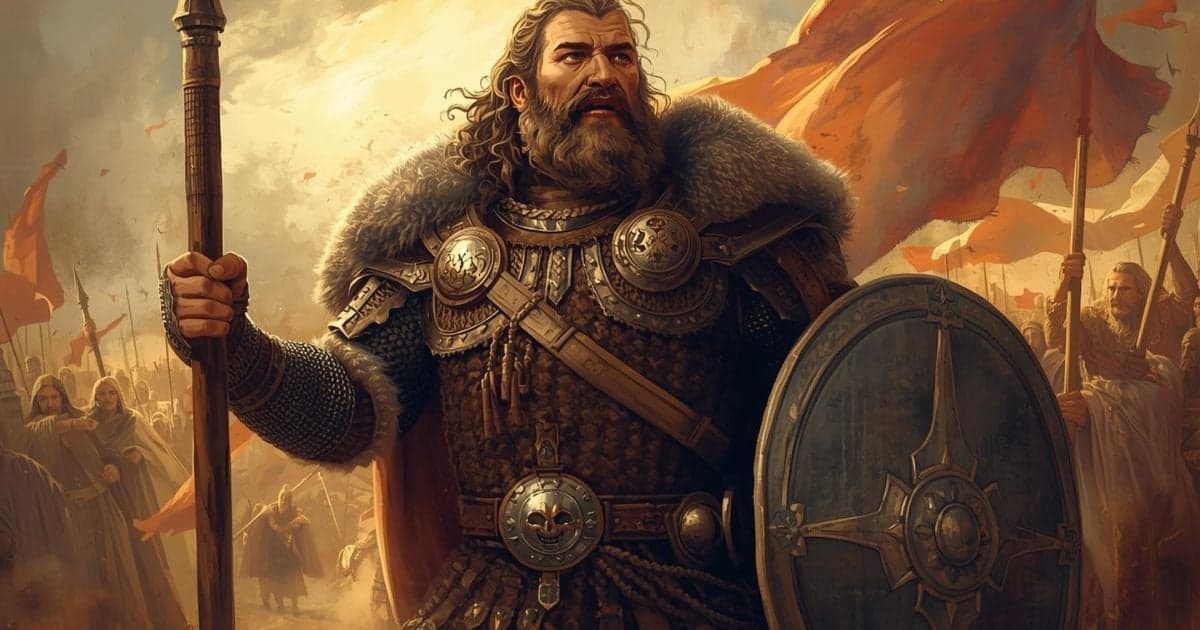
Zeus wakes up furious to find his orders disobeyed, the Trojans are retreating and Poseidon is helping the Greeks. His rage at Hera's manipulation reveals how even the most powerful relationships involve deception and submission when stakes are high. Hera quickly shifts to damage control, swearing innocence while Zeus reasserts dominance by outlining his master plan: Troy will push the Greeks back to their ships, Patroclus will die trying to help, and only then will Achilles return to turn the tide. This moment shows how those in power often reveal their long-term strategies only when challenged. Meanwhile, Poseidon reluctantly withdraws after Zeus's messenger Iris delivers the ultimatum, demonstrating how even justified resistance must sometimes yield to superior force. Apollo then revives the nearly-dead Hector, who returns to battle like a man possessed. The god literally breaks down the Greek defensive walls, their careful fortifications crumble like a child's sandcastle. As Trojans pour toward the ships with torches, Ajax becomes a one-man army, leaping from ship to ship like an acrobat, desperately trying to hold the line. The chapter ends with Hector grabbing the stern of a Greek ship, calling for fire to end the ten-year war in one blazing moment. This is the Greeks' darkest hour, their backs literally to the sea, their walls destroyed, their greatest warrior still sulking in his tent.

Jupiter, awaking, sees the Trojans repulsed from the trenches, Hector in a swoon, and Neptune at the head of the Greeks: he is highly incensed at the artifice of Juno, who appeases him by her submissions; she is then sent to Iris and Apollo.

Juno, repairing to the assembly of the gods, attempts, with extraordinary address, to incense them against Jupiter; in particular she touches Mars with a violent resentment; he is ready to take arms, but is prevented by Minerva.

Far in the distant clouds let him control, And awe the younger brothers of the pole; There to his children his commands be given, The trembling, servile, second race of heaven.” “And must I then (said she), O sire of floods!

Correct it yet, and change thy rash intent; A noble mind disdains not to repent. s up the Grecian wall; Legions on legions from each side arise: Thick sound the keels; the storm of arrows flies.

Fierce on the ships above, the cars below, These wield the mace, and those the javelin throw. “Is there (he said) in arms a youth like you, So strong to fight, so active to pursue?

Lift the bold lance, and make some Trojan bleed.” He said; and backward to the lines retired; Forth rush’d the youth with martial fury fired, Beyond the foremost ranks; his lance he threw, And round the black battalions cast his view.


In this chapter: Terms Characters Key Quotes Themes Modern Story

Why This Matters

Connect literature to life

Skill: Reading Renewed Escalation

A stalled fight can restart harder the moment powerful backers recommit to winning. Zeus revives Hector and the Trojans press the Greek ships toward fire and rout. Ask whether renewed pressure comes with new support or only new demands on exhausted people.

Coming Up in Chapter 16

With Greek ships about to burn and Ajax fighting alone against impossible odds, Patroclus finally reaches his breaking point. The gentle healer who's been tending wounds while his people die will make a desperate plea that changes everything.

Share it with friends

PreviousPrevious ChapterNextNext Chapter
Original text
7,305 wordscomplete

Chapter 15

The Breaking Point at the Ships

ARGUMENT. THE FIFTH BATTLE AT THE SHIPS; AND THE ACTS OF AJAX. Jupiter, awaking, sees the Trojans repulsed from the trenches, Hector in a swoon, and Neptune at the head of the Greeks: he is highly incensed at the artifice of Juno, who appeases him by her submissions; she is then sent to Iris and Apollo. Juno, repairing to the assembly of the gods, attempts, with extraordinary address, to incense them against Jupiter; in particular she touches Mars with a violent resentment; he is ready to take arms, but is prevented by Minerva. Iris and Apollo obey the orders of…

Public-domain chapter text, formatted for reading.

Master this chapter. Complete your experience

Purchase the complete book to access all chapters and support classic literature

Buy at Powell'sBuy on Amazon

Available in paperback, hardcover, and e-book formats

Now let's explore the literary elements.

Key Quotes & Analysis

"THE FIFTH BATTLE AT THE SHIPS; AND THE ACTS OF AJAX."

— Hector

Context: A pivotal line from the opening of the chapter

The chapter title announces the climactic naval battle where Ajax becomes the Greeks' last hope. This moment captures how crisis strips away complexity, leaving only essential action and the individuals who must rise to meet impossible odds.

In Today's Words:

When everything falls apart at work, someone has to step up and hold the line. Ajax becomes that person, fighting desperately to save what's left while everyone else retreats to safety. Naming the pattern early matters when pride keeps both sides locked in a move they cannot undo.

"They fly: at once the chasers and the prey."

— Narrator

Context: A pivotal line from the middle of the chapter

This line captures the fluid nature of battle where roles reverse instantly and hunters become hunted. It reveals how quickly confidence can collapse when circumstances shift, leaving people scrambling to adapt to new realities.

In Today's Words:

In any competitive situation, the tables can turn in seconds. One moment you're winning, the next you're running for cover, trying to figure out what went wrong. You still see it when rage outlasts grief and everyone treats mercy as surrender. You still see it when rage outlasts grief and everyone treats mercy as surrender.

"The fiery Spartan first, with loud applause."

— Nestor

Context: A pivotal line from the closing third of the chapter

Nestor's praise of the Spartan warrior shows how leaders recognize and celebrate courage in dark moments. This reflects the human need to acknowledge bravery publicly, especially when morale is low and examples of heroism become precious.

In Today's Words:

Good managers know when to spotlight someone doing exceptional work during a crisis. Public recognition of courage inspires others to step up when the team needs it most. Naming the pattern early matters when pride keeps both sides locked in a move they cannot undo.

"Warms the bold son of Nestor in his cause."

— Nestor

Context: A pivotal line from the closing third of the chapter

Nestor's encouragement of his own son reveals the complex dynamics of family expectations in high-stakes situations. Parents often push their children toward danger while believing they're inspiring greatness, mixing love with potentially deadly ambition.

In Today's Words:

Parents sometimes encourage their kids to take risks they wouldn't take themselves, believing they're building character. The line between supportive and reckless can blur when family pride is involved. Naming the pattern early matters when pride keeps both sides locked in a move they cannot undo.

Thematic Threads

Power

In This Chapter

Zeus demonstrates absolute authority by revealing his master plan and forcing Poseidon to withdraw

Development

Power structures become more explicit as the conflict intensifies

In Your Life:

You see this when supervisors suddenly explain company strategy only when facing staff rebellion

Deception

In This Chapter

Hera quickly shifts to damage control, swearing innocence while Zeus calls out her manipulation

Development

Deception becomes more desperate as consequences mount

In Your Life:

This mirrors how people backtrack and claim innocence when their schemes are exposed

Resistance

In This Chapter

Poseidon reluctantly withdraws despite being justified, showing how superior force trumps righteous cause

Development

Resistance faces increasingly impossible odds

In Your Life:

You face this when fighting unfair workplace policies but ultimately having to comply to keep your job

Desperation

In This Chapter

Ajax becomes a one-man army leaping between ships as Greek defenses completely collapse

Development

Individual heroism emerges as collective strategies fail

In Your Life:

This shows up when you're the only person willing to work extra shifts during a staffing crisis

Collapse

In This Chapter

Carefully built Greek fortifications crumble like sandcastles when divine power intervenes

Development

External forces can instantly destroy what took years to build

In Your Life:

You experience this when budget cuts eliminate programs you've spent years developing

You now have the context. Time to form your own thoughts.

Discussion Questions

This is not a test. Five prompts guide you through the chapter, from how it opens to how it closes, so you notice context and rhythm rather than facts to memorize. Sit with each question in your own words. When you see "One way to read it," treat it as a starting point, not the only answer.

  1. 1

    What happens to Hector before Zeus sends Iris to revive him?

    ▶One way to read it

    He is wounded and the Trojan assault at the ships begins to stall.

    analysis • surface
  2. 2

    How do the Greeks react when Hector returns to fierce fighting?

    ▶One way to read it

    Ajax and the defenders are shocked, as if Hector has risen from death itself.

    analysis • medium
  3. 3

    What is at stake for the Greeks once the Trojans reach the ships?

    ▶One way to read it

    If the fleet burns, the campaign collapses and Greece loses the war in practice.

    application • medium
  4. 4

    Where have you seen leadership double down on a failing plan instead of changing course?

    ▶One way to read it

    Strong answers describe renewed pressure after exhaustion, often with no new resources for the people carrying the cost.

    application • deep
  5. 5

    What does this chapter suggest about the cost of fighting once command re-enters the field?

    ▶One way to read it

    Renewed backing from above can turn a local stalemate into a catastrophe for the people still on the ground.

    reflection • deep

Critical Thinking Exercise

10 minutes

Map Your Power Revelation Moment

Think of a time when someone in authority over you—boss, parent, teacher, partner—suddenly became very transparent about their plans or reasoning, but only after you challenged them or threatened to leave. Write down what they revealed and analyze why they chose that moment to share information they'd previously kept hidden.

Consider:

  • •What specific threat or challenge triggered their sudden transparency?
  • •How did the information they shared change your understanding of the situation?
  • •What did their timing tell you about your actual leverage in the relationship?

Journaling Prompt

Write about how you could use the pattern of strategic revelation to better navigate future power dynamics—both recognizing when others are using it on you and deciding when you might need to use it yourself.

Coming Up Next...

Chapter 16: The Death of Patroclus

With Greek ships about to burn and Ajax fighting alone against impossible odds, Patroclus finally reaches his breaking point. The gentle healer who's been tending wounds while his people die will make a desperate plea that changes everything.

Continue to Chapter 16
Previous
Juno's Seduction and Neptune's Intervention
Contents
Next
The Death of Patroclus
Keep exploring

Continue Exploring

Study guides, teaching tools, themes, and the full library.More ways to read The Iliad: study guides, teaching tools, and the wider library.

  • The Iliad Study Guide
  • Teaching Resources
  • Essential Life Index
  • Browse by Theme
  • All Books

What this chapter teaches

Theme analyses that draw on this chapter and apply it to modern life.

  • Recognizing the Cost of PrideHow wounded pride cripples missions and relationships in Homer
  • Understanding Honor CultureReputation, war prizes, and public respect in Homer

You Might Also Like

The Odyssey cover

The Odyssey

Homer

Also by Homer

Beowulf cover

Beowulf

Unknown

Explores war & conflict

Metamorphoses cover

Metamorphoses

Ovid

Explores identity & self

The Aeneid cover

The Aeneid

Virgil

Explores war & conflict

Browse all 106+ books

Share This Chapter

Know someone who'd enjoy this? Spread the wisdom!

TwitterFacebookLinkedInEmail

Go further with Prestige

Unlock study guides and downloads, early access, and exclusive content — and support free access for everyone.

Subscribe to PrestigeCreate free account
Intelligence Amplifier
Intelligence Amplifier™Powering Wide Reads

Exploring human-AI collaboration through books, essays, and philosophical dialogues. Classic literature transformed into navigational maps for modern life.

2025 Books

→ The Amplified Human Spirit→ The Alarming Rise of Stupidity Amplified→ San Francisco: The AI Capital of the World
Visit intelligenceamplifier.org
hello@widereads.com

WideReads Originals

→ You Are Not Lost→ The Last Chapter First→ The Lit of Love→ Wealth and Poverty→ Wisdom for the Wounded
Arvintech
arvintechAmplify your Mind
Visit at arvintech.com

Navigate

  • Home
  • Library
  • Essential Life Index
  • How It Works
  • Subscribe
  • Account
  • About
  • Contact
  • Authors
  • Suggest a Book
  • Landings

Made For You

  • Trending
  • Students
  • Educators
  • Families
  • Readers
  • Literary Analysis
  • Finding Purpose
  • Letting Go
  • Recovering from a Breakup
  • Corruption
  • Gaslighting in the Classics

Newsletter

Weekly insights from the classics. Amplify Your Mind.

Legal

  • Privacy Policy
  • Terms of Service
  • Editorial Standards
  • Cookie Policy
  • Accessibility

Why Public Domain?

We focus on public domain classics because these timeless works belong to everyone. No paywalls, no restrictions—just wisdom that has stood the test of centuries, freely accessible to all readers.

Public domain books have shaped humanity's understanding of love, justice, ambition, and the human condition. By amplifying these works, we help preserve and share literature that truly belongs to the world.

A Pilgrimage

Powell's City of Books

Portland, Oregon

If you ever find yourself in Portland, walk to the corner of Burnside and 10th. The building takes up an entire city block. Inside is over a million books, new and used on the same shelf, organized by color-coded rooms with names like the Rose Room and the Pearl Room. You can lose an afternoon. You can lose a weekend. You will find a book you have been looking for your whole life, and three you did not know existed.

It is a pilgrimage. We cannot find a bookstore like it anywhere on earth. If you read the classics, and you ever get the chance, go. It belongs on every reader's bucket list.

Visit powells.com

We are not in any way affiliated with Powell's. We are just a very big fan.

© 2026 Wide Reads™. All Rights Reserved.

Intelligence Amplifier™ and Wide Reads™ are proprietary trademarks of Arvin Lioanag.

Copyright Protection: All original content, analyses, discussion questions, pedagogical frameworks, and methodology are protected by U.S. and international copyright law. Unauthorized reproduction, distribution, web scraping, or use for AI training is strictly prohibited. See our Copyright Notice for details.

Disclaimer: The information provided on this website is for general informational and educational purposes only and does not constitute professional, legal, financial, or technical advice. While we strive to ensure accuracy and relevance, we make no warranties regarding completeness, reliability, or suitability. Any reliance on such information is at your own risk. We are not liable for any losses or damages arising from use of this site. By using this site, you agree to these terms.