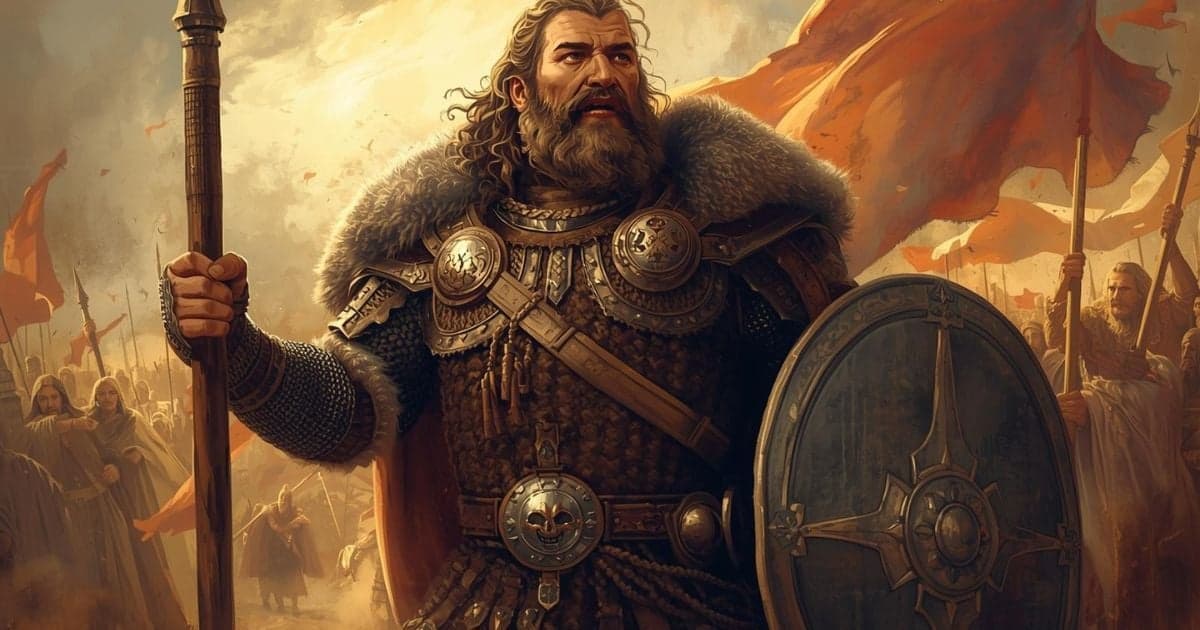
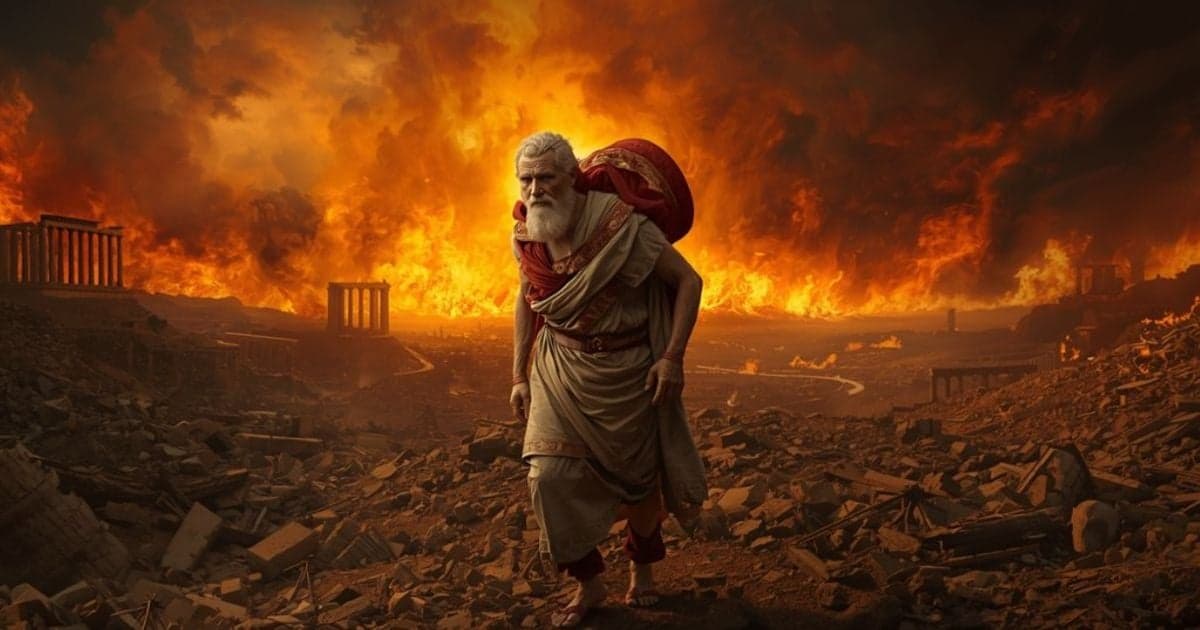
While Zeus looks away from the battlefield, Neptune secretly intervenes to help the struggling Greeks. Disguising himself as the prophet Calchas, he inspires the two Ajax warriors to rally their forces against Hector's advancing Trojans. The god's divine touch fills the Greek heroes with renewed strength and courage, fundamentally altering the battle's momentum. Neptune's intervention represents a crucial turning point where divine will directly counters Zeus's apparent abandonment of the Greeks to their fate. The opening phase establishes Neptune's strategic assessment of the crisis. From his vantage point on Mount Samothrace, the sea god witnesses the Trojans breaking through Greek fortifications and recognizes that without intervention, the entire Greek expedition will collapse. His decision to act despite Zeus's withdrawal demonstrates how competing divine interests shape mortal conflicts. Neptune's transformation into Calchas shows divine beings understanding that mortals respond better to familiar authority figures than to obvious supernatural manifestations. The middle section focuses on the remarkable military transformation that follows Neptune's inspiration.
The two Ajax warriors, previously exhausted and demoralized, suddenly feel supernatural energy coursing through their bodies. They organize their troops into an impenetrable phalanx formation that stops Hector's seemingly unstoppable advance. This tactical shift from individual heroics to coordinated group defense proves decisive. The Greeks begin systematically pushing back Trojan forces who had moments before seemed certain of victory. Simultaneously, individual Greek champions emerge to demonstrate exceptional valor. Idomeneus of Crete becomes the chapter's dominant warrior, methodically killing multiple Trojan heroes including Othryoneus, who had boasted he would win Cassandra's hand through military success. The Cretan king's conversation with Meriones reveals the practical realities of ancient warfare, where warriors constantly need fresh weapons and must carefully manage their equipment. Their dialogue also explores the psychology of courage, distinguishing between cowards who panic under pressure and true heroes who remain calm in deadly situations. The chapter's climactic phase showcases brutal individual combat as the battle reaches its peak intensity.
Meriones proves his worth through deadly spear work, while other Greek champions like Teucer and Menelaus demonstrate their skills against formidable Trojan opponents. The fighting becomes increasingly savage, with detailed descriptions of spear thrusts, shield impacts, and the mechanics of ancient warfare. Bodies accumulate on both sides as the Greeks steadily gain ground against their previously dominant enemies. Hector remains unaware that his forces are being systematically repelled on the flanks while he continues fighting fiercely at the center. His isolation from the broader tactical situation demonstrates how even the greatest individual warriors can lose perspective during intense combat. The wise Polydamas recognizes their deteriorating position and advises Hector to call a war council to reassess their strategy. This counsel represents the voice of strategic thinking against the intoxication of battle fury. The closing third reveals the full extent of the Greek resurgence as Neptune's intervention produces cascading effects throughout the battlefield.
Teucer demonstrates exceptional archery skills, killing Imbrius with a precise shot between throat and ear. The death of this Trojan warrior, who had lived peacefully in Pedaeus before joining the war effort, illustrates how conflict destroys lives that might otherwise have remained untouched by violence. Ajax and his namesake work in deadly coordination, stripping armor from fallen enemies and displaying the severed head of Imbrius at Hector's feet as psychological warfare. The chapter reveals how battles can shift dramatically through both divine intervention and human courage, while highlighting the crucial importance of strategic thinking over blind aggression. Neptune's involvement shows that divine politics directly influence mortal conflicts, with gods pursuing their own agendas regardless of Zeus's official neutrality. The Greek recovery demonstrates that demoralized forces can rapidly regain effectiveness when properly inspired and organized. Moreover, the individual combat sequences illustrate how personal honor and reputation drive warriors to extraordinary feats of courage. Each hero seeks to prove his worth through visible acts of valor, creating a competitive dynamic that elevates overall military performance.
The detailed weapon exchanges and tactical discussions ground the mythic narrative in realistic military concerns, showing that even legendary warriors must deal with practical limitations like broken spears and exhausted strength. The conversation between Idomeneus and Meriones particularly emphasizes how experienced warriors understand that courage manifests differently in various combat situations, with ambush warfare requiring different psychological qualities than open battle. The climactic turn occurs when Idomeneus emerges as the chapter's most formidable warrior, systematically eliminating Trojan champions and proving that individual excellence can complement tactical coordination. His methodical approach to combat contrasts sharply with Hector's emotional intensity, demonstrating different but equally effective leadership styles. The Cretan king's ability to inspire Meriones while simultaneously engaging in deadly combat shows how veteran warriors can multitask under extreme pressure. Their partnership becomes a model for how experienced fighters can amplify each other's effectiveness through mutual support and shared tactical understanding. Ultimately, this chapter demonstrates that successful warfare requires multiple elements working in harmony: divine favor, inspirational leadership, tactical coordination, individual courage, and strategic wisdom. The Greeks' dramatic reversal of fortune illustrates how quickly military situations can change when these factors align properly, while the Trojans' gradual loss of initiative shows the dangers of overconfidence and tactical inflexibility in fluid combat situations.