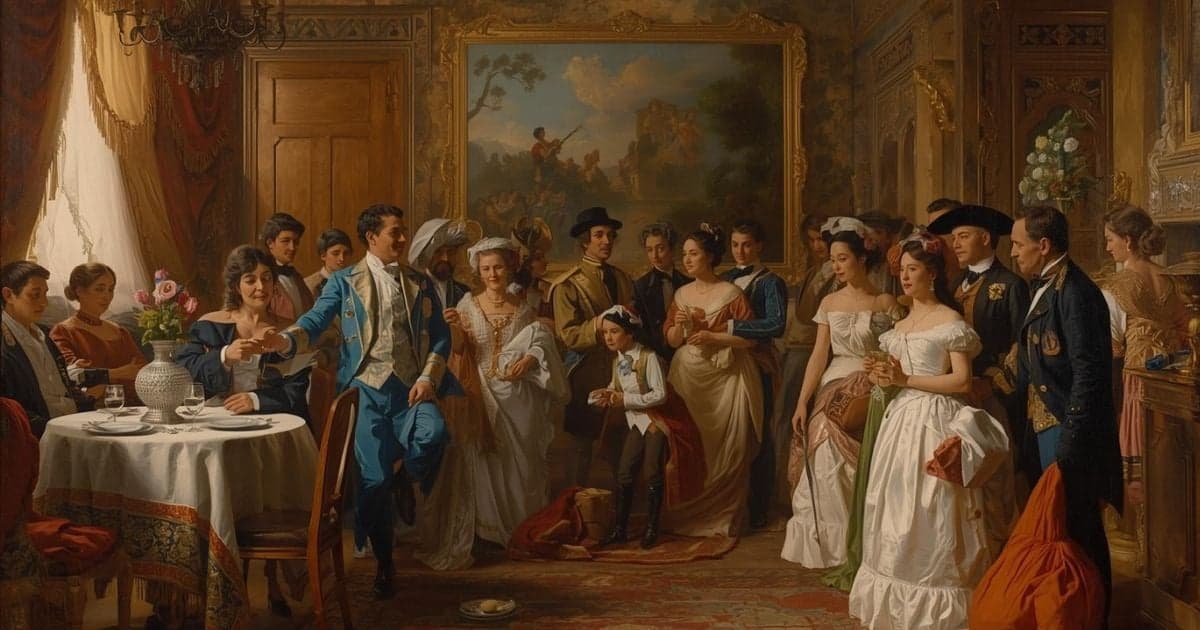
Chapter 99
The Law
We have seen how quietly Mademoiselle Danglars and Mademoiselle d’Armilly accomplished their transformation and flight; the fact being that everyone was too much occupied in his or her own affairs to think of theirs. We will leave the banker contemplating the enormous magnitude of his debt before the phantom of bankruptcy, and follow the baroness, who after being momentarily crushed under the weight of the blow which had struck her, had gone to seek her usual adviser, Lucien Debray. The baroness had looked forward to this marriage as a means of ridding her of a guardianship which, over a girl…
Public-domain chapter text, formatted for reading.
Master this chapter. Complete your experience
Purchase the complete book to access all chapters and support classic literature
Available in paperback, hardcover, and e-book formats
Now let's explore the literary elements.
Key Quotes & Analysis
"What am I?"
Context: Villefort refuses to bend the law for Madame Danglars
He answers: the law, not a friend.
In Today's Words:
Villefort tells Madame Danglars that he is not a code or a man but the law when she begs mercy. Officials hide behind role. When a prosecutor refuses friendship, hear procedure, not grief. The pattern is not abstract. It appears whenever power, timing, and social ritual quietly decide what people treat as real.
"Arrested"
Context: Villefort reads the ministerial despatch
Telegraph ends the mother’s last hope.
In Today's Words:
Villefort cries that Andrea was taken at Compiègne and all is over when the dragoon’s note says Arrested. Wires outrun carriages. When a parent hears that word, the bargain ends. The pattern is not abstract. It appears whenever power, timing, and social ritual quietly decide what people treat as real.
"five days"
Context: Villefort refuses to delay Andrea’s trial
Justice is timed, not negotiated.
In Today's Words:
Villefort says there are five days left and instructions are given when the baroness asks for months. Deadlines are weapons. When someone names a short clock, stop begging and start moving. The pattern is not abstract. It appears whenever power, timing, and social ritual quietly decide what people treat as real.
"assassin"
Context: Villefort calls Benedetto an assassin, not an impostor
Family shame becomes capital charge.
In Today's Words:
Villefort tells Madame Danglars that Andrea Cavalcanti is nothing less than an assassin. Labels harden fast. When a lawyer upgrades your scandal to murder, expect no private fix. The pattern is not abstract. It appears whenever power, timing, and social ritual quietly decide what people treat as real.
Thematic Threads
Debray absent
In This Chapter
Baroness waits in flowers he arranged.
Development
He will not marry Eugénie now.
In Your Life:
Advisers vanish when dowries fail.
Law speech
In This Chapter
Villefort refuses friendship at the crucifix.
Development
Five-day clock cannot bend.
In Your Life:
Prosecutors may hide behind duty.
Telegraph arrest
In This Chapter
Dragoon brings Arrested from Compiègne.
Development
Baroness leaves pale; he rejoices.
In Your Life:
Wires beat carriages.
You now have the context. Time to form your own thoughts.
Discussion Questions
This is not a test. Five prompts guide you through the chapter, from how it opens to how it closes, so you notice context and rhythm rather than facts to memorize. Sit with each question in your own words. When you see "One way to read it," treat it as a starting point, not the only answer.
- 1
Madame Danglars, veiled in black, goes to Villefort after Debray refuses to marry Eugénie and the contract scandal breaks. Why the prosecutor?
analysis • surfaceOne way to read it
One way to read it: she trusts the friend who cut the disgrace away from her house. She needs law, not comfort.
- 2
Villefort receives her under strict watch while tradesmen wait in the court like prisoners. What atmosphere greets the baroness?
analysis • mediumOne way to read it
One way to read it: quarantine without plague. Even visitors enter as if the house itself were accused.
- 3
A letter announces Andrea was taken at Compiègne and Villefort cries that all is over with joy. Why celebrate an arrest?
application • mediumOne way to read it
One way to read it: murder completes his session's list. Benedetto's trial will dazzle Paris and distract from his own hall.
- 4
Villefort reads Madame Danglars' thought about the poison deaths in his house and says she was thinking of it. What mutual fear binds them?
application • deepOne way to read it
One way to read it: that the killer walks among kin. Each visitor wonders if the magistrate suspects them too.
- 5
Villefort says he needed a murder and now has one for a splendid session. When does justice become appetite?
reflection • deepOne way to read it
One way to read it: when the prosecutor counts cases like trophies. Andrea's crime may save Villefort's name for a day.
Critical Thinking Exercise
Map the Collateral Damage
Think of a situation where you wanted someone to 'get what they deserved' - a bad boss, unfaithful partner, or toxic family member. Draw a simple diagram showing that person in the center, then map out all the innocent people who would be affected if they faced total consequences. Include spouses, children, coworkers, friends, and anyone else in their orbit.
Consider:
- •Consider both immediate family and extended relationships that would be impacted
- •Think about financial consequences that ripple outward to innocent people
- •Notice how your desire for justice might conflict with protecting innocent parties
Journaling Prompt
Write about a time when you had to choose between getting perfect justice and protecting innocent people. What did you learn about the real cost of revenge?
Coming Up Next...
Chapter 100: The Apparition
After Villefort reads Arrested from Compiègne, Valentine will lie feverish at home while Monte Cristo enters through the library door he has rented, drinks her night draught first, and swaps poison for a living cup.