Wide Reads
Literature MattersLife IndexEducators
Sign in
Where to Begin

The Vendetta — The Count of Monte Cristo

The Count of Monte Cristo - The Vendetta

Alexandre Dumas

The Count of Monte Cristo

The Vendetta

Home›Books›The Count of Monte Cristo›Chapter 44: The Vendetta
Previous
44 of 117
Next

Analysis by the Wide Reads editorial team·Reviewed against the source text·Updated November 29, 2025

Summary

The Vendetta

The Count of Monte Cristo by Alexandre Dumas

0:000:00
Listen to Next Chapter

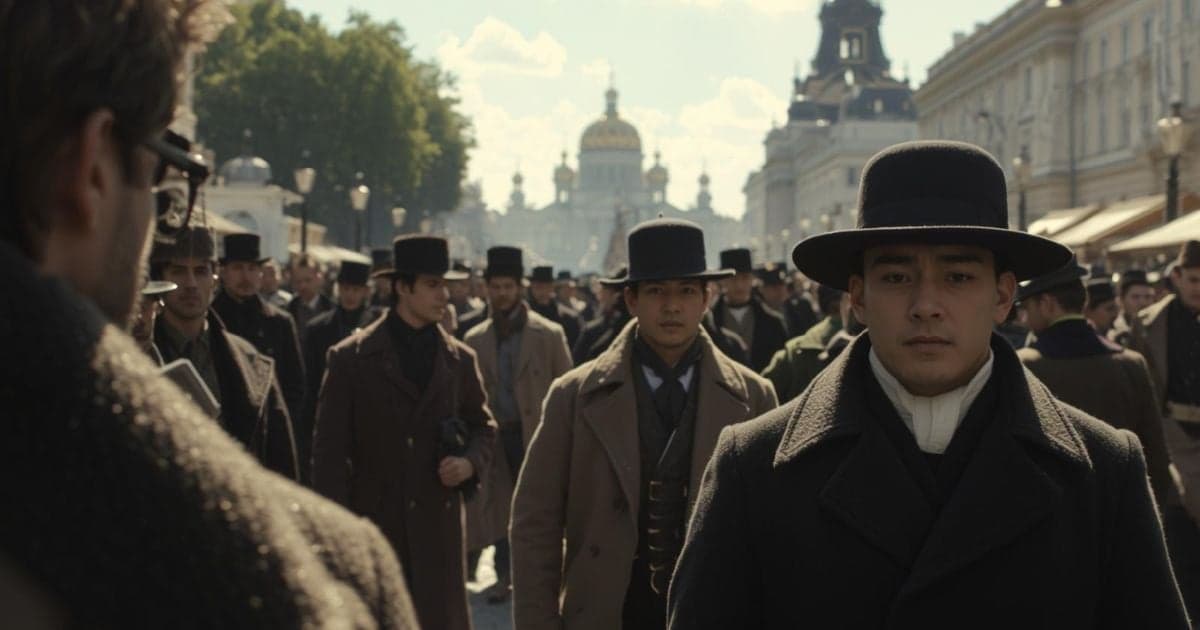
Bertuccio begins at Nîmes in 1815, when royalist violence against Bonapartists still passed for order. His brother, a soldier loyal to the emperor, is lured from a hiding place and murdered in an olive grove while officials look away. Bertuccio carries the body home; his sister-in-law dies of grief; only the infant nephew remains.

He seeks justice from the deputy procureur du roi, a young Villefort who listens politely and does nothing. When Bertuccio corners him after mass, Villefort calls the killing politics, not crime, and hides behind office hours. Bertuccio answers that 1815 is not yesterday and declares vendetta before disappearing into the hills.

Months later he follows Villefort to Paris and to the house at Auteuil. He learns the procureur's habits, the servants' schedules, and the garden path where a man of law becomes a man with a shovel. On a rainy night he watches Villefort dig under the plane-tree and bury a box. Bertuccio stabs him in the chest, drags the body into the hole, and covers it, believing he has killed the man who killed his family.

Then the box moves. Inside he finds a living infant wrapped in linen marked with an H and a coronet. Horror turns to pity: he cannot leave a child in the earth. He carries the baby to the foundling hospital; when they refuse without a name, he baptizes the boy Benedetto and delivers him to his widowed sister-in-law Assunta in Rogliano.

Assunta raises Benedetto with tenderness he repays with cruelty. She covers for his thefts, weeps over his lies, and calls him beautiful even when neighbors whisper. Bertuccio smuggles to survive, returns wounded from a customs fight, and discovers the boy has tortured animals and stolen from Wasilio's orchard. A neighbor warns that Benedetto is poison; the child is sent to work for a baker, then runs away with a fairground troupe while Assunta weeps and Bertuccio curses the night he saved a procureur's son.

Years pass in Corsica and the Ligurian coast. Bertuccio prospers in contraband, survives a customs ambush, and keeps one purse of gold for Assunta. He tells himself the boy's wickedness is fate's reply to the night he spared Villefort's bloodline. He returns home to find Benedetto back, grown handsome and vicious, denying Bertuccio is his father while bleeding Assunta for money. The rescued infant has become a stranger who treats kinship as extortion.

When Assunta shows Bertuccio a diamond Abbé Busoni gave Caderousse at the inn, the steward recognizes the priest who once saved him after the stabbing. He remembers the calm voice that sent him toward a new life and understands the gem is bait, not charity. He follows Caderousse to Beaucaire, watches the drunkard lie to the jeweller Joannes about how he acquired the stone, and sees Busoni test Caderousse with a gem worth forty-five thousand francs. Edmond Dantès's name surfaces in the priest's questions, though Bertuccio does not yet connect the sailor to the Count listening now.

Bertuccio hides in the loft while Caderousse and La Carconte receive gold and notes. The jeweller leaves to verify the sale; Caderousse counts his fortune and trembles that it may be a dream. La Carconte flatters; Caderousse swears; the inn becomes a stage where greed rehearses murder.

The chapter ends with Joannes returning and Bertuccio still watching from above, knowing the night is not finished. The confession has tied Marseilles, Nîmes, Auteuil, and Rogliano into one chain: Villefort's buried secret, Benedetto's origin, Busoni's disguises, and Caderousse's hunger.

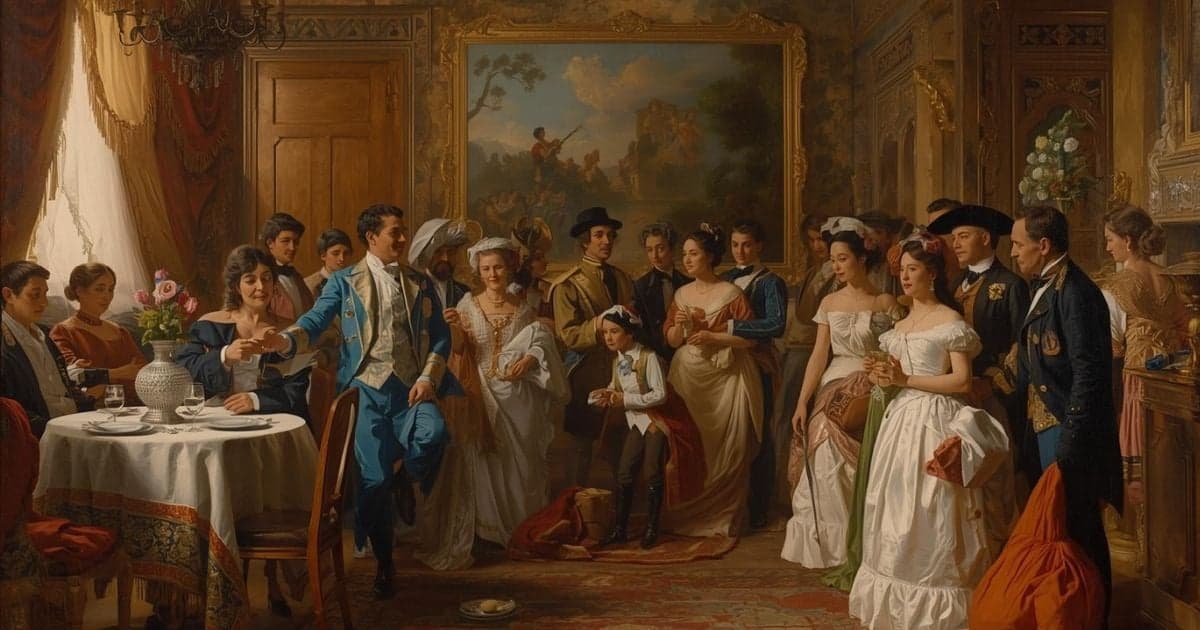
Monte Cristo interrupts only to sharpen detail: the H on the linen, the coronet, the exact hour at the plane-tree. He is not absolving sin; he is filing it. Each sentence Bertuccio speaks adds another line to a design that already includes Danglars, Morcerf, and the procureur who once buried his own child.

By dawn the steward's life reads like a counter-history of the novel itself: official justice refused, private blood spilled, an innocent pulled from earth, a wicked boy returned, and a priest's diamond placed in the hands of the innkeeper who once watched Dantès's wedding feast.

The Count has not moved from his chair, yet Paris has grown smaller because every crime now points to the same garden. He now knows why Bertuccio feared Auteuil, who Benedetto truly is, and how Busoni once stood in a courtroom before this night ever reached the Champs-Élysées. The vendetta that began in Nîmes will not end with Villefort's wound; it will end when every participant is positioned on the same board. For now he only needs the story complete before the blood on the inn stairs arrives in the next breath.

In this chapter: Terms Characters Key Quotes Themes Modern Story

Why This Matters

Connect literature to life

Skill: Tracing How Denied Justice Spreads

One refusal at the courthouse can branch into decades of private harm. Villefort will not prosecute Bertuccio's brother's killers, so Bertuccio swears vendetta, stabs Villefort, and raises the buried child into Benedetto. Follow each unattended injury to the next person who pays for it.

Coming Up in Chapter 45

Joannes will walk back into Caderousse's inn to count the diamond money one last time, and the loft where Bertuccio hides will become the witness box for a double murder.

Share it with friends

PreviousPrevious ChapterNextNext Chapter
Original text
8,332 wordscomplete

Chapter 44

The Vendetta

At what point shall I begin my story, your excellency?” asked Bertuccio. “Where you please,” returned Monte Cristo, “since I know nothing at all of it.” “I thought the Abbé Busoni had told your excellency.” “Some particulars, doubtless, but that is seven or eight years ago, and I have forgotten them.” “Then I can speak without fear of tiring your excellency.” “Go on, M. Bertuccio; you will supply the want of the evening papers.” “The story begins in 1815.” “Ah,” said Monte Cristo, “1815 is not yesterday.” “No, monsieur, and yet I recollect all things as clearly as if they…

Public-domain chapter text, formatted for reading.

Master this chapter. Complete your experience

Purchase the complete book to access all chapters and support classic literature

Buy at Powell'sBuy on Amazon

Available in paperback, hardcover, and e-book formats

Now let's explore the literary elements.

Key Quotes & Analysis

"1815 is not yesterday"

— Bertuccio

Context: Bertuccio rejects Villefort's claim that politics erased the crime

He refuses the official calendar that would make murder obsolete.

In Today's Words:

Bertuccio answers that 1815 is not yesterday when Villefort dismisses royalist killings. Power often dates harm into irrelevance. Do not accept a statute of convenience from the person who benefited from the harm. The pattern is not abstract. It appears whenever power, timing, and social ritual quietly decide what people treat as real.

"I declare the vendetta against you"

— Bertuccio

Context: After Villefort refuses to prosecute the brother's killers

Institutional failure converts grief into private war.

In Today's Words:

Bertuccio tells Villefort he declares the vendetta against him after justice is denied. When systems fail, people sometimes swear personal enforcement. Notice when that oath begins, because later violence will call it tradition. The pattern is not abstract. It appears whenever power, timing, and social ritual quietly decide what people treat as real.

"Edmond Dantès"

— Bertuccio

Context: Bertuccio recalls Abbé Busoni asking about the Marseilles sailor

The Count's buried name surfaces inside another man's confession.

In Today's Words:

Bertuccio repeats the name Edmond Dantès while describing Abbé Busoni's questions in the inn. A forgotten prisoner can sit at the center of many side stories. Track who asks about the missing person; they may already be shaping the return. The pattern is not abstract. It appears whenever power, timing, and social ritual quietly decide what people treat as real.

"Morbleu"

— Caderousse

Context: Caderousse reacts to the jeweller's offer for the diamond

Greed speaks before the murder that will follow the sale.

In Today's Words:

Caderousse swears Morbleu when the jeweller names a fortune for the diamond. Sudden wealth can scramble judgment faster than poverty did. Watch who starts counting before they start thinking. The pattern is not abstract. It appears whenever power, timing, and social ritual quietly decide what people treat as real.

Thematic Threads

Vendetta logic

In This Chapter

Bertuccio declares war on Villefort after lawful channels fail.

Development

Private justice immediately entangles an innocent infant.

In Your Life:

Cycles of retaliation often begin with a legitimate grievance and then outgrow any single target.

Rescue and ruin

In This Chapter

Bertuccio saves the baby from the hole; Assunta later weeps over Benedetto's cruelty.

Development

Mercy without structure becomes another tragedy.

In Your Life:

Saving someone once does not automatically teach them how to live afterward.

Disguised priests

In This Chapter

Abbé Busoni tests Caderousse with a diamond while Bertuccio watches.

Development

The same moral mask links Marseilles, Nîmes, and Beaucaire.

In Your Life:

Mentors who appear under different roles may be gathering evidence, not offering random charity.

You now have the context. Time to form your own thoughts.

Discussion Questions

This is not a test. Five prompts guide you through the chapter, from how it opens to how it closes, so you notice context and rhythm rather than facts to memorize. Sit with each question in your own words. When you see "One way to read it," treat it as a starting point, not the only answer.

  1. 1

    Villefort dismisses Bertuccio's plea for justice after royalists murder his Bonapartist brother in Nîmes. Why does that refusal turn grief into vendetta?

    ▶One way to read it

    One way to read it: the law closes its door while naming the dead man the enemy. Bertuccio leaves with a Corsican oath because the magistrate will not act as magistrate.

    analysis • surface
  2. 2

    Bertuccio stabs Villefort in the garden while the procureur buries a box, then discovers a living infant inside. How does one night's violence split into murder and rescue?

    ▶One way to read it

    One way to read it: he came for revenge and found a child already suffocated by another crime. Saving the boy does not erase the knife, but it changes what the night means.

    analysis • medium
  3. 3

    Assunta raises the abandoned child as Benedetto, who later denies Bertuccio is his father. What does that return suggest about guilt without restitution?

    ▶One way to read it

    One way to read it: Bertuccio saved a life but never restored the child to its mother. The boy grows wild, as if punishment outlasts the original act.

    application • medium
  4. 4

    Monte Cristo listens calmly while Bertuccio calls Villefort's office a place where justice died. When have you seen institutions fail someone who asked for help the right way?

    ▶One way to read it

    One way to read it: Bertuccio did everything a citizen should do and was mocked. Private vengeance begins where public duty stops.

    application • deep
  5. 5

    The count asks about the linen marked with an H and coronet while pretending to forget details. Why gather every thread of the Auteuil story before acting?

    ▶One way to read it

    One way to read it: he is not merely hearing a crime; he is indexing Villefort, Benedetto, and the buried box for later use. Memory becomes ammunition.

    reflection • deep

Critical Thinking Exercise

10 minutes

Design Your Strategic Reinvention

Think of a major setback or betrayal you've experienced (or imagine one). Map out how you could use strategic reinvention to transform that experience into power. What new identity, skills, or positioning would serve your goals? Don't focus on getting back at anyone - focus on becoming unstoppable.

Consider:

  • •What specific skills or knowledge would this new version of you need?
  • •How would this transformation change your relationship to power and opportunity?
  • •What's the difference between transforming for growth versus transforming for revenge?

Journaling Prompt

Write about a time when you had to rebuild yourself after something fell apart. What did you learn about your own capacity for reinvention? What would you do differently knowing what you know now?

Coming Up Next...

Chapter 45: The Rain of Blood

Joannes will walk back into Caderousse's inn to count the diamond money one last time, and the loft where Bertuccio hides will become the witness box for a double murder.

Continue to Chapter 45
Previous
The House at Auteuil
Contents
Next
The Rain of Blood
Keep exploring

Continue Exploring

Study guides, teaching tools, themes, and the full library.More ways to read The Count of Monte Cristo: study guides, teaching tools, and the wider library.

  • The Count of Monte Cristo Study Guide
  • Teaching Resources
  • Essential Life Index
  • Browse by Theme
  • All Books

Life-skill deep dives in The Count of Monte Cristo

  • Distinguishing Justice from RevengeExplore distinguishing justice from revenge through The Count of Monte Cristo by Alexandre Dumas. Timeless wisdom for modern life.
  • How Trauma Transforms IdentitySee how suffering creates new selves—Edmond Dantès dies in the Château d
  • Surviving Catastrophic BetrayalUnderstand how to endure when people you trusted destroy you—Dantès loses everything yet survives through will and learning, showing growth is...
  • Understanding Collateral DamageRecognize how revenge never limits itself to the guilty—watch how the Count
Moral Dilemmas & EthicsPower & CorruptionIdentity & Self-Discovery

You Might Also Like

Les Misérables: Essential Edition cover

Les Misérables: Essential Edition

Victor Hugo

Explores justice & fairness

Noli Me Tángere cover

Noli Me Tángere

José Rizal

Explores justice & fairness

A Tale of Two Cities cover

A Tale of Two Cities

Charles Dickens

Explores justice & fairness

Crime and Punishment cover

Crime and Punishment

Fyodor Dostoevsky

Explores suffering & resilience

Browse all 106+ books

Share This Chapter

Know someone who'd enjoy this? Spread the wisdom!

TwitterFacebookLinkedInEmail

Go further with Prestige

Unlock study guides and downloads, early access, and exclusive content — and support free access for everyone.

Subscribe to PrestigeCreate free account
Intelligence Amplifier
Intelligence Amplifier™Powering Wide Reads

Exploring human-AI collaboration through books, essays, and philosophical dialogues. Classic literature transformed into navigational maps for modern life.

2025 Books

→ The Amplified Human Spirit→ The Alarming Rise of Stupidity Amplified→ San Francisco: The AI Capital of the World
Visit intelligenceamplifier.org
hello@widereads.com

WideReads Originals

→ You Are Not Lost→ The Last Chapter First→ The Lit of Love→ Wealth and Poverty→ Wisdom for the Wounded
Arvintech
arvintechAmplify your Mind
Visit at arvintech.com

Navigate

  • Home
  • Library
  • Essential Life Index
  • How It Works
  • Subscribe
  • Account
  • About
  • Contact
  • Authors
  • Suggest a Book
  • Landings

Made For You

  • Trending
  • Students
  • Educators
  • Families
  • Readers
  • Literary Analysis
  • Finding Purpose
  • Letting Go
  • Recovering from a Breakup
  • Corruption
  • Gaslighting in the Classics

Newsletter

Weekly insights from the classics. Amplify Your Mind.

Legal

  • Privacy Policy
  • Terms of Service
  • Editorial Standards
  • Cookie Policy
  • Accessibility

Why Public Domain?

We focus on public domain classics because these timeless works belong to everyone. No paywalls, no restrictions—just wisdom that has stood the test of centuries, freely accessible to all readers.

Public domain books have shaped humanity's understanding of love, justice, ambition, and the human condition. By amplifying these works, we help preserve and share literature that truly belongs to the world.

A Pilgrimage

Powell's City of Books

Portland, Oregon

If you ever find yourself in Portland, walk to the corner of Burnside and 10th. The building takes up an entire city block. Inside is over a million books, new and used on the same shelf, organized by color-coded rooms with names like the Rose Room and the Pearl Room. You can lose an afternoon. You can lose a weekend. You will find a book you have been looking for your whole life, and three you did not know existed.

It is a pilgrimage. We cannot find a bookstore like it anywhere on earth. If you read the classics, and you ever get the chance, go. It belongs on every reader's bucket list.

Visit powells.com

We are not in any way affiliated with Powell's. We are just a very big fan.

© 2026 Wide Reads™. All Rights Reserved.

Intelligence Amplifier™ and Wide Reads™ are proprietary trademarks of Arvin Lioanag.

Copyright Protection: All original content, analyses, discussion questions, pedagogical frameworks, and methodology are protected by U.S. and international copyright law. Unauthorized reproduction, distribution, web scraping, or use for AI training is strictly prohibited. See our Copyright Notice for details.

Disclaimer: The information provided on this website is for general informational and educational purposes only and does not constitute professional, legal, financial, or technical advice. While we strive to ensure accuracy and relevance, we make no warranties regarding completeness, reliability, or suitability. Any reliance on such information is at your own risk. We are not liable for any losses or damages arising from use of this site. By using this site, you agree to these terms.