Chapter 07
Edward Arrives
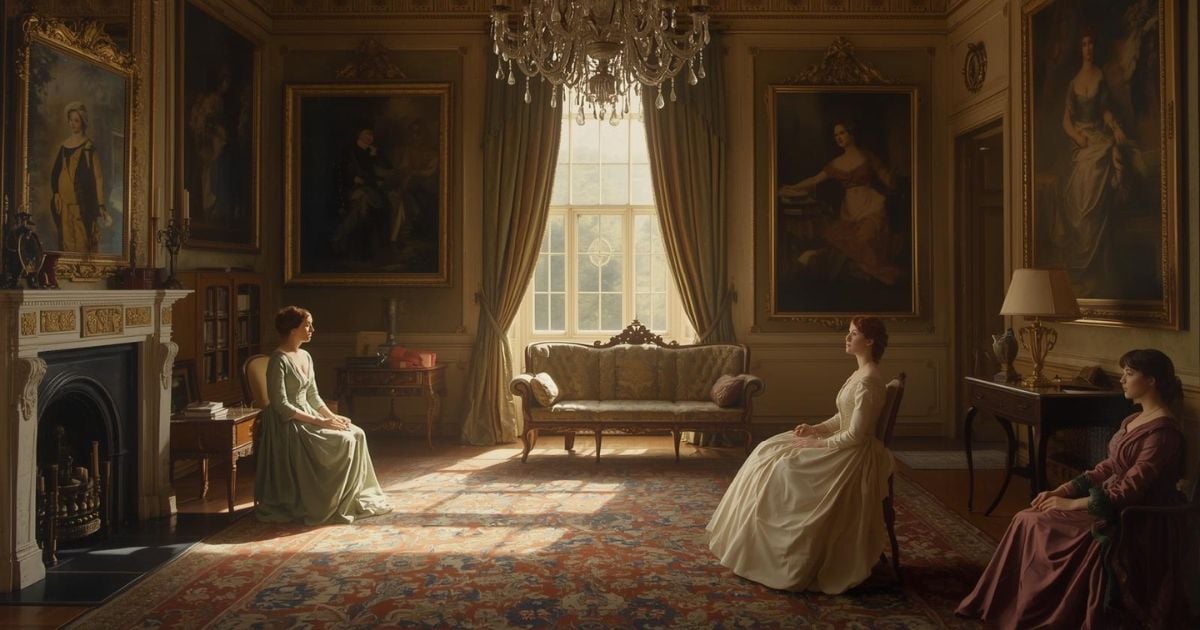
Barton Park was about half a mile from the cottage. The ladies had passed near it in their way along the valley, but it was screened from their view at home by the projection of a hill. The house was large and handsome; and the Middletons lived in a style of equal hospitality and elegance. The former was for Sir John’s gratification, the latter for that of his lady. They were scarcely ever without some friends staying with them in the house, and they kept more company of every kind than any other family in the neighbourhood. It was necessary…
Public-domain chapter text, formatted for reading.
Master this chapter. Complete your experience
Purchase the complete book to access all chapters and support classic literature
Available in paperback, hardcover, and e-book formats
Now let's explore the literary elements.
Key Quotes & Analysis
"Barton Park was about half a mile from the cottage."
Context: From the opening of the chapter
This line anchors the scene's pressure and shows how inheritance, charm, or family politics can reshape what people owe one another.
In Today's Words:
In plain terms, the passage says: Barton Park was about half a mile from the cottage. Readers still recognize the same dynamic when money anxiety or social rank quietly overrides a promise that once sounded binding. The same pressure appears today when a family promise shrinks under a partner's influence, or when someone with power
"The ladies had passed near it in their way along the valley, but it was screened from their view at home by the projection of a hill."
Context: From the opening of the chapter
This line anchors the scene's pressure and shows how inheritance, charm, or family politics can reshape what people owe one another.
In Today's Words:
In plain terms, the passage says: The ladies had passed near it in their way along the valley, but it was screened from their view at home by the projection of a hill. Readers still recognize the same dynamic when money anxiety or social rank quietly overrides a promise that once sounded binding.
"The house was large and handsome; and the Middletons lived in a style of equal hospitality and elegance."
Context: From the opening of the chapter
This line anchors the scene's pressure and shows how inheritance, charm, or family politics can reshape what people owe one another.
In Today's Words:
In plain terms, the passage says: The house was large and handsome; and the Middletons lived in a style of equal hospitality and elegance. Readers still recognize the same dynamic when money anxiety or social rank quietly overrides a promise that once sounded binding. The same pressure appears today when a family promise shrinks under
"The former was for Sir John’s gratification, the latter for that of his lady."
Context: From the opening of the chapter
This line anchors the scene's pressure and shows how inheritance, charm, or family politics can reshape what people owe one another.
In Today's Words:
In plain terms, the passage says: The former was for Sir John’s gratification, the latter for that of his lady. Readers still recognize the same dynamic when money anxiety or social rank quietly overrides a promise that once sounded binding. The same pressure appears today when a family promise shrinks under a partner's influence, or
Thematic Threads
Adaptation
In This Chapter
Each Dashwood woman develops different coping strategies for their reduced circumstances, Elinor through practical management, Marianne through emotional release
Development
Building from earlier displacement themes, now showing how adaptation actually works in practice
In Your Life:
You might recognize this when family members handle the same crisis completely differently, causing tension instead of mutual support.
Community
In This Chapter
Sir John's persistent hospitality represents how genuine community support appears during transitions, sometimes overwhelming but ultimately healing
Development
Introduced here as counterpoint to earlier isolation and loss
In Your Life:
This appears when neighbors, coworkers, or acquaintances step up during your crisis in ways that surprise you.
Class Mobility
In This Chapter
The cottage represents downward mobility handled with dignity, smaller space, less status, but still a home they can shape
Development
Continuing from Norland loss, now showing practical reality of reduced circumstances
In Your Life:
You see this when financial setbacks force lifestyle changes that initially feel like failure but create unexpected opportunities.
Emotional Processing
In This Chapter
Marianne's solitary walks show how some people need physical movement and solitude to work through major life changes
Development
Developing her established pattern of intense emotional response, now channeled into healthy outlets
In Your Life:
This might be your tendency to need alone time after big changes, even when others want to help or socialize.
Social Expectations
In This Chapter
The tension between accepting Sir John's hospitality and maintaining privacy shows the delicate balance of social obligations during vulnerable times
Development
Building on earlier themes of proper behavior, now complicated by genuine need and gratitude
In Your Life:
You experience this when people offer help during tough times, but accepting feels like admitting failure or losing independence.
You now have the context. Time to form your own thoughts.
Discussion Questions
This is not a test. Five prompts guide you through the chapter, from how it opens to how it closes, so you notice context and rhythm rather than facts to memorize. Sit with each question in your own words. When you see "One way to read it," treat it as a starting point, not the only answer.
- 1
How does Austen introduce the Middletons' lifestyle through their contrasting but equally limited interests?
analysis • surfaceOne way to read it
Sir John hunts and collects young people for noise, Lady Middleton focuses on elegant tables and spoiling children. Both lack talent and taste, filling emptiness with constant social activity.
- 2
What does Mrs. Jennings's immediate teasing about lovers reveal about the social pressures facing the Dashwood sisters?
analysis • mediumOne way to read it
Her jokes about hearts left in Sussex and watching for blushes show how unmarried women become public entertainment, their romantic prospects fair game for vulgar speculation.
- 3
When have you felt judged by a group's shallow standards, like Marianne facing the dinner party's musical tastes?
application • mediumOne way to read it
Like facing coworkers who only appreciate popular entertainment, or family members who dismiss your interests. The pressure to perform for people who don't truly listen creates isolation.
- 4
Why does Marianne respect Colonel Brandon's restrained response to her music more than the others' loud praise?
application • deepOne way to read it
His quiet attention shows genuine listening versus performative applause. She values authentic engagement over empty flattery, even if it means less dramatic appreciation of her talents.
- 5
What does this evening teach about finding your place in a community that doesn't share your values?
reflection • deepOne way to read it
Sometimes you must navigate shallow social circles while protecting your authentic self. Look for the few who offer genuine attention, even if they seem unlikely allies at first.
Critical Thinking Exercise
Map Your Rebuilding Style
Think of a time when you faced a major life change - job loss, move, breakup, health crisis, or family shift. Write down how you handled the first month. Did you jump into action like Elinor, seek solitude like Marianne, or find balance like their mother? Now identify someone in your life going through change right now and consider how their style differs from yours.
Consider:
- •Different rebuilding styles aren't better or worse - they're just different paths
- •Your style might change depending on the type of crisis you're facing
- •Recognizing others' styles helps you offer the right kind of support
Journaling Prompt
Write about a time when someone offered you help during a difficult transition. What made their support effective or ineffective? How can you be a better 'Sir John' to someone in your life right now?
Coming Up Next...
Chapter 8: Edward's Secret
Sir John's relentless social invitations are about to pay off in ways the Dashwood women don't expect. New faces will soon enter their quiet world, bringing both opportunity and complication to their peaceful cottage life..