Chapter 31
The Palmers
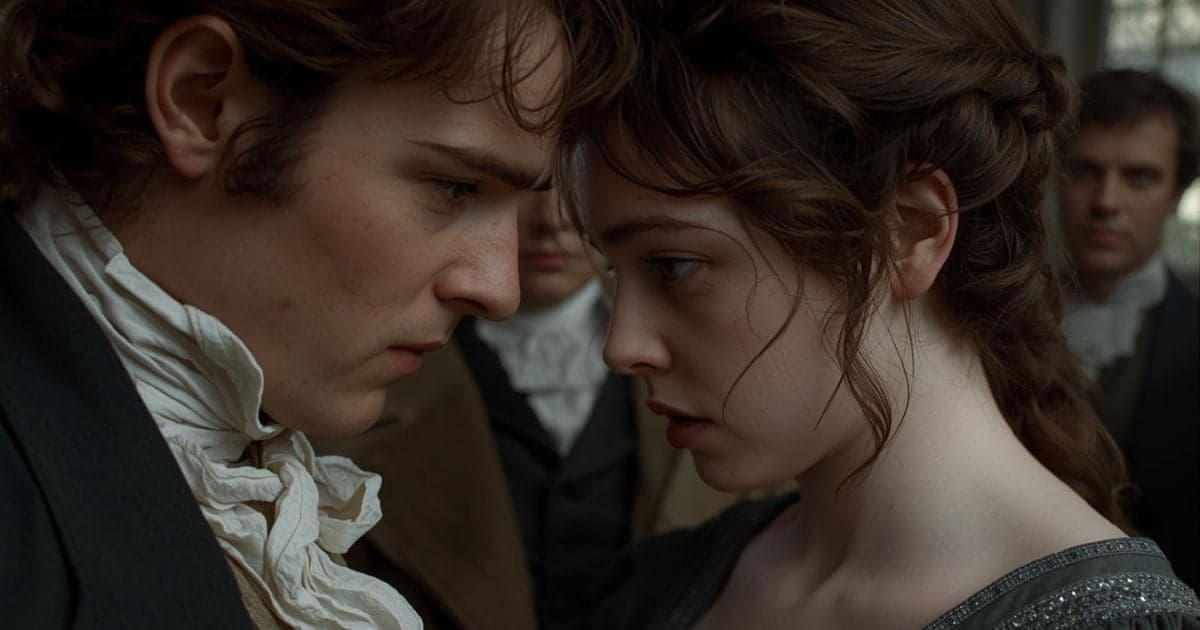
From a night of more sleep than she had expected, Marianne awoke the next morning to the same consciousness of misery in which she had closed her eyes. Elinor encouraged her as much as possible to talk of what she felt; and before breakfast was ready, they had gone through the subject again and again; and with the same steady conviction and affectionate counsel on Elinor’s side, the same impetuous feelings and varying opinions on Marianne’s, as before. Sometimes she could believe Willoughby to be as unfortunate and as innocent as herself, and at others, lost every consolation in the…
Public-domain chapter text, formatted for reading.
Master this chapter. Complete your experience
Purchase the complete book to access all chapters and support classic literature
Available in paperback, hardcover, and e-book formats
Now let's explore the literary elements.
Key Quotes & Analysis
"From a night of more sleep than she had expected, Marianne awoke the next morning to the same consciousness of misery in which she had closed her eyes."
Context: From the opening of the chapter
This line anchors the scene's pressure and shows how inheritance, charm, or family politics can reshape what people owe one another.
In Today's Words:
In plain terms, the passage says: From a night of more sleep than she had expected, Marianne awoke the next morning to the same consciousness of misery in which she had close Readers still recognize the same dynamic when money anxiety or social rank quietly overrides a promise that once sounded binding.
"Elinor’s side, the same impetuous feelings and varying opinions on Marianne’s, as before."
Context: From the opening of the chapter
This line anchors the scene's pressure and shows how inheritance, charm, or family politics can reshape what people owe one another.
In Today's Words:
In plain terms, the passage says: Elinor’s side, the same impetuous feelings and varying opinions on Marianne’s, as before. Readers still recognize the same dynamic when money anxiety or social rank quietly overrides a promise that once sounded binding. The same pressure appears today when a family promise shrinks under a partner's influence, or when
"Sometimes she could believe Willoughby to be as unfortunate and as innocent as herself, and at others, lost every consolation in the impossibility of acquitting him."
Context: From the opening of the chapter
This line anchors the scene's pressure and shows how inheritance, charm, or family politics can reshape what people owe one another.
In Today's Words:
In plain terms, the passage says: Sometimes she could believe Willoughby to be as unfortunate and as innocent as herself, and at others, lost every consolation in the impossi Readers still recognize the same dynamic when money anxiety or social rank quietly overrides a promise that once sounded binding.
"At one moment she was absolutely indifferent to the observation of all the world, at another she would seclude herself from it for ever, and at a third could resist it with energy."
Context: From the opening of the chapter
This line anchors the scene's pressure and shows how inheritance, charm, or family politics can reshape what people owe one another.
In Today's Words:
In plain terms, the passage says: At one moment she was absolutely indifferent to the observation of all the world, at another she would seclude herself from it for ever, and Readers still recognize the same dynamic when money anxiety or social rank quietly overrides a promise that once sounded binding.
Thematic Threads
Social Expectations
In This Chapter
Edward feels trapped by society's definition of honor and promise-keeping, even when it causes widespread suffering
Development
Evolved from earlier chapters showing how social rules constrain the Dashwood women's choices
In Your Life:
You might feel pressured to stay in situations that harm you because others expect you to 'stick it out' or 'honor your commitments'
Personal Growth
In This Chapter
Edward recognizes he was 'young and foolish' when he got engaged but feels unable to act on this wisdom
Development
Builds on Marianne's journey of learning from her mistakes with Willoughby
In Your Life:
You might struggle to change course even when you know you've outgrown old decisions or relationships
Identity
In This Chapter
Edward's identity is so tied to being 'honorable' that he can't imagine breaking his word without losing himself
Development
Continues the theme of characters defining themselves through social roles rather than authentic desires
In Your Life:
You might stay stuck in patterns because changing would challenge how you see yourself or how others see you
Human Relationships
In This Chapter
Elinor prioritizes Edward's wellbeing over her own pain, showing love through problem-solving rather than possession
Development
Contrasts with earlier examples of selfish love from characters like Willoughby and Lucy
In Your Life:
You might recognize the difference between love that seeks to possess and love that seeks the other person's genuine happiness
You now have the context. Time to form your own thoughts.
Discussion Questions
This is not a test. Five prompts guide you through the chapter, from how it opens to how it closes, so you notice context and rhythm rather than facts to memorize. Sit with each question in your own words. When you see "One way to read it," treat it as a starting point, not the only answer.
- 1
How does Marianne's emotional state fluctuate when she wakes up, and what does this reveal about her processing of heartbreak?
analysis • surfaceOne way to read it
Marianne oscillates between believing Willoughby innocent and condemning him, showing heartbreak's chaotic nature. Her emotions swing from indifference to isolation to defiance, revealing how grief resists linear processing.
- 2
Why does Marianne react so harshly to Mrs. Jennings bringing the letter, and how does this misunderstanding escalate?
analysis • mediumOne way to read it
Marianne imagines the letter is from Willoughby with explanations and reconciliation. When it's from her mother instead, the crushing disappointment makes her blame Mrs. Jennings for cruelty, though the gesture was kind.
- 3
How might someone today experience Marianne's reaction to receiving an unexpected message during emotional crisis?
application • mediumOne way to read it
Like hoping a text notification is from an ex-partner apologizing, only to find it's from family. The false hope followed by disappointment can feel more painful than no contact at all.
- 4
What difficult choice does Colonel Brandon face in deciding whether to reveal Willoughby's past, and what motivates him?
application • deepOne way to read it
Brandon must choose between respecting privacy and preventing further harm to Marianne. His love for her and knowledge of Willoughby's pattern of abandoning vulnerable women compels him to share painful truth.
- 5
What does Brandon's story about Eliza suggest about how past trauma can drive present protective instincts?
reflection • deepOne way to read it
Brandon's inability to save his first love from a destructive marriage and abandonment drives his determination to protect Marianne. Past helplessness can transform into fierce advocacy for others facing similar threats.
Critical Thinking Exercise
Break Down the Honor Trap
Think of a situation where you or someone you know stayed committed to something that was making everyone miserable because it felt like the 'right' thing to do. Write down what the original promise was, what changed since then, who gets hurt by keeping it, and who would benefit if it were broken. Then identify what fear or belief keeps the person trapped.
Consider:
- •Consider whether the person who made the promise had full information when they made it
- •Think about whether the other person would actually want them to stay trapped
- •Look for whether 'honor' is being used to avoid a difficult conversation or decision
Journaling Prompt
Write about a time when you stayed in a situation longer than you should have because you thought leaving would make you a 'bad person.' What were you really afraid of, and what would you tell your past self now?
Coming Up Next...
Chapter 32: Willoughby's Letter
Mrs. Jennings returns with shocking news that will turn Edward's impossible situation completely upside down. Sometimes the solution to an unsolvable problem comes from the most unexpected source. The opening of XXXII. will tighten the family's position faster than anyone at Norland expected, and the next scene will test whether good intentions survive polite pressure..