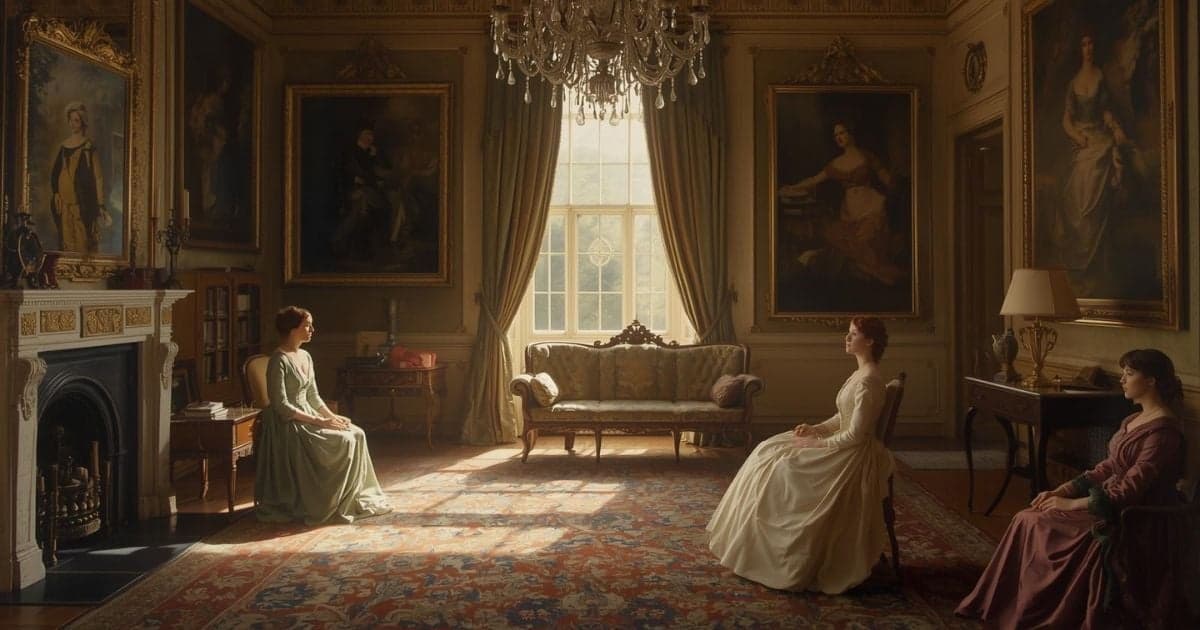
Chapter 10
A Growing Attachment
Marianne’s preserver, as Margaret, with more elegance than precision, styled Willoughby, called at the cottage early the next morning to make his personal enquiries. He was received by Mrs. Dashwood with more than politeness; with a kindness which Sir John’s account of him and her own gratitude prompted; and every thing that passed during the visit tended to assure him of the sense, elegance, mutual affection, and domestic comfort of the family to whom accident had now introduced him. Of their personal charms he had not required a second interview to be convinced. Miss Dashwood had a delicate complexion, regular…
Public-domain chapter text, formatted for reading.
Master this chapter. Complete your experience
Purchase the complete book to access all chapters and support classic literature
Available in paperback, hardcover, and e-book formats
Now let's explore the literary elements.
Key Quotes & Analysis
"The same books, the same passages were idolized by each—or if any difference appeared, any objection arose, it lasted no longer than till the force of her arguments and the brightness of her eyes could be displayed."
Context: Describing how Marianne and Willoughby seem to agree on everything, especially literature and poetry
This reveals how Marianne is so swept up in romance that she doesn't notice Willoughby might be telling her what she wants to hear. The phrase about her 'bright eyes' suggests he's charmed by her passion rather than genuinely sharing her views.
In Today's Words:
They agreed on everything, and when they didn't, he'd let her convince him because he was enchanted by how passionate she got about things. The same pressure appears today when a family promise shrinks under a partner's influence, or when someone with power keeps sounding reasonable while doing less and less for the people who
"Marianne began now to perceive that the desperation which had seized her at sixteen and a half, of ever seeing a man who could satisfy her ideas of perfection, had been rash and unjustifiable."
Context: After meeting Willoughby, Marianne thinks she's found her perfect match
This shows Marianne's all-or-nothing thinking - she went from believing no perfect man existed to being certain she'd found him. The irony is that she's still being 'rash' by falling so completely for someone she barely knows.
In Today's Words:
Marianne realized she'd been wrong to think at sixteen that she'd never find the perfect guy - clearly she'd found him now. The same pressure appears today when a family promise shrinks under a partner's influence, or when someone with power keeps sounding reasonable while doing less and less for the people who depend on
"Marianne’s preserver, as Margaret, with more elegance than precision, styled Willoughby, called at the cottage early the next morning to make his personal enquiries."
Context: From the opening of the chapter
This line anchors the scene's pressure and shows how inheritance, charm, or family politics can reshape what people owe one another.
In Today's Words:
In plain terms, the passage says: Marianne’s preserver, as Margaret, with more elegance than precision, styled Willoughby, called at the cottage early the next morning to mak Readers still recognize the same dynamic when money anxiety or social rank quietly overrides a promise that once sounded binding.
"Of their personal charms he had not required a second interview to be convinced."
Context: From the opening of the chapter
This line anchors the scene's pressure and shows how inheritance, charm, or family politics can reshape what people owe one another.
In Today's Words:
In plain terms, the passage says: Of their personal charms he had not required a second interview to be convinced. Readers still recognize the same dynamic when money anxiety or social rank quietly overrides a promise that once sounded binding. The same pressure appears today when a family promise shrinks under a partner's influence, or
Thematic Threads
Emotional Intensity
In This Chapter
Marianne mistakes the rush of being rescued and the daily intensity of shared passions for true love
Development
Building on her earlier emotional extremes, now focused on romantic feelings
In Your Life:
You might confuse drama and intensity for deep connection in your own relationships
Social Expectations
In This Chapter
Elinor worries that Marianne is ignoring proper courtship conventions in her enthusiasm
Development
Continuing tension between following social rules versus following your heart
In Your Life:
You face pressure to follow unwritten rules about how relationships should progress
Fantasy vs Reality
In This Chapter
Marianne's rescue feels like her beloved novels come to life, making her blind to potential red flags
Development
Her romantic idealism now has a specific target in Willoughby
In Your Life:
You might project your ideal relationship onto someone new instead of seeing who they really are
Sisterly Concern
In This Chapter
Elinor watches Marianne's whirlwind romance with growing worry about potential heartbreak
Development
Deepening the contrast between their approaches to love and life
In Your Life:
You might worry about a loved one making impulsive romantic decisions while feeling powerless to intervene
Identity Through Romance
In This Chapter
Marianne defines herself through her passionate connection with Willoughby, losing her individual identity
Development
New theme showing how romantic love can consume personal identity
In Your Life:
You might lose yourself in a new relationship, making your partner's interests and opinions your own
You now have the context. Time to form your own thoughts.
Discussion Questions
This is not a test. Five prompts guide you through the chapter, from how it opens to how it closes, so you notice context and rhythm rather than facts to memorize. Sit with each question in your own words. When you see "One way to read it," treat it as a starting point, not the only answer.
- 1
What does Willoughby's immediate agreement with all of Marianne's literary opinions reveal about their early courtship dynamic?
analysis • surfaceOne way to read it
Willoughby becomes 'an immediate convert' to whatever books Marianne praises, suggesting he prioritizes winning her approval over expressing genuine opinions.
- 2
How does Elinor's teasing about Marianne exhausting 'every subject for discourse' highlight a problem with instant intimacy?
analysis • mediumOne way to read it
Elinor warns that rushing through all important topics in one visit leaves no foundation for sustained relationship building over time.
- 3
When have you seen someone mirror another person's interests completely to win approval, like Willoughby does with Marianne's book preferences?
application • mediumOne way to read it
This mirrors modern dating apps or early relationships where someone adopts their crush's music taste or hobbies without genuine interest, prioritizing connection over authenticity.
- 4
What choice does Elinor face when she sees Colonel Brandon being dismissed while Willoughby charms everyone, and why is this position difficult?
application • deepOne way to read it
Elinor must choose between supporting her sister's happiness or defending an overlooked good man, knowing that opposing Marianne's romance could damage their relationship.
- 5
What does Marianne's belief that Willoughby satisfies 'her ideas of perfection' suggest about the danger of finding exactly what you think you want?
reflection • deepOne way to read it
Getting exactly what we think we want can blind us to red flags, as Marianne's joy prevents her from noticing Willoughby's concerning traits that Elinor observes.
Critical Thinking Exercise
Rewrite the Meet-Cute
Take Marianne and Willoughby's dramatic first meeting and rewrite it as a modern scenario. Maybe she's stranded with a dead car battery, or he helps her when she drops groceries in a parking lot. Then analyze: what makes this type of meeting feel so romantic, and what red flags might be hidden in the rescue dynamic?
Consider:
- •How does being vulnerable change the power balance in a first meeting?
- •What do we actually learn about someone's character when they help us in a crisis?
- •How might the 'rescued' person feel obligated to the rescuer?
Journaling Prompt
Write about a time when someone 'rescued' you or you rescued someone else. Looking back, how did that dramatic beginning affect the relationship that followed? What did you learn about the difference between crisis chemistry and real compatibility?
Coming Up Next...
Chapter 11: Willoughby's Departure
Willoughby's daily visits become the highlight of Marianne's existence, but their growing intimacy starts raising eyebrows in the neighborhood. Meanwhile, Elinor faces her own romantic complications that she's trying desperately to hide. The opening of XI. will tighten the family's position faster than anyone at Norland expected, and the next scene will test whether good intentions survive polite pressure.