Wide Reads
Literature MattersLife IndexEducators
Sign in
Where to Begin

The Dance of Social Navigation — Northanger Abbey

Northanger Abbey - The Dance of Social Navigation

Jane Austen

Northanger Abbey

The Dance of Social Navigation

Home›Books›Northanger Abbey›Chapter 10: The Dance of Social Navigation
Previous
10 of 31
Next

Analysis by the Wide Reads editorial team·Reviewed against the source text·Updated December 5, 2025

Summary

The Dance of Social Navigation

Northanger Abbey by Jane Austen

0:000:00
Listen to Next Chapter

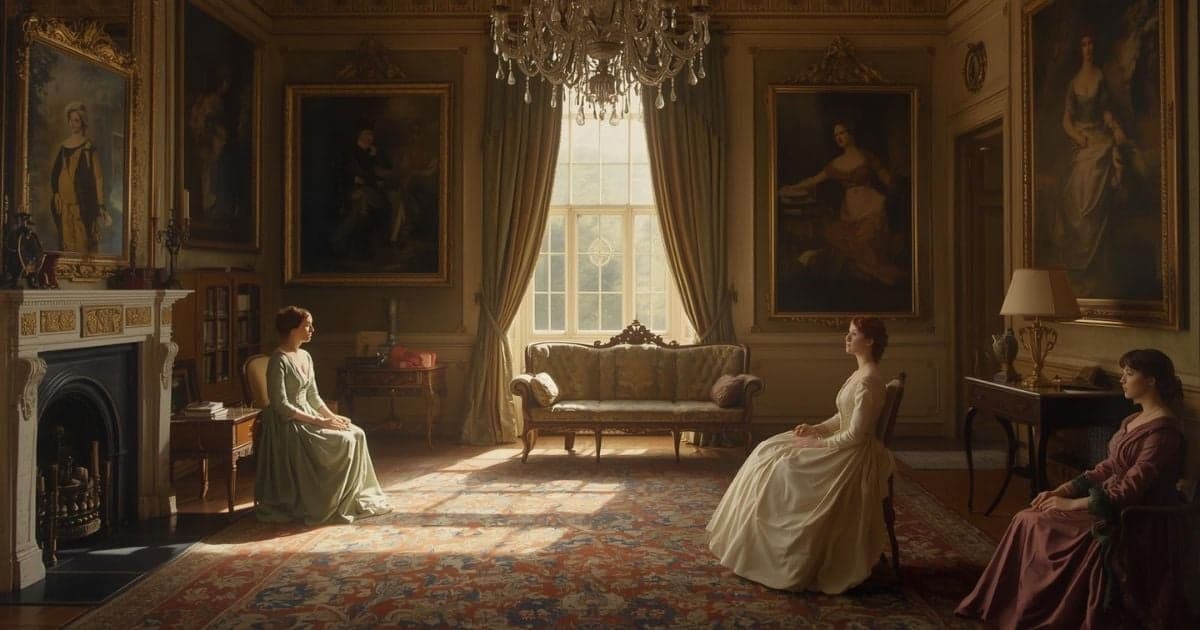
Catherine finds herself caught between two very different social dynamics at the theater and ball. Isabella dominates their conversation with dramatic declarations and self-centered chatter, barely letting Catherine speak while claiming intimate friendship. Meanwhile, Catherine successfully connects with Eleanor Tilney through genuine, reciprocal conversation that feels natural rather than performed. At the cotillion ball, Catherine faces a classic social dilemma: avoiding the pushy John Thorpe while hoping to dance with Henry Tilney.

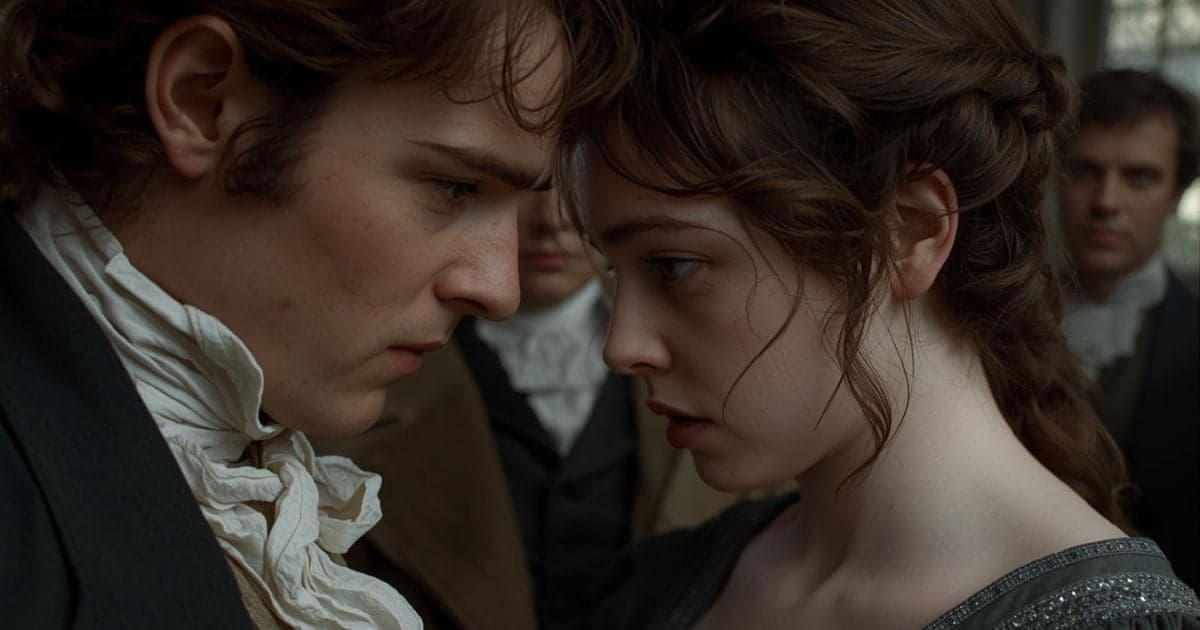
When Henry does ask her to dance, their conversation reveals his wit and intelligence as he playfully compares dancing to marriage, arguing both require fidelity, mutual effort, and exclusive attention during the commitment. Catherine's honest responses about preferring Bath to country life amuse Henry, who appreciates her fresh perspective. The evening ends with Catherine meeting Henry's father, General Tilney, and making plans for a country walk with the Tilney siblings.

This chapter shows Catherine learning to distinguish between superficial social performance and authentic connection. Isabella's friendship feels exhausting and one-sided, while her interactions with the Tilneys feel energizing and reciprocal. Catherine is developing better instincts about who deserves her time and attention, moving away from people who drain her energy toward those who engage with her as an equal.

In this chapter: Terms Characters Key Quotes Themes Modern Story

Why This Matters

Connect literature to life

Skill: Auditing Social Energy

Some people exhaust you with performance while others leave you clearer and more yourself. Isabella monologues at the theatre while Henry and Eleanor converse with Catherine as an equal at the ball. After each interaction, ask whether you feel drained or enlivened and allocate time accordingly.

Coming Up in Chapter 11

Catherine eagerly awaits her planned walk with the Tilneys, but the morning brings uncertain weather that threatens her plans. Will the outing happen, or will circumstances beyond her control interfere with this promising new friendship?


Share it with friends

PreviousPrevious ChapterNextNext Chapter
Original text
3,916 wordscomplete

Chapter 10

The Dance of Social Navigation

The Allens, Thorpes, and Morlands all met in the evening at the theatre; and, as Catherine and Isabella sat together, there was then an opportunity for the latter to utter some few of the many thousand things which had been collecting within her for communication in the immeasurable length of time which had divided them. “Oh, heavens! my beloved Catherine, have I got you at last?” was her address on Catherine’s entering the box and sitting by her. “Now, Mr. Morland,” for he was close to her on the other side, “I shall not speak another word to you all…

Public-domain chapter text, formatted for reading.

Master this chapter. Complete your experience

Purchase the complete book to access all chapters and support classic literature

Buy at Powell'sBuy on Amazon

Available in paperback, hardcover, and e-book formats

Now let's explore the literary elements.

Key Quotes & Analysis

"Oh, heavens! my beloved Catherine, have I got you at last?"

— Isabella Thorpe

Context: Isabella greets Catherine at the theatre after brief separation

The hyperbolic language treats Catherine as an audience for drama rather than an equal participant.

In Today's Words:

Isabella acts like they have been apart for years though the separation was short. Performative intimacy can feel flattering while giving you no room to speak. Notice who monologues about closeness instead of making space for you. The same pressure appears today when people perform a version of themselves that looks impressive on paper but drains the energy

"I consider a country-dance as an emblem of marriage. Fidelity and complaisance are the principal duties of both;"

— Henry Tilney

Context: Henry talks with Catherine while they dance at the cotillion ball

Henry uses wit to explore commitment, attention, and mutual obligation without lecturing.

In Today's Words:

Henry jokingly compares dancing to marriage because both require loyalty and effort for the time you are partnered. Playful metaphors can test whether someone listens and thinks with you. Good conversation feels collaborative, not like a performance you only applaud. The same pressure appears today when people perform a version of themselves that looks impressive on paper but

"Only go and call on Mrs. Allen! he repeated."

— Henry Tilney

Context: Henry teases Catherine about her limited country social life

His teasing is sharp but attentive; he responds to her actual words rather than flattery scripts.

In Today's Words:

Henry mocks how small Catherine's country social world sounds when she says she mostly visits Mrs Allen. He pays attention to what she said and pushes it further with humor. That is different from someone who only talks about themselves. The same pressure appears today when people perform a version of themselves that looks impressive on paper but

"It is General Tilney, my father."

— Henry Tilney

Context: Henry introduces his father after Catherine notices the general watching her

The introduction expands Catherine's sense of the Tilney family and raises the social stakes of the connection.

In Today's Words:

Henry tells Catherine the imposing man watching them is his father, General Tilney. New relationships often come with family contexts that change how public attention feels. Notice who introduces you thoughtfully versus who hides context. The same pressure appears today when people perform a version of themselves that looks impressive on paper but drains the energy needed for

Thematic Threads

Authentic Connection

In This Chapter

Catherine experiences the stark difference between Isabella's performative friendship and Eleanor's genuine engagement

Development

Building from earlier chapters where Catherine was impressed by superficial charm

In Your Life:

Notice the difference between people who make you feel heard versus those who make you feel like an audience.

Social Performance

In This Chapter

Isabella dominates conversations with dramatic declarations while barely listening to Catherine's responses

Development

Escalating from her earlier attention-seeking behaviors

In Your Life:

Watch for people who turn every conversation into their personal stage show.

Class Dynamics

In This Chapter

Henry's father, General Tilney, represents a higher social tier that Catherine must now navigate carefully

Development

Introduced here as Catherine moves into more elevated social circles

In Your Life:

Every workplace and community has unspoken hierarchies that affect how you're treated.

Personal Growth

In This Chapter

Catherine develops better instincts about who deserves her time and emotional investment

Development

Continuing her journey from naive acceptance to discerning judgment

In Your Life:

Learning to trust your gut about people is a skill that improves with practice and attention.

Reciprocity

In This Chapter

Henry's conversation about dancing and marriage emphasizes mutual effort and exclusive attention during commitment

Development

Introduced here as a framework for understanding healthy relationships

In Your Life:

Healthy relationships require both people to show up fully and consistently.

You now have the context. Time to form your own thoughts.

Discussion Questions

This is not a test. Five prompts guide you through the chapter, from how it opens to how it closes, so you notice context and rhythm rather than facts to memorize. Sit with each question in your own words. When you see "One way to read it," treat it as a starting point, not the only answer.

  1. 1

    How does Isabella behave at the theatre compared with Eleanor Tilney at the pump-room?

    ▶One way to read it

    Isabella dominates and performs; Eleanor converses with civility and balance, making Catherine feel included rather than used.

    analysis • surface
  2. 2

    Why does Henry compare country-dancing to marriage?

    ▶One way to read it

    He playfully argues that both require temporary exclusive attention and mutual effort, teasing Catherine while testing whether she will think with him.

    analysis • medium
  3. 3

    When have you avoided someone pushy and felt relieved when a better invitation arrived?

    ▶One way to read it

    Answers should describe dodging unwanted attention at events or online and the relief of a chosen alternative.

    application • medium
  4. 4

    What makes Catherine's conversation with Henry different from her talks with John Thorpe?

    ▶One way to read it

    Henry listens, responds to her actual statements, and invites thought; Thorpe monologues, contradicts, and pressures.

    application • deep
  5. 5

    Why does planning a walk with the Tilneys matter to Catherine's development?

    ▶One way to read it

    It shows her choosing reciprocal friendship and honest company over Thorpe obligation and Isabella's one-sided drama.

    reflection • deep

Critical Thinking Exercise

10 minutes

Conduct Your Own Energy Audit

Make two lists: people in your life who consistently leave you feeling energized versus those who leave you drained. For each person, write one sentence describing how they typically interact with you. Look for patterns in conversation style, listening habits, and whether they show genuine interest in your thoughts and experiences.

Consider:

  • •Notice who asks follow-up questions about your life versus who redirects conversations back to themselves
  • •Pay attention to how you feel during and after interactions, not just what people say
  • •Consider whether someone's need for attention or drama consistently overshadows your own needs

Journaling Prompt

Write about a relationship that has shifted from energizing to draining, or vice versa. What changed in how that person interacted with you, and how did you respond to that change?

Coming Up Next...

Chapter 11: Weather, Lies, and Missed Connections

Catherine eagerly awaits her planned walk with the Tilneys, but the morning brings uncertain weather that threatens her plans. Will the outing happen, or will circumstances beyond her control interfere with this promising new friendship?
Continue to Chapter 11
Previous
A Drive with Thorpe
Contents
Next
Weather, Lies, and Missed Connections
Keep exploring

Continue Exploring

Study guides, teaching tools, themes, and the full library.More ways to read Northanger Abbey: study guides, teaching tools, and the wider library.

  • Northanger Abbey Study Guide
  • Teaching Resources
  • Essential Life Index
  • Browse by Theme
  • All Books

Life-skill deep dives in Northanger Abbey

  • Building Critical ThinkingLearn how Catherine Morland develops the ability to question her assumptions, test her theories against evidence, and think clearly about...
  • Navigating Friendship DynamicsLearn how Catherine Morland distinguishes authentic friendship from social performance, managing the complexities of loyalty, boundaries, and...
  • Reading People AccuratelyExplore how Catherine Morland learns to distinguish genuine character from performance—recognizing who
  • Separating Fiction from RealityExplore the key chapters in Northanger Abbey that teach us how to distinguish between romantic narratives and real life—learning when our stories...
Love & RelationshipsSocial Class & StatusIdentity & Self-Discovery

You Might Also Like

Emma cover

Emma

Jane Austen

Also by Jane Austen

Persuasion cover

Persuasion

Jane Austen

Also by Jane Austen

Pride and Prejudice cover

Pride and Prejudice

Jane Austen

Also by Jane Austen

Sense and Sensibility cover

Sense and Sensibility

Jane Austen

Also by Jane Austen

Browse all 106+ books

Share This Chapter

Know someone who'd enjoy this? Spread the wisdom!

TwitterFacebookLinkedInEmail

Go further with Prestige

Unlock study guides and downloads, early access, and exclusive content — and support free access for everyone.

Subscribe to PrestigeCreate free account
Intelligence Amplifier
Intelligence Amplifier™Powering Wide Reads

Exploring human-AI collaboration through books, essays, and philosophical dialogues. Classic literature transformed into navigational maps for modern life.

2025 Books

→ The Amplified Human Spirit→ The Alarming Rise of Stupidity Amplified→ San Francisco: The AI Capital of the World
Visit intelligenceamplifier.org
hello@widereads.com

WideReads Originals

→ You Are Not Lost→ The Last Chapter First→ The Lit of Love→ Wealth and Poverty→ Wisdom for the Wounded
Arvintech
arvintechAmplify your Mind
Visit at arvintech.com

Navigate

  • Home
  • Library
  • Essential Life Index
  • How It Works
  • Subscribe
  • Account
  • About
  • Contact
  • Authors
  • Suggest a Book
  • Landings

Made For You

  • Trending
  • Students
  • Educators
  • Families
  • Readers
  • Literary Analysis
  • Finding Purpose
  • Letting Go
  • Recovering from a Breakup
  • Corruption
  • Gaslighting in the Classics

Newsletter

Weekly insights from the classics. Amplify Your Mind.

Legal

  • Privacy Policy
  • Terms of Service
  • Editorial Standards
  • Cookie Policy
  • Accessibility

Why Public Domain?

We focus on public domain classics because these timeless works belong to everyone. No paywalls, no restrictions—just wisdom that has stood the test of centuries, freely accessible to all readers.

Public domain books have shaped humanity's understanding of love, justice, ambition, and the human condition. By amplifying these works, we help preserve and share literature that truly belongs to the world.

A Pilgrimage

Powell's City of Books

Portland, Oregon

If you ever find yourself in Portland, walk to the corner of Burnside and 10th. The building takes up an entire city block. Inside is over a million books, new and used on the same shelf, organized by color-coded rooms with names like the Rose Room and the Pearl Room. You can lose an afternoon. You can lose a weekend. You will find a book you have been looking for your whole life, and three you did not know existed.

It is a pilgrimage. We cannot find a bookstore like it anywhere on earth. If you read the classics, and you ever get the chance, go. It belongs on every reader's bucket list.

Visit powells.com

We are not in any way affiliated with Powell's. We are just a very big fan.

© 2026 Wide Reads™. All Rights Reserved.

Intelligence Amplifier™ and Wide Reads™ are proprietary trademarks of Arvin Lioanag.

Copyright Protection: All original content, analyses, discussion questions, pedagogical frameworks, and methodology are protected by U.S. and international copyright law. Unauthorized reproduction, distribution, web scraping, or use for AI training is strictly prohibited. See our Copyright Notice for details.

Disclaimer: The information provided on this website is for general informational and educational purposes only and does not constitute professional, legal, financial, or technical advice. While we strive to ensure accuracy and relevance, we make no warranties regarding completeness, reliability, or suitability. Any reliance on such information is at your own risk. We are not liable for any losses or damages arising from use of this site. By using this site, you agree to these terms.