Chapter 07
First Impressions and Class Divides
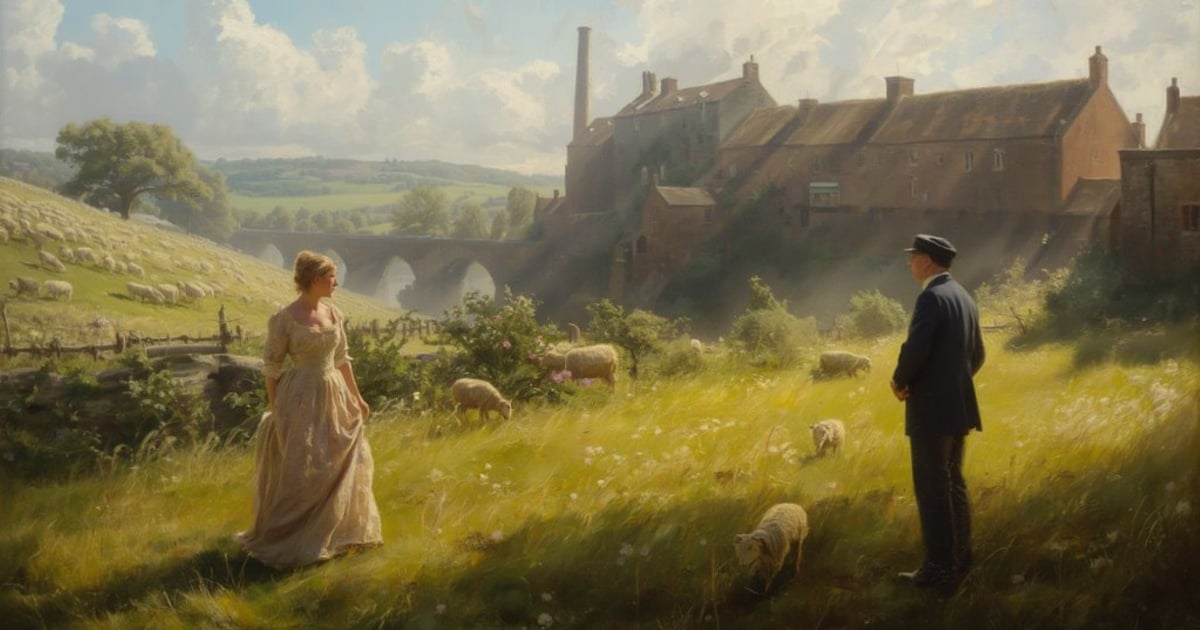
NEW SCENES AND FACES. “Mist clogs the sunshine, Smoky dwarf houses Hem me round everywhere.” MATTHEW ARNOLD. The next afternoon, about twenty miles from Milton-Northern, they entered on the little branch railway that led to Heston. Heston itself was one long straggling street, running parallel to the seashore. It had a character of its own, as different from the little bathing-places in the south of England as they again from those of the continent. To use a Scotch word, everything looked more “purpose-like.” The country carts had more iron, and less wood and leather about the horse-gear; the people in…
Public-domain chapter text, formatted for reading.
Master this chapter. Complete your experience
Purchase the complete book to access all chapters and support classic literature
Available in paperback, hardcover, and e-book formats
Now let's explore the literary elements.
Key Quotes & Analysis
"To use a Scotch word, everything looked more “purpose-like."
Context: Margaret's first impression of Heston, contrasting the northern town with the south she has left
The Scots word 'purpose-like' does the work of several sentences: northern England looks functional, direct, less ornamented than the south. Gaskell establishes the cultural gap through a single borrowed adjective, planting the idea that the Hales are entering a world that values utility over appearance, which will reshape all of Margaret's assumptions about what counts as civilization.
In Today's Words:
Arriving for the first time in a city with a different culture from the one you grew up in: everything is organized around different priorities. The people walk differently, the buildings are built for function rather than impression. The gap is not hostile, just honest about what it values.
"Instead of a quiet, middle-aged clergyman, a young lady came forward with frank dignity,—a young lady of a different type to most"
Context: Thornton's first sight of Margaret when he calls at their hotel room and finds her instead of her father
Thornton came expecting a clergyman and found a different type of young woman entirely. Gaskell gives us the meeting through Thornton's discomfiture rather than Margaret's, which tells us he is the one whose expectations are being scrambled. The 'frank dignity' is exactly what unsettles him: he has no social category ready for it.
In Today's Words:
Walking into a meeting expecting a quiet, senior counterpart and finding instead someone who has more presence and less deference than you anticipated. The surprise recalibrates what you thought you understood about the situation and the people in it, even before a word has been exchanged, and the next ten minutes require you to update all of your assumptions on the fly.
"she owed to herself to be a gentlewoman, and to speak courteously from time to time to this stranger; not over-brushed, nor over-polished"
Context: Margaret's internal resolution about how to treat Thornton during their first uncomfortable encounter
Margaret falls back on her training: whatever she thinks of this stranger, she owes herself the behaviour of a gentlewoman, which means courtesy. The description 'not over-brushed, nor over-polished' is her private measure of him, accurate and slightly dismissive. She does the social work while forming a judgment she keeps out of her face.
In Today's Words:
The professional obligation to be civil to a counterpart you find abrasive: you speak politely because it is what your own standards require, not because the other person has earned it. The private assessment runs alongside the public courtesy, and keeping them separate is its own kind of effort.
"what he did not care to do for a Reverend Mr. Hale, unknown in Milton, he was only too glad to do at the one short sharp remonstrance of Mr. Thornton, the wealthy manufacturer."
Context: The revelation at chapter's end that the re-papered drawing room was Thornton's doing
The chapter's final revelation arrives quietly: what the landlord would not do for an unknown clergyman, he did immediately at Thornton's one-sentence remonstrance. Gaskell drops this without emphasis, letting the reader register what the Hales cannot know: that Thornton has already exercised his power on their behalf, for reasons he has not stated.
In Today's Words:
The favour done without announcement: the senior colleague who resolves a problem with one call or email and never mentions it. The recipient benefits without knowing who intervened or why. Gaskell holds the reveal until the final paragraph of the chapter, which is exactly when it lands with its full weight and changes how you read everything that came before it.
Thematic Threads
Class
In This Chapter
Margaret and Thornton judge each other through class lenses, she sees him as rough trade, he sees her as aristocratic ice
Development
Building from earlier chapters where class differences created the family's exile from Helstone
In Your Life:
You might catch yourself making assumptions about people based on their job, accent, or appearance rather than getting to know them.
Identity
In This Chapter
Both characters feel their identity threatened, Margaret's genteel world is crumbling, Thornton's self-made status feels insufficient
Development
Continues Margaret's identity crisis from losing her familiar southern life
In Your Life:
When you feel insecure about who you are, you might judge others to feel better about yourself.
Pride
In This Chapter
Each character's pride prevents them from seeing past surface impressions to genuine connection
Development
Introduced here as a barrier between characters
In Your Life:
Your pride might keep you from admitting you were wrong about someone or from showing vulnerability.
Power
In This Chapter
Thornton quietly arranges to replace the wallpaper, showing how industrial wealth can solve problems genteel poverty cannot
Development
Introduced here, the power of new money versus old status
In Your Life:
You might see how different types of power, money, connections, knowledge, create different kinds of influence.
Adaptation
In This Chapter
Margaret must accept the gaudy wallpaper and cramped quarters as her new reality, learning to bend without breaking
Development
Continues her journey from sheltered southern life to harsh northern realities
In Your Life:
When circumstances force you into unfamiliar territory, you have to decide what standards to maintain and what to let go.
You now have the context. Time to form your own thoughts.
Discussion Questions
This is not a test. Five prompts guide you through the chapter, from how it opens to how it closes, so you notice context and rhythm rather than facts to memorize. Sit with each question in your own words. When you see "One way to read it," treat it as a starting point, not the only answer.
- 1
Gaskell uses a Scots word to describe Margaret's first view of the northern town: everything looks more 'purpose-like.' What does this borrowed word reveal about the cultural shift Margaret is entering?
analysis • surfaceOne way to read it
Purpose-like means organized around function rather than appearance. The north values utility in a way the south does not, or at least does not display. Gaskell introduces this through a borrowed word, which signals that Margaret is entering a culture with its own vocabulary and its own measure of what matters.
- 2
Thornton calls at the Hales' hotel expecting a clergyman and finds Margaret. Gaskell writes that he is 'a good deal more surprised and discomfited than she.' Why is he more unsettled by the encounter than she is?
analysis • mediumOne way to read it
Thornton had a clear expectation and Margaret confounds it by being neither the type he expected nor easy to place. Margaret has better social training: she knows how to enter a room with strangers because she has done it many times. His discomfiture comes from having his category system disrupted; her calm comes from having had more practice managing social surprise.
- 3
Margaret resolves to treat Thornton with courtesy because 'she owed it to herself to be a gentlewoman,' not because he has earned it. When have you maintained professional courtesy toward someone you found difficult, and what made that discipline valuable regardless of how they behaved?
application • mediumOne way to read it
Margaret's standard is internal: she behaves as her own values require, not in response to what the other person deserves. That distinction is practically useful because it keeps you from letting someone else's behaviour degrade your own. She is also privately observing and assessing him throughout, so the courtesy and the judgment coexist without one compromising the other.
- 4
The Hales discover their drawing room has been repapered. The final paragraph reveals it was done at Thornton's remonstrance to the landlord. Why does Gaskell delay this revelation to the last paragraph, and what does Thornton's unremarked intervention tell us about him?
application • deepOne way to read it
Holding the information until the end gives it full weight: we have spent the chapter assuming the Hales are managing alone, then discover that Thornton has already exercised influence on their behalf without telling them. The gesture is generous and also quietly demonstrates his power in Milton. Gaskell does not let us decide which of those is more important.
- 5
Margaret's internal description of Thornton as 'not over-brushed, nor over-polished' uses a negative definition. What does the fact that she names what he lacks rather than what he has reveal about her frame of reference at this early point in the novel?
reflection • deepOne way to read it
Margaret is measuring Thornton against the social register she knows: London lawyers, clergymen, gentry. He falls short of its finishing, which she notes without asking whether the finishing is what matters here. The negative definition reveals her own assumed standard more than it reveals him. The novel will spend considerable time dismantling exactly that standard.
Critical Thinking Exercise
Rewrite the First Impression
Choose either Margaret or Thornton and rewrite their first meeting from their perspective, but this time have them pause and get curious instead of defensive. What questions might they ask themselves or each other? What different story might they tell about the encounter?
Consider:
- •What fears or insecurities is your chosen character trying to protect?
- •What assumptions are they making based on appearance or manner?
- •What one question could they ask that might change the entire dynamic?
Journaling Prompt
Write about a recent situation where you made a quick judgment about someone. What were you feeling vulnerable about? How might curiosity have changed that interaction?
Coming Up Next...
Chapter 8: Finding Home in Strange Places
The Hales settle into their new life in Milton, but Margaret struggles to adapt to the industrial town's harsh realities. Meanwhile, her first impression of Mr. Thornton begins to evolve as she witnesses his world firsthand..