Chapter 07
First Impressions and Class Divides
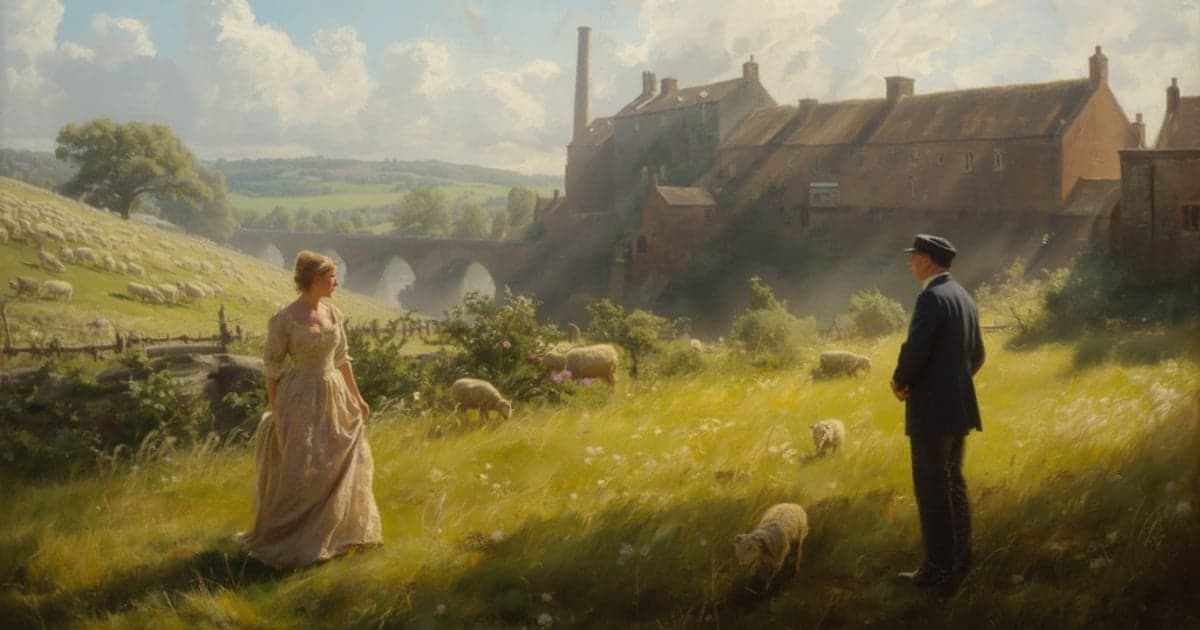
NEW SCENES AND FACES. “Mist clogs the sunshine, Smoky dwarf houses Hem me round everywhere.” MATTHEW ARNOLD. The next afternoon, about twenty miles from Milton-Northern, they entered on the little branch railway that led to Heston. Heston itself was one long straggling street, running parallel to the seashore. It had a character of its own, as different from the little bathing-places in the south of England as they again from those of the continent. To use a Scotch word, everything looked more “purpose-like.” The country carts had more iron, and less wood and leather about the horse-gear; the people in…
Public-domain chapter text, formatted for reading.
Master this chapter. Complete your experience
Purchase the complete book to access all chapters and support classic literature
Available in paperback, hardcover, and e-book formats
Now let's explore the literary elements.
Key Quotes & Analysis
"Mist clogs the sunshine, Smoky dwarf houses Hem me round everywhere."
Context: From the opening of the chapter
This line anchors the scene's pressure and shows how class pride, labor conflict, or moral certainty can harden before anyone listens.
In Today's Words:
In plain terms, the passage says: Mist clogs the sunshine, Smoky dwarf houses Hem me round everywhere. Readers still recognize the same dynamic when people with different stakes talk past each other instead of toward a solution. The same pressure shows up in workplaces and families when class pride, moral certainty, or fear of looking
"The next afternoon, about twenty miles from Milton-Northern, they entered on the little branch railway that led to Heston."
Context: From the opening of the chapter
This line anchors the scene's pressure and shows how class pride, labor conflict, or moral certainty can harden before anyone listens.
In Today's Words:
In plain terms, the passage says: The next afternoon, about twenty miles from Milton-Northern, they entered on the little branch railway that led to Heston. Readers still recognize the same dynamic when people with different stakes talk past each other instead of toward a solution.
"Heston itself was one long straggling street, running parallel to the seashore."
Context: From the opening of the chapter
This line anchors the scene's pressure and shows how class pride, labor conflict, or moral certainty can harden before anyone listens.
In Today's Words:
In plain terms, the passage says: Heston itself was one long straggling street, running parallel to the seashore. Readers still recognize the same dynamic when people with different stakes talk past each other instead of toward a solution. The same pressure shows up in workplaces and families when class pride, moral certainty, or fear of
"It had a character of its own, as different from the little bathing-places in the south of England as they again from those of the continent."
Context: From the opening of the chapter
This line anchors the scene's pressure and shows how class pride, labor conflict, or moral certainty can harden before anyone listens.
In Today's Words:
In plain terms, the passage says: It had a character of its own, as different from the little bathing-places in the south of England as they again from those of the continent Readers still recognize the same dynamic when people with different stakes talk past each other instead of toward a solution.
Thematic Threads
Class
In This Chapter
Margaret and Thornton judge each other through class lenses, she sees him as rough trade, he sees her as aristocratic ice
Development
Building from earlier chapters where class differences created the family's exile from Helstone
In Your Life:
You might catch yourself making assumptions about people based on their job, accent, or appearance rather than getting to know them.
Identity
In This Chapter
Both characters feel their identity threatened, Margaret's genteel world is crumbling, Thornton's self-made status feels insufficient
Development
Continues Margaret's identity crisis from losing her familiar southern life
In Your Life:
When you feel insecure about who you are, you might judge others to feel better about yourself.
Pride
In This Chapter
Each character's pride prevents them from seeing past surface impressions to genuine connection
Development
Introduced here as a barrier between characters
In Your Life:
Your pride might keep you from admitting you were wrong about someone or from showing vulnerability.
Power
In This Chapter
Thornton quietly arranges to replace the wallpaper, showing how industrial wealth can solve problems genteel poverty cannot
Development
Introduced here, the power of new money versus old status
In Your Life:
You might see how different types of power, money, connections, knowledge, create different kinds of influence.
Adaptation
In This Chapter
Margaret must accept the gaudy wallpaper and cramped quarters as her new reality, learning to bend without breaking
Development
Continues her journey from sheltered southern life to harsh northern realities
In Your Life:
When circumstances force you into unfamiliar territory, you have to decide what standards to maintain and what to let go.
You now have the context. Time to form your own thoughts.
Discussion Questions
This is not a test. Five prompts guide you through the chapter, from how it opens to how it closes, so you notice context and rhythm rather than facts to memorize. Sit with each question in your own words. When you see "One way to read it," treat it as a starting point, not the only answer.
- 1
What situation opens "First Impressions and Class Divides", and what is at stake for Margaret or the people around her?
analysis • surfaceOne way to read it
Margaret and her father venture into Milton-Northern to find housing, and the industrial town immediately assaults their senses with its smoky air, crowded streets, and utilitarian atmosphere.
- 2
How does the middle of "First Impressions and Class Divides" test pride, loyalty, or conscience under pressure?
analysis • mediumOne way to read it
Their first encounter crackles with mutual misunderstanding, she appears haughty and dismissive to him, while he seems rough and ungentlemanly to her.
- 3
Where in "First Impressions and Class Divides" do class, work, or family obligations pull in opposite directions?
application • mediumOne way to read it
Their first encounter crackles with mutual misunderstanding, she appears haughty and dismissive to him, while he seems rough and ungentlemanly to her.
- 4
What does the closing movement of "First Impressions and Class Divides" suggest about love, justice, or self-knowledge?
application • deepOne way to read it
This sets up the complex dance of attraction, misunderstanding, and social navigation that will define Margaret and Thornton's relationship.
- 5
After "First Impressions and Class Divides", what would you do differently if you were trying to bridge a divide without surrendering your values?
reflection • deepOne way to read it
This sets up the complex dance of attraction, misunderstanding, and social navigation that will define Margaret and Thornton's relationship.
Critical Thinking Exercise
Rewrite the First Impression
Choose either Margaret or Thornton and rewrite their first meeting from their perspective, but this time have them pause and get curious instead of defensive. What questions might they ask themselves or each other? What different story might they tell about the encounter?
Consider:
- •What fears or insecurities is your chosen character trying to protect?
- •What assumptions are they making based on appearance or manner?
- •What one question could they ask that might change the entire dynamic?
Journaling Prompt
Write about a recent situation where you made a quick judgment about someone. What were you feeling vulnerable about? How might curiosity have changed that interaction?
Coming Up Next...
Chapter 8: Finding Home in Strange Places
The Hales settle into their new life in Milton, but Margaret struggles to adapt to the industrial town's harsh realities. Meanwhile, her first impression of Mr. Thornton begins to evolve as she witnesses his world firsthand.