Chapter 09
First Glimpse of Lowick Manor
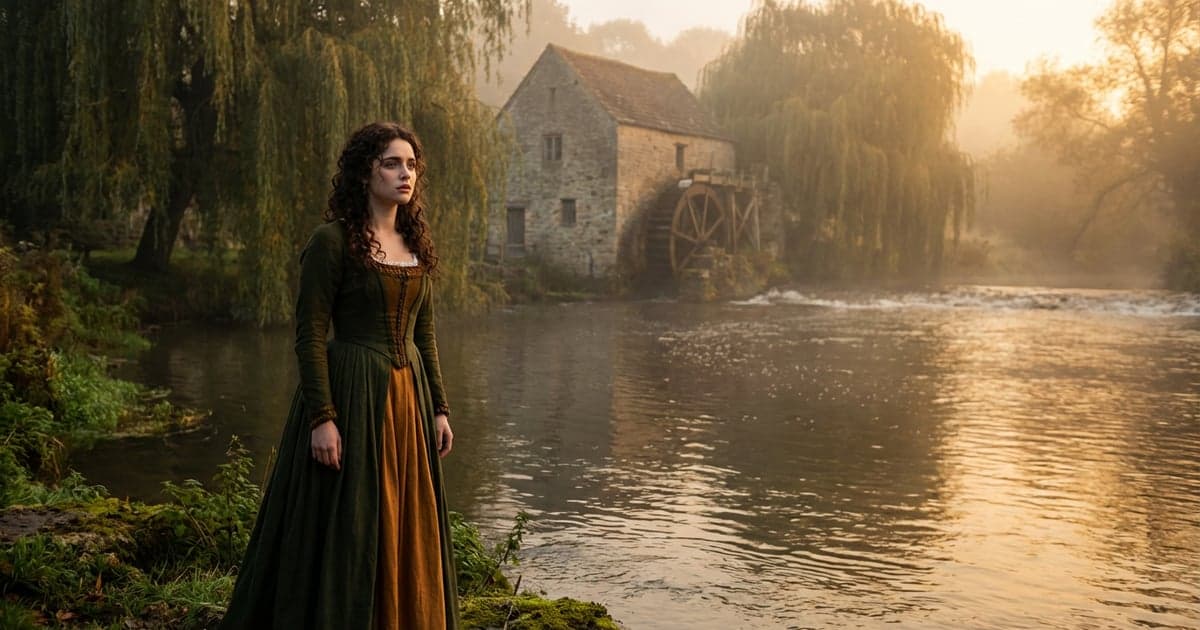
1st Gent. An ancient land in ancient oracles Is called “law-thirsty”: all the struggle there Was after order and a perfect rule. Pray, where lie such lands now? . . . 2d Gent. Why, where they lay of old—in human souls. Mr. Casaubon’s behavior about settlements was highly satisfactory to Mr. Brooke, and the preliminaries of marriage rolled smoothly along, shortening the weeks of courtship. The betrothed bride must see her future home, and dictate any changes that she would like to have made there. A woman dictates before marriage in order that she may have an appetite for submission…
Public-domain chapter text, formatted for reading.
Master this chapter. Complete your experience
Purchase the complete book to access all chapters and support classic literature
Available in paperback, hardcover, and e-book formats
Now let's explore the literary elements.
Key Quotes & Analysis
"A woman dictates before marriage in order that she may have an appetite for submission afterwards."
Context: On brides visiting their future homes before the wedding
Eliot's narrator exposes the social script: brief power before marriage trains women to accept later powerlessness. Dorothea's refusal to choose a room already bends that script.
In Today's Words:
Let her rearrange the house now so she will accept having no voice later. The line is cynical about Victorian marriage, not about Dorothea's sincerity. Today the pattern survives whenever someone gets a cosmetic say before a binding commitment while the real terms stay unchanged.
"She filled up all blanks with unmanifested perfections, interpreting him as she interpreted the works of Providence"
Context: Dorothea's tour of Lowick during courtship
Dorothea does not evaluate Casaubon; she sanctifies him. Every silence becomes depth, every stiffness becomes dignity, because her hunger for purpose needs a hero.
In Today's Words:
She supplied every missing quality herself and read his coldness the way she read fate: as something grand she was too small to hear yet. That is how intelligent people defend a choice they have already announced. The house looks holy because she needs it to.
"There was too much cleverness in her apology: she was laughing both at her uncle and himself."
Context: Will's reaction to Dorothea's words about not understanding art
Will hears judgment where Dorothea offers humility. Both misread the other because context poisons first impressions: she is Casaubon's fiancée, he is already defensive.
In Today's Words:
Her modesty sounded like mockery because it was too quick and too articulate for innocence. He assumed scorn, not shyness. First meetings often fail this way when each person imports a story about the other before a real conversation can begin and trust can form.
"That is very kind of you, said Dorothea, looking up at Mr. Casaubon with delight. It is noble. After all, people may really have in them some vocation which is not quite plain to themselves, may they not?"
Context: After Casaubon agrees to support Will's year abroad
Dorothea projects her own need for unseen vocation onto Will and reads Casaubon's duty as magnanimity. Her charity toward Will mirrors her faith in Casaubon's greatness.
In Today's Words:
She praised Casaubon for funding Will and argued that people can look idle while they are still becoming themselves. She is really defending her own bet on hidden greatness. When you are committed to one grand project, you start seeing every wanderer as proof you are right.
Thematic Threads
Self-Deception
In This Chapter
Dorothea transforms every flaw of Lowick Manor into a virtue, refusing to see what doesn't fit her romantic vision
Development
Deepens from her earlier idealization of Casaubon, now extending to his entire world
In Your Life:
You might catch yourself defending choices you're secretly unsure about, finding reasons why problems are actually features
Class Judgment
In This Chapter
Will is dismissed for rejecting traditional education paths and wanting to travel rather than choose an immediate profession
Development
Builds on earlier themes of social expectations, now showing generational conflict over 'proper' choices
In Your Life:
You might face judgment for non-traditional career paths or educational choices that don't fit others' expectations
Perspective
In This Chapter
Celia and Dorothea see the exact same house completely differently based on their emotional investment
Development
Introduced here as a key mechanism for understanding character differences
In Your Life:
You might notice how your mood or investment in an outcome completely changes what you notice in situations
First Impressions
In This Chapter
Will and Dorothea immediately misread each other, with assumptions clouding their actual interaction
Development
Introduced here, establishing the foundation for their complex future relationship
In Your Life:
You might realize how quickly you form judgments about people based on limited information or context
Defending Choices
In This Chapter
Dorothea defends Will's unconventional path while simultaneously defending her own unconventional marriage choice
Development
Shows how her idealism extends beyond self-interest to general principles
In Your Life:
You might find yourself defending others' choices when they mirror your own controversial decisions
You now have the context. Time to form your own thoughts.
Discussion Questions
This is not a test. Five prompts guide you through the chapter, from how it opens to how it closes, so you notice context and rhythm rather than facts to memorize. Sit with each question in your own words. When you see "One way to read it," treat it as a starting point, not the only answer.
- 1
The narrator claims 'A woman dictates before marriage in order that she may have an appetite for submission afterwards.' How does Dorothea's behavior at Lowick confirm or challenge this cynical view?
analysis • surfaceOne way to read it
Dorothea refuses to dictate any changes, saying she wants everything 'just as you have been used to have it.' She's already practicing submission before marriage even begins.
- 2
Why does Eliot emphasize that Will Ladislaw has the same 'peculiar' features as his grandmother's portrait, especially the 'delicate irregular nose with a little ripple in it'?
analysis • mediumOne way to read it
The physical resemblance connects Will to the aunt who 'made an unfortunate marriage,' suggesting he too might disrupt conventional expectations and social order.
- 3
Dorothea 'fills up all blanks with unmanifested perfections' when viewing Casaubon. What modern relationship dynamic does this idealization pattern reflect?
application • mediumOne way to read it
This mirrors how people project their own needs onto partners in online dating or early relationships, seeing potential rather than reality.
- 4
Casaubon criticizes Will for calling himself 'Pegasus' and prescribed work 'harness.' When might refusing conventional career paths be justified versus self-indulgent?
application • deepOne way to read it
It's justified when someone has genuine artistic vision or sees systemic problems in traditional paths. It's self-indulgent when it's just avoiding responsibility or difficulty.
- 5
Dorothea defends Will's refusal to choose a profession, saying people 'may seem idle and weak because they are growing.' What does this reveal about her own need to see goodness?
reflection • deepOne way to read it
Her charitable interpretation shows she needs to believe in others' hidden nobility to justify her own idealistic worldview and choices.
Critical Thinking Exercise
Find Your Celia
Think of a current situation where you might be editing reality to protect a choice you've made. Write down what you see as the positives. Now imagine you're advising a friend in the exact same situation - what concerns would you raise? What would you notice that they might be overlooking?
Consider:
- •Focus on someone with no emotional investment in your choice
- •Notice what you emphasize vs. what you downplay when describing the situation
- •Ask yourself: 'What would I see here if I had no skin in the game?'
Journaling Prompt
Write about a time when you realized you'd been protecting a bad choice by refusing to see obvious problems. What finally helped you see clearly, and how did you navigate changing course?
Coming Up Next...
Chapter 10: The Weight of Expectations
Will leaves for the Continent without visiting Brooke. Eliot asks us to look at Casaubon from inside: he has won Dorothea, yet as the wedding nears he does not find delight, only blankness where joy should be..