Chapter 34
Featherstone's Final Performance
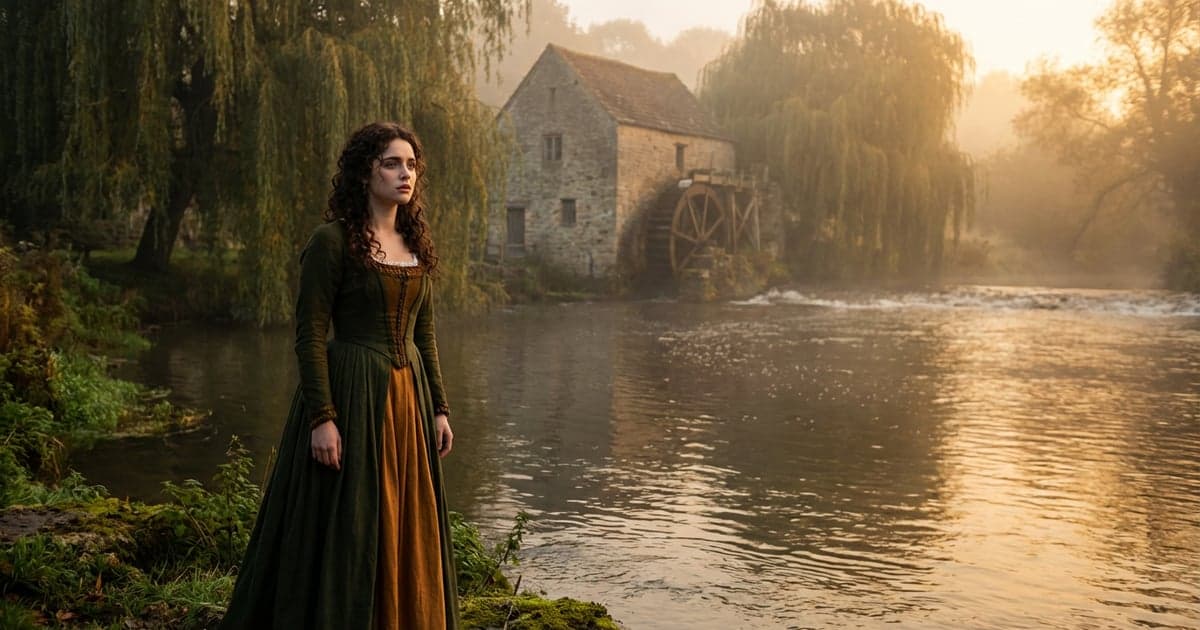
“1st Gent. Such men as this are feathers, chips, and straws, Carry no weight, no force. 2d Gent. But levity Is causal too, and makes the sum of weight. For power finds its place in lack of power; Advance is cession, and the driven ship May run aground because the helmsman’s thought Lacked force to balance opposites.” It was on a morning of May that Peter Featherstone was buried. In the prosaic neighborhood of Middlemarch, May was not always warm and sunny, and on this particular morning a chill wind was blowing the blossoms from the surrounding gardens on to…
Public-domain chapter text, formatted for reading.
Master this chapter. Complete your experience
Purchase the complete book to access all chapters and support classic literature
Available in paperback, hardcover, and e-book formats
Now let's explore the literary elements.
Key Quotes & Analysis
"I am fond of knowing something about the people I live among"
Context: Watching the funeral from the manor window with Mrs. Cadwallader
Dorothea's curiosity is moral, not gossipy. She wants reality beyond her class bubble, which makes the coming collision with Will and her marriage more poignant.
In Today's Words:
Dorothea said she wanted to understand how her neighbors actually live, not only poor cottagers from a distance. Curiosity about other lives can be empathy trying to find facts before judgment forms. When you feel walled off from your town, ask whether you are seeking gossip or the knowledge that makes duty real.
"It is a blot on the morning. I cannot bear to think that any one should die and leave no love behind."
Context: After Mrs. Cadwallader says none of the mourners are sorry
Dorothea measures death by affection, not display. Featherstone's handsome funeral only proves how much ceremony can cost without warmth.
In Today's Words:
Dorothea called the funeral a stain on the day because Featherstone seemed to die without anyone loving him. Big send-offs can still be empty when the crowd came for spectacle or money, not grief. When you judge a life, weigh who would miss the person, not how many carriages followed the hearse.
"Why, Dodo, you never told me that Mr. Ladislaw was come again!"
Context: Seeing Will in the churchyard crowd from the upper window
Celia's innocent notice forces the secret into the open. Dorothea's shock tells Casaubon more than any speech about Will could.
In Today's Words:
Celia spotted Will at the funeral and said Dorothea never mentioned he was back in the county. A relative's casual remark can expose what a marriage has been hiding by omission. If a surprise guest makes your partner pale, the problem is rarely the guest alone; it is what was not said at home.
"He came with me, you know; he is my guest, puts up with me at the Grange,"
Context: Announcing Will to Dorothea and Casaubon at the window
Brooke's easy tone sandpapers the wound. He thinks he brings pleasure; he actually confirms Casaubon's fear that Dorothea's world is widening without his consent.
In Today's Words:
Brooke said Will was staying with him at the Grange as if the news were a pleasant surprise for everyone. Well-meaning hosts often reopen wounds by announcing guests without asking the marriage first. Before you invite someone your relatives distrust, check who pays the social cost when the visit becomes permanent.
Thematic Threads
Miscommunication
In This Chapter
Casaubon and Dorothea's conflicting assumptions about Will's invitation create public tension and private crisis
Development
Building from earlier subtle misunderstandings between the couple into open conflict
In Your Life:
You might recognize this when you and your partner have completely different versions of the same conversation or agreement.
Class
In This Chapter
The funeral displays stark class differences between wealthy Vincys and working-class mourners, all performing grief for social appearance
Development
Continues Eliot's examination of how class shapes every social interaction, even death rituals
In Your Life:
You see this at any mixed-class gathering where people perform their status through clothing, speech, or behavior.
Social Performance
In This Chapter
Everyone at the funeral performs appropriate mourning for a man they disliked, while hiding their real feelings and motivations
Development
Extends the theme of public versus private selves that runs throughout the novel
In Your Life:
You experience this at workplace meetings, family gatherings, or community events where you must perform emotions you don't feel.
Power
In This Chapter
Even dead, Featherstone orchestrates drama through his elaborate funeral, while Brooke unwittingly wields power through his casual announcement
Development
Shows how power operates both deliberately and accidentally, building on earlier power dynamics
In Your Life:
You might see this when someone uses information or timing to control situations, whether intentionally or through carelessness.
Secrets
In This Chapter
The hidden tension about Will's presence creates a private drama playing out during a public ceremony
Development
Escalates the undercurrent of concealed feelings and unspoken conflicts between characters
In Your Life:
You recognize this when family secrets surface at the worst possible moments, holidays, celebrations, or public events.
You now have the context. Time to form your own thoughts.
Discussion Questions
This is not a test. Five prompts guide you through the chapter, from how it opens to how it closes, so you notice context and rhythm rather than facts to memorize. Sit with each question in your own words. When you see "One way to read it," treat it as a starting point, not the only answer.
- 1
How does Featherstone's elaborate funeral arrangements reveal his character, particularly his desire to have people 'bid' to it who would rather have stayed at home?
analysis • surfaceOne way to read it
Featherstone uses his funeral as a final power play, forcing attendance from those he controlled in life. Even in death, he prioritizes making others uncomfortable over genuine mourning or respect.
- 2
Why does Eliot contrast the 'lightly dropping blossoms and gleams of sunshine' with the 'heavy human faces and black draperies' at the funeral?
analysis • mediumOne way to read it
The natural beauty highlights the artificiality of the human drama. While nature continues its cycles indifferently, the mourners perform grief for someone who inspired little genuine affection.
- 3
What modern situations mirror Dorothea's inability to explain Will's presence without revealing her husband's jealousy to the assembled company?
application • mediumOne way to read it
Any social gathering where explaining the truth would expose private tensions, like family dinners with estranged relatives or workplace events where personal conflicts must stay hidden.
- 4
If you were Casaubon, discovering your wife had secretly arranged for Will's return through her uncle, how would you handle the situation differently?
application • deepOne way to read it
Direct private conversation with Dorothea would be healthier than silent assumptions. His pride prevents him from asking questions that might reveal his insecurity, worsening their communication breakdown.
- 5
What does Casaubon's assumption that Dorothea arranged Will's invitation reveal about how suspicion operates in troubled marriages?
reflection • deepOne way to read it
Suspicion fills gaps in communication with the worst possible interpretations. Casaubon's pride prevents him from seeking clarification, so he constructs a narrative that confirms his fears rather than discovering the truth.
Critical Thinking Exercise
The Assumption Audit
Think of an important relationship in your life right now. Write down three things you assume this person knows about your feelings, needs, or expectations - but that you've never actually said out loud. For each assumption, write what you think would happen if you tested it with a direct conversation.
Consider:
- •Consider why you've avoided stating these things directly - fear, embarrassment, or belief they should 'just know'
- •Think about whether your assumptions might be protecting you from disappointment or conflict
- •Reflect on how your unspoken expectations might be creating invisible pressure in the relationship
Journaling Prompt
Write about a time when an unspoken assumption in a relationship led to hurt feelings or conflict. How might things have been different if you had checked your assumption with a direct conversation?
Coming Up Next...
Chapter 35: The Weight of Unspoken Words
At Stone Court the Featherstone kin will count every legacy while a frog-faced stranger named Rigg sits among the mourners, and Mary Garth alone will know what happened on the last night At Stone Court the Featherstone relations arrive like animals wary of sharing fodder, jealous of the Vincys and of Mary Garth. A frog-faced stranger, Rigg, appears as mourner though only Mary and.