Chapter 21
When Illusions Begin to Crack
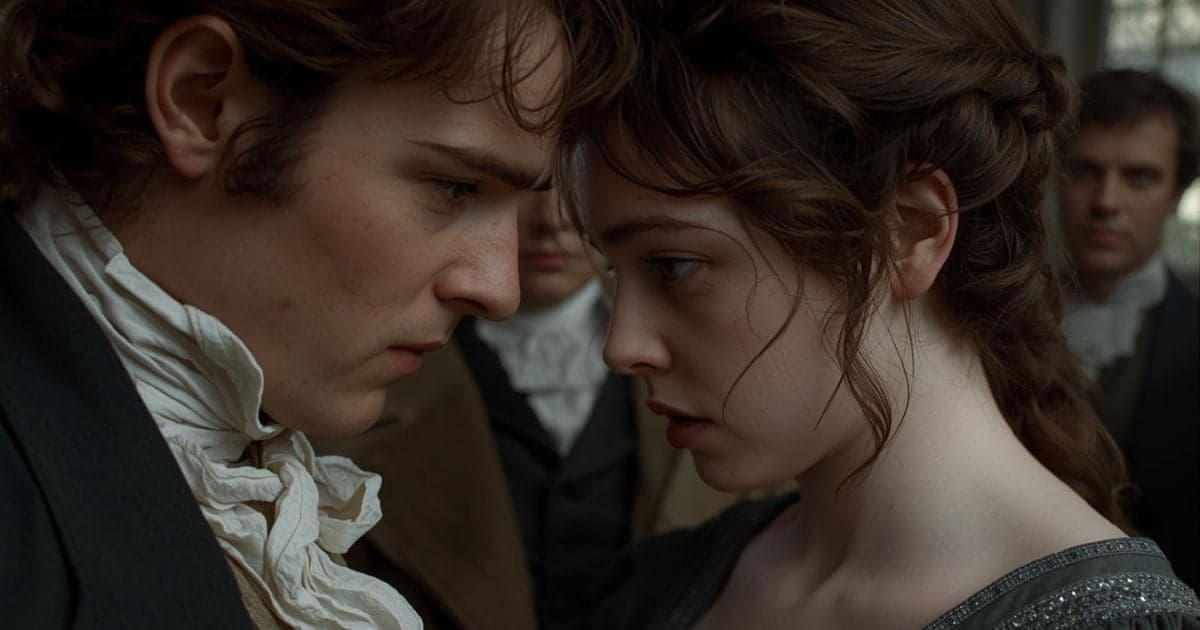
“Hire facounde eke full womanly and plain, No contrefeted termes had she To semen wise.” —CHAUCER. It was in that way Dorothea came to be sobbing as soon as she was securely alone. But she was presently roused by a knock at the door, which made her hastily dry her eyes before saying, “Come in.” Tantripp had brought a card, and said that there was a gentleman waiting in the lobby. The courier had told him that only Mrs. Casaubon was at home, but he said he was a relation of Mr. Casaubon’s: would she see him? “Yes,” said Dorothea,…
Public-domain chapter text, formatted for reading.
Master this chapter. Complete your experience
Purchase the complete book to access all chapters and support classic literature
Available in paperback, hardcover, and e-book formats
Now let's explore the literary elements.
Key Quotes & Analysis
"She was alive to anything that gave her an opportunity for active sympathy"
Context: Why Dorothea receives Will while upset
Her nature needs useful connection. Marriage is not supplying it, so a visitor becomes relief and danger at once.
In Today's Words:
The narrator says she leaped at any chance to care actively because feeling had nowhere else to go. Neglected devotion always seeks a valve. If you only come alive when someone needs you, check what your marriage or job is not giving. Sympathy for a stranger can be virtue and escape in the same gesture.
"He is usually away almost from breakfast till dinner."
Context: Explaining Casaubon's schedule to Will
The schedule states the marriage. Honeymoon Rome functions as solo residence for the wife while the husband reads.
In Today's Words:
She told Will her husband vanished from breakfast to dinner into libraries even on their Roman honeymoon. Absence dressed as scholarship is still absence. When someone explains a schedule instead of a feeling, believe the schedule. The listener who hears the schedule has already begun to judge the marriage.
"If Mr. Casaubon read German he would save himself a great deal of trouble."
Context: After Dorothea defends Casaubon's perseverance
Will means to puncture idolatry and instead punctures her hope of being a helpmate. Casual expertise becomes marital catastrophe.
In Today's Words:
Will said Casaubon could save years by reading German scholarship instead of groping with old methods. He thought it a pinprick; for her it threatened her husband's life's work and her role beside it. Words that sound clever can land as demolition when someone is already afraid.
"that he had an equivalent centre of self, whence the lights and shadows must always fall with a certain difference."
Context: Dorothea's emerging recognition after the visit
This is the moral awakening: other people are not extensions of your vocation. Casaubon has a centre she cannot enter by devotion alone.
In Today's Words:
The narrator says she began to grasp that he had his own centre of self, not a shadow of hers. Loving him as a project could not merge their inner lives. Real intimacy starts when you stop treating a partner as proof of your purpose.
Thematic Threads
Illusion
In This Chapter
Dorothea realizes her entire understanding of her marriage was based on fantasy rather than reality
Development
Builds from earlier hints of marital disappointment to full recognition of self-deception
In Your Life:
You might discover that a relationship you thought was solid was built on assumptions rather than genuine understanding.
Recognition
In This Chapter
Dorothea begins to see Casaubon as a separate person with his own struggles, not an extension of her needs
Development
First major breakthrough in her emotional maturity since the marriage began
In Your Life:
You might realize that someone you've been frustrated with is fighting battles you never considered.
Class
In This Chapter
Will's casual mention of German scholarship reveals the intellectual hierarchy Dorothea is excluded from
Development
Continues theme of how education and cultural capital create invisible barriers
In Your Life:
You might feel excluded when others casually reference knowledge or experiences you don't have access to.
Growth
In This Chapter
Dorothea's painful realization marks the beginning of seeing beyond her own perspective
Development
First step toward emotional maturity after chapters of naive idealism
In Your Life:
You might face moments where growing up means accepting uncomfortable truths about people you love.
Communication
In This Chapter
Despite Dorothea's attempt at reconciliation, the emotional distance between the couple remains
Development
Shows how good intentions alone cannot bridge fundamental incompatibility
In Your Life:
You might find that apologizing doesn't automatically fix deeper relationship problems.
You now have the context. Time to form your own thoughts.
Discussion Questions
This is not a test. Five prompts guide you through the chapter, from how it opens to how it closes, so you notice context and rhythm rather than facts to memorize. Sit with each question in your own words. When you see "One way to read it," treat it as a starting point, not the only answer.
- 1
When Will sees Dorothea's tears and learns Casaubon spends every day away from her, why does he feel 'comic disgust' rather than simple sympathy?
analysis • surfaceOne way to read it
Will sees the absurdity of a dried-up pedant winning an adorable young woman then abandoning her for dusty research. His reaction mixes outrage at the waste with contempt for Casaubon's priorities.
- 2
Why does Will's comment about German scholarship hit Dorothea like a blow, making her wish she had learned German at Lausanne?
analysis • mediumOne way to read it
She realizes her husband's life work might be worthless, and she feels helpless to assist him. The revelation shatters her dream of being his intellectual companion and helpmate.
- 3
How might a modern spouse react upon learning their partner's career field has been revolutionized by methods they refuse to adopt?
application • mediumOne way to read it
They might feel torn between loyalty and reality, perhaps researching the new methods themselves or gently suggesting professional development. The challenge lies in supporting without undermining their partner's confidence.
- 4
If you discovered your life partner was pursuing a project that experts considered outdated, how would you balance honesty with support?
application • deepOne way to read it
You might focus on their passion and effort rather than results, while quietly encouraging exposure to current developments. The goal would be protecting their dignity while preventing wasted years on obsolete work.
- 5
What does Dorothea's final realization about Casaubon having 'an equivalent centre of self' reveal about the nature of truly knowing another person?
reflection • deepOne way to read it
Real understanding requires seeing others as complete beings with their own needs and fears, not just extensions of our own desires. Love often begins with projection but matures into recognition of separate selfhood.
Critical Thinking Exercise
Reality Check Your Relationships
Think of an important relationship in your life—romantic, friendship, or work. Write down three things you assumed about this person when you first met them, then three things you've learned about them that surprised you. Look for patterns: Are you still expecting them to be your original assumptions, or have you adjusted to who they actually are?
Consider:
- •Notice whether your surprises were positive, negative, or just different from what you expected
- •Consider whether you're still trying to change them back to your original vision
- •Ask yourself if you're accepting their actual personality or still hoping they'll become someone else
Journaling Prompt
Write about a time when you had to let go of who you wanted someone to be and accept who they actually were. What did you learn about yourself in that process?
Coming Up Next...
Chapter 22: The Artist's Eye
Will dines charmingly, escorts them to Naumann's studio, watches Dorothea posed as Santa Clara, and calls alone to speak of art, German scholarship, and a promise she will extract before he leaves Rome Will shines at dinner, drawing Casaubon out while his own talk falls like a gay chime after the great bell. He urges a studio visit; Casaubon, seeing Dorothea eager, agrees..