
Wide Reads
Literature MattersLife IndexEducators
Sign in
Where to Begin

Everything Changes: Philosophy, Rome, and Ovid's Exit — Metamorphoses

Metamorphoses - Everything Changes: Philosophy, Rome, and Ovid's Exit

Ovid

Metamorphoses

Everything Changes: Philosophy, Rome, and Ovid's Exit

Home›Books›Metamorphoses›Chapter 15: Everything Changes: Philosophy, Rome, and Ovid's Exit
Previous
15 of 15

Analysis by the Wide Reads editorial team·Reviewed against the source text·Updated December 5, 2025

Summary

Everything Changes: Philosophy, Rome, and Ovid's Exit

Metamorphoses by Ovid

0:000:00

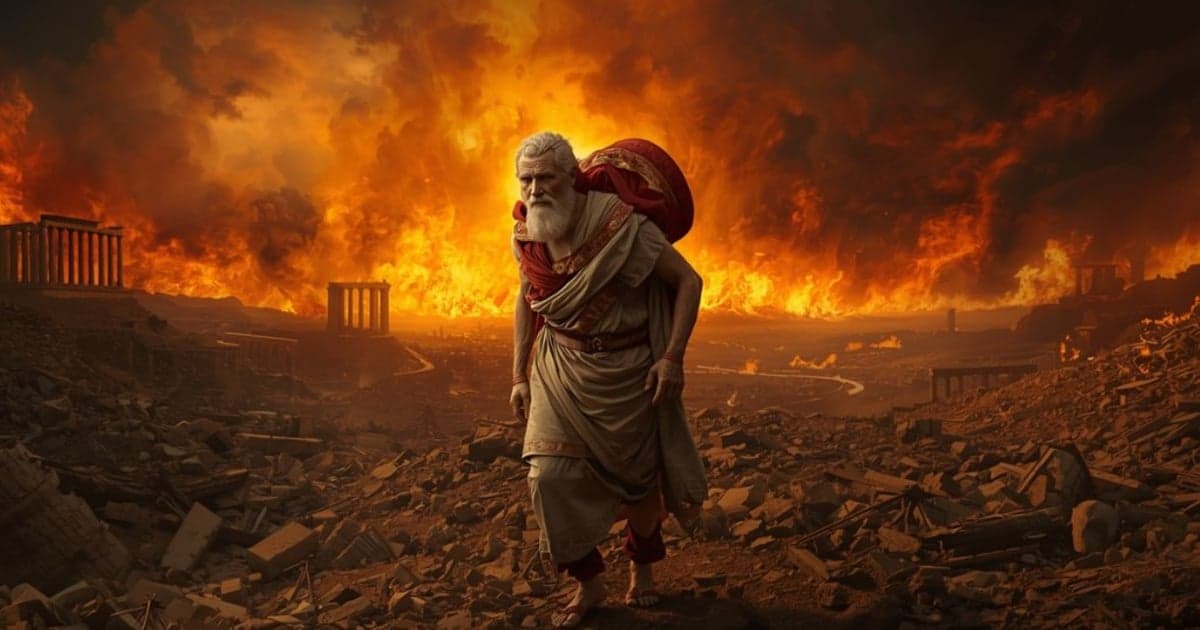
Book 15 serves as Ovid's philosophical and political capstone, opening with succession anxiety after Rome's early kings and moving quickly toward Numa's search for wisdom. Rather than inherit rule through force alone, Numa seeks understanding of nature, law, and sacred order, and this quest leads him to teachings associated with Pythagoras. Ovid positions this move as consequential: governance grounded only in ritual repetition cannot survive history's volatility, but governance informed by pattern recognition might. The early tale of Myscelos, ordered by dream to migrate and nearly condemned for obeying, reinforces the same point from below. Law can preserve order, yet rigid law can also punish necessary change unless interpretation adapts. From the first pages, the chapter insists that stability comes not from freezing forms but from guiding transitions well.

Pythagoras's long discourse then reframes the entire epic through one proposition: nothing perishes absolutely; forms circulate. Bodies age, elements exchange, rivers shift channels, cities rise and fail, and souls move through living beings. Ovid uses this speech to reinterpret transformation not as occasional miracle but as baseline ontology. The practical ethical consequence is restraint, especially toward violence and appetite. If life is continuous across changing vessels, domination loses its metaphysical justification. Whether or not readers accept metempsychosis literally, the argument trains attention toward interdependence. What appears isolated in one moment is often an episode in a longer transfer chain. The speech thus links cosmology to conduct, asking leaders and citizens alike to act with temporal depth rather than immediate impulse.

After philosophy, Ovid returns to Roman exempla that test how change enters public institutions. The horned prodigy of Cipus raises a succession dilemma where personal advancement could trigger civic fear; his refusal of kingship converts potential tyranny into legitimate honor from outside the walls. The arrival of Aesculapius during plague similarly dramatizes transformation as translational movement, Greek healing cult becoming Roman remedy through ritual import and symbolic adaptation. These stories show Rome's resilience as selective permeability: the city survives not by purity but by incorporating external forms while narrating them as consonant with Roman destiny. Ovid neither mocks nor fully endorses this process; he displays its mechanics so readers can see how collective identity is continually re-authored.

The culminating political metamorphosis is Julius Caesar's apotheosis. Assassination appears as violent rupture, yet Venus lifts Caesar's soul and fixes it as a star, while Augustus is framed as inheritor of transfigured authority. Here Ovid demonstrates state mythmaking at imperial scale: death is converted into celestial legitimacy, and private mourning is aligned with public continuity. The passage can be read as praise, caution, or both. It grants grandeur to Rome's narrative while quietly reminding us that every legitimacy claim is mediated through story, omen, and poetic craft. No regime escapes mortality; it negotiates mortality through symbols that persuade successors and subjects to keep moving.

Ovid closes by applying metamorphosis to himself. If bodies pass and empires shift, poetry may still outlast bronze by circulating in memory across generations. This final turn is not vanity alone; it is methodological consistency. The poet who has shown trees from women, rivers from lovers, birds from pyres, and stars from rulers now offers text as another transformed vessel for life. For modern readers, Book 15 is a discipline of adaptive realism. It teaches that resistance to all change is delusion, but surrender to every change is abdication. Wisdom lies in discerning which transformations preserve justice, which merely rebrand power, and which open new forms of care. By ending with both Caesar's star and his own voice, Ovid leaves us with a dual mandate: read history critically, and contribute forms that can carry humane intelligence forward when current structures inevitably alter. The finale is sober and energizing at once: everything changes, but how we narrate and govern that change still determines whether dignity expands or contracts. Ovid leaves readers with work to do, not just wonder to admire. He effectively asks every generation to become interpreters and custodians, translating inherited myths into responsible practice while resisting both fatalism and propaganda. This charge includes intellectual honesty about loss, humility about prediction, and willingness to revise inherited systems without discarding ethical anchors. In that sense, the end of Metamorphoses is not closure but apprenticeship: readers are invited to practice transformation responsibly in law, medicine, family, and civic life. The poem's final gift is procedural rather than sentimental: keep examining stories, keep revising institutions, and keep measuring whether your transformations actually reduce avoidable suffering for those with the least voice, especially when success narratives reward speed over reflection and silence over truth. His closing stance insists that memory itself is a civic duty, and that forgetting repeats preventable harm. This closing reflection reinforces the same chapter pattern in practical terms, so readers can carry the insight into decisions made under pressure rather than leaving it in myth alone.

In this chapter: Terms Characters Key Quotes Themes Modern Story

Why This Matters

Connect literature to life

Skill: Practicing Principled Adaptation

People often swing between resisting every change and embracing every change without standards. Book 15 offers a middle discipline: keep ethical constants while revising forms as reality shifts. Reading this finale helps you evaluate whether a transition preserves dignity or merely repackages power.

Share it with friends

PreviousPrevious Chapter
Original text
698 wordscomplete

Chapter 15

Everything Changes: Philosophy, Rome, and Ovid's Exit

Meanwhile, one is being sought who can bear a weight of such magnitude, and can succeed a king so great. Fame, the harbinger of truth, destines the illustrious Numa for the sovereign power. He does not deem it sufficient to be acquainted with the ceremonials of the Sabine nation; in his expansive mind he conceives greater views, and inquires into the nature of things. ’Twas love of this pursuit, his country and cares left behind, that caused him to penetrate to the city of the stranger Hercules. To him, making the inquiry what founder it was that had erected a…

Public-domain chapter text, formatted for reading.

Master this chapter. Complete your experience

Purchase the complete book to access all chapters and support classic literature

Buy at Powell'sBuy on Amazon

Available in paperback, hardcover, and e-book formats

Now let's explore the literary elements.

Key Quotes & Analysis

"in his expansive mind he conceives greater views, and inquires into the nature of things."

— Narrator

Context: Numa's preparation for kingship begins with intellectual humility and inquiry.

Rule is framed as an epistemic task: power without curiosity cannot govern transformation well.

In Today's Words:

Numa does not assume rank equals wisdom; he studies before he rules. Thomas sees this when new charge nurses either ask questions or pretend certainty. In volatile environments, curiosity is not weakness, it is a safety practice. Thomas sees the same pattern in the ER when bodies and identities shift under pressure nobody chose.

"there, on the appointed land, did he found his walls, and he transferred the name of him that was {there} entombed to his city."

— Pythagoras

Context: The Crotona foundation story ties migration and command to concrete civic construction.

Transformation in this chapter is institutional as well as personal, and continuity must be deliberately built.

In Today's Words:

Thomas reads this as a systems lesson: safer care appears when teams intentionally build new routines rather than waiting for culture to improve on its own during crisis. Thomas sees the same pattern in the ER when bodies and identities shift under pressure nobody chose.

"Fame, the harbinger of truth, destines the illustrious Numa for the sovereign power."

— Pythagoras

Context: Numa's rise is narrated as public reputation converging with civic need.

Political transition depends on trusted story channels as much as on bloodline or force.

In Today's Words:

Thomas sees this whenever leadership changes in emergency medicine: formal titles matter, but durable legitimacy comes from whether staff believe the next leader can actually carry shared burden. Thomas sees the same pattern in the ER when bodies and identities shift under pressure nobody chose.

"after a prosperous voyage, and, while his herd was straying along the soft pastures, himself to have entered the abode of the great Croton, no inhospitable dwelling, and to have rested in repose after his prolonged labours, and to have said thus at departing: ‘In the time of thy grandsons this shall be the site of a city;’ and his promise was fulfilled."

— Narrator

Context: Caesar's death is converted into celestial apotheosis within Rome's imperial story.

Political rupture is narratively stabilized by symbolic elevation and succession framing.

In Today's Words:

Caesar's star turns trauma into continuity for the state. Thomas sees similar moves when institutions rename painful failures as milestones. Symbols can help collective survival, but they must not erase accountability for the wound that preceded them. Thomas sees the same pattern in the ER when bodies and identities shift under pressure nobody chose.

Thematic Threads

Identity

In This Chapter

Ovid declares his immortal identity through his work, transcending physical death through artistic transformation

Development

Evolved from external transformations to internal identity transformation—the ultimate metamorphosis

In Your Life:

Your sense of self may need to transform as you grow, and that's not loss—it's evolution

Class

In This Chapter

Caesar's transformation from mortal ruler to divine star shows how power structures can be transcended through change

Development

Throughout the book, social positions have been fluid and changeable rather than fixed

In Your Life:

Your current economic or social position isn't permanent—transformation can elevate or humble anyone

Personal Growth

In This Chapter

Pythagoras teaches that wisdom comes from accepting and understanding change rather than fighting it

Development

Culmination of the book's message that growth requires embracing transformation

In Your Life:

Real personal development means learning to flow with life's changes rather than rigidly resisting them

Human Relationships

In This Chapter

The philosopher's teachings about souls transmigrating between bodies suggests all beings are connected through transformation

Development

Relationships throughout the book have been transformed by change—love, loss, and renewal

In Your Life:

Your relationships will change over time, and that evolution can deepen rather than diminish connection

Social Expectations

In This Chapter

Ovid boldly claims his poetry will outlast emperors and monuments, defying expectations about what creates lasting legacy

Development

Characters have consistently challenged or been challenged by social norms through transformation

In Your Life:

Society's expectations for your life path aren't fixed—you can transform beyond what others expect of you

You now have the context. Time to form your own thoughts.

Discussion Questions

This is not a test. Five prompts guide you through the chapter, from how it opens to how it closes, so you notice context and rhythm rather than facts to memorize. Sit with each question in your own words. When you see "One way to read it," treat it as a starting point, not the only answer.

  1. 1

    Why does Ovid begin the final book with Numa seeking philosophical inquiry before rule?

    ▶One way to read it

    He presents governance as interpretation under change, suggesting authority needs reflective intelligence, not only lineage or force.

    analysis • surface
  2. 2

    How does Pythagoras's claim that nothing perishes alter ethical thinking in the chapter?

    ▶One way to read it

    It extends responsibility across forms and time, encouraging restraint, compassion, and awareness that actions circulate beyond immediate contexts.

    analysis • medium
  3. 3

    What do Cipus and Aesculapius reveal about Rome's strategy for preserving identity while changing?

    ▶One way to read it

    Rome integrates disruptive elements through ritual framing, turning potential instability into sanctioned continuity without pretending nothing changed.

    application • medium
  4. 4

    How can Caesar's apotheosis be read as both emotional consolation and political narrative control?

    ▶One way to read it

    It helps a grieving public imagine continuity while also legitimizing succession by translating violent rupture into sacred destiny.

    application • deep
  5. 5

    In Thomas's ER, what should remain non-negotiable during constant operational change, and why?

    ▶One way to read it

    Non-negotiables include patient dignity, medication safety, and clear handoffs because adaptive systems fail ethically and clinically when these anchors are compromised.

    reflection • deep

Critical Thinking Exercise

10 minutes

Track Your Resistance Points

List three changes happening in your life right now—big or small. For each one, write down exactly how you're resisting it and what you're afraid of losing. Then reframe each change as information rather than threat. What is this transformation trying to teach you?

Consider:

  • •Notice which changes feel most threatening and why
  • •Identify what you're trying to preserve that might already be evolving
  • •Consider how fighting the change might be creating more stress than the change itself

Journaling Prompt

Write about a major change you resisted in the past that turned out to be positive. What did you learn about your own patterns of resistance, and how can you apply that wisdom to current transformations?

Previous
Desire, Disguise, and the Founding of Order
Contents
Keep exploring

Continue Exploring

Study guides, teaching tools, themes, and the full library.More ways to read Metamorphoses: study guides, teaching tools, and the wider library.

  • Metamorphoses Study Guide
  • Teaching Resources
  • Essential Life Index
  • Browse by Theme
  • All Books

What this chapter teaches

Theme analyses that draw on this chapter and apply it to modern life.

  • Understanding Change As The Only ConstantOvid opens with Chaos giving way to order and closes with Pythagoras on flux: four books on transformation as the law of existence.

You Might Also Like

The Aeneid cover

The Aeneid

Virgil

Explores identity & self

The Iliad cover

The Iliad

Homer

Explores identity & self

The Book of Job cover

The Book of Job

Anonymous

Explores identity & self

Ecclesiastes cover

Ecclesiastes

Qoheleth

Explores identity & self

Browse all 106+ books

Share This Chapter

Know someone who'd enjoy this? Spread the wisdom!

TwitterFacebookLinkedInEmail

Go further with Prestige

Unlock study guides and downloads, early access, and exclusive content — and support free access for everyone.

Subscribe to PrestigeCreate free account
Intelligence Amplifier
Intelligence Amplifier™Powering Wide Reads

Exploring human-AI collaboration through books, essays, and philosophical dialogues. Classic literature transformed into navigational maps for modern life.

2025 Books

→ The Amplified Human Spirit→ The Alarming Rise of Stupidity Amplified→ San Francisco: The AI Capital of the World
Visit intelligenceamplifier.org
hello@widereads.com

WideReads Originals

→ You Are Not Lost→ The Last Chapter First→ The Lit of Love→ Wealth and Poverty→ Wisdom for the Wounded
Arvintech
arvintechAmplify your Mind
Visit at arvintech.com

Navigate

  • Home
  • Library
  • Essential Life Index
  • How It Works
  • Subscribe
  • Account
  • About
  • Contact
  • Authors
  • Suggest a Book
  • Landings

Made For You

  • Trending
  • Students
  • Educators
  • Families
  • Readers
  • Literary Analysis
  • Finding Purpose
  • Letting Go
  • Recovering from a Breakup
  • Corruption
  • Gaslighting in the Classics

Newsletter

Weekly insights from the classics. Amplify Your Mind.

Legal

  • Privacy Policy
  • Terms of Service
  • Editorial Standards
  • Cookie Policy
  • Accessibility

Why Public Domain?

We focus on public domain classics because these timeless works belong to everyone. No paywalls, no restrictions—just wisdom that has stood the test of centuries, freely accessible to all readers.

Public domain books have shaped humanity's understanding of love, justice, ambition, and the human condition. By amplifying these works, we help preserve and share literature that truly belongs to the world.

A Pilgrimage

Powell's City of Books

Portland, Oregon

If you ever find yourself in Portland, walk to the corner of Burnside and 10th. The building takes up an entire city block. Inside is over a million books, new and used on the same shelf, organized by color-coded rooms with names like the Rose Room and the Pearl Room. You can lose an afternoon. You can lose a weekend. You will find a book you have been looking for your whole life, and three you did not know existed.

It is a pilgrimage. We cannot find a bookstore like it anywhere on earth. If you read the classics, and you ever get the chance, go. It belongs on every reader's bucket list.

Visit powells.com

We are not in any way affiliated with Powell's. We are just a very big fan.

© 2026 Wide Reads™. All Rights Reserved.

Intelligence Amplifier™ and Wide Reads™ are proprietary trademarks of Arvin Lioanag.

Copyright Protection: All original content, analyses, discussion questions, pedagogical frameworks, and methodology are protected by U.S. and international copyright law. Unauthorized reproduction, distribution, web scraping, or use for AI training is strictly prohibited. See our Copyright Notice for details.

Disclaimer: The information provided on this website is for general informational and educational purposes only and does not constitute professional, legal, financial, or technical advice. While we strive to ensure accuracy and relevance, we make no warranties regarding completeness, reliability, or suitability. Any reliance on such information is at your own risk. We are not liable for any losses or damages arising from use of this site. By using this site, you agree to these terms.