Wide Reads
Literature MattersLife IndexEducators
Sign in
Where to Begin
Madame Bovary - The Ball at Vaubyessard

Gustave Flaubert

Madame Bovary

The Ball at Vaubyessard

Home›Books›Madame Bovary›Chapter 8
Previous
8 of 35
Next

Summary

The Ball at Vaubyessard

Madame Bovary by Gustave Flaubert

0:000:00
Listen to Next Chapter

The château at Vaubyessard is a modern building in Italian style, with two projecting wings and three flights of steps, set at the foot of an immense green lawn where cows graze among large trees. Charles's dog-cart pulls up before the middle flight of steps. The Marquis himself comes forward and offers his arm to the doctor's wife. The vestibule is paved with marble slabs, lofty, echoing like a church. To the left, a gallery leads to the billiard room, where men with grave faces and orders on their chests stand round the table, their chins resting on high cravats. On the wainscoting, gold-framed portraits bear names in black letters — ancestors killed at Coutras, wounded at the Hougue-Saint-Vaast. The Marchioness receives Emma on an ottoman and talks to her as amicably as if she had known her a long time. At seven, dinner is served. Emma enters the dining room and feels herself wrapped in warm air — a blending of perfumes, fine linen, the fumes of viands, the odour of truffles. Silver dish covers reflect the wax candles; cut crystal throws pale rays; napkins are folded after the fashion of a bishop's mitre; lobster claws hang over the dishes; quails sit in their plumage. Madame Bovary notices that many ladies have not put their gloves in their glasses — a detail of aristocratic manners she files away. But at the upper end of the table, alone among all the women, bent over his full plate with a napkin tied round his neck like a child, an old man sits eating, letting drops of gravy drip from his mouth. His eyes are bloodshot; he wears a little queue tied with black ribbon. He is the old Duke de Laverdière, once favourite of the Count d'Artois, said to have been the lover of Queen Marie Antoinette. He has lived a life of noisy debauch — duels, bets, elopements — and squandered his entire fortune. A servant names aloud to him in his ear the dishes he points to stammering. Emma cannot stop looking at him. He had lived at court and slept in the bed of queens. Iced champagne is poured. She shivers as she feels it cold in her mouth. She has never seen pomegranates nor tasted pineapples. Even the powdered sugar seems whiter and finer than elsewhere. Emma makes her toilet with the fastidious care of an actress on her debut — hair dressed according to the hairdresser's directions, barège dress spread out on the bed. Her black eyes seem blacker than ever; a rose in her chignon trembles on its stalk with artificial dewdrops at the tip of the leaves. She wears a gown of pale saffron trimmed with three bouquets of pompon roses mixed with green. Charles, whose trouser-straps are too tight for dancing, suggests he might waltz. "You must be mad," she tells him. "They would make fun of you; keep your place. Besides, it is more becoming for a doctor." He is silent and waits while she finishes dressing. He comes to kiss her shoulder. "Let me alone! You are tumbling me." At the ball, Emma studies the men of breeding scattered among the dancers — fifteen or so, aged twenty-five to forty. Their clothes are better made, their hair more delicately pomaded, their necks moving easily in low cravats. They have the complexion of wealth: that clear complexion heightened by the pallor of porcelain, the shimmer of satin, the veneer of old furniture. In their unconcerned looks is the calm of passions daily satiated, and through all their gentleness of manner pierces that peculiar brutality — the result of half-easy mastery, force exercised and vanity amused — the management of thoroughbred horses and the society of loose women. A gentleman in a blue coat talks of Italy with a pale young woman wearing pearls. Emma listens with one ear to a conversation full of words she doesn't understand — a young man who has beaten "Miss Arabella" and "Romolus" and won two thousand louis jumping a ditch in England. With her other eye she watches a white note, folded in a triangle, thrown into a gentleman's hat by a young woman's hand as he stoops to retrieve a fallen fan. The lamps are growing dim. A servant gets up on a chair and breaks the window-panes to let in air. At the crash of glass, Emma turns and sees the faces of peasants pressed against the windows looking in. The memory of Les Bertaux rushes back — the farm, the muddy pond, her father in his blouse under the apple trees, herself skimming cream from milk-pans in the dairy. But in the refulgence of the present hour her past life, so distinct until then, fades away completely, and she almost doubts having lived it. She is just eating a maraschino ice from a silver-gilt cup, her eyes half-closed, the spoon between her teeth. At three o'clock the cotillion begins. Emma does not know how to waltz. Everyone is waltzing — Mademoiselle d'Andervilliers, the Marquis — only the guests staying in the château remain, about a dozen. One of the waltzers, familiarly called Viscount, whose low-cut waistcoat seems moulded to his chest, comes a second time to ask Madame Bovary to dance, assuring her he will guide her and that she will get through it very well. They begin slowly, then more rapidly. All around them turns — the lamps, the furniture, the wainscoting, the floor, like a disc on a pivot. The bottom of Emma's dress catches against his trousers. Their legs commingle; he looks down at her; she raises her eyes to his. A torpor seizes her; she stops. They start again, faster; the Viscount drags her along to the end of the gallery where, panting, she almost falls and for a moment rests her head upon his breast. Then, still turning but more slowly, he guides her back to her seat. She leans against the wall and covers her eyes with her hands. Charles has spent five consecutive hours standing bolt upright at the card tables, watching whist without understanding a thing, and drags himself upstairs by the balusters, his knees going up into his body, and falls asleep with a deep sigh of relief. Emma throws a shawl over her shoulders, opens the window, and leans out into the night. Some drops of rain are falling. The damp wind refreshes her eyelids. The music of the ball is still murmuring in her ears. She tries to keep herself awake to prolong the illusion of this luxurious life she would soon have to give up. Day begins to break. She looks long at the windows of the château, trying to guess which rooms belonged to those she had noticed the evening before. She would fain have known their lives, have penetrated, blended with them. But she is shivering with cold. She undresses and cowers down between the sheets against Charles, who is asleep. At luncheon next morning the repast lasts ten minutes; no liqueurs are served, which astonishes the doctor. They walk in the hothouses — strange plants bristling with hairs rise in pyramids under hanging vases, from which long green cords fall interlacing like over-filled nests of serpents. The Marquis takes Emma to see the stables: porcelain slabs bear the horses' names in black letters; the harness room shines like the flooring of a drawing room. Then the Bovarys pay their respects and set out again for Tostes. On the heights of Thibourville, some horsemen with cigars between their lips pass laughing. Emma thinks she recognizes the Viscount and turns back — she catches only the movement of heads rising and falling with the unequal cadence of a trot or gallop. A mile farther on, they stop to mend a broken trace. Charles picks up something from the ground between the horse's legs: a cigar case with a green silk border, emblazoned in the centre like the door of a carriage. Two cigars are inside. He pockets it. When they get home the dinner is not ready. Emma loses her temper. Nastasie answers rudely. "Leave the room," says Emma. "You are forgetting yourself. I give you warning." For dinner there is onion soup and a piece of veal with sorrel. Charles rubs his hands: "How good it is to be at home again!" Nastasie can be heard crying in the kitchen — she had been his first patient, his oldest acquaintance in the place. Charles tries one of the cigars in the kitchen while they wait for their room to be made ready. He smokes with lips protruding, spitting at every puff, making himself ill. "You'll make yourself ill," Emma says scornfully. He puts down the cigar and runs to swallow a glass of cold water at the pump. Emma seizes the cigar case and throws it quickly to the back of the cupboard. The next day is long. She walks about her little garden, up and down the same walks, stopping before the beds, the espalier, the plaster curate — looking with amazement at all these things she knows so well. How far off the ball seems already. Her journey to Vaubyessard had made a hole in her life, like one of those great crevices a storm will sometimes make in one night in mountains. Still she was resigned. She puts away her beautiful dress devoutly in her drawers, down to the satin shoes whose soles were yellowed with the slippery wax of the dancing floor. Her heart was like these. In its friction against wealth, something had come over it that could not be effaced. The memory of the ball then becomes an occupation for Emma. Whenever Wednesday comes round she says to herself as she wakes: "Ah! I was there a week — a fortnight — three weeks ago." And little by little the faces grow confused in her remembrance. She forgets the tune of the quadrilles; she no longer sees the liveries so distinctly; some details escape her — but the regret remains.

Coming Up in Chapter 9

As the memory of the ball fades but the longing intensifies, Emma must face the reality of her daily life in Tostes. Her restlessness grows, and she begins to see her marriage and surroundings in an increasingly harsh light.

Share it with friends

Previous ChapterNext Chapter
GO ADS FREE — JOIN US
Original text
complete·3,482 words
C

hapter Eight

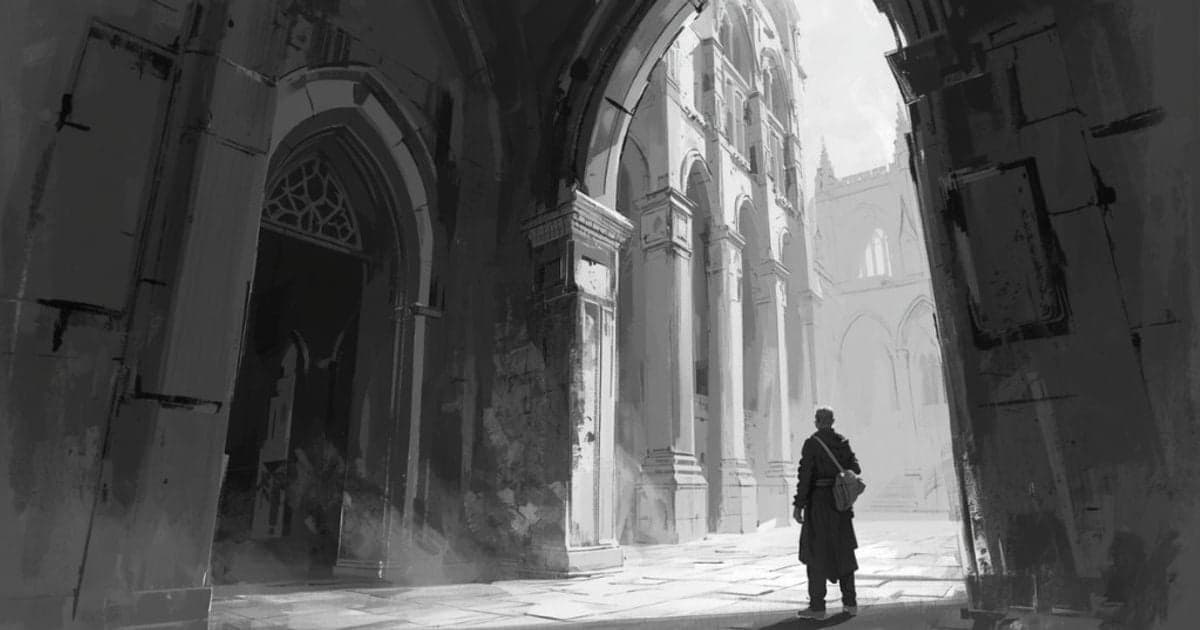
The château, a modern building in Italian style, with two projecting wings and three flights of steps, lay at the foot of an immense green-sward, on which some cows were grazing among groups of large trees set out at regular intervals, while large beds of arbutus, rhododendron, syringas, and guelder roses bulged out their irregular clusters of green along the curve of the gravel path. A river flowed under a bridge; through the mist one could distinguish buildings with thatched roofs scattered over the field bordered by two gently sloping, well timbered hillocks, and in the background amid the trees rose in two parallel lines the coach houses and stables, all that was left of the ruined old château.

Charles’s dog-cart pulled up before the middle flight of steps; servants appeared; the Marquis came forward, and, offering his arm to the doctor’s wife, conducted her to the vestibule.

It was paved with marble slabs, was very lofty, and the sound of footsteps and that of voices re-echoed through it as in a church.

1 / 23

Master this chapter. Complete your experience

Purchase the complete book to access all chapters and support classic literature

Read Free on GutenbergBuy at Powell'sBuy on Amazon

As an Amazon Associate, we earn a small commission from qualifying purchases at no additional cost to you.

Available in paperback, hardcover, and e-book formats

GO ADS FREE — JOIN US

Why This Matters

Connect literature to life

Skill: Recognizing Status Traps

This chapter teaches how brief exposure to elevated circumstances can permanently damage satisfaction with your actual life.

Practice This Today

This week, notice when social media or experiences with wealthier people leave you feeling resentful about your own situation, then consciously practice the tourist mindset instead.

GO ADS FREE — JOIN US

Now let's explore the literary elements.

Key Quotes & Analysis

"She would have liked to live in some old manor-house, like those long-waisted chatelaines who, in the shade of pointed arches, spent their days leaning on the stone, chin in hand, watching a cavalier with white plume galloping on his black horse from the distant fields."

— Narrator

Context: Describing Emma's romantic fantasies after experiencing the château

This quote reveals how the ball has intensified Emma's romantic delusions. She's not just dissatisfied with her current life - she's created an elaborate fantasy of medieval romance that real life can never match.

In Today's Words:

She wanted to live like a princess in a fairy tale, waiting for her prince to come rescue her from ordinary life.

"It was like a door opening on to her life; she could see beyond it a vast land of joys and passions."

— Narrator

Context: Emma's reaction to the château experience

The ball creates what Flaubert calls 'a hole in her life' - a permanent gap between what she has and what she now knows exists. This moment transforms her from merely dissatisfied to actively tormented by impossible dreams.

In Today's Words:

It was like getting a taste of the good life and realizing how much she was missing out on.

"At the bottom of her heart, however, she was waiting for something to happen."

— Narrator

Context: Describing Emma's state of mind after the ball

This captures Emma's fundamental problem - she's passive in her own life, waiting for external events to transform her rather than taking action. The ball has made this waiting more desperate and specific.

In Today's Words:

Deep down, she was just waiting for something exciting to finally happen to her.

Thematic Threads

Class

In This Chapter

Emma experiences aristocratic luxury firsthand and realizes the vast gulf between social classes

Development

Evolved from abstract romantic fantasies to concrete class consciousness

In Your Life:

You might feel this when visiting wealthy neighborhoods or attending events above your usual social circle

Identity

In This Chapter

Emma feels the ball reveals her 'true self' while her actual life feels like a mistake

Development

Her identity confusion deepens as she rejects her current role

In Your Life:

You might recognize this when certain experiences make you feel like you're finally being your 'real self'

Dissatisfaction

In This Chapter

The ball creates 'a hole in her life' that makes everything else feel inadequate

Development

Transformed from general restlessness to specific, focused discontent

In Your Life:

You might notice this when one good experience makes everything else in your life seem disappointing

Memory

In This Chapter

Emma obsessively replays every detail of the ball as the memory becomes more precious than reality

Development

Introduced here as a coping mechanism for disappointment

In Your Life:

You might catch yourself doing this when you can't stop thinking about a perfect moment from your past

Social Performance

In This Chapter

Emma watches how the aristocrats move naturally through their world while she and Charles are clearly out of place

Development

Building on her awareness of social expectations and proper behavior

In Your Life:

You might feel this when you're in professional or social settings where you're not sure of the unwritten rules

GO ADS FREE — JOIN US

You now have the context. Time to form your own thoughts.

Discussion Questions

  1. 1

    What specific details from the ball does Emma obsess over, and how does her behavior change when she returns home?

    analysis • surface
  2. 2

    Why does one evening at the château have such a powerful and lasting effect on Emma's satisfaction with her life?

    analysis • medium
  3. 3

    Where do you see this 'borrowed glory' pattern today—people getting a taste of a higher lifestyle and becoming permanently dissatisfied with their reality?

    application • medium
  4. 4

    How could Emma have enjoyed the ball without letting it poison her contentment with her actual life? What strategies help people appreciate special experiences without making them the new standard?

    application • deep
  5. 5

    What does Emma's reaction reveal about how comparison affects our ability to find satisfaction in what we have?

    reflection • deep

Critical Thinking Exercise

10 minutes

Track Your Comparison Triggers

For the next week, notice when you feel dissatisfied after seeing someone else's lifestyle—whether in person, on social media, or in entertainment. Write down what you saw and how it made you feel about your own situation. Then identify which experiences inspire you to grow versus which ones just make you resentful.

Consider:

  • •Pay attention to the difference between momentary appreciation and lasting dissatisfaction
  • •Notice if certain types of content or situations consistently trigger comparison
  • •Consider whether the lifestyle you're envying is actually achievable or just fantasy

Journaling Prompt

Write about a time when you experienced something luxurious or elevated beyond your normal life. How did it affect your satisfaction with your regular circumstances? Looking back, how could you have enjoyed the experience without letting it become a source of ongoing dissatisfaction?

GO ADS FREE — JOIN US

Coming Up Next...

Chapter 9: The Viscount's Cigar Case

As the memory of the ball fades but the longing intensifies, Emma must face the reality of her daily life in Tostes. Her restlessness grows, and she begins to see her marriage and surroundings in an increasingly harsh light.

Continue to Chapter 9
Previous
The Weight of Ordinary Love
Contents
Next
The Viscount's Cigar Case

Continue Exploring

Madame Bovary Study GuideTeaching ResourcesEssential Life IndexBrowse by ThemeAll Books
Love & RelationshipsSocial Class & StatusIdentity & Self-Discovery

You Might Also Like

Jane Eyre cover

Jane Eyre

Charlotte Brontë

Explores personal growth

Great Expectations cover

Great Expectations

Charles Dickens

Explores personal growth

The Strange Case of Dr Jekyll and Mr Hyde cover

The Strange Case of Dr Jekyll and Mr Hyde

Robert Louis Stevenson

Explores personal growth

Don Quixote cover

Don Quixote

Miguel de Cervantes Saavedra

Explores personal growth

Browse all 47+ books
GO ADS FREE — JOIN US

Share This Chapter

Know someone who'd enjoy this? Spread the wisdom!

TwitterFacebookLinkedInEmail

Read ad-free with Prestige

Get rid of ads, unlock study guides and downloads, and support free access for everyone.

Subscribe to PrestigeCreate free account
Intelligence Amplifier
Intelligence Amplifier™Powering Wide Reads

Exploring human-AI collaboration through books, essays, and philosophical dialogues. Classic literature transformed into navigational maps for modern life.

2025 Books

→ The Amplified Human Spirit→ The Alarming Rise of Stupidity Amplified→ San Francisco: The AI Capital of the World
Visit intelligenceamplifier.org
hello@widereads.com

WideReads Originals

→ You Are Not Lost→ The Last Chapter First→ The Lit of Love→ Wealth and Poverty→ 10 Paradoxes in the Classics · coming soon
Arvintech
arvintechAmplify your Mind
Visit at arvintech.com

Navigate

  • Home
  • Library
  • Essential Life Index
  • How It Works
  • Subscribe
  • Account
  • About
  • Contact
  • Authors
  • Suggest a Book
  • Landings

Made For You

  • Students
  • Educators
  • Families
  • Readers
  • Literary Analysis
  • Finding Purpose
  • Letting Go
  • Recovering from a Breakup
  • Corruption
  • Gaslighting in the Classics

Newsletter

Weekly insights from the classics. Amplify Your Mind.

Legal

  • Privacy Policy
  • Terms of Service
  • Cookie Policy
  • Accessibility

Why Public Domain?

We focus on public domain classics because these timeless works belong to everyone. No paywalls, no restrictions—just wisdom that has stood the test of centuries, freely accessible to all readers.

Public domain books have shaped humanity's understanding of love, justice, ambition, and the human condition. By amplifying these works, we help preserve and share literature that truly belongs to the world.

A Pilgrimage

Powell's City of Books

Portland, Oregon

If you ever find yourself in Portland, walk to the corner of Burnside and 10th. The building takes up an entire city block. Inside is over a million books, new and used on the same shelf, organized by color-coded rooms with names like the Rose Room and the Pearl Room. You can lose an afternoon. You can lose a weekend. You will find a book you have been looking for your whole life, and three you did not know existed.

It is a pilgrimage. We cannot find a bookstore like it anywhere on earth. If you read the classics, and you ever get the chance, go. It belongs on every reader's bucket list.

Visit powells.com

We are not in any way affiliated with Powell's. We are just a very big fan.

© 2026 Wide Reads™. All Rights Reserved.

Intelligence Amplifier™ and Wide Reads™ are proprietary trademarks of Arvin Lioanag.

Copyright Protection: All original content, analyses, discussion questions, pedagogical frameworks, and methodology are protected by U.S. and international copyright law. Unauthorized reproduction, distribution, web scraping, or use for AI training is strictly prohibited. See our Copyright Notice for details.

Disclaimer: The information provided on this website is for general informational and educational purposes only and does not constitute professional, legal, financial, or technical advice. While we strive to ensure accuracy and relevance, we make no warranties regarding completeness, reliability, or suitability. Any reliance on such information is at your own risk. We are not liable for any losses or damages arising from use of this site. By using this site, you agree to these terms.