Chapter 21
The Escape Plan Unfolds
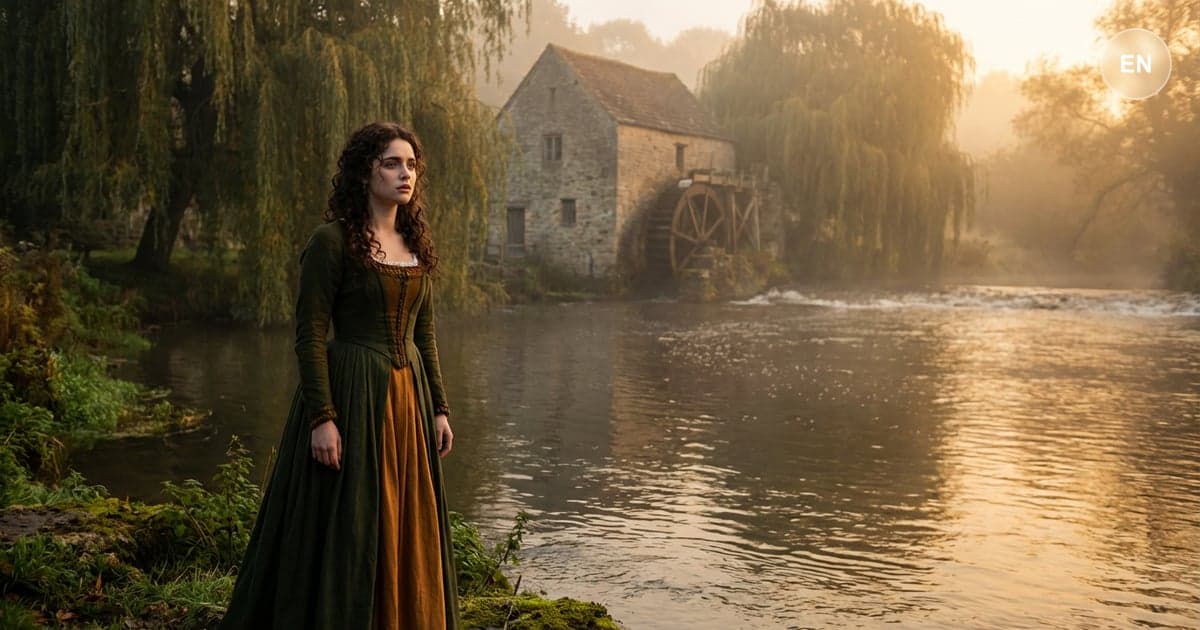
Chapter Twelve They began to love one another again. Often, even in the middle of the day, Emma suddenly wrote to him, then from the window made a sign to Justin, who, taking his apron off, quickly ran to La Huchette. Rodolphe would come; she had sent for him to tell him that she was bored, that her husband was odious, her life frightful. “But what can I do?” he cried one day impatiently. “Ah! if you would--” She was sitting on the floor between his knees, her hair loose, her look lost. “Why, what?” said Rodolphe. She sighed. “We…
Public-domain chapter text, formatted for reading.
Master this chapter. Complete your experience
Purchase the complete book to access all chapters and support classic literature
Available in paperback, hardcover, and e-book formats
Now let's explore the literary elements.
Key Quotes & Analysis
"Ah! I’ve got you!” thought Lheureux"
Context: After Emma refuses to return the riding-whip
The tradesman marks her panic and knows debt will bind her faster than romance.
In Today's Words:
Lheureux hears her refuse the whip and thinks he finally has her. That inner sentence is how predators name leverage: not love, not luck, but the moment you cannot return what you bought on credit and must borrow again on his terms, smiling while you still pretend the account will not come due.
"since human speech is like a cracked tin kettle, on which we hammer out tunes to make bears dance when we long to move the stars."
Context: Rodolphe hears Emma's extravagant love language
Flaubert judges both her overflow and his boredom: passion cannot be measured in words.
In Today's Words:
Flaubert says our words are too small for what we feel, like banging a dented pot to move the stars. Rodolphe has heard the same speeches from other women, so Emma's eloquence sounds like noise while she believes she is singing something unique, and the tragedy is that she is sincere while he is merely bored.
"Take me away,” she cried, “carry me off! Oh, I pray you!"
Context: After the white signal brings Rodolphe to the garden
She treats flight as salvation; he treats the scene as another performance.
In Today's Words:
Emma begs Rodolphe to steal her from Yonville as if geography could cure a marriage. She throws herself at his mouth to pull yes from a kiss, but he is already measuring what flight would cost him while she hears only her own desperation, and she will even take Berthe to make the fantasy look responsible.
"And besides, the worry, the expense! Ah! no, no, no, no! a thousand times no! That would be too stupid."
Context: Alone after leaving Emma on the riverbank
His tenderness lasts a moment; arithmetic and freedom win.
In Today's Words:
Rodolphe steadies himself by listing bother and money until refusal feels virtuous. He calls elopement stupid because it would make him responsible, and Flaubert shows how quickly a lover renames cowardice as realism once the white gown disappears in the dark, leaving Emma to discover the truth in a basket of apricots.
Thematic Threads
Desperation
In This Chapter
Emma's frantic planning and gift-giving to secure Rodolphe's commitment
Development
Escalated from earlier romantic fantasies to concrete escape plans
In Your Life:
You might recognize this when you find yourself over-explaining, over-giving, or over-planning to make someone stay.
Financial Control
In This Chapter
Lheureux manipulates Emma's debt while she uses money to try controlling Rodolphe
Development
Built from earlier shopping impulses to systematic financial manipulation
In Your Life:
This appears when creditors exploit your desperation or when you use spending to solve emotional problems.
Perception Gap
In This Chapter
Emma sees love and liberation while Rodolphe sees burden and entrapment in the same moments
Development
Widened from initial romantic misunderstandings to complete reality disconnect
In Your Life:
You experience this when you and someone else remember the same conversation completely differently.
Class Anxiety
In This Chapter
Emma's expensive travel fantasies and gift-giving as attempts to transcend her station
Development
Evolved from social climbing desires to concrete escape attempts
In Your Life:
This shows up when you overspend to fit in or when status anxiety drives major life decisions.
Emotional Labor
In This Chapter
Emma doing all the planning and emotional work while expecting Rodolphe to match her investment
Development
Intensified from earlier one-sided romantic efforts
In Your Life:
You see this when you're always the one making plans, initiating contact, or managing the relationship.
You now have the context. Time to form your own thoughts.
Discussion Questions
This is not a test. Five prompts guide you through the chapter, from how it opens to how it closes, so you notice context and rhythm rather than facts to memorize. Sit with each question in your own words. When you see "One way to read it," treat it as a starting point, not the only answer.
- 1
Why does Lheureux's whip scene matter for the rest of the chapter?
analysis • surfaceOne way to read it
It shows Emma cannot pay and he knows he can tighten control through credit.
- 2
What does the cracked tin kettle passage reveal about Rodolphe?
analysis • mediumOne way to read it
He experiences her passion as repetition, not revelation, and stays for convenience.
- 3
Why does Emma agree to take Berthe when she flees?
application • mediumOne way to read it
Panic makes her bundle duty into fantasy; Rodolphe already avoids the child.
- 4
How do Charles's bedside dreams contrast with Emma's travel reveries?
reflection • deepOne way to read it
He builds a domestic future she pretends to sleep through while planning to leave.
- 5
What changes in Rodolphe between the terrace midnight and the meadow?
analysis • deepOne way to read it
He performs commitment until distance lets him call elopement stupid and choose freedom.
Critical Thinking Exercise
Rewrite the Scene from Rodolphe's Perspective
Take one of Emma's desperate attempts to secure Rodolphe's commitment from this chapter and rewrite it from his point of view. Focus on what he's thinking and feeling as she pressures him. Then compare your version to what Emma thinks is happening in the same moment.
Consider:
- •Notice how the same conversation can feel completely different to each person
- •Pay attention to moments where Emma mistakes his politeness for enthusiasm
- •Consider how her intensity might feel overwhelming rather than romantic to him
Journaling Prompt
Write about a time when you were either the desperate bargainer or the person being pressured. How did the mismatch in intensity affect the relationship? What would you do differently now?
Coming Up Next...
Chapter 22: The Art of Self-Deception
Chapter Twenty-Two opens with Rodolphe at his desk, rummaging souvenirs, and composing the letter that will arrive hidden under apricots while Emma waits for a carriage that will never come.