Wide Reads
Literature MattersLife IndexEducators
Sign in
Where to Begin
Madame Bovary - The Merchant's Temptation and Hidden Desires

Gustave Flaubert

Madame Bovary

The Merchant's Temptation and Hidden Desires

Home›Books›Madame Bovary›Chapter 14
Previous
14 of 35
Next

Summary

The Merchant's Temptation and Hidden Desires

Madame Bovary by Gustave Flaubert

0:000:00
Listen to Next Chapter

On a Sunday afternoon in February, with snow falling, they all go to see a yarn-mill being built in the valley — Monsieur and Madame Bovary, Homais, and Leon, with Napoleon and Athalie brought along for exercise and Justin carrying the umbrellas. The mill is nothing: a great piece of waste ground, rusty break-wheels, an unfinished building through whose joists the sky can be seen, a bunch of straw with tricoloured ribbons fluttering in the wind. Homais computes the strength of the floorings and regrets not having a yard-stick such as Binet possesses for his own special use. Emma has taken Leon's arm. She turns and sees Charles: his cap drawn down over his eyebrows, his two thick lips trembling, which added a look of stupidity to his face; his very back, his calm back, was irritating to behold. Then Leon steps forward — the cold that makes him pale seems to add a more gentle languor to his face; between his cravat and his neck the somewhat loose collar of his shirt shows the skin; the lobe of his ear looks out beneath a lock of hair; his large blue eyes, raised to the clouds, seem to Emma more limpid and more beautiful than those mountain-lakes where the heavens are mirrored. Napoleon precipitates himself into a heap of lime to whiten his boots. A knife is wanted to clean them; Charles offers his. 'Ah!' she says to herself. 'He carried a knife in his pocket like a peasant.' That evening, alone in bed looking at the clean fire, the comparison re-begins with the clearness of a sensation almost actual. She sees Leon standing up, one hand behind his cane, holding Athalie who sucks a piece of ice. She cannot tear herself away. She pouted out her lips as if for a kiss: 'Charming! Charming! Is he not in love? But with whom? With me?' All the proofs arose before her at once; her heart leapt. Then began the eternal lamentation: 'Oh, if Heaven had not willed it! And why not?' When Charles comes home at midnight she asks carelessly what happened that evening. 'Monsieur Leon went to his room early.' She could not help smiling, and fell asleep, her soul filled with a new delight. The next day at dusk comes Monsieur Lheureux the draper — born a Gascon but bred a Norman, grafting southern volubility onto the cunning of the Cauchois. His fat beardless face is dyed by a decoction of liquorice; his white hair makes his small black eyes more vivid. Polite to obsequiousness, he holds himself perpetually bent in the position of one who bows. He lays out his wares: embroidered collars, Algerian scarves, English needles, straw slippers, eggcups in coconut wood carved by convicts. He filliqs the silk of the scarves with his nail; in the green twilight the gold spangles scintillate like little stars. Emma declines. He replies unconcernedly: 'We shall understand one another by and by.' Then quietly, leaning close: 'I could give you some money, if need be... I shouldn't have to go far to find you some, rely on that.' He closes the door gently. Emma has her dinner served in her bedroom on a tray by the fireside. 'How good I was!' she says to herself, thinking of the scarves. She hears steps on the stairs. It is Leon. She grabs the first pile of dusters to hem. The conversation languishes; he turns an ivory thimble-case in his fingers; she stitches in silence. At last he mentions going to Rouen and asks whether to renew her music subscription. 'No,' she says. 'Why?' 'Because —' and pursing her lips she draws a long stitch of grey thread. He asks if she is giving up music. 'Have I not my house to look after, my husband to attend to, a thousand things, many duties that must be considered first?' She looks at the clock. Affects anxiety about Charles being late. Two or three times she repeats: 'He is so good!' On the following days everything changes. She takes interest in the housework, goes to church regularly, is severe with her servant. She takes Berthe back from the nurse and when visitors call undresses her to show off her limbs, declaring she adores children. When Charles comes home his slippers are warming by the fire; his waistcoat never wants lining; in the cupboard the night-caps are arranged in piles of the same height. When Leon sees Charles by his fireside after dinner — hands on his stomach, feet on the fender, cheeks red with feeding, eyes moist with happiness, the child crawling on the carpet, and this woman with the slender waist coming behind his armchair to kiss his forehead — he says to himself: 'What madness! And how to reach her!' And thus she seemed so virtuous and inaccessible that he lost all hope. But by this renunciation he placed her on an extraordinary pinnacle — she stood outside those fleshly attributes, and in his heart she rose ever farther from him after the magnificent manner of an apotheosis that is taking wing. Emma grew thinner, her cheeks paler, her face longer. With her black hair, large eyes, aquiline nose, her birdlike walk, and always silent now, she seemed to be passing through life scarcely touching it, bearing on her brow the vague impress of some divine destiny. Near her one felt seized by an icy charm, as we shudder in churches at the perfume of flowers mingling with the cold of marble. Homais said: 'She is a woman of great parts, who wouldn't be misplaced in a sub-prefecture.' But she was eaten up with desires, with rage, with hate. She was in love with Leon and sought solitude to delight in his image. She rose after he left to watch him in the street, invented excuses to go to his room, envied Madame Homais for sleeping under the same roof. The more she recognised her love, the more she crushed it down. Domestic mediocrity drove her to lewd fancies, marriage tenderness to adulterous desires. She would have liked Charles to beat her, that she might have a better right to hate him. His conviction that he was making her happy seemed to her an imbecile insult. She was left broken, breathless, inert, sobbing in a low voice with flowing tears. 'It is the nerves,' she told Felicite. 'Do not speak to him of it.' Felicite told her of La Guerine, Pere Guerin's daughter, the fisherman's daughter at Pollet, who was so sad that she would go alone to the sea-shore, and the customs officer going his rounds often found her lying flat on her face, crying on the shingle. After her marriage, they said, it went off. 'But with me,' replied Emma, 'it was after marriage that it began.'

Coming Up in Chapter 15

Emma's carefully constructed facade of virtue begins to crack as her emotional needs clash with the suffocating reality of provincial life. A new opportunity for escape may present itself.

Share it with friends

Previous ChapterNext Chapter
GO ADS FREE — JOIN US
Original text
complete·3,039 words
C

hapter Five

It was a Sunday in February, an afternoon when the snow was falling.

They had all, Monsieur and Madame Bovary, Homais, and Monsieur Léon, gone to see a yarn-mill that was being built in the valley a mile and a half from Yonville. The druggist had taken Napoleon and Athalie to give them some exercise, and Justin accompanied them, carrying the umbrellas on his shoulder.

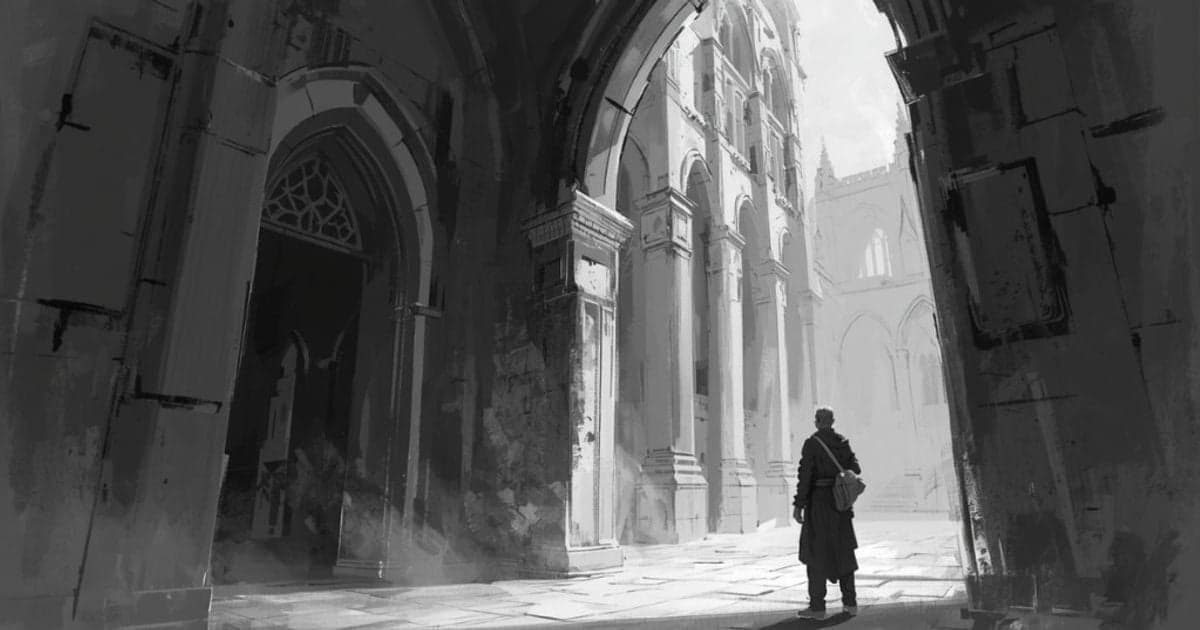
Nothing, however, could be less curious than this curiosity. A great piece of waste ground, on which pell-mell, amid a mass of sand and stones, were a few break-wheels, already rusty, surrounded by a quadrangular building pierced by a number of little windows. The building was unfinished; the sky could be seen through the joists of the roofing. Attached to the stop-plank of the gable a bunch of straw mixed with corn-ears fluttered its tricoloured ribbons in the wind.

Homais was talking. He explained to the company the future importance of this establishment, computed the strength of the floorings, the thickness of the walls, and regretted extremely not having a yard-stick such as Monsieur Binet possessed for his own special use.

1 / 19

Master this chapter. Complete your experience

Purchase the complete book to access all chapters and support classic literature

Read Free on GutenbergBuy at Powell'sBuy on Amazon

As an Amazon Associate, we earn a small commission from qualifying purchases at no additional cost to you.

Available in paperback, hardcover, and e-book formats

GO ADS FREE — JOIN US

Why This Matters

Connect literature to life

Skill: Recognizing Emotional Pressure Cookers

This chapter teaches how suppressed feelings transform into their opposite behaviors, creating dangerous internal pressure.

Practice This Today

This week, notice when you're performing virtue - working extra hard, being extra nice, or extra responsible - and ask yourself what feeling you're trying to avoid.

GO ADS FREE — JOIN US

Now let's explore the literary elements.

Key Quotes & Analysis

"She wondered if by some other chance combination it would have been possible to meet another man; and she tried to imagine what would have been these unrealised events, this different life, this unknown husband."

— Narrator

Context: Emma lies in bed thinking about her life and wondering about alternate possibilities

This reveals Emma's deep dissatisfaction with her choices and her tendency to fantasize about escape rather than address her real problems. She's already mentally unfaithful by imagining other lives.

In Today's Words:

What if I'd married someone else? What would my life be like with a different husband?

"She reproached herself with having loved him, and wished she could have been stronger."

— Narrator

Context: Emma trying to talk herself out of her feelings for Léon

This shows how Emma turns her natural emotions into moral failures, creating shame and self-hatred instead of honestly examining what her feelings mean about her marriage.

In Today's Words:

I shouldn't have fallen for him. I should have been able to control my feelings.

"The next day was a dreary one for Emma. Everything seemed to her enveloped in a black atmosphere floating confusedly over the exterior of things."

— Narrator

Context: Emma's emotional state after admitting her feelings for Léon

This captures how suppressed emotions affect our entire perception of reality. When we can't process feelings honestly, everything else becomes dark and confusing too.

In Today's Words:

The next day everything felt gray and hopeless, like the whole world was covered in fog.

"She would have liked to confide all these things to someone. But how tell an unspeakable uneasiness, variable as the clouds, unstable as the winds?"

— Narrator

Context: Emma's isolation and inability to express her inner turmoil

This shows how emotional isolation compounds suffering. Emma has no one she can trust with her real feelings, making her internal conflict even more unbearable.

In Today's Words:

She wanted to talk to someone about how she felt, but how do you explain feelings you can't even put into words?

Thematic Threads

Class Consciousness

In This Chapter

Emma is embarrassed by Charles's peasant-like gesture with the knife, highlighting her social aspirations and shame about her current position

Development

Deepening from earlier hints - now actively comparing her husband unfavorably to higher-class ideals

In Your Life:

You might find yourself embarrassed by a partner's behavior in public because it doesn't match the image you want to project

Desire

In This Chapter

Emma finally admits to herself that she's in love with Léon, marking a crucial internal shift from attraction to acknowledged feeling

Development

Evolved from subtle attraction in previous chapters to conscious recognition and internal confession

In Your Life:

You might recognize the moment when attraction becomes something you can no longer deny to yourself

Performance

In This Chapter

Emma launches into exaggerated domesticity and motherhood, performing virtue to combat her feelings

Development

New development - she's now actively constructing a false self rather than just being dissatisfied

In Your Life:

You might throw yourself into being the 'perfect' employee or parent when you're questioning those roles

Temptation

In This Chapter

Lheureux appears with luxury goods and easy credit, planting seeds for future financial trouble

Development

First appearance of this merchant character who will become significant to Emma's downfall

In Your Life:

You might encounter offers of easy money or instant gratification when you're emotionally vulnerable

Communication

In This Chapter

Emma and Léon's conversation becomes awkward and strained as unspoken feelings create tension

Development

Their easy rapport from earlier chapters now complicated by acknowledged but unexpressed attraction

In Your Life:

You might find conversations becoming stilted when there are feelings you both sense but can't discuss

GO ADS FREE — JOIN US

You now have the context. Time to form your own thoughts.

Discussion Questions

  1. 1

    What specific behaviors does Emma adopt to try to be the 'perfect wife,' and how does her body respond to this internal conflict?

    analysis • surface
  2. 2

    Why does Emma's attempt to suppress her feelings through exaggerated virtue actually make those feelings stronger?

    analysis • medium
  3. 3

    Where have you seen someone throw themselves into 'being good' when they're actually struggling with unwanted feelings or desires?

    application • medium
  4. 4

    When you're trying to avoid difficult emotions, what's the difference between healthy coping and the kind of 'virtuous rebellion' Emma displays?

    application • deep
  5. 5

    What does Emma's pattern teach us about what happens when we try to solve internal conflicts through external performance?

    reflection • deep

Critical Thinking Exercise

10 minutes

Spot the Pressure Cooker Pattern

Think of a time when you or someone close to you went overboard trying to be 'perfect' in one area of life. Map out what was really happening underneath that performance. What feeling or situation were they trying to avoid? How did the extra effort actually make things worse?

Consider:

  • •Look for situations where someone suddenly became 'too good' at something they normally handled casually
  • •Notice when perfectionism appears right after a crisis, temptation, or difficult realization
  • •Consider how the body and energy levels responded to this internal pressure

Journaling Prompt

Write about a time when you tried to solve an emotional problem by being extra good at something else. What were you really trying not to feel, and what happened to those buried feelings over time?

GO ADS FREE — JOIN US

Coming Up Next...

Chapter 15: Spiritual Emptiness and Failed Connections

Emma's carefully constructed facade of virtue begins to crack as her emotional needs clash with the suffocating reality of provincial life. A new opportunity for escape may present itself.

Continue to Chapter 15
Previous
Dangerous Intimacy Through Small Gestures
Contents
Next
Spiritual Emptiness and Failed Connections

Continue Exploring

Madame Bovary Study GuideTeaching ResourcesEssential Life IndexBrowse by ThemeAll Books
Love & RelationshipsSocial Class & StatusIdentity & Self-Discovery

You Might Also Like

Jane Eyre cover

Jane Eyre

Charlotte Brontë

Explores personal growth

Great Expectations cover

Great Expectations

Charles Dickens

Explores personal growth

The Strange Case of Dr Jekyll and Mr Hyde cover

The Strange Case of Dr Jekyll and Mr Hyde

Robert Louis Stevenson

Explores personal growth

Don Quixote cover

Don Quixote

Miguel de Cervantes Saavedra

Explores personal growth

Browse all 47+ books
GO ADS FREE — JOIN US

Share This Chapter

Know someone who'd enjoy this? Spread the wisdom!

TwitterFacebookLinkedInEmail

Read ad-free with Prestige

Get rid of ads, unlock study guides and downloads, and support free access for everyone.

Subscribe to PrestigeCreate free account
Intelligence Amplifier
Intelligence Amplifier™Powering Wide Reads

Exploring human-AI collaboration through books, essays, and philosophical dialogues. Classic literature transformed into navigational maps for modern life.

2025 Books

→ The Amplified Human Spirit→ The Alarming Rise of Stupidity Amplified→ San Francisco: The AI Capital of the World
Visit intelligenceamplifier.org
hello@widereads.com

WideReads Originals

→ You Are Not Lost→ The Last Chapter First→ The Lit of Love→ Wealth and Poverty→ 10 Paradoxes in the Classics · coming soon
Arvintech
arvintechAmplify your Mind
Visit at arvintech.com

Navigate

  • Home
  • Library
  • Essential Life Index
  • How It Works
  • Subscribe
  • Account
  • About
  • Contact
  • Authors
  • Suggest a Book
  • Landings

Made For You

  • Students
  • Educators
  • Families
  • Readers
  • Literary Analysis
  • Finding Purpose
  • Letting Go
  • Recovering from a Breakup
  • Corruption
  • Gaslighting in the Classics

Newsletter

Weekly insights from the classics. Amplify Your Mind.

Legal

  • Privacy Policy
  • Terms of Service
  • Cookie Policy
  • Accessibility

Why Public Domain?

We focus on public domain classics because these timeless works belong to everyone. No paywalls, no restrictions—just wisdom that has stood the test of centuries, freely accessible to all readers.

Public domain books have shaped humanity's understanding of love, justice, ambition, and the human condition. By amplifying these works, we help preserve and share literature that truly belongs to the world.

A Pilgrimage

Powell's City of Books

Portland, Oregon

If you ever find yourself in Portland, walk to the corner of Burnside and 10th. The building takes up an entire city block. Inside is over a million books, new and used on the same shelf, organized by color-coded rooms with names like the Rose Room and the Pearl Room. You can lose an afternoon. You can lose a weekend. You will find a book you have been looking for your whole life, and three you did not know existed.

It is a pilgrimage. We cannot find a bookstore like it anywhere on earth. If you read the classics, and you ever get the chance, go. It belongs on every reader's bucket list.

Visit powells.com

We are not in any way affiliated with Powell's. We are just a very big fan.

© 2026 Wide Reads™. All Rights Reserved.

Intelligence Amplifier™ and Wide Reads™ are proprietary trademarks of Arvin Lioanag.

Copyright Protection: All original content, analyses, discussion questions, pedagogical frameworks, and methodology are protected by U.S. and international copyright law. Unauthorized reproduction, distribution, web scraping, or use for AI training is strictly prohibited. See our Copyright Notice for details.

Disclaimer: The information provided on this website is for general informational and educational purposes only and does not constitute professional, legal, financial, or technical advice. While we strive to ensure accuracy and relevance, we make no warranties regarding completeness, reliability, or suitability. Any reliance on such information is at your own risk. We are not liable for any losses or damages arising from use of this site. By using this site, you agree to these terms.