Chapter 10
Welcome to Yonville
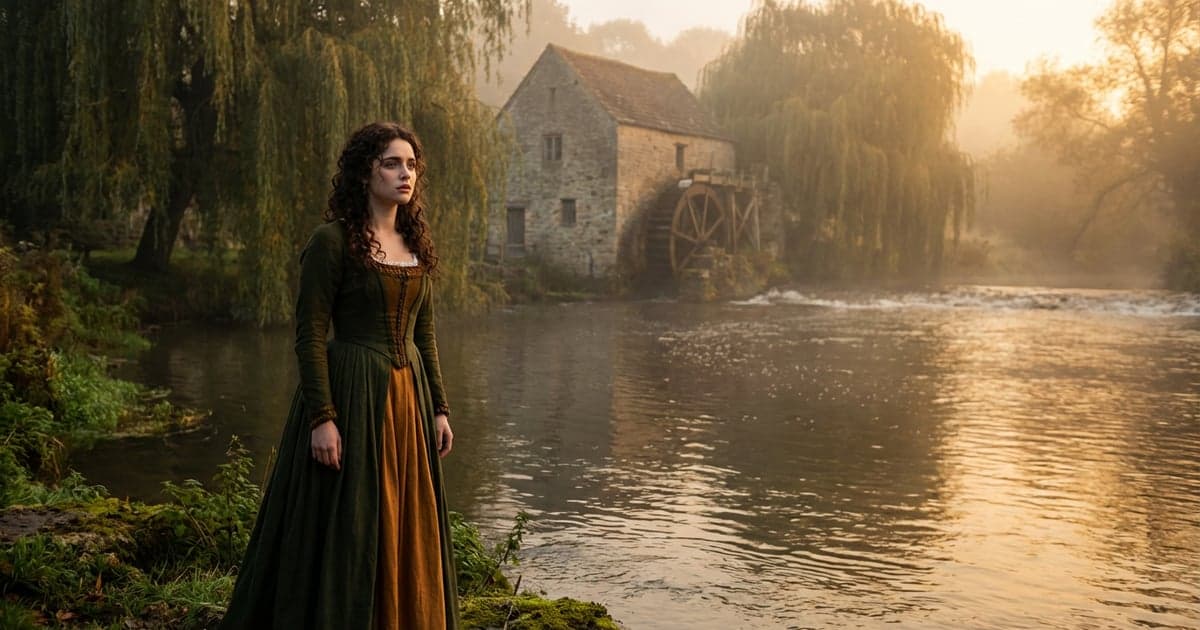
Chapter One Yonville-l’Abbaye (so called from an old Capuchin abbey of which not even the ruins remain) is a market-town twenty-four miles from Rouen, between the Abbeville and Beauvais roads, at the foot of a valley watered by the Rieule, a little river that runs into the Andelle after turning three water-mills near its mouth, where there are a few trout that the lads amuse themselves by fishing for on Sundays. We leave the highroad at La Boissiere and keep straight on to the top of the Leux hill, whence the valley is seen. The river that runs through it…
Public-domain chapter text, formatted for reading.
Master this chapter. Complete your experience
Purchase the complete book to access all chapters and support classic literature
Available in paperback, hardcover, and e-book formats
Now let's explore the literary elements.
Key Quotes & Analysis
"Here we are on the confines of Normandy, Picardy, and the Ile-de-France, a bastard land whose language is without accent and its landscape is without character."
Context: Flaubert introduces Yonville's region
The town begins as bland geography. Mediocrity is built into the map.
In Today's Words:
The town sits in a forgettable borderland, neither one place nor another, with no distinctive voice or view. Some suburbs and strip towns feel the same: you drive through and cannot describe them an hour later. Flaubert is warning that geography without character cannot rescue a mood you carry inside the coach.
"Yonville-l’Abbaye has remained stationary in spite of its “new outlet.”"
Context: A new road did not modernize the town
Change arrives but habits resist it. Emma will find the same trap with new faces.
In Today's Words:
Even after a new road, the town refused to grow up or change its habits. Fresh starts often fail when people keep the same complaints and call it tradition instead of examining what they import. Emma will discover that Yonville's new outlet is scenery, not a new inner life, and the same boredom will return on schedule.
"You live on the dead, Lestiboudois!"
Context: The gravedigger plants potatoes in the cemetery
Dark comedy shows provincial moral fuzziness. Profit and piety share soil.
In Today's Words:
The priest accuses the graveyard keeper of farming the burial ground for profit. Small places normalize mixed motives: side hustles beside sacred work, gossip beside charity, and everyone learns to look away. Flaubert uses dark comedy to show that Yonville's moral lines are blurry long before Emma's affairs complicate them further.
"Emma had wept, grown angry; she had accused Charles of this misfortune."
Context: The greyhound was lost on the coach journey
Arrival is grief and blame. Even pets become symbols of what she left.
In Today's Words:
She cried and blamed Charles when the dog ran off during the move. Stress relocations often turn into fights about symbols, not the real fear underneath, and the wrong person pays first. The lost greyhound stands for every small disaster that becomes proof the marriage, not the journey, failed her expectations again.
Thematic Threads
Static Town
In This Chapter
New roads, old pasture habits, cemetery potatoes
Development
Sets Yonville as Tostes with a pharmacy and Léon nearby
In Your Life:
Visit a place twice before you decide it will save you.
Arrival Grief
In This Chapter
Emma weeps for the greyhound and blames Charles
Development
Shows she mourns fantasy loss, not only the pet
In Your Life:
Notice anger on moving day that targets the wrong person.
You now have the context. Time to form your own thoughts.
Discussion Questions
This is not a test. Five prompts guide you through the chapter, from how it opens to how it closes, so you notice context and rhythm rather than facts to memorize. Sit with each question in your own words. When you see "One way to read it," treat it as a starting point, not the only answer.
- 1
Why does Flaubert describe Yonville in detail before Emma enters?
analysis • surfaceOne way to read it
The town is a character: cramped, comic, resistant to change. Readers see the trap before Emma does.
- 2
What do Homais and Binet represent in the town's social world?
analysis • mediumOne way to read it
Homais is loud progressive self-promotion; Binet is rigid habit. Both will press on Emma differently than Charles.
- 3
When have you expected a new place to fix an old feeling?
application • mediumOne way to read it
Moves, job changes, or trips often repeat dynamics because people, not addresses, carry the mood.
- 4
Why is Emma's grief over the greyhound also grief over something larger?
analysis • deepOne way to read it
The dog is a symbol of lost possibility. She mourns the life she thought the move would restore.
- 5
How does Lheureux's presence on the coach foreshadow later harm?
reflection • deepOne way to read it
He flatters her sorrow and speaks commerce. Comfort and credit will arrive together in Yonville.
Critical Thinking Exercise
Map Your Moving Pattern
Think about a time when you changed something external hoping it would fix an internal problem - a job, relationship, living situation, or even something smaller like a gym or grocery store. Write down what you were hoping would change and what actually happened. Then identify what patterns or habits you carried with you to the new situation.
Consider:
- •Focus on your own patterns rather than blaming circumstances or other people
- •Look for what stayed the same despite the external change
- •Consider what internal work might have led to different outcomes
Journaling Prompt
Write about a major change you're considering now. What are you running from versus what are you growing toward? What internal work could you do first to set yourself up for success?
Coming Up Next...
Chapter 11: First Connections in Yonville
Chapter Eleven opens at the Lion d'Or hearth: Emma warms her foot by the fire while Léon watches, and their talk of sunsets, novels, and boredom begins before they walk home through the fog After the Hirondelle stops, the Bovarys dine at the Lion d'Or with Homais and Léon. Emma warms her foot at the kitchen fire while the clerk watches from across the.