Wide Reads
Literature MattersLife IndexEducators
Sign in
Where to Begin
Madame Bovary - Welcome to Yonville

Gustave Flaubert

Madame Bovary

Welcome to Yonville

Home›Books›Madame Bovary›Chapter 10
Previous
10 of 35
Next

Summary

Welcome to Yonville

Madame Bovary by Gustave Flaubert

0:000:00
Listen to Next Chapter

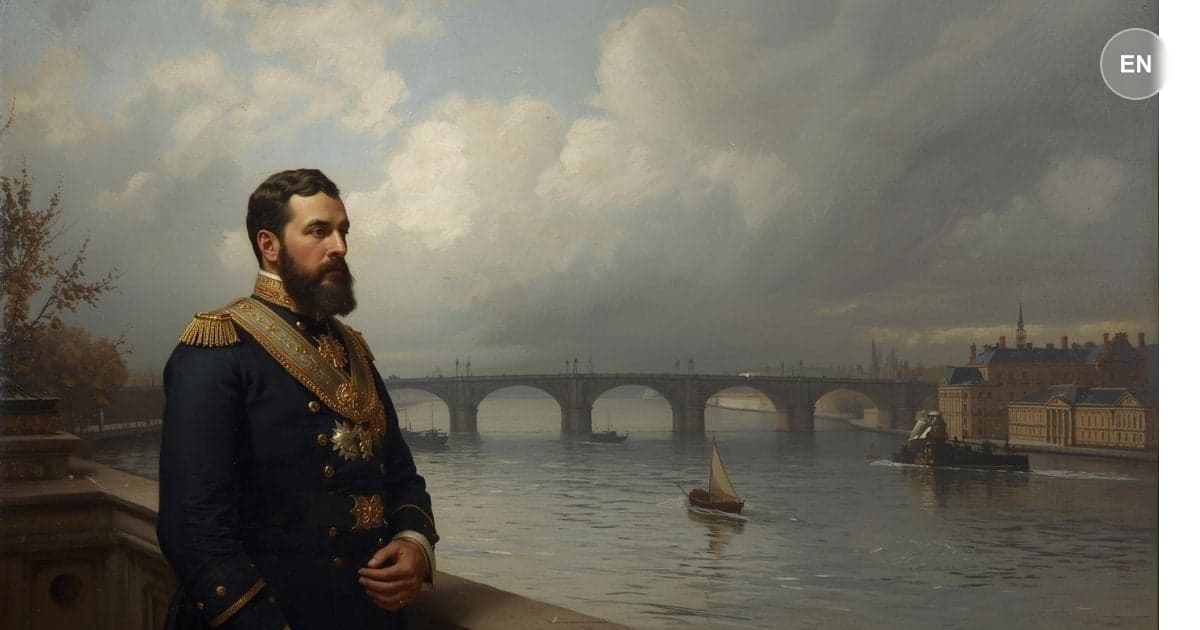
Before the Bovarys arrive, Flaubert gives us Yonville-l'Abbaye entire — a market-town twenty-four miles from Rouen, at the foot of a valley watered by the Rieule. Seen from the top of the Leux hill, the river divides the valley into two distinct regions: all on the left is pasture land, all on the right arable. The water flowing by the grass divides it with a white line, and the country is like a great unfolded mantle with a green velvet cape bordered with a fringe of silver. Here we are on the confines of Normandy, Picardy, and the Ile-de-France — a bastard land whose language is without accent and its landscape without character. It is there that they make the worst Neufchatel cheeses of all the arrondissement. A new cross-road was built in 1835, but Yonville-l'Abbaye has remained stationary in spite of its 'new outlet.' Instead of improving the soil, they persist in keeping up the pasture lands. The lazy borough, growing away from the plain, has naturally spread riverwards, sprawling along the banks like a cowherd taking a siesta by the water-side. The architectural tour of Yonville is Flaubert's quiet comedy. The first houses have thatched roofs, like fur caps drawn over eyes, reaching down over a third of the low windows whose coarse convex glasses have knots in the middle like the bottoms of bottles. Then comes the notary's house — the finest in the place — beyond a grass mound ornamented with a Cupid, his finger on his lips, two brass vases at each end of a flight of steps. The church nearby has a wooden roof beginning to rot, and a statuette of the Virgin clothed in a satin robe with red cheeks, like an idol of the Sandwich Islands. The town hall is a sort of Greek temple constructed 'from the designs of a Paris architect,' its dome crowned by a Gallic cock resting one foot on the Charte and holding in the other the scales of Justice. But that which most attracts the eye is the chemist's shop of Monsieur Homais, opposite the Lion d'Or inn. In the evening its argand lamp is lit up and the red and green jars throw far across the street their two streams of colour; the shadow of the chemist leans over his desk as if in Bengal lights. His house from top to bottom is placarded with inscriptions: 'Vichy, Seltzer, Barege waters, blood purifiers, Raspail patent medicine, Arabian racahout, Darcet lozenges, Regnault paste, trusses, baths, hygienic chocolate.' The signboard bears in gold letters 'Homais, Chemist.' At the back of the shop, behind the great scales, the word 'Laboratory' appears on a scroll above a glass door, which halfway up repeats 'Homais' again in gold on a black ground. Beyond this there is nothing to see at Yonville. The single street, a gunshot in length, stops short at the turn of the highroad. At the time of the cholera, in order to enlarge the cemetery, a piece of wall was pulled down and three acres purchased; but the new portion is almost tenantless. The keeper — who is at once gravedigger and church beadle, making a double profit out of the parish corpses — has taken advantage of the unused ground to plant potatoes there. 'You live on the dead, Lestiboudois!' the cure at last said to him one day. This grim remark made him reflect; it checked him for some time; but to this day he carries on the cultivation of his little tubers, and even maintains stoutly that they grow naturally. Since the events about to be narrated, nothing in fact has changed at Yonville. The tin tricolour flag still swings at the top of the church-steeple; the chemist's foetuses rot more and more in their turbid alcohol; and above the big door of the inn the old golden lion, faded by rain, still shows passers-by its poodle mane. On the evening the Bovarys are to arrive, Widow Lefrancois, landlady of the Lion d'Or, is sweating great drops over her saucepans. Tomorrow is market-day; meat must be cut beforehand, fowls drawn, soup and coffee made, and the boarders' dinner seen to as well. The billiard-room echoes with bursts of laughter; three millers in a small parlour are calling for brandy; the wood is blazing; the brazen pan hissing; on the long kitchen table, amid quarters of raw mutton, rise piles of plates rattling with the shaking of the block on which spinach is being chopped. From the poultry-yard comes the screaming of fowls whose necks are being wrung. Warming his back at the chimney, in green leather slippers and a velvet cap with a gold tassel, is a man slightly marked with small-pox whose face expresses nothing but self-satisfaction — as calm as the goldfinch suspended above him in its wicker cage. This is Monsieur Homais, the chemist. He and Madame Lefrancois are in the middle of a quarrel about the billiard table, which he insists she should replace with a modern one — narrow pockets, heavy cues, no more hazards. 'Just look at Tellier!' he says. The landlady reddens with vexation. She has no intention of changing a table that comes in so handy for folding the washing, and on which, in hunting season, she has slept six visitors. Madame Lefrancois mentions her two regular boarders: Binet and Leon. Binet arrives on the stroke of six — not a minute late, not a minute early — a former carabineer turned tax-collector, wearing a blue frock-coat falling in a straight line round his thin body. He has a bald forehead flattened by the constant wearing of a helmet, fair whiskers framing his long wan face like a garden border, and a habit of turning napkin rings on his lathe at home, with which he has filled up his house with the jealousy of an artist and the egotism of a bourgeois. He goes directly to the small parlour and does not utter a word. Leon, by contrast, sometimes comes at seven or half-past and doesn't look at what he eats. 'Such a nice young man! Never speaks a rough word!' When the cure appears at the kitchen door — a rubicund, athletic man in black — to retrieve an umbrella he forgot at the Ernemont convent, Madame Lefrancois offers him a thimbleful of cassis or a glass of wine. He declines very politely and leaves for the church, where the Angelus is ringing. The moment his footsteps fade across the square, Homais declares his refusal to take refreshment 'the most odious hypocrisy' — all priests tippled on the sly and were trying to bring back the days of the tithe. The landlady defends her cure. Homais is not to be deflected. He launches into his profession of faith: 'I have a religion, my religion, and I even have more than all these others with their mummeries and their juggling. I adore God, on the contrary. I believe in the Supreme Being, in a Creator, whatever he may be.' He does not need to go to church to kiss silver plates and fatten good-for-nothings who live better than he does. 'My God! Mine is the God of Socrates, of Franklin, of Voltaire, and of Beranger! I am for the profession of faith of the Savoyard Vicar, and the immortal principles of '89! And I can't admit of an old boy of a God who takes walks in his garden with a cane in his hand, who lodges his friends in the belly of whales, dies uttering a cry, and rises again at the end of three days — things absurd in themselves, and completely opposed, moreover, to all physical laws.' He ceases, looking round for an audience, having for a moment fancied himself in the midst of the town council. But the landlady is no longer listening. She hears a distant rolling — a carriage mingled with the clattering of loose horseshoes — and the Hirondelle stops at the door. It is a yellow box on two large wheels, its small panes rattling in their sashes, retaining here and there patches of mud amid old layers of dust that not even storms of rain have washed away, drawn by three horses, its bottom jolting against the ground on downhill runs. Hivert the coachman, who serves as Yonville's errand-runner — bringing rolls of leather for the shoemaker, old iron for the farrier, a barrel of herrings for his mistress, caps from the milliner's — has been delayed. An accident: Madame Bovary's greyhound had run across a field. They had whistled for her a quarter of an hour; Hivert had even gone back a mile and a half. But it had been necessary to go on. Emma had wept, grown angry, and accused Charles of this misfortune. Monsieur Lheureux, a draper who happened to be in the coach with her, had tried to console her with a number of examples of lost dogs recognising their masters after long years — one who had come back to Paris from Constantinople, another who had gone a hundred and fifty miles in a straight line and swum four rivers, and his own father's poodle, which after twelve years of absence had all of a sudden jumped on his back in the street as he was going to dine in town.

Coming Up in Chapter 11

The Bovarys finally arrive in Yonville and meet their new neighbors, including the charming young clerk Léon who shares Emma's romantic sensibilities. Their first encounter will awaken feelings Emma thought she'd left behind in her marriage.

Share it with friends

Previous ChapterNext Chapter
GO ADS FREE — JOIN US
Original text
complete·3,463 words
C

hapter One

Yonville-l’Abbaye (so called from an old Capuchin abbey of which not even the ruins remain) is a market-town twenty-four miles from Rouen, between the Abbeville and Beauvais roads, at the foot of a valley watered by the Rieule, a little river that runs into the Andelle after turning three water-mills near its mouth, where there are a few trout that the lads amuse themselves by fishing for on Sundays.

1 / 23

Master this chapter. Complete your experience

Purchase the complete book to access all chapters and support classic literature

Read Free on GutenbergBuy at Powell'sBuy on Amazon

As an Amazon Associate, we earn a small commission from qualifying purchases at no additional cost to you.

Available in paperback, hardcover, and e-book formats

GO ADS FREE — JOIN US

Why This Matters

Connect literature to life

Skill: Recognizing Environmental vs. Personal Change

This chapter teaches how to distinguish between problems that require external changes and those that require internal growth.

Practice This Today

This week, notice when you catch yourself thinking 'If only I worked somewhere else...' or 'If only we lived in a different place...' and ask what patterns you might be carrying with you.

GO ADS FREE — JOIN US

Now let's explore the literary elements.

Key Quotes & Analysis

"Yonville-l'Abbaye is a market-town twenty-four miles from Rouen"

— Narrator

Context: Opening description of the town where the Bovarys will live

Flaubert immediately establishes this as a place defined by its distance from somewhere more important. The detailed geographic description suggests a place that's isolated and provincial, far from the excitement Emma craves.

In Today's Words:

It's one of those small towns in the middle of nowhere, hours from the nearest real city.

"The country is like a great unfolded mantle with a green velvet cape bordered with a fringe of silver"

— Narrator

Context: Describing the landscape around Yonville

Flaubert uses beautiful, almost romantic language to describe what is essentially farmland and pastures. This contrast between poetic description and mundane reality mirrors Emma's tendency to romanticize her surroundings.

In Today's Words:

The countryside looked like something out of a fairy tale, all green and shimmering.

"They make a wretched cheese there"

— Narrator

Context: Describing Yonville's main product

Even the town's one claim to fame - its cheese - is mediocre. This detail perfectly captures the theme of mediocrity that will suffocate Emma's dreams throughout the novel.

In Today's Words:

Even their local specialty was nothing to write home about.

Thematic Threads

Class

In This Chapter

The social hierarchy of Yonville emerges through evening routines—Homais the educated pharmacist dominates conversation, while others defer or withdraw

Development

Expanded from Charles's medical status to show how entire communities organize around perceived intellectual and social rankings

In Your Life:

You might notice this in how people position themselves in meetings, who gets heard and who gets ignored based on job titles or education levels.

Stagnation

In This Chapter

Yonville has infrastructure for progress (new roads) but residents resist change, preferring familiar routines and gossip

Development

Introduced here as the backdrop that will trap Emma's ambitions

In Your Life:

You might recognize this in workplaces that have the tools for improvement but stick to 'how we've always done things.'

Identity

In This Chapter

Each character has carved out a role—Homais the intellectual, Binet the solitary craftsman, Madame Lefrancois the hardworking proprietor

Development

Building on Emma's identity crisis by showing how people create fixed personas to navigate small-town social dynamics

In Your Life:

You might see this in how you or others get typecast in families or workplaces and struggle to grow beyond those roles.

Loss

In This Chapter

Emma weeps over her lost greyhound, mourning what she's left behind even as she seeks something new

Development

Deepened from her earlier dissatisfactions to show how change always involves grief for what we're leaving

In Your Life:

You might recognize this feeling when starting new jobs, relationships, or life phases—excitement mixed with unexpected sadness for what you're losing.

Expectations

In This Chapter

Emma arrives with hopes for a fresh start, but Yonville is revealed as another kind of limitation disguised as opportunity

Development

Continued from her marriage disappointments, now extending to her environment and community

In Your Life:

You might notice this pattern when moves, job changes, or relationship changes don't deliver the transformation you expected.

GO ADS FREE — JOIN US

You now have the context. Time to form your own thoughts.

Discussion Questions

  1. 1

    What does Flaubert show us about Yonville through the evening routines at the Lion d'Or inn, and what does Emma's reaction to losing her dog reveal about her expectations?

    analysis • surface
  2. 2

    Why do you think the townspeople resist progress despite having new roads that could bring prosperity, and how does this connect to Emma's pattern of seeking external solutions?

    analysis • medium
  3. 3

    Where do you see the 'Settling Pattern' today - people changing locations, jobs, or relationships while recreating the same problems?

    application • medium
  4. 4

    Before making a major life change, what internal work should someone do to avoid simply carrying their problems to a new place?

    application • deep
  5. 5

    What does this chapter teach us about the difference between running from something versus growing toward something?

    reflection • deep

Critical Thinking Exercise

10 minutes

Map Your Moving Pattern

Think about a time when you changed something external hoping it would fix an internal problem - a job, relationship, living situation, or even something smaller like a gym or grocery store. Write down what you were hoping would change and what actually happened. Then identify what patterns or habits you carried with you to the new situation.

Consider:

  • •Focus on your own patterns rather than blaming circumstances or other people
  • •Look for what stayed the same despite the external change
  • •Consider what internal work might have led to different outcomes

Journaling Prompt

Write about a major change you're considering now. What are you running from versus what are you growing toward? What internal work could you do first to set yourself up for success?

GO ADS FREE — JOIN US

Coming Up Next...

Chapter 11: First Connections in Yonville

The Bovarys finally arrive in Yonville and meet their new neighbors, including the charming young clerk Léon who shares Emma's romantic sensibilities. Their first encounter will awaken feelings Emma thought she'd left behind in her marriage.

Continue to Chapter 11
Previous
The Viscount's Cigar Case
Contents
Next
First Connections in Yonville

Continue Exploring

Madame Bovary Study GuideTeaching ResourcesEssential Life IndexBrowse by ThemeAll Books
Love & RelationshipsSocial Class & StatusIdentity & Self-Discovery

You Might Also Like

Jane Eyre cover

Jane Eyre

Charlotte Brontë

Explores personal growth

Great Expectations cover

Great Expectations

Charles Dickens

Explores personal growth

The Strange Case of Dr Jekyll and Mr Hyde cover

The Strange Case of Dr Jekyll and Mr Hyde

Robert Louis Stevenson

Explores personal growth

Don Quixote cover

Don Quixote

Miguel de Cervantes Saavedra

Explores personal growth

Browse all 47+ books
GO ADS FREE — JOIN US

Share This Chapter

Know someone who'd enjoy this? Spread the wisdom!

TwitterFacebookLinkedInEmail

Read ad-free with Prestige

Get rid of ads, unlock study guides and downloads, and support free access for everyone.

Subscribe to PrestigeCreate free account
Intelligence Amplifier
Intelligence Amplifier™Powering Wide Reads

Exploring human-AI collaboration through books, essays, and philosophical dialogues. Classic literature transformed into navigational maps for modern life.

2025 Books

→ The Amplified Human Spirit→ The Alarming Rise of Stupidity Amplified→ San Francisco: The AI Capital of the World
Visit intelligenceamplifier.org
hello@widereads.com

WideReads Originals

→ You Are Not Lost→ The Last Chapter First→ The Lit of Love→ Wealth and Poverty→ 10 Paradoxes in the Classics · coming soon
Arvintech
arvintechAmplify your Mind
Visit at arvintech.com

Navigate

  • Home
  • Library
  • Essential Life Index
  • How It Works
  • Subscribe
  • Account
  • About
  • Contact
  • Authors
  • Suggest a Book
  • Landings

Made For You

  • Students
  • Educators
  • Families
  • Readers
  • Literary Analysis
  • Finding Purpose
  • Letting Go
  • Recovering from a Breakup
  • Corruption
  • Gaslighting in the Classics

Newsletter

Weekly insights from the classics. Amplify Your Mind.

Legal

  • Privacy Policy
  • Terms of Service
  • Cookie Policy
  • Accessibility

Why Public Domain?

We focus on public domain classics because these timeless works belong to everyone. No paywalls, no restrictions—just wisdom that has stood the test of centuries, freely accessible to all readers.

Public domain books have shaped humanity's understanding of love, justice, ambition, and the human condition. By amplifying these works, we help preserve and share literature that truly belongs to the world.

A Pilgrimage

Powell's City of Books

Portland, Oregon

If you ever find yourself in Portland, walk to the corner of Burnside and 10th. The building takes up an entire city block. Inside is over a million books, new and used on the same shelf, organized by color-coded rooms with names like the Rose Room and the Pearl Room. You can lose an afternoon. You can lose a weekend. You will find a book you have been looking for your whole life, and three you did not know existed.

It is a pilgrimage. We cannot find a bookstore like it anywhere on earth. If you read the classics, and you ever get the chance, go. It belongs on every reader's bucket list.

Visit powells.com

We are not in any way affiliated with Powell's. We are just a very big fan.

© 2026 Wide Reads™. All Rights Reserved.

Intelligence Amplifier™ and Wide Reads™ are proprietary trademarks of Arvin Lioanag.

Copyright Protection: All original content, analyses, discussion questions, pedagogical frameworks, and methodology are protected by U.S. and international copyright law. Unauthorized reproduction, distribution, web scraping, or use for AI training is strictly prohibited. See our Copyright Notice for details.

Disclaimer: The information provided on this website is for general informational and educational purposes only and does not constitute professional, legal, financial, or technical advice. While we strive to ensure accuracy and relevance, we make no warranties regarding completeness, reliability, or suitability. Any reliance on such information is at your own risk. We are not liable for any losses or damages arising from use of this site. By using this site, you agree to these terms.