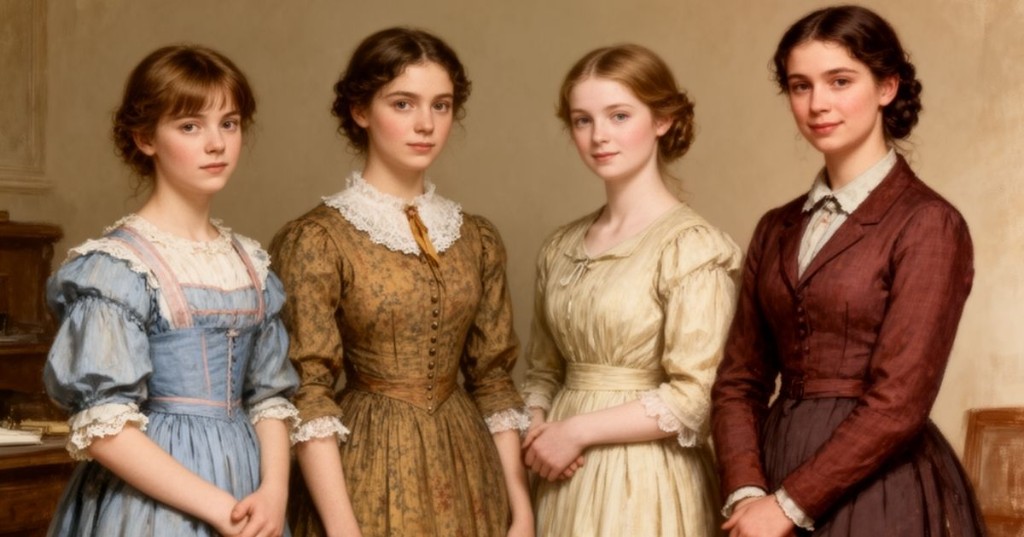
Chapter 45
The Next Generation's Wisdom
CHAPTER FORTY-FIVE DAISY AND DEMI I cannot feel that I have done my duty as humble historian of the March family, without devoting at least one chapter to the two most precious and important members of it. Daisy and Demi had now arrived at years of discretion, for in this fast age babies of three or four assert their rights, and get them, too, which is more than many of their elders do. If there ever were a pair of twins in danger of being utterly spoiled by adoration, it was these prattling Brookes. Of course they were the most…
Public-domain chapter text, formatted for reading.
Master this chapter. Complete your experience
Purchase the complete book to access all chapters and support classic literature
Available in paperback, hardcover, and e-book formats
Now let's explore the literary elements.
Key Quotes & Analysis
"humble historian"
Context: Opening apology for devoting a chapter to the twins
Alcott winks at serial form while centering the next generation.
In Today's Words:
The narrator calls herself a humble historian. Stories about families eventually turn to the children. The next generation reveals what adults have been hiding. The same pressure appears today when people perform a version of themselves that looks impressive on paper but drains the energy needed for real competence and connection.
"DAISY AND DEMI"
Context: Focus on Meg's twins
The title elevates toddlers to main characters.
In Today's Words:
A whole chapter belongs to the twins. Kids can drive plot by speaking plainly and needing care. Their world exposes adult pretense. The same pressure appears today when people perform a version of themselves that looks impressive on paper but drains the energy needed for real competence and connection.
"great boys like great girls"
Context: Demi asks about Jo and the Professor
Child logic forces the romance into the open.
In Today's Words:
A child asks if big boys like big girls. Kids still announce what adults circle around. Innocent questions can end denial. The same pressure appears today when people perform a version of themselves that looks impressive on paper but drains the energy needed for real competence and connection.
"neglected her playfellows"
Context: Jo spends time with Bhaer instead of the twins
Romantic distraction shows where Jo's heart is moving.
In Today's Words:
She neglects the children she used to entertain. New love rearranges your attention before you admit it. Absence tells on you. The same pressure appears today when people perform a version of themselves that looks impressive on paper but drains the energy needed for real competence and connection.
Thematic Threads
Authenticity
In This Chapter
Mr. Bhaer's natural ease with the twins contrasts with others' awkward performances around children
Development
Building from Jo's journey toward authentic self-expression
In Your Life:
You might notice how children or vulnerable patients respond differently to you when you're genuinely present versus going through motions.
Truth
In This Chapter
Demi's innocent question about whether 'great boys like great girls' forces hidden feelings into the open
Development
Continues the theme of truth emerging through unexpected channels
In Your Life:
You might find that honest questions from children or naive colleagues reveal truths others are avoiding.
Growth
In This Chapter
Jo's changing priorities as she neglects the twins for the Professor show her maturing focus
Development
Part of Jo's ongoing evolution from girl to woman
In Your Life:
You might recognize when your attention shifts signal deeper changes in your values and priorities.
Family
In This Chapter
The twins represent continuity and hope as the next generation of the March family legacy
Development
Evolution from the original four sisters to the expanding family circle
In Your Life:
You might see how children in your family carry forward values and traits from previous generations.
Wisdom
In This Chapter
Demi's philosophical conversations with his grandfather show how children possess unclouded insight
Development
Introduced here as a new perspective on intelligence and understanding
In Your Life:
You might notice how children ask the questions adults are afraid to voice, cutting straight to core issues.
You now have the context. Time to form your own thoughts.
Discussion Questions
This is not a test. Five prompts guide you through the chapter, from how it opens to how it closes, so you notice context and rhythm rather than facts to memorize. Sit with each question in your own words. When you see "One way to read it," treat it as a starting point, not the only answer.
- 1
Why does Alcott devote a chapter to Daisy and Demi?
analysis • surfaceOne way to read it
They are precious to the family and reveal adult behavior, especially Jo's romance, through innocent eyes.
- 2
How does Bhaer behave differently with children?
analysis • mediumOne way to read it
He plays naturally and kindly rather than performing affection, which makes children trust him immediately.
- 3
What does Demi's question accomplish?
application • mediumOne way to read it
It forces the hidden courtship between Jo and Bhaer into family awareness without adult speeches.
- 4
Why does Jo neglect the twins?
application • deepOne way to read it
Her focus has shifted toward Bhaer, showing her feelings are growing even before she declares them.
- 5
When has a child's honesty changed a room?
reflection • deepOne way to read it
Strong answers describe a direct question or remark that made adults stop pretending.
Critical Thinking Exercise
Test Your Authenticity Detector
Think of three people in your life who interact with children, elderly relatives, or new employees. Write down how these vulnerable groups respond to each person. Look for patterns - do children light up around one person but seem cautious with another? Do new coworkers immediately trust one supervisor but keep their guard up with someone else? Use these observations to identify who possesses genuine care versus who performs it.
Consider:
- •Children and vulnerable people haven't learned to ignore their instincts yet
- •Pay attention to body language and energy, not just words
- •Someone can say all the right things but still make others uncomfortable
Journaling Prompt
Write about a time when you initially trusted someone because they seemed nice, but children or animals around them acted differently. What did you learn from that experience about reading people's true character?
Coming Up Next...
Chapter 46: Love Under the Umbrella
The romantic tension that Demi innocently exposed reaches a crescendo as Jo and Professor Bhaer find themselves alone under an umbrella. Sometimes the most important conversations happen when you're caught in the rain with nowhere to hide..