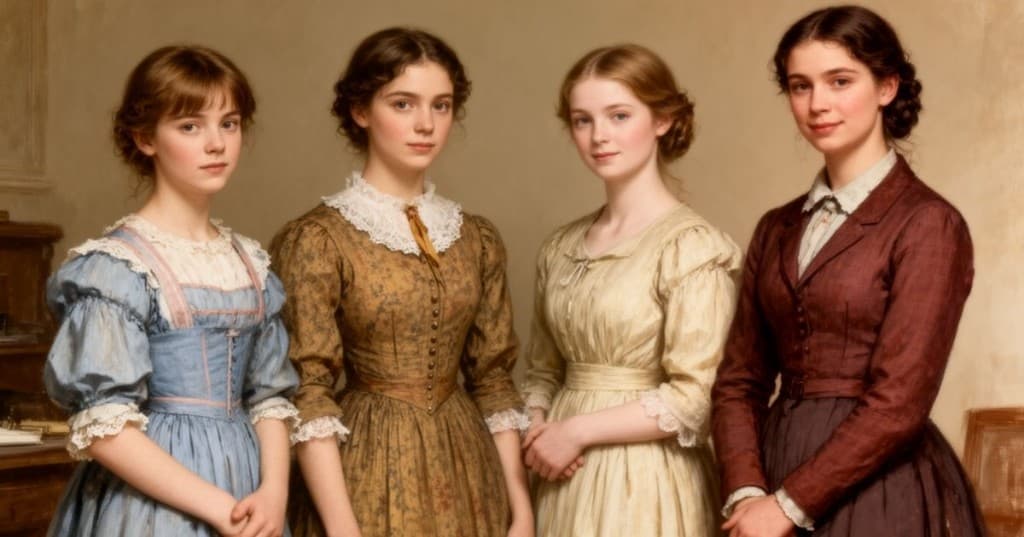
Chapter 04
When Life Gets Heavy Again
CHAPTER FOUR BURDENS “Oh, dear, how hard it does seem to take up our packs and go on,” sighed Meg the morning after the party, for now the holidays were over, the week of merrymaking did not fit her for going on easily with the task she never liked. “I wish it was Christmas or New Year’s all the time. Wouldn’t it be fun?” answered Jo, yawning dismally. “We shouldn’t enjoy ourselves half so much as we do now. But it does seem so nice to have little suppers and bouquets, and go to parties, and drive home, and read…
Public-domain chapter text, formatted for reading.
Master this chapter. Complete your experience
Purchase the complete book to access all chapters and support classic literature
Available in paperback, hardcover, and e-book formats
Now let's explore the literary elements.
Key Quotes & Analysis
"shoulder our bundles and trudge along as cheerfully as Marmee does"
Context: Jo answers Meg's wish that Christmas could last forever
Jo reframes duty as forward motion with a shared posture, borrowing Pilgrim language for ordinary work.
In Today's Words:
We cannot keep the holiday, so let's carry our loads and keep walking the way our mother does. People still need that shift after a good weekend when Monday returns unchanged obligations. Cheerfulness here means motion, not denial. The same pressure appears today when people perform a version of themselves that looks impressive on paper but drains the
"I give my boys, and give ’em free."
Context: Marmee tells the girls about a father who lost two sons and is going to a third
His quiet sacrifice shames comparison and resets the scale of what real loss looks like.
In Today's Words:
I gave my sons to the country's need and did not count the price. Hearing someone name a larger sacrifice can shrink self-pity without erasing your own pain. Scale is a tool for perspective, not a contest. The same pressure appears today when people perform a version of themselves that looks impressive on paper but drains the energy
"Tink ob yer marcies"
Context: Jo jokes after Marmee's gratitude parable
Jo turns sermon into family language they can reuse, which keeps the lesson alive without crushing spirits.
In Today's Words:
Think of your blessings, kids. Humor can make a moral reminder bearable enough to remember. Families need a phrase they can repeat without sounding preachy every time complaining starts to spiral. The same pressure appears today when people perform a version of themselves that looks impressive on paper but drains the energy needed for real competence and connection.
"There are many Beths in the world"
Context: Alcott describes Beth's quiet sacrifices
The narrator widens Beth from one character to a social type whose labor stays invisible until it disappears.
In Today's Words:
There are many quiet people who keep households running and rarely ask for credit. Offices, families, and friend groups depend on them until burnout or absence finally reveals how much they carried. Notice the steady person before the silence arrives. The same pressure appears today when people perform a version of themselves that looks impressive on paper but
Thematic Threads
Class
In This Chapter
Each sister's work situation reflects their family's economic position—Meg serves wealthy families, Jo depends on rich relatives, Beth can't afford music lessons, Amy wears old clothes
Development
Deepened from earlier chapters—now showing how class affects daily emotional experience, not just material conditions
In Your Life:
You might recognize how economic stress shapes not just what you can afford, but how you feel about yourself every day.
Identity
In This Chapter
Each sister struggles with who they are versus who they want to be—Meg wants luxury, Jo wants independence, Beth wants music, Amy wants beauty
Development
Evolved from Christmas wishes to daily reality checks—identity formation through confronting limitations
In Your Life:
You might see this in the gap between your career dreams and your current job, or between your ideal self and daily struggles.
Social Expectations
In This Chapter
The sisters must work and contribute while maintaining feminine respectability—a delicate balance of duty and propriety
Development
Expanded from family expectations to societal pressures—how women navigate economic necessity while preserving social standing
In Your Life:
You might recognize this in balancing professional ambition with family expectations, or managing multiple roles that sometimes conflict.
Personal Growth
In This Chapter
Mother's wisdom teaches the sisters to transform their relationship to hardship rather than escape it
Development
Introduced here as conscious character development—growth through perspective change rather than circumstance change
In Your Life:
You might apply this when facing unchangeable situations that require internal rather than external solutions.
Human Relationships
In This Chapter
The family gathering and story-sharing creates connection that helps everyone bear their individual burdens
Development
Deepened from earlier chapters—showing how relationships provide emotional support and perspective during difficult times
In Your Life:
You might recognize how sharing struggles with trusted people can make them feel more manageable, even when nothing practical changes.
You now have the context. Time to form your own thoughts.
Discussion Questions
This is not a test. Five prompts guide you through the chapter, from how it opens to how it closes, so you notice context and rhythm rather than facts to memorize. Sit with each question in your own words. When you see "One way to read it," treat it as a starting point, not the only answer.
- 1
Why is the morning after the party so tense in the March household?
analysis • surfaceOne way to read it
Holiday pleasure sharpened the contrast with work, money limits, and daily friction, so small annoyances like ink spills and cats feel larger than they would on an ordinary morning.
- 2
How does each sister's burden differ in this chapter?
analysis • mediumOne way to read it
Meg envies luxury while minding children, Jo trades freedom for Aunt March's library, Beth serves quietly without asking for a piano, and Amy suffers social shame over appearance and pride.
- 3
What does the narrator mean by saying there are many Beths in the world?
application • mediumOne way to read it
Alcott warns that shy, steady caregivers often stay invisible until they break or disappear, which means their sacrifice should be recognized before crisis makes it obvious.
- 4
How does Marmee's storytelling method work better than direct scolding?
application • deepOne way to read it
She lets the girls recognize themselves inside a parable and a real war father's example, so they change mood through insight rather than shame, and Jo can keep dignity while still taking the lesson.
- 5
When has someone else's story changed how heavy your own day felt?
reflection • deepOne way to read it
Strong answers describe a moment when hearing a larger or quieter sacrifice put their frustration in scale and made action possible again without pretending the problem vanished.
Critical Thinking Exercise
Practice the Perspective Flip
Think of something in your life that's been bothering you lately - a work situation, living arrangement, relationship issue, or financial stress. Write it down in one sentence. Then practice three different perspective flips: First, imagine how someone with a much bigger version of this problem would view yours. Second, list three things about your situation that someone else might actually envy. Third, identify one small action you could take within your current circumstances to improve things slightly.
Consider:
- •The goal isn't to dismiss your real feelings or problems, but to see them more clearly
- •Notice how your emotional response changes as you shift your focus
- •Pay attention to which perspective flip feels most helpful for moving forward
Journaling Prompt
Write about a time when someone else's story or struggle completely changed how you viewed your own situation. What did you learn about the power of perspective from that experience?
Coming Up Next...
Chapter 5: Breaking Down Barriers Through Kindness
The March family is about to meet their mysterious new neighbor, and this encounter will open up unexpected friendships and opportunities that will change their lives in ways they never imagined.