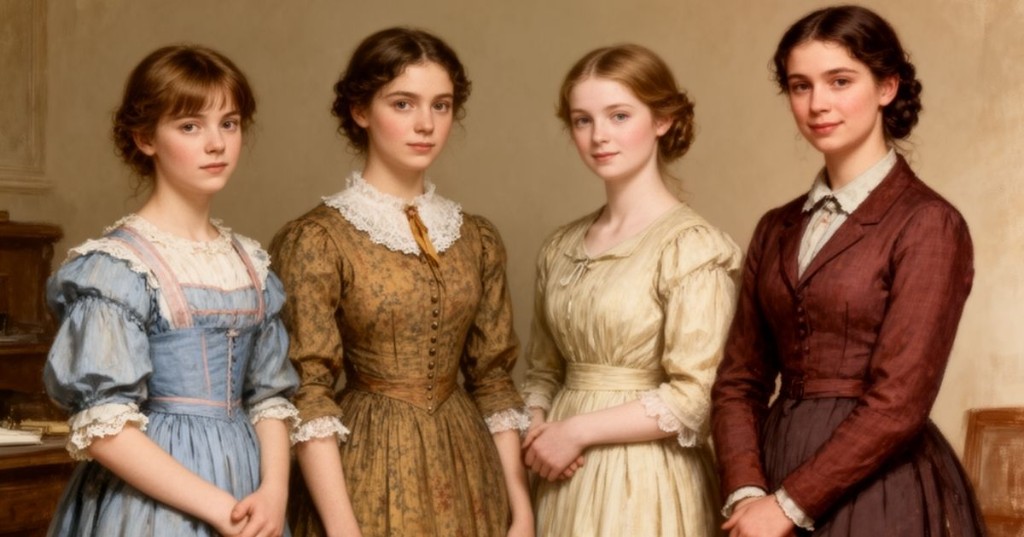
Chapter 16
Letters from the Heart
CHAPTER SIXTEEN LETTERS In the cold gray dawn the sisters lit their lamp and read their chapter with an earnestness never felt before. For now the shadow of a real trouble had come, the little books were full of help and comfort, and as they dressed, they agreed to say goodbye cheerfully and hopefully, and send their mother on her anxious journey unsaddened by tears or complaints from them. Everything seemed very strange when they went down, so dim and still outside, so full of light and bustle within. Breakfast at that early hour seemed odd, and even Hannah’s familiar…
Public-domain chapter text, formatted for reading.
Master this chapter. Complete your experience
Purchase the complete book to access all chapters and support classic literature
Available in paperback, hardcover, and e-book formats
Now let's explore the literary elements.
Key Quotes & Analysis
"In the cold gray dawn"
Context: Opening of Marmee's departure day
Alcott sets spiritual reading against physical dread before the first goodbye.
In Today's Words:
They woke in gray early light with dread in the room. Bad news still arrives at hours that feel too quiet for catastrophe. Rituals help when the day ahead is bigger than your courage. The same pressure appears today when people perform a version of themselves that looks impressive on paper but drains the energy needed for real
"shadow of a real trouble had come"
Context: Why the sisters read Pilgrim's Progress with new seriousness
Abstract war becomes a father in a hospital bed, giving their childhood game real stakes.
In Today's Words:
Real trouble had finally shown up. Problems feel different when they have a name and an address. The stories you rehearsed suddenly have to work in daylight. The same pressure appears today when people perform a version of themselves that looks impressive on paper but drains the energy needed for real competence and connection.
"TOPSY-TURVY JO"
Context: Jo's exuberant letter to her parents
Jo turns anxiety into performance and poetry instead of collapsing.
In Today's Words:
She signs her letter like a character because humor is how she survives fear. People still use jokes, memes, and bravado when they cannot say how scared they are. Style does not erase worry; it carries it. The same pressure appears today when people perform a version of themselves that looks impressive on paper but drains the energy
"begged each other’s pardon"
Context: After their quarrel at the gate
Friendship repairs quickly when both value the bond more than being right.
In Today's Words:
They apologized and made up on the spot. Healthy relationships still need fast repair after stupid fights, especially when bigger grief is waiting in the background. Pride is expensive when someone might leave town. The same pressure appears today when people perform a version of themselves that looks impressive on paper but drains the energy needed for real
Thematic Threads
Responsibility
In This Chapter
Meg steps into adult leadership role, managing household and siblings while maintaining emotional stability
Development
Evolved from earlier complaints about domestic duties to genuine pride in competence
In Your Life:
You might recognize this when you surprise yourself by how well you handle a family crisis or workplace emergency
Identity
In This Chapter
Each sister's letter reveals distinct personality through writing style, concerns, and coping mechanisms
Development
Builds on established character traits but shows them under pressure
In Your Life:
You see this when stress brings out either your best or worst qualities in relationships
Communication
In This Chapter
Letters become lifeline maintaining family connection across distance, each reflecting writer's emotional needs
Development
Introduced here as primary plot device and character revelation method
In Your Life:
You experience this when you realize how much your texting style reveals about your emotional state
Class
In This Chapter
Family's financial constraints show in Amy's concern about French lessons and social appearances
Development
Continues thread of economic anxiety affecting daily choices and social positioning
In Your Life:
You might notice this when your own financial stress affects decisions about your children's activities or education
Growth
In This Chapter
Crisis accelerates maturity, particularly in Meg who embraces adult responsibilities with newfound confidence
Development
Continues theme of gradual character development but shows crisis as catalyst
In Your Life:
You see this when unexpected challenges force you to develop skills or confidence you didn't know you had
You now have the context. Time to form your own thoughts.
Discussion Questions
This is not a test. Five prompts guide you through the chapter, from how it opens to how it closes, so you notice context and rhythm rather than facts to memorize. Sit with each question in your own words. When you see "One way to read it," treat it as a starting point, not the only answer.
- 1
Why do the sisters try to say goodbye cheerfully?
analysis • surfaceOne way to read it
They do not want to burden Marmee's anxious journey with tears and complaints when she already looks pale and worn.
- 2
How do the sisters' letters differ in tone and content?
analysis • mediumOne way to read it
Meg sounds responsible, Jo sounds exuberant and poetic, Beth is brief and tender, and Amy worries about lessons and spelling, each revealing temperament under stress.
- 3
What does Jo's quarrel and reconciliation with Laurie show?
application • mediumOne way to read it
Their friendship can survive petty friction because both value the bond enough to laugh and apologize before larger grief isolates them.
- 4
Why does Jo include a poem in her letter to Father?
application • deepOne way to read it
She knows he enjoys her silly verses and uses creativity to send love and courage when she cannot hug him herself.
- 5
When has distance forced you to show who you really are in writing?
reflection • deepOne way to read it
Strong answers describe a message sent during crisis that revealed their coping style more clearly than face-to-face talk would have.
Critical Thinking Exercise
Crisis Response Profile
Think of three different people in your life - a family member, a coworker, and a friend. Write down how each person typically responds when things go wrong: Do they take charge, withdraw, panic, blame others, or something else? Then reflect on your own crisis response pattern. What does this tell you about the reliability and compatibility of these relationships?
Consider:
- •Notice whether people become more helpful or more demanding under stress
- •Pay attention to who stays calm versus who creates additional drama
- •Consider how different crisis styles might complement or clash with your own
Journaling Prompt
Write about a recent stressful situation you experienced. What was your automatic response, and what did that reveal about your character? How might you want to develop your crisis response for future challenges?
Coming Up Next...
Chapter 17: When Good Intentions Fall Apart
While the March family adapts to life without their mother, Beth's quiet devotion to others will soon put her own health at risk in ways no one could have predicted For a week after Marmee leaves, virtue floods the March house. Self-denial is fashionable, everyone is patient, and the neighborhood could borrow moral credit from the kitchen..