Wide Reads
Literature MattersLife IndexEducators
Sign in
Where to Begin

Why Logic Fails Against Real Vice — Letters from a Stoic

Letters from a Stoic - Why Logic Fails Against Real Vice

Seneca

Letters from a Stoic

Why Logic Fails Against Real Vice

Home›Books›Letters from a Stoic›Chapter 83: Why Logic Fails Against Real Vice
Previous
83 of 124
Next

Analysis by the Wide Reads editorial team·Reviewed against the source text·Updated December 11, 2025

Summary

Why Logic Fails Against Real Vice

Letters from a Stoic by Seneca

0:000:00
Listen to Next Chapter

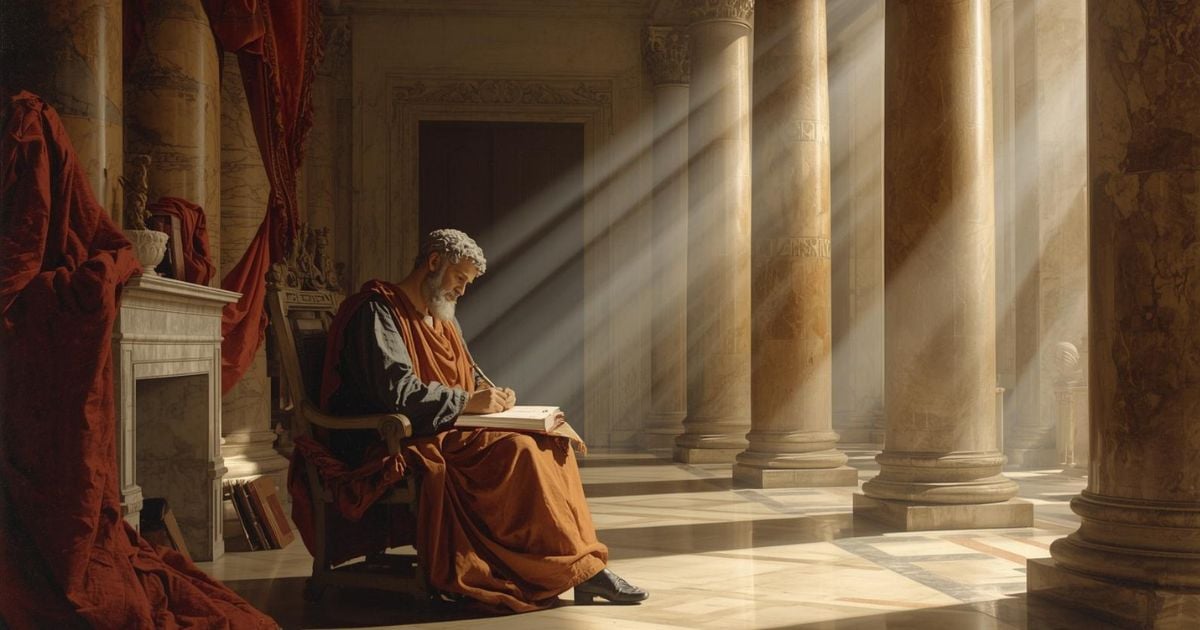
Seneca gives Lucilius the requested account of his day, and it is spare. Letter 83 opens with a full description of a single morning: a brief rest, some reading, a little exercise with his slave Pharius (who needs a new master soon, he observes, since old men make poor running companions), and then a cold bath. He is candid about his declining powers but not resentful of them. After the cold bath, he reads.

After reading, he walks. After walking, he dines simply and goes to sleep. The life is ordinary, but what makes it notable is the daily review, the habit of looking back over what you have done. This, Seneca says, is what makes us good or keeps us from becoming worse: accountability to ourselves, every day, not just in crisis.

The letter then shifts to a sustained argument against drunkenness. He uses Alexander the Great, who, in a drunken rage, killed Clitus, one of his closest friends, as his primary example. His point isn't merely that drunkenness leads to bad behavior, but that it exposes who a person actually is. A man's vices are always present; drink only removes the guard.

Logical arguments that a wise man can maintain virtue while drunk are useless. You cannot prove that character survives intoxication any more than you can prove that a sleeping potion doesn't cause sleep.

In this chapter: Terms Characters Key Quotes Themes Modern Story

Why This Matters

Connect literature to life

Skill: Living as if Seen by God

A reviewed day is harder to waste than a rushed one. Seneca lives as if in plain sight of all men, reviews each day because failing to look back makes us wicked, and rejects logic tricks about drunkenness in favor of plain truth about vice revealed. End today with five honest minutes accounting for what you did and why.

Coming Up in Chapter 84

Seneca turns from critiquing bad philosophy to practicing good habits, exploring how the mind collects and processes ideas during travel. He'll reveal his method for mental note-taking and why physical movement unlocks creative thinking.

Share it with friends

PreviousPrevious ChapterNextNext Chapter
Original text
2,803 wordscomplete

Chapter 83

Why Logic Fails Against Real Vice

1.You bid me give you an account of each separate day, and of the whole day too; so you must have a good opinion of me if you think that in these days of mine there is nothing to hide. At any rate, it is thus that we should live,—as if we lived in plain sight of all men; and it is thus that we should think,—as if there were someone who could look into our inmost souls; and there is one who can so look. For what avails it that something is hidden from man? Nothing is shut…

Public-domain chapter text, formatted for reading.

Master this chapter. Complete your experience

Purchase the complete book to access all chapters and support classic literature

Buy at Powell'sBuy on Amazon

Available in paperback, hardcover, and e-book formats

Now let's explore the literary elements.

Key Quotes & Analysis

"as if we lived in plain sight of all men; and it is thus that we should think,—as if there were someone who could look into our inmost souls; and there is one who can so look."

— Seneca

Context: On transparent living

Visibility breeds integrity.

In Today's Words:

Seneca says we should live as if in plain sight of all men and think as if someone could look into our inmost souls. Hidden conduct still has a witness. Act as though your motives were already seen. Apply that test to one real decision you face in the next few days.

"For what avails it that something is hidden from man? Nothing is shut off from the sight of God."

— Seneca

Context: On divine witness

Secrecy is illusion.

In Today's Words:

Seneca asks what avails it that something is hidden from man; nothing is shut off from God's sight. Privacy before people is not privacy before truth. Live knowing the soul has a witness. Apply that test to one real decision you face in the next few days.

"this is what makes us wicked: that no one of us looks back over his own life"

— Seneca

Context: On daily review

Unexamined days repeat error.

In Today's Words:

Seneca says this is what makes us wicked: no one looks back over his own life while thoughts chase only what is next. Unreviewed habit hardens vice. End each day with honest reckoning. Apply that test to one real decision you face in the next few days.

"state that drunkenness[11] is nothing but a condition of insanity purposely assumed"

— Seneca

Context: Against syllogisms on vice

Vice needs plain description.

In Today's Words:

Seneca says drunkenness is nothing but a condition of insanity purposely assumed. Logic cannot sanitize what experience exposes. Name vices plainly instead of arguing around them. Apply that test to one real decision you face in the next few days. Apply that test to one real decision you face in the next few days.

Thematic Threads

Class

In This Chapter

Seneca contrasts intellectual elites who use fancy logic with practical Romans who handle real responsibilities despite personal flaws

Development

Builds on earlier themes about class by showing how intellectual sophistication can actually be less valuable than practical wisdom

In Your Life:

You might notice how people with advanced degrees sometimes make simple problems unnecessarily complicated

Identity

In This Chapter

Seneca struggles with his identity as both a philosopher who should respect Zeno and a practical person who sees the flaws in pure logic

Development

Continues exploring the tension between who we think we should be and who we actually are

In Your Life:

You face this when your professional role conflicts with your common-sense judgment about what actually works

Social Expectations

In This Chapter

The expectation that 'good people' must be perfect in all ways, including never drinking, versus the reality of competent people with human flaws

Development

Deepens the theme by questioning whether social expectations about virtue are realistic or helpful

In Your Life:

You see this in workplace expectations that good employees must be perfect rather than simply effective at their jobs

Personal Growth

In This Chapter

Seneca's growth comes from learning to value practical wisdom over impressive-sounding philosophical arguments

Development

Shows growth as moving toward simplicity and directness rather than increasing complexity

In Your Life:

Your own growth might involve learning to trust simple truths over complicated explanations that sound more sophisticated

You now have the context. Time to form your own thoughts.

Discussion Questions

This is not a test. Five prompts guide you through the chapter, from how it opens to how it closes, so you notice context and rhythm rather than facts to memorize. Sit with each question in your own words. When you see "One way to read it," treat it as a starting point, not the only answer.

  1. 1

    Seneca gives a spare account of his day and says we should live as if in plain sight and think as if someone could look into our inmost souls. Who is that someone?

    ▶One way to read it

    God or conscience sees within regardless of privacy. Acting openly keeps daily life honest before that witness.

    analysis • surface
  2. 2

    Seneca argues syllogisms cannot prove a tottering drunk half sober any more than they prove he will not die from poison. Why does logic fail against real vice?

    ▶One way to read it

    Visible condition outruns formal proof. Reason from words when feet and tongue betray drunken soul is absurd.

    analysis • medium
  3. 3

    Seneca cites Piso trusted by Augustus despite drunkenness and Cossus who slept through Senate yet kept secrets. When does he say we should abolish certain harangues?

    ▶One way to read it

    When rhetoric denies what experience shows about character under vice. Exceptions do not make drunkenness wisdom, but expose rigid logic.

    application • medium
  4. 4

    Seneca's morning includes reading, exercise with aging slave Pharius, and cold bath, candid about declining powers. How is that daily honesty part of philosophy?

    ▶One way to read it

    Philosophy lives in modest routine confessed without shame. Plain account of a day trains the soul visible to itself.

    application • deep
  5. 5

    Seneca says nothing to hide in his days if Lucilius asks for each one. What would your unhidden daily account reveal?

    ▶One way to read it

    Gaps between preached virtue and spent hours. Living as if watched closes the gap before logic tries to.

    reflection • deep

Critical Thinking Exercise

10 minutes

Strip Away the Complexity

Think of a current problem in your life that feels complicated or overwhelming. Write it down exactly as you usually think about it, with all the complex factors and considerations. Then rewrite it as simply as possible, in one clear sentence that gets to the heart of what's really happening. Finally, write what the simple truth suggests you should actually do about it.

Consider:

  • •Notice if you feel resistance to simplifying - that resistance often points to what you're avoiding
  • •Ask yourself: Am I making this complex because the simple version is uncomfortable?
  • •Remember that simple doesn't mean easy - it just means clear

Journaling Prompt

Write about a time when someone gave you advice that was perfectly simple and clear, but you ignored it because you preferred a more complicated approach. What happened, and what did you learn?

Coming Up Next...

Chapter 84: Learning Like a Bee

Seneca turns from critiquing bad philosophy to practicing good habits, exploring how the mind collects and processes ideas during travel. He'll reveal his method for mental note-taking and why physical movement unlocks creative thinking.

Continue to Chapter 84
Previous
Death's True Face
Contents
Next
Learning Like a Bee
Keep exploring

Continue Exploring

Study guides, teaching tools, themes, and the full library.More ways to read Letters from a Stoic: study guides, teaching tools, and the wider library.

  • Letters from a Stoic Study Guide
  • Teaching Resources
  • Essential Life Index
  • Browse by Theme
  • All Books

Life-skill deep dives in Letters from a Stoic

  • Choosing Friendships WiselySeneca on true friendship, toxic company, and the inner circle: how the people you keep either improve you or slowly become you.
  • Dealing with AdversitySeneca on illness, exile, loss, and hardship: how to endure what you cannot remove without surrendering your judgment or dignity.
  • Emotional RegulationSeneca on anger, fear, and grief: how to feel without being ruled, and how emotional storms pass through those who train the mind.
  • Facing Mortality with CourageSeneca on memento mori without morbidity: prepare for death early, drain its terror, and let mortality clarify how you live now.
  • Living According to ValuesSeneca on integrity, virtue, and the gap between what we praise and what we do: close it before wealth, crowds, or comfort make hypocrisy normal.
  • Managing Time and PrioritiesSeneca on guarding your hours: reclaim time from distraction, busywork, and other people

You Might Also Like

Meditations cover

Meditations

Marcus Aurelius

Explores personal growth

The Dhammapada cover

The Dhammapada

Buddha

Explores suffering & resilience

The Enchiridion cover

The Enchiridion

Epictetus

Explores suffering & resilience

The Consolation of Philosophy cover

The Consolation of Philosophy

Boethius

Explores suffering & resilience

Browse all 106+ books

Share This Chapter

Know someone who'd enjoy this? Spread the wisdom!

TwitterFacebookLinkedInEmail

Go further with Prestige

Unlock study guides and downloads, early access, and exclusive content — and support free access for everyone.

Subscribe to PrestigeCreate free account
Intelligence Amplifier
Intelligence Amplifier™Powering Wide Reads

Exploring human-AI collaboration through books, essays, and philosophical dialogues. Classic literature transformed into navigational maps for modern life.

2025 Books

→ The Amplified Human Spirit→ The Alarming Rise of Stupidity Amplified→ San Francisco: The AI Capital of the World
Visit intelligenceamplifier.org
hello@widereads.com

WideReads Originals

→ You Are Not Lost→ The Last Chapter First→ The Lit of Love→ Wealth and Poverty→ Wisdom for the Wounded
Arvintech
arvintechAmplify your Mind
Visit at arvintech.com

Navigate

  • Home
  • Library
  • Essential Life Index
  • How It Works
  • Subscribe
  • Account
  • About
  • Contact
  • Authors
  • Suggest a Book
  • Landings

Made For You

  • Trending
  • Students
  • Educators
  • Families
  • Readers
  • Literary Analysis
  • Finding Purpose
  • Letting Go
  • Recovering from a Breakup
  • Corruption
  • Gaslighting in the Classics

Newsletter

Weekly insights from the classics. Amplify Your Mind.

Legal

  • Privacy Policy
  • Terms of Service
  • Editorial Standards
  • Cookie Policy
  • Accessibility

Why Public Domain?

We focus on public domain classics because these timeless works belong to everyone. No paywalls, no restrictions—just wisdom that has stood the test of centuries, freely accessible to all readers.

Public domain books have shaped humanity's understanding of love, justice, ambition, and the human condition. By amplifying these works, we help preserve and share literature that truly belongs to the world.

A Pilgrimage

Powell's City of Books

Portland, Oregon

If you ever find yourself in Portland, walk to the corner of Burnside and 10th. The building takes up an entire city block. Inside is over a million books, new and used on the same shelf, organized by color-coded rooms with names like the Rose Room and the Pearl Room. You can lose an afternoon. You can lose a weekend. You will find a book you have been looking for your whole life, and three you did not know existed.

It is a pilgrimage. We cannot find a bookstore like it anywhere on earth. If you read the classics, and you ever get the chance, go. It belongs on every reader's bucket list.

Visit powells.com

We are not in any way affiliated with Powell's. We are just a very big fan.

© 2026 Wide Reads™. All Rights Reserved.

Intelligence Amplifier™ and Wide Reads™ are proprietary trademarks of Arvin Lioanag.

Copyright Protection: All original content, analyses, discussion questions, pedagogical frameworks, and methodology are protected by U.S. and international copyright law. Unauthorized reproduction, distribution, web scraping, or use for AI training is strictly prohibited. See our Copyright Notice for details.

Disclaimer: The information provided on this website is for general informational and educational purposes only and does not constitute professional, legal, financial, or technical advice. While we strive to ensure accuracy and relevance, we make no warranties regarding completeness, reliability, or suitability. Any reliance on such information is at your own risk. We are not liable for any losses or damages arising from use of this site. By using this site, you agree to these terms.