Wide Reads
Literature MattersLife IndexEducators
Sign in
Where to Begin

Finding Your Guide to Wisdom — Letters from a Stoic

Letters from a Stoic - Finding Your Guide to Wisdom

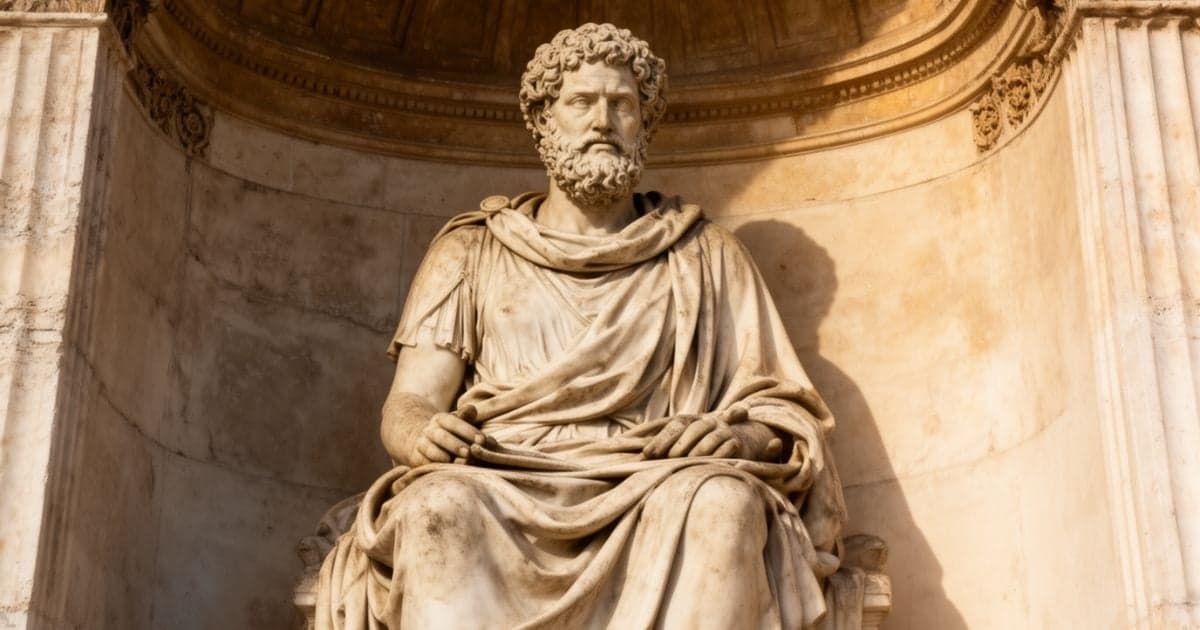
Seneca

Letters from a Stoic

Finding Your Guide to Wisdom

Home›Books›Letters from a Stoic›Chapter 52: Finding Your Guide to Wisdom
Previous
52 of 124
Next

Analysis by the Wide Reads editorial team·Reviewed against the source text·Updated December 11, 2025

Summary

Finding Your Guide to Wisdom

Letters from a Stoic by Seneca

0:000:00
Listen to Next Chapter

Not everyone finds their way to wisdom alone, and that's not a failure. Letter 52 opens with an honest question: what is the force that drags us away from our intentions? We veer from plan to plan. Nothing stays fixed.

None of our wishes is lasting. Seneca draws on Epicurus's framework of three kinds of people: those who break through to truth on their own, those who need a guide but follow faithfully once they have one, and those who must be pushed, forced, and driven. He places himself and Lucilius in the second group, and says they should not despair of it. The will to be saved, even if it needs assistance, still means a great deal.

His advice on choosing a guide is precise: choose not someone who speaks well, but someone who lives well. Choose a man you will admire more when you see him act than when you hear him speak. A surgeon doesn't want his patient's applause during the operation.

Philosophy doesn't want it either. Submit in silence to the cure.

In this chapter: Terms Characters Key Quotes Themes Modern Story

Why This Matters

Connect literature to life

Skill: Matching Support to Learning Style

Self-mastery rarely arrives without a hand on the rope. Seneca asks what force drags us off course, says no man alone has strength to rise above folly, and urges choosing guides admired more in action than in speech, even among the ancients. Name one teacher, living or dead, whose conduct you would trust before their eloquence.

Coming Up in Chapter 53

Seneca faces his own mortality as a severe asthma attack forces him to confront death. His reflections on breathing, living, and letting go offer profound insights into how we can face our own inevitable end with courage and wisdom.

Share it with friends

PreviousPrevious ChapterNextNext Chapter
Original text
1,348 wordscomplete

Chapter 52

Finding Your Guide to Wisdom

1.What is this force, Lucilius, that drags us in one direction when we are aiming in another, urging us on to the exact place from which we long to withdraw? What is it that wrestles with our spirit, and does not allow us to desire anything once for all? We veer from plan to plan. None of our wishes is free, none is unqualified, none is lasting. 2. “But it is the fool,” you say, “who is inconsistent; nothing suits him for long.” But how or when can we tear ourselves away from this folly? No man by himself…

Public-domain chapter text, formatted for reading.

Master this chapter. Complete your experience

Purchase the complete book to access all chapters and support classic literature
Buy at Powell'sBuy on Amazon

Available in paperback, hardcover, and e-book formats

Now let's explore the literary elements.

Key Quotes & Analysis

"What is this force, Lucilius, that drags us in one direction when we are aiming in another, urging us on to the exact place from which we long to withdraw"

— Seneca

Context: On conflicting desires and plans

Aim and drift war inside us.

In Today's Words:

Seneca asks what force drags us when we aim elsewhere, urging us toward the very place we long to leave. Plans change because impulse outranks resolve. When you reverse course again, ask which hidden current is steering. Apply that test to one real decision you face in the next few days.

"No man by himself has sufficient strength to rise above it; he needs a helping hand, and some one to extricate him"

— Seneca

Context: On needing help to escape folly

Solo pride prolongs folly.

In Today's Words:

Seneca says no man by himself has sufficient strength to rise above folly; he needs a helping hand to extricate him. Pride delays rescue. Admit the helper before another season of the same mistake. Apply that test to one real decision you face in the next few days.

"there are others who need outside help, who will not proceed unless someone leads the way, but who will follow faithfully"

— Seneca

Context: Epicurus on second-grade learners

Following well is honorable.

In Today's Words:

Seneca cites those who need outside help and will not proceed unless someone leads the way but will follow faithfully. Not every soul is a self-starter. If you learn best with a guide, choose one worthy of trust and follow fully. Apply that test to one real decision you face in the next few days.

"Choose as a guide one whom you will admire more when you see him act than when you hear him speak"

— Seneca

Context: On selecting living teachers

Conduct outranks eloquence.

In Today's Words:

Seneca says choose a guide you admire more in action than in speech. Eloquence without example is theater. Pick mentors whose calendar matches their creed. Apply that test to one real decision you face in the next few days. Apply that test to one real decision you face in the next few days.

Thematic Threads

Personal Growth

In This Chapter

Seneca argues transformation is possible for everyone but requires different approaches based on individual learning styles

Development

Builds on earlier letters about self-improvement by providing practical framework for how different people actually change

In Your Life:

You might recognize whether you learn best alone, with examples, or with accountability partners

Human Relationships

In This Chapter

The mentor-student relationship requires authenticity over performance, with teachers who practice what they preach

Development

Extends relationship themes by focusing specifically on learning relationships and choosing guides

In Your Life:

You might evaluate whether your advisors and role models live by their own advice

Class

In This Chapter

Seneca respects those who must work hardest for their progress, comparing them to builders who dig through soft ground

Development

Continues class consciousness by valuing effort over natural advantages

In Your Life:

You might recognize that needing more support doesn't make you inferior to those with natural advantages

Social Expectations

In This Chapter

Criticizes philosophers who perform for applause rather than focusing on genuine teaching and transformation

Development

Builds on earlier critiques of social performance by examining how it corrupts learning relationships

In Your Life:

You might notice when experts prioritize their reputation over actually helping you grow

Identity

In This Chapter

Understanding your learning type becomes part of knowing yourself and choosing your path forward

Development

Deepens self-knowledge themes by providing concrete framework for understanding how you change

In Your Life:

You might gain clarity about why certain approaches to self-improvement have or haven't worked for you

You now have the context. Time to form your own thoughts.

Discussion Questions

This is not a test. Five prompts guide you through the chapter, from how it opens to how it closes, so you notice context and rhythm rather than facts to memorize. Sit with each question in your own words. When you see "One way to read it," treat it as a starting point, not the only answer.

  1. 1

    Seneca asks what force drags us toward what we long to leave and makes no wish free, unqualified, or lasting. Why does he reject the excuse that only fools are inconsistent?

    ▶One way to read it

    Inconstancy is not limited to fools; the spirit wrestles with itself. Even serious people veer because no desire stays fixed.

    analysis • surface
  2. 2

    Seneca uses Epicurus's three kinds: some find truth alone, some need a guide but follow faithfully, and some wander. Which kind needs what kind of help?

    ▶One way to read it

    Self-movers need material; guided souls need a trustworthy leader; drifters need rescue from endless plan-changing. Not finding truth alone is not failure.

    analysis • medium
  3. 3

    Seneca says philosophy suffers loss when she exposes her charms for sale but can still be viewed in her sanctuary if the exhibitor is priest, not pedlar. How do you tell priest from pedlar?

    ▶One way to read it

    The pedlar sells display; the priest serves the shrine. Public performance for crowd indulgence differs from teaching that keeps philosophy sacred.

    application • medium
  4. 4

    Seneca notes long investigation is needed for how to address the public and what indulgence to allow speaker and crowd. When does public philosophy become corruption?

    ▶One way to read it

    When applause, flattery, and crowd management replace transformation. Exposure for sale trades sanctuary for spectacle.

    application • deep
  5. 5

    You veer from plan to plan though you aim elsewhere. What guide or rule would keep your next wish free and lasting?

    ▶One way to read it

    Choose a teacher or principle you will follow faithfully once found, and test each plan against whether it serves philosophy, not mood.

    reflection • deep

Critical Thinking Exercise

10 minutes

Map Your Learning Support System

Think about a specific area where you want to grow or change (health habits, job skills, parenting, relationships). First, honestly identify which type of learner you are in this area. Then map out what kind of support you actually need versus what you've been trying to do. Finally, identify one person in your life whose actions match their words in this area—someone who could be an authentic guide rather than just a good talker.

Consider:

  • •Be honest about your learning style without judging yourself as 'weak' for needing support
  • •Look for people who consistently practice what they teach, not just those who sound impressive
  • •Consider that you might be different types of learners in different areas of life

Journaling Prompt

Write about a time when you tried to change something important but kept falling back into old patterns. What type of support did you actually need that you weren't getting? How might things have been different with the right kind of guide?

Coming Up Next...

Chapter 53: When Self-Awareness Feels Impossible

Seneca faces his own mortality as a severe asthma attack forces him to confront death. His reflections on breathing, living, and letting go offer profound insights into how we can face our own inevitable end with courage and wisdom.

Continue to Chapter 53
Previous
Why Your Environment Shapes Your Character
Contents
Next
When Self-Awareness Feels Impossible
Keep exploring

Continue Exploring

Study guides, teaching tools, themes, and the full library.More ways to read Letters from a Stoic: study guides, teaching tools, and the wider library.

  • Letters from a Stoic Study Guide
  • Teaching Resources
  • Essential Life Index
  • Browse by Theme
  • All Books

Life-skill deep dives in Letters from a Stoic

  • Choosing Friendships WiselySeneca on true friendship, toxic company, and the inner circle: how the people you keep either improve you or slowly become you.
  • Dealing with AdversitySeneca on illness, exile, loss, and hardship: how to endure what you cannot remove without surrendering your judgment or dignity.
  • Emotional RegulationSeneca on anger, fear, and grief: how to feel without being ruled, and how emotional storms pass through those who train the mind.
  • Facing Mortality with CourageSeneca on memento mori without morbidity: prepare for death early, drain its terror, and let mortality clarify how you live now.
  • Living According to ValuesSeneca on integrity, virtue, and the gap between what we praise and what we do: close it before wealth, crowds, or comfort make hypocrisy normal.
  • Managing Time and PrioritiesSeneca on guarding your hours: reclaim time from distraction, busywork, and other people

You Might Also Like

Meditations cover

Meditations

Marcus Aurelius

Explores personal growth

The Dhammapada cover

The Dhammapada

Buddha

Explores suffering & resilience

The Enchiridion cover

The Enchiridion

Epictetus

Explores suffering & resilience

The Consolation of Philosophy cover

The Consolation of Philosophy

Boethius

Explores suffering & resilience

Browse all 106+ books

Share This Chapter

Know someone who'd enjoy this? Spread the wisdom!

TwitterFacebookLinkedInEmail

Go further with Prestige

Unlock study guides and downloads, early access, and exclusive content — and support free access for everyone.

Subscribe to PrestigeCreate free account
Intelligence Amplifier
Intelligence Amplifier™Powering Wide Reads

Exploring human-AI collaboration through books, essays, and philosophical dialogues. Classic literature transformed into navigational maps for modern life.

2025 Books

→ The Amplified Human Spirit→ The Alarming Rise of Stupidity Amplified→ San Francisco: The AI Capital of the World
Visit intelligenceamplifier.org
hello@widereads.com

WideReads Originals

→ You Are Not Lost→ The Last Chapter First→ The Lit of Love→ Wealth and Poverty→ Wisdom for the Wounded
Arvintech
arvintechAmplify your Mind
Visit at arvintech.com

Navigate

  • Home
  • Library
  • Essential Life Index
  • How It Works
  • Subscribe
  • Account
  • About
  • Contact
  • Authors
  • Suggest a Book
  • Landings

Made For You

  • Trending
  • Students
  • Educators
  • Families
  • Readers
  • Literary Analysis
  • Finding Purpose
  • Letting Go
  • Recovering from a Breakup
  • Corruption
  • Gaslighting in the Classics

Newsletter

Weekly insights from the classics. Amplify Your Mind.

Legal

  • Privacy Policy
  • Terms of Service
  • Editorial Standards
  • Cookie Policy
  • Accessibility

Why Public Domain?

We focus on public domain classics because these timeless works belong to everyone. No paywalls, no restrictions—just wisdom that has stood the test of centuries, freely accessible to all readers.

Public domain books have shaped humanity's understanding of love, justice, ambition, and the human condition. By amplifying these works, we help preserve and share literature that truly belongs to the world.

A Pilgrimage

Powell's City of Books

Portland, Oregon

If you ever find yourself in Portland, walk to the corner of Burnside and 10th. The building takes up an entire city block. Inside is over a million books, new and used on the same shelf, organized by color-coded rooms with names like the Rose Room and the Pearl Room. You can lose an afternoon. You can lose a weekend. You will find a book you have been looking for your whole life, and three you did not know existed.

It is a pilgrimage. We cannot find a bookstore like it anywhere on earth. If you read the classics, and you ever get the chance, go. It belongs on every reader's bucket list.

Visit powells.com

We are not in any way affiliated with Powell's. We are just a very big fan.

© 2026 Wide Reads™. All Rights Reserved.

Intelligence Amplifier™ and Wide Reads™ are proprietary trademarks of Arvin Lioanag.

Copyright Protection: All original content, analyses, discussion questions, pedagogical frameworks, and methodology are protected by U.S. and international copyright law. Unauthorized reproduction, distribution, web scraping, or use for AI training is strictly prohibited. See our Copyright Notice for details.

Disclaimer: The information provided on this website is for general informational and educational purposes only and does not constitute professional, legal, financial, or technical advice. While we strive to ensure accuracy and relevance, we make no warranties regarding completeness, reliability, or suitability. Any reliance on such information is at your own risk. We are not liable for any losses or damages arising from use of this site. By using this site, you agree to these terms.