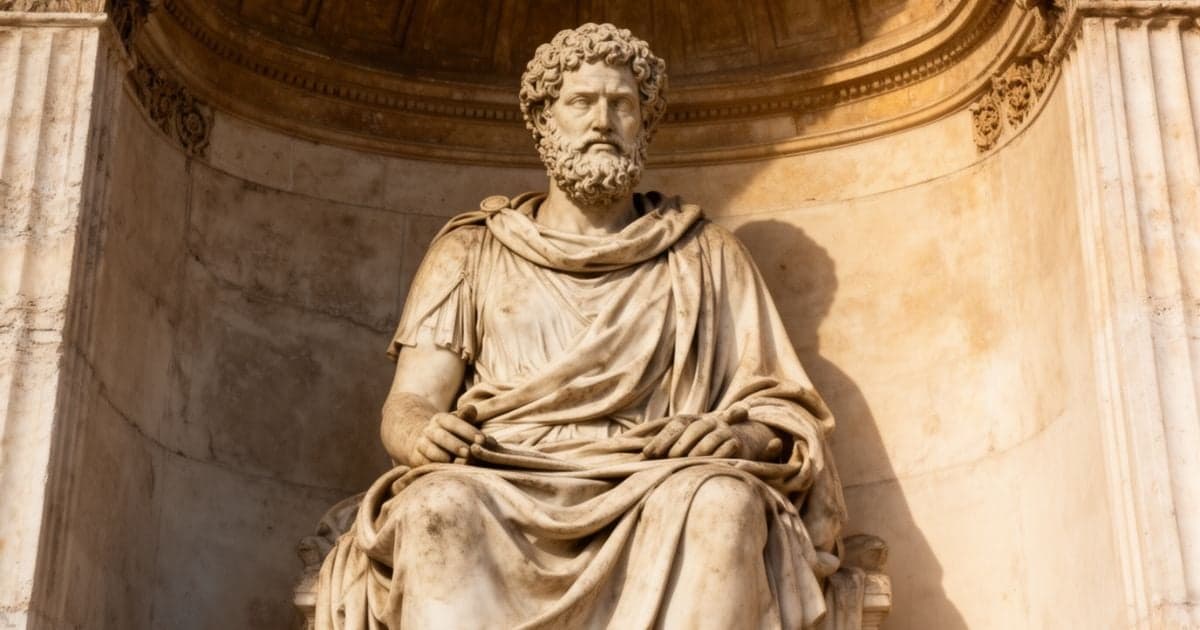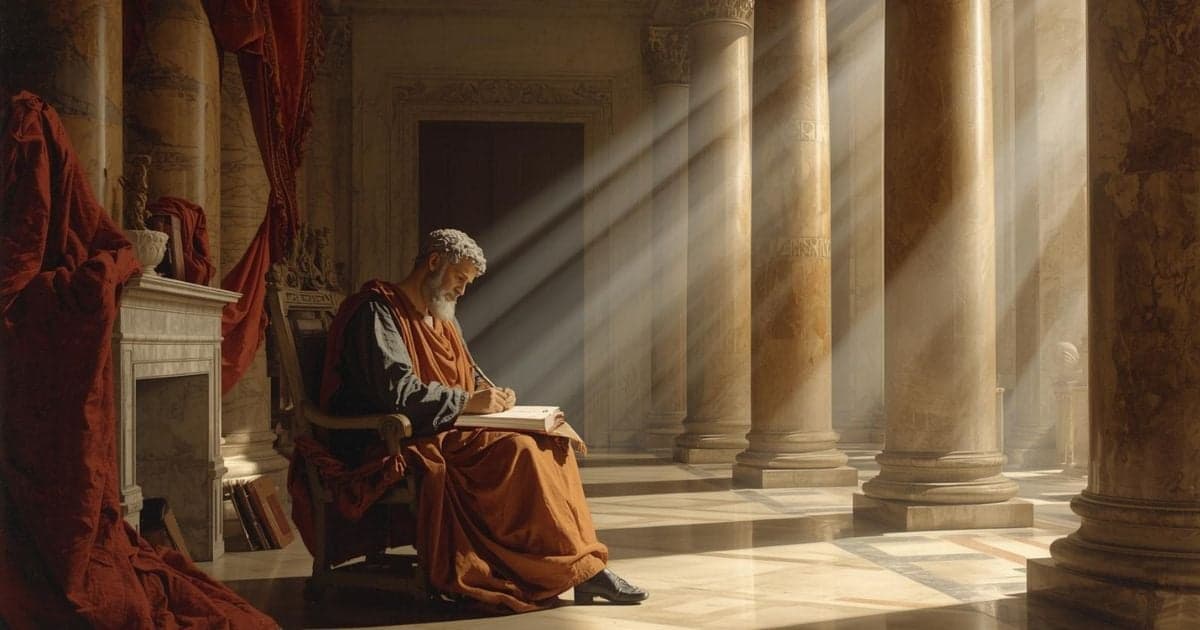
Chapter 43
Living in the Spotlight
1.Do you ask how the news reached me, and who informed me, that you were entertaining this idea, of which you had said nothing to a single soul? It was that most knowing of persons,—gossip. “What,” you say, “am I such a great personage that I can stir up gossip?” Now there is no reason why you should measure yourself according to this part of the world;[1] have regard only to the place where you are dwelling. 2. Any point which rises above adjacent points is great, at the spot where it rises. For greatness is not absolute; comparison…
Public-domain chapter text, formatted for reading.
Master this chapter. Complete your experience
Purchase the complete book to access all chapters and support classic literature

Available in paperback, hardcover, and e-book formats
Now let's explore the literary elements.
Key Quotes & Analysis
"Any point which rises above adjacent points is great, at the spot where it rises."
Context: On relative stature in a small place
Local eminence misleads scale.
In Today's Words:
Seneca says any point rising above adjacent points is great at the spot where it rises. Provincial fame inflates small comparisons. Do not let local applause convince you that you have finished growing. Apply that test to one real decision you face in the next few days.
"deem yourself truly happy until you find that you can live before men’s eyes"
Context: Test of genuine happiness
Happiness tolerates witnesses.
In Today's Words:
Seneca says do not deem yourself truly happy until you can live before men's eyes. Real contentment does not require a locked door. Use public scrutiny as a mirror, not a threat, when your conduct is aligned. Apply that test to one real decision you face in the next few days.
"your walls protect but do not hide you; although we are apt to believe that these walls surround us, not to enable us to live more safely, but that we may sin more secretly."
Context: On domestic privacy versus concealment
Shelter is not invisibility.
In Today's Words:
Seneca says your walls protect but do not hide you. We mistake houses for permission to sin in secret. Let home be refuge for honest living, not a stage set for concealed harm. Apply that test to one real decision you face in the next few days.
"we are apt to believe that these walls surround us, not to enable us to live more safely, but that we may sin more secretly"
Context: Why people misuse domestic privacy
Architecture cannot moralize.
In Today's Words:
Seneca says we believe walls surround us not to live more safely but to sin more secretly. Brick and mortar do not erase accountability. If you would be ashamed at work, do not rehearse the act at home. Apply that test to one real decision you face in the next few days.
Thematic Threads
Identity
In This Chapter
Lucilius discovers his identity shifts based on environment—big fish in small pond versus small fish in ocean
Development
Builds on earlier themes of self-knowledge, adding the complexity of relative social positioning
In Your Life:
You might feel like a different person at work versus at home, or confident in your neighborhood but intimidated downtown
Social Expectations
In This Chapter
People's curiosity about Lucilius creates pressure to live up to their image of who he should be
Development
Introduced here as external pressure that can either elevate or constrain behavior
In Your Life:
You might change how you act when you know coworkers, neighbors, or family members are paying attention to your choices
Personal Growth
In This Chapter
Seneca frames visibility as an opportunity for improvement rather than a burden to bear
Development
Continues the theme of turning challenges into growth opportunities
In Your Life:
You could use others' attention as motivation to become the person you want to be, rather than hiding from scrutiny
Class
In This Chapter
Recognition of how environment determines status—same person, different relative importance
Development
Explores how class and status are contextual rather than absolute
In Your Life:
You might feel more or less important depending on whether you're at the community college or the country club
You now have the context. Time to form your own thoughts.
Discussion Questions
This is not a test. Five prompts guide you through the chapter, from how it opens to how it closes, so you notice context and rhythm rather than facts to memorize. Sit with each question in your own words. When you see "One way to read it," treat it as a starting point, not the only answer.
- 1
Seneca says gossip told him Lucilius's private idea before Lucilius shared it, because anyone above the local level becomes remarkable in his province. How does context make you more visible than you think?
analysis • surfaceOne way to read it
A ship large in a river looks small at sea. Where you stand out locally, your thoughts and acts draw attention even without fame.
- 2
Seneca warns that in a watched life, even withdrawal does not hide you, and that rising above neighbors is like being caught in the act. What mistake does hiding assume?
analysis • mediumOne way to read it
It assumes privacy can erase visibility in a small pond. Conduct must stand inspection because concealment fails where you are already notable.
- 3
Seneca writes that a good conscience welcomes the crowd while a bad one is troubled even in solitude. How is solitude test different from reputation management?
application • mediumOne way to read it
Reputation cares who knows; conscience cares who you are when no one knows. A bad witness within makes solitude noisy.
- 4
Seneca asks why hide from eyes and ears if base deeds still matter because you know them yourself. Where do people perform virtue publicly while despising their inner witness?
application • deepOne way to read it
Polished image with private compromise makes you wretched to yourself. Seneca says self-knowledge is the witness you cannot escape.
- 5
Lucilius considered an idea he had told no one, yet gossip arrived first. How should expected visibility change what you attempt in a leadership role?
reflection • deepOne way to read it
Act as if your intentions will surface, because locally they likely will. Live as though your real audience is conscience plus the community that watches.
Critical Thinking Exercise
The Privacy vs. Secrecy Audit
Think about areas of your life where you prefer privacy. For each one, write down whether you're protecting healthy boundaries or hiding something you're uncomfortable with. Be honest about which category each situation falls into and why.
Consider:
- •Privacy protects your energy and peace; secrecy protects you from judgment about your choices
- •Ask yourself: Would I be comfortable explaining this decision to someone I respect?
- •Consider whether your need for privacy increases when you're doing something questionable
Journaling Prompt
Write about a time when you felt exposed or watched by others. What did that visibility reveal about your choices or character? How did it change your behavior, and was that change for better or worse?
Coming Up Next...
Chapter 44: True Nobility Comes from Within
In the next letter, Seneca tackles Lucilius's insecurity about his humble background, exploring whether family pedigree and social status actually matter for living a meaningful life.