Chapter 46
The Suicide of Javert
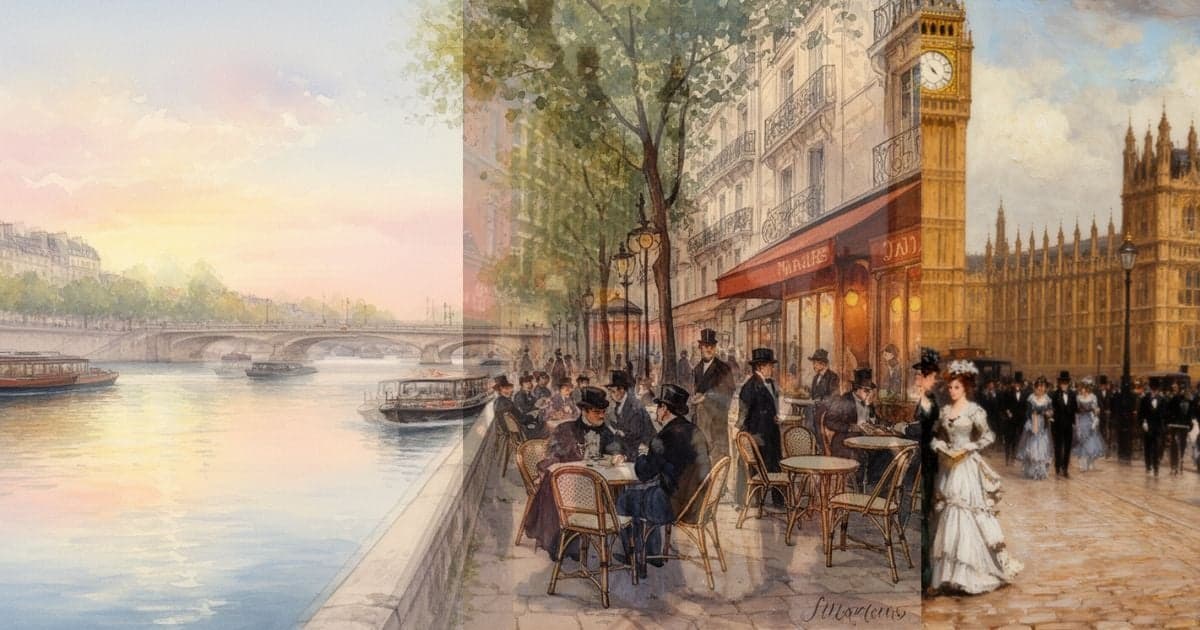
Javert walked on with slow steps. One might have supposed that he was following some one whom he did not see. The moon made a whitish stain through the clouds. Not a breath of air was stirring; not a cloud was passing; all was silent. Javert proceeded towards the Seine. He reached the parapet, and placed both elbows on it. His chin rested in the hollow of his hand, and his fingers closed slowly on his hair. For the first time in his life, this rigid man meditated. All that had been his life appeared to him now. Never had…
Master this chapter. Complete your experience
Purchase the complete book to access all chapters and support classic literature
Available in paperback, hardcover, and e-book formats
Now let's explore the literary elements.
Key Quotes & Analysis
"To have been granite and to doubt! To be the statue of Penalty and to suddenly perceive that one holds under one's bronze cuirass something absurd and disobedient which almost resembles a heart!"
Context: Javert's realization that his rigid principles are crumbling
Hugo uses metaphors of stone and bronze to show how Javert saw himself as an unchanging force of justice, making his sudden humanity feel foreign and threatening
In Today's Words:
To have been completely certain about everything and suddenly doubt it all! To think you're just doing your job and realize you actually have feelings about it!. Hugo maps how law, poverty, and reputation trap people long after punishment ends. The line still names a pattern you can spot in hiring, housing, policing, and family life whenever dignity is withheld from someone society has already condemned.
"A terrible situation! Never had he felt himself so utterly an instrument, so absolutely passive."
Context: Javert's recognition of his powerlessness in the face of moral complexity
Javert realizes he's been a tool of the system rather than a thinking person, and this recognition paralyzes him
In Today's Words:
What a horrible position to be in! He'd never felt so much like he was just following orders without thinking for himself. Hugo maps how law, poverty, and reputation trap people long after punishment ends. The line still names a pattern you can spot in hiring, housing, policing, and family life whenever dignity is withheld from someone society has already condemned.
"One might have supposed that he was following some one whom he did not see."
Context: Passage from The Suicide of Javert
Hugo uses concrete detail to show how institutions and neighbors shape a person's options.
In Today's Words:
In today's language, the passage says: One might have supposed that he was following some one whom he did not see. Hugo maps how law, poverty, and reputation trap people long after punishment ends. The line still names a pattern you can spot in hiring, housing, policing, and family life whenever dignity is withheld from someone society has already condemned.
"The moon made a whitish stain through the clouds."
Context: Passage from The Suicide of Javert
Hugo uses concrete detail to show how institutions and neighbors shape a person's options.
In Today's Words:
In today's language, the passage says: The moon made a whitish stain through the clouds. Hugo maps how law, poverty, and reputation trap people long after punishment ends. The line still names a pattern you can spot in hiring, housing, policing, and family life whenever dignity is withheld from someone society has already condemned.
Thematic Threads
Justice vs. Mercy
In This Chapter
Javert's inability to reconcile legal justice with moral mercy
Development
His rigid interpretation of justice collapses when confronted with Valjean's compassionate act
In Your Life:
Times when following the rules feels wrong, or when someone deserves forgiveness more than punishment
Redemption's Limits
In This Chapter
Not everyone can be redeemed - sometimes people are too rigid to change
Development
While Valjean found redemption through mercy, Javert cannot accept the possibility of transformation
In Your Life:
Recognizing when someone in your life is too set in their ways to grow, and knowing when to stop trying to change them
The Tragedy of Inflexibility
In This Chapter
Javert's suicide as the ultimate consequence of refusing to adapt
Development
His inability to live with moral ambiguity leads to his destruction
In Your Life:
The importance of developing mental flexibility and the ability to hold complex, sometimes contradictory truths
You now have the context. Time to form your own thoughts.
Discussion Questions
This is not a test. Five prompts guide you through the chapter, from how it opens to how it closes, so you notice context and rhythm rather than facts to memorize. Sit with each question in your own words. When you see "One way to read it," treat it as a starting point, not the only answer.
- 1
Was Javert's suicide inevitable, or could he have found another way to resolve his moral crisis?
analysis • deepOne way to read it
Hugo's chapter supports this reading directly. Inspector Javert walks through the darkened streets of Paris in a state of unprecedented moral turmoil. For the first time in his life, the man who lived by absolute certainties finds himself drowning in doubt. The question asks you to connect that narrative pressure to lived experience: where do you see the same pattern in workplaces, families, courts, or public policy today? Use the text as evidence, not as a moral slogan.
- 2
Can you think of a time when someone's unexpected kindness changed how you saw them completely?
reflection • mediumOne way to read it
Hugo's chapter supports this reading directly. Inspector Javert walks through the darkened streets of Paris in a state of unprecedented moral turmoil. For the first time in his life, the man who lived by absolute certainties finds himself drowning in doubt. The question asks you to connect that narrative pressure to lived experience: where do you see the same pattern in workplaces, families, courts, or public policy today? Use the text as evidence, not as a moral slogan.
- 3
How can we maintain strong principles while still allowing room for growth and exceptions?
application • deepOne way to read it
Hugo's chapter supports this reading directly. Inspector Javert walks through the darkened streets of Paris in a state of unprecedented moral turmoil. For the first time in his life, the man who lived by absolute certainties finds himself drowning in doubt. The question asks you to connect that narrative pressure to lived experience: where do you see the same pattern in workplaces, families, courts, or public policy today? Use the text as evidence, not as a moral slogan.
- 4
How does The Suicide of Javert show the conflict between rigid justice and compassionate mercy?
analysis • deepOne way to read it
Hugo's chapter supports this reading directly. Inspector Javert walks through the darkened streets of Paris in a state of unprecedented moral turmoil. For the first time in his life, the man who lived by absolute certainties finds himself drowning in doubt. The question asks you to connect that narrative pressure to lived experience: where do you see the same pattern in workplaces, families, courts, or public policy today? Use the text as evidence, not as a moral slogan.
- 5
What social or economic trap does Hugo expose in The Suicide of Javert, and who profits from keeping it in place?
reflection • mediumOne way to read it
Hugo's chapter supports this reading directly. Inspector Javert walks through the darkened streets of Paris in a state of unprecedented moral turmoil. For the first time in his life, the man who lived by absolute certainties finds himself drowning in doubt. The question asks you to connect that narrative pressure to lived experience: where do you see the same pattern in workplaces, families, courts, or public policy today? Use the text as evidence, not as a moral slogan.
Critical Thinking Exercise
The Flexibility Test
Think of a rule or belief you follow absolutely - something you've never questioned or made exceptions for. Now imagine a scenario where following that rule would cause genuine harm to someone good. What would you do?
Consider:
- •What makes this rule important to you?
- •Are there situations where the rule might not serve its intended purpose?
- •How could you honor both the rule's intent and the person's needs?
- •What would change in your life if you allowed for exceptions?
Journaling Prompt
Write about a time when your certainty about something was challenged. How did you respond? What did you learn about yourself in that moment?
Coming Up Next...
Chapter 47: Volume V, Book 5: Grandfather and Grandson - Reconciliation
As Jean Valjean tends to the wounded Marius, he must confront his own mortality and make the most difficult decision of his transformed life - whether to reveal his true identity and risk losing Cosette forever.