Chapter 12
The Storm Within and Without
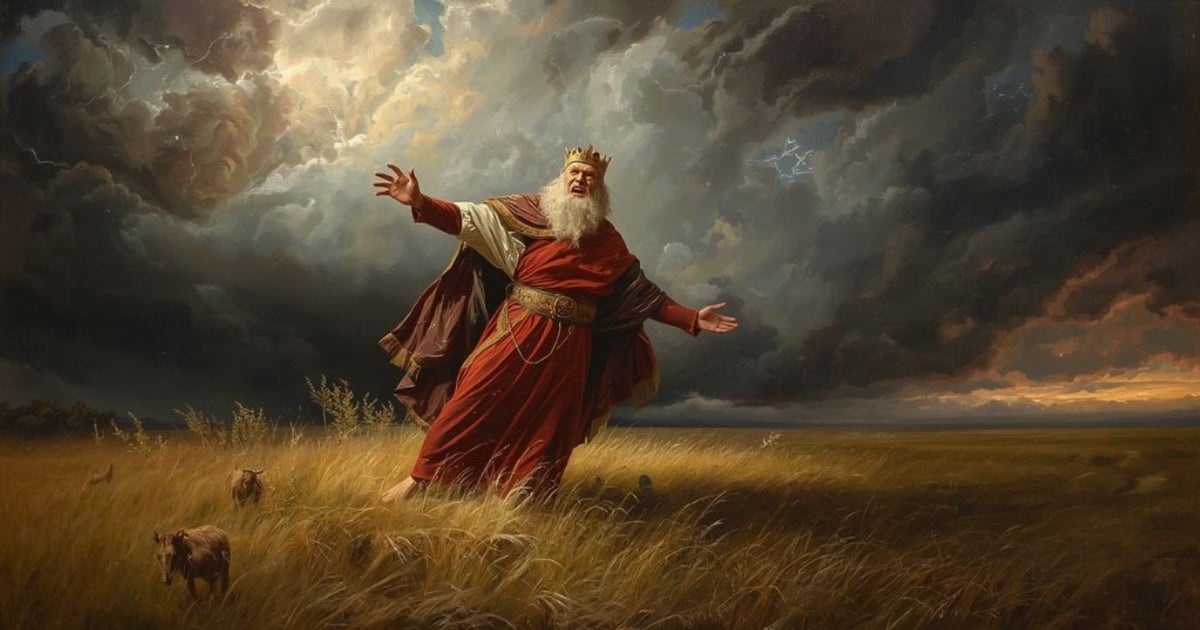
SCENE IV. A part of the Heath with a Hovel Storm continues. Enter Lear, Kent and Fool. KENT. Here is the place, my lord; good my lord, enter: The tyranny of the open night’s too rough For nature to endure. LEAR. Let me alone. KENT. Good my lord, enter here. LEAR. Wilt break my heart? KENT. I had rather break mine own. Good my lord, enter. LEAR. Thou think’st ’tis much that this contentious storm Invades us to the skin: so ’tis to thee, But where the greater malady is fix’d, The lesser is scarce felt. Thou’dst shun a bear;…
Public-domain chapter text, formatted for reading.
Master this chapter. Complete your experience
Purchase the complete book to access all chapters and support classic literature
Available in paperback, hardcover, and e-book formats
Now let's explore the literary elements.
Key Quotes & Analysis
"the tempest in my mind Doth from my senses take all feeling else Save what beats there."
Context: Lear explains to Kent why the storm barely registers compared to his daughters' betrayal
Psychological pain overrides physical sensation. Lear can stand in the storm because inner anguish has already occupied every nerve. The line marks the moment external chaos becomes almost irrelevant.
In Today's Words:
When grief or betrayal hits hard enough, hunger, cold, and exhaustion barely register. A parent in the parking lot after being locked out may not feel rain because humiliation takes the whole body. Do not mistake numbness for strength; it can mean the wound is already deeper than the weather.
"O, I have ta’en Too little care of this!"
Context: Lear's prayer for poor people exposed to the storm without shelter
Standing in the same weather, Lear suddenly sees subjects he never noticed. The confession has no audience and no performance; it is the first selfless thought in the play. Empathy arrives through shared exposure, not through throne room speeches.
In Today's Words:
Sometimes you only see the homeless in the storm when you are standing in it yourself. A boss who never noticed night-shift janitors may finally ask who has no heat after losing the corner office. Shared vulnerability can open eyes privilege kept closed for decades.
"unaccommodated man is no more but such a poor, bare, forked animal as thou art."
Context: Lear confronts Poor Tom and begins tearing off his own clothes
Titles, robes, and status peel away until only the animal body remains. Lear sees Edgar's disguise not as madness alone but as truth: strip the lending and the king is the same forked creature. The insight is radical and immediate.
In Today's Words:
Take away the suit, the title, and the LinkedIn headline, and we are all fragile bodies trying to stay warm. A CEO in a borrowed coat at a shelter is not a different species from the man beside him; the costume was the lie. Crisis can strip pretense faster than philosophy ever does.
"The grief hath craz’d my wits. What a night’s this!"
Context: Gloucester speaks to Kent while Lear talks with Poor Tom, not recognizing Edgar
Gloucester mirrors Lear's unraveling while still trying to get the king under a roof. His own son is outlawed and hunting him, yet he tends Lear first. The line shows parallel fractures in two fathers who trusted the wrong child.
In Today's Words:
Two people can break in different keys on the same night. A manager smuggling a founder toward safety may admit his own family is shattered while still doing the rescue. Shared catastrophe does not fix either wound, but it can keep one person from pretending they are fine alone.
Thematic Threads
Class
In This Chapter
Lear finally sees the 'poor naked wretches' he never noticed while living in comfort
Development
Evolved from abstract power dynamics to visceral understanding of economic inequality
In Your Life:
You might notice how differently people treat service workers based on whether they've ever worked those jobs themselves.
Recognition
In This Chapter
Gloucester fails to recognize his own son Edgar standing before him in disguise
Development
Deepened from earlier failures to see true character, now showing literal blindness to family
In Your Life:
You might miss important changes in people close to you because you see what you expect, not what's actually there.
Identity
In This Chapter
Lear strips off his royal garments, seeing humans as 'poor, bare, forked animals'
Development
Progressed from clinging to titles and status to questioning what makes us essentially human
In Your Life:
You might find that your job title or social role becomes less important during personal crises.
Suffering
In This Chapter
The storm forces Lear to feel what his subjects have always endured without choice
Development
Transformed from self-pity about betrayal to understanding shared human vulnerability
In Your Life:
You might discover that your own struggles help you connect with others going through similar hardships.
Projection
In This Chapter
Lear assumes Edgar's madness must come from ungrateful daughters, like his own pain
Development
Introduced here as Lear begins seeing his trauma as universal rather than unique
In Your Life:
You might assume others' problems match your own experiences instead of listening to their actual story.
You now have the context. Time to form your own thoughts.
Discussion Questions
This is not a test. Five prompts guide you through the chapter, from how it opens to how it closes, so you notice context and rhythm rather than facts to memorize. Sit with each question in your own words. When you see "One way to read it," treat it as a starting point, not the only answer.
- 1
How does Lear describe the difference between the storm's violence and the "tempest in my mind"?
analysis • surfaceOne way to read it
Lear says the storm cannot touch his mind the way ingratitude does; external violence is less painful than the betrayal raging inside him.
- 2
What shift happens when Lear speaks about "poor naked wretches" and says he has taken too little?
analysis • mediumOne way to read it
He suddenly sees poor people's suffering and admits he took too little care of them when he had power, a moral awakening bought by loss.
- 3
Where have you seen someone finally understand a problem only after losing the status that?
application • mediumOne way to read it
People often grasp injustice only after losing the status that insulated them from others' daily hardship.
- 4
Why does Lear assume Poor Tom was destroyed by ungrateful daughters, and what does Kent's?
application • deepOne way to read it
Lear projects his story onto Poor Tom because betrayal by daughters is the wound he can name; Kent's correction shows how grief misreads others.
- 5
What does Edgar mean by "He childed as I fathered," and how does watching Lear change his own?
reflection • deepOne way to read it
Edgar means both men were destroyed by family treachery; watching Lear teaches Edgar what his own father's error cost him.
Critical Thinking Exercise
Map Your Power Gaps
Think of a decision maker in your life (boss, landlord, school administrator, family member) who affects you but seems disconnected from your daily reality. Write down three specific things they don't understand about your situation because they've never experienced it themselves. Then identify one concrete way you could help them understand without waiting for a crisis to teach them.
Consider:
- •Focus on specific experiences, not general complaints
- •Consider what protections or privileges might limit their perspective
- •Think about timing and approach for sharing your reality effectively
Journaling Prompt
Write about a time when you gained new understanding about someone else's struggle only after experiencing something similar yourself. What changed in how you saw their situation?
Coming Up Next...
Chapter 13: The Betrayer Gets His Reward
The action shifts to Gloucester's castle, where new schemes unfold. As the storm rages outside, darker storms brew within, and the consequences of past deceptions begin to accelerate toward their inevitable reckoning.