Wide Reads
Literature MattersLife IndexEducators
Sign in
Where to Begin

First Glimpse of the Promised Land — Jude the Obscure

Jude the Obscure - First Glimpse of the Promised Land

Thomas Hardy

Jude the Obscure

First Glimpse of the Promised Land

Home›Books›Jude the Obscure›Chapter 3: First Glimpse of the Promised Land
Previous
3 of 53
Next

Analysis by the Wide Reads editorial team·Reviewed against the source text·Updated December 4, 2025

Summary

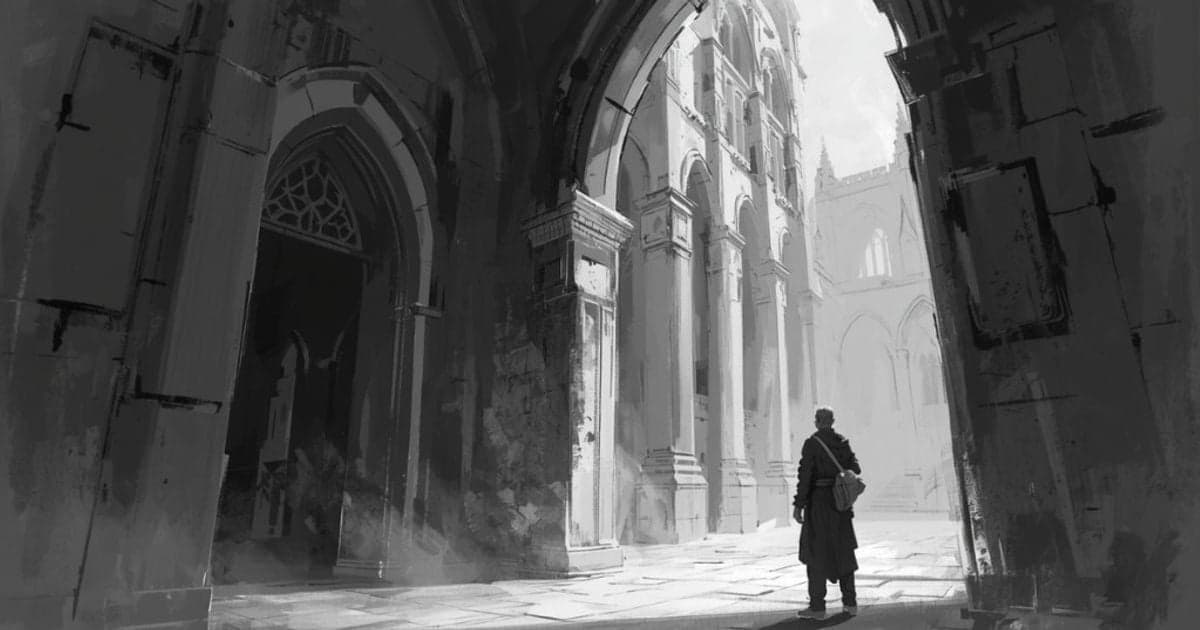
Jude arrives at the ancient ridgeway -- the Icknield Street, a Roman road that has run east and west across the high plateau since before living memory -- on a hazy afternoon. The northern landscape spreads below him for forty or fifty miles, bluer and moister than the upland air he lives in. He climbs a ladder on the Brown House barn where two tile-workers are repairing the roof and asks them to point toward Christminster. They do, but the mist is too thick for anyone to see anything.

When the men finish their work and descend, Jude stays on the ridge, unwilling to leave without at least trying. He climbs the ladder a second time alone. In a gesture of pure, unselfconscious faith, he kneels on the third rung and prays for the mist to clear. He has read in a tract that prayer works for some people and not others, depending on obscure circumstances. Ten minutes later the mist dissolves. As the sun breaks through at the western horizon, the spires, domes, and lit windows of Christminster appear as tiny points of topaz light before fading again with the last of the day.

He watches until they go dark. Later, having grown bolder, he makes a second evening pilgrimage to the same spot after dark to see the city's glow against the sky, inhaling the northeast wind as though it carries particles of Phillotson's breath from the streets of the city itself. He meets a coal carter who has never visited Christminster but delivers a vivid, partly invented account of its scholars, church music, college halls, and foreign languages, getting his authority from a friend who once cleaned boots at a hotel there. Walking home alone in the dark, Jude invents a private catechism for the city he cannot yet enter. Each phrase carries him further from the boy who left Marygreen that afternoon. He calls Christminster a city of light, a tree of knowledge, a place that teachers of men spring from and go to, and finally a castle manned by scholarship and religion. His last whispered verdict is the simplest: it would just suit me. Hardy has moved Jude from yearning to intention, from rumor to personal covenant.

In this chapter: Terms Characters Key Quotes Themes Modern Story

Why This Matters

Connect literature to life

Skill: Maintain a difficult aspiration through deliberate ritual

Keeping a difficult dream alive sometimes requires ritual more than measurable progress. Jude climbs the barn ladder a second time after the workers have gone, kneels on the third rung, and prays for the mist to clear; it does, and for fifteen minutes the spires of Christminster are visible before going dark again. Identify the specific act -- the visit, the re-reading, the return to the place -- that most reliably renews your conviction that the goal is worth the cost, and schedule it as deliberately as you schedule work.

Coming Up in Chapter 4

On his walk home in the dark, Jude is overtaken by a fast-striding figure in a tall hat with a watch-chain dancing at his waist. Physician Vilbert promises to bring Latin and Greek grammars in exchange for a fortnight's worth of pill advertising across the neighboring hamlets. Jude has never been more certain of anything.

Share it with friends

PreviousPrevious ChapterNextNext Chapter
Original text
2,682 wordscomplete

Chapter 03

First Glimpse of the Promised Land

Not a soul was visible on the hedgeless highway, or on either side of it, and the white road seemed to ascend and diminish till it joined the sky. At the very top it was crossed at right angles by a green “ridgeway”—the Ickneild Street and original Roman road through the district. This ancient track ran east and west for many miles, and down almost to within living memory had been used for driving flocks and herds to fairs and markets. But it was now neglected and overgrown. The boy had never before strayed so far north as this from…

Public-domain chapter text, formatted for reading.

Master this chapter. Complete your experience

Purchase the complete book to access all chapters and support classic literature

Buy at Powell'sBuy on Amazon

Available in paperback, hardcover, and e-book formats

Now let's explore the literary elements.

Key Quotes & Analysis

"The heavenly Jerusalem"

— Jude Fawley

Context: One tile-worker says Christminster looks like something at sunset but cannot name what; Jude supplies the image immediately.

The boy on the ladder has read Revelation more carefully than either laborer. His interjection is not showing off; it is the only lens he has for something that transcends ordinary description. That a child supplies the image the adults grope for encapsulates Hardy's argument about misplaced intelligence.

In Today's Words:

It looks like the city at the end of time -- the one that comes down from heaven in the old book, all light and gates and promises. I have never seen it either, but that is the closest image I know for something that brilliant appearing on a horizon that is otherwise just fields and fog.

"mist might rise"

— Narrator

Context: Jude kneels on the ladder rungs after the workers have gone and prays for the mist to clear before he has to leave.

Hardy takes the prayer seriously. He does not mock it or frame it as superstition. The mist clears. Whether this is weather or grace the narrative does not say, which is precisely the point: for Jude it is confirmation, and confirmation is what drives the next decade of his life.

In Today's Words:

He was on his knees on a ladder rung, alone on the roof of a barn, asking for the weather to cooperate with his need to believe that the city was real. It is a small and earnest prayer. It worked, or something that looked exactly like working happened in the next ten minutes.

"cocks, touching Mr. Phillotson"

— Narrator

Context: Jude addresses the northeast wind at night as though it has just traveled from Phillotson's street in Christminster to reach him on the hill.

The wind becomes a medium of communion with the life Jude wants. He is not simply imaginative; he is practicing a form of presence -- making himself feel connected to a place by tracing the physical path that connects them. The schoolmaster he admires is made real and reachable by the air between them.

In Today's Words:

He breathed in the wind and told himself it had just come from Christminster, had touched Phillotson's face before turning south, and was now here in his own lungs. It was a way of making the connection feel real rather than theoretical. The distance was the same; the breathing made it smaller.

"It would just suit me"

— Jude Fawley

Context: Walking home alone in the dark at the chapter's close, Jude murmurs a private catechism about Christminster, ending with this verdict.

The phrase moves from external description to personal claim. The first phrases say what Christminster is to the world; this one says what it is to Jude specifically. It is the moment he stops describing a city and asserts a right to it.

In Today's Words:

Everything about it -- the books, the scholars, the serious purpose of the place, the way it organizes a life around learning and questions -- is exactly what I have been looking for without knowing the name. It fits what I already am. I belong there. I will get there.

Thematic Threads

Class

In This Chapter

Jude sees Christminster as his escape route from working-class life, believing education can transform his entire social position

Development

Intensifying from his earlier academic interests into a specific class-climbing strategy

In Your Life:

You might recognize this when you believe a degree, job, or move will automatically change how others see and treat you

Identity

In This Chapter

Jude begins defining himself not by who he is, but by who he imagines he could become in Christminster

Development

Evolving from general dissatisfaction into a concrete but untested new identity

In Your Life:

This appears when you start introducing yourself by your dreams rather than your current reality

Isolation

In This Chapter

Jude's vision quest is completely solitary—he climbs alone, dreams alone, makes plans alone without consulting anyone who's actually been there

Development

His physical isolation now creating dangerous mental isolation from reality-testing

In Your Life:

You see this when you make major life decisions based entirely on your own research and imagination

Purpose

In This Chapter

Christminster gives Jude's daily struggles meaning—suddenly his Latin studies and intellectual hunger have a clear destination

Development

Introduced here as the organizing principle that will drive all his future choices

In Your Life:

This happens when you finally find something that makes all your current sacrifices feel worthwhile

Idealization

In This Chapter

Jude transforms a real city with real problems into a perfect symbol of learning, transformation, and belonging

Development

New theme emerging from his tendency to romanticize absent figures like Phillotson

In Your Life:

You might catch yourself doing this with companies, neighborhoods, or relationships you've never actually experienced up close

You now have the context. Time to form your own thoughts.

Discussion Questions

This is not a test. Five prompts guide you through the chapter, from how it opens to how it closes, so you notice context and rhythm rather than facts to memorize. Sit with each question in your own words. When you see "One way to read it," treat it as a starting point, not the only answer.

  1. 1

    The two tile-workers on the barn roof describe Christminster confidently without having been there, and their knowledge ultimately traces back to a man who cleaned boots at a hotel. What does their account suggest about how institutional reputations are built and sustained?

    ▶One way to read it

    The prestige of Christminster is maintained entirely through hearsay delivered as authority. Nobody in the scene has firsthand knowledge, yet the picture grows more detailed and confident with each retelling. Hardy implies that the glamour of elite institutions depends on the stories outsiders tell each other rather than on the experience of insiders.

    thematic • high
  2. 2

    Jude kneels on the ladder and prays for the mist to clear. He has read a tract about a man whose prayer for building funds was answered immediately. What does the tract's explanation for failed prayer -- bad breeches made by a wicked Jew -- reveal about the quality of religious instruction Jude has had access to?

    ▶One way to read it

    It is a crude apologetic designed to explain failure without questioning the original promise. It shows that Jude's religious formation has come from cheap popular tracts rather than serious theology. This matters because he aspires to become a Christian divine trained at Christminster -- his starting materials are a long way from his destination.

    contextual • medium
  3. 3

    When the mist clears, Jude sees Christminster only as tiny points of light for about fifteen minutes before they go dark. How does Hardy's decision to keep the city physically unresolved serve the novel's larger argument about aspiration and reality?

    ▶One way to read it

    If Christminster appeared clearly and stayed clear, the dream would risk becoming ordinary and graspable. By keeping it as a shimmer that appears and vanishes, Hardy builds the gap between aspiration and attainment into the novel's earliest imagery. The city is most powerful as a vision on the verge of disappearing.

    analytical • high
  4. 4

    The carter reveals at the end of his long, detailed account of Christminster that he has never visited and got all his knowledge from secondhand sources. How does Jude respond to this admission, and what does his response reveal about his need to believe in the city?

    ▶One way to read it

    Hardy describes the carter as Jude's 'remarkably well-informed friend' -- Jude does not register the irony. He walks beside him listening to more descriptions of towers and colleges. His need for Christminster to be extraordinary overrides his ability to evaluate the reliability of his source.

    character • medium
  5. 5

    Jude's private catechism on the walk home moves from large abstractions -- 'a city of light,' 'the tree of knowledge' -- to the personal claim 'It would just suit me.' Why is this final phrase the most significant in the sequence?

    ▶One way to read it

    The first phrases describe what Christminster is; the last one asserts what it is to Jude specifically. It is the moment he stops describing an external object and claims a right to it. The catechism transforms Christminster from a rumor into a personal destination.

    close-reading • high

Critical Thinking Exercise

10 minutes

Reality-Test Your Dream Destination

Think of a major change you've considered - a new job, city, relationship, or life path that you've idealized from a distance. Write down what you imagine it would be like, then list three specific ways you could research the actual reality. What questions would you ask people who've actually been there?

Consider:

  • •Consider both the benefits you're seeking and the problems you might be trying to escape
  • •Think about what information you're basing your dreams on - is it firsthand or secondhand?
  • •Ask yourself what specific problems this change would solve versus what new challenges it might create

Journaling Prompt

Write about a time when a place, job, or situation you'd idealized turned out different than expected. What did you learn about the difference between dreaming and planning?

Coming Up Next...

Chapter 4: The Quack's Broken Promise

On his walk home in the dark, Jude is overtaken by a fast-striding figure in a tall hat with a watch-chain dancing at his waist. Physician Vilbert promises to bring Latin and Greek grammars in exchange for a fortnight's worth of pill advertising across the neighboring hamlets. Jude has never been more certain of anything.

Continue to Chapter 4
Previous
When Kindness Gets You Fired
Contents
Next
The Quack's Broken Promise
Keep exploring

Continue Exploring

Study guides, teaching tools, themes, and the full library.More ways to read Jude the Obscure: study guides, teaching tools, and the wider library.

  • Jude the Obscure Study Guide
  • Teaching Resources
  • Essential Life Index
  • Browse by Theme
  • All Books

What this chapter teaches

Theme analyses that draw on this chapter and apply it to modern life.

  • Recognizing Class BarriersHow Christminster keeps Jude out, and how invisible class walls still decide who gets through the gate.
Social Class & StatusIdentity & Self-DiscoveryMoral Dilemmas & Ethics

You Might Also Like

Far from the Madding Crowd cover

Far from the Madding Crowd

Thomas Hardy

Also by Thomas Hardy

Tess of the d'Urbervilles cover

Tess of the d'Urbervilles

Thomas Hardy

Also by Thomas Hardy

The Scarlet Letter cover

The Scarlet Letter

Nathaniel Hawthorne

Explores suffering & resilience

The Picture of Dorian Gray cover

The Picture of Dorian Gray

Oscar Wilde

Explores suffering & resilience

Browse all 106+ books

Share This Chapter

Know someone who'd enjoy this? Spread the wisdom!

TwitterFacebookLinkedInEmail

Go further with Prestige

Unlock study guides and downloads, early access, and exclusive content — and support free access for everyone.

Subscribe to PrestigeCreate free account
Intelligence Amplifier
Intelligence Amplifier™Powering Wide Reads

Exploring human-AI collaboration through books, essays, and philosophical dialogues. Classic literature transformed into navigational maps for modern life.

2025 Books

→ The Amplified Human Spirit→ The Alarming Rise of Stupidity Amplified→ San Francisco: The AI Capital of the World
Visit intelligenceamplifier.org
hello@widereads.com

WideReads Originals

→ You Are Not Lost→ The Last Chapter First→ The Lit of Love→ Wealth and Poverty→ Wisdom for the Wounded
Arvintech
arvintechAmplify your Mind
Visit at arvintech.com

Navigate

  • Home
  • Library
  • Essential Life Index
  • How It Works
  • Subscribe
  • Account
  • About
  • Contact
  • Authors
  • Suggest a Book
  • Landings

Made For You

  • Trending
  • Students
  • Educators
  • Families
  • Readers
  • Literary Analysis
  • Finding Purpose
  • Letting Go
  • Recovering from a Breakup
  • Corruption
  • Gaslighting in the Classics

Newsletter

Weekly insights from the classics. Amplify Your Mind.

Legal

  • Privacy Policy
  • Terms of Service
  • Editorial Standards
  • Cookie Policy
  • Accessibility

Why Public Domain?

We focus on public domain classics because these timeless works belong to everyone. No paywalls, no restrictions—just wisdom that has stood the test of centuries, freely accessible to all readers.

Public domain books have shaped humanity's understanding of love, justice, ambition, and the human condition. By amplifying these works, we help preserve and share literature that truly belongs to the world.

A Pilgrimage

Powell's City of Books

Portland, Oregon

If you ever find yourself in Portland, walk to the corner of Burnside and 10th. The building takes up an entire city block. Inside is over a million books, new and used on the same shelf, organized by color-coded rooms with names like the Rose Room and the Pearl Room. You can lose an afternoon. You can lose a weekend. You will find a book you have been looking for your whole life, and three you did not know existed.

It is a pilgrimage. We cannot find a bookstore like it anywhere on earth. If you read the classics, and you ever get the chance, go. It belongs on every reader's bucket list.

Visit powells.com

We are not in any way affiliated with Powell's. We are just a very big fan.

© 2026 Wide Reads™. All Rights Reserved.

Intelligence Amplifier™ and Wide Reads™ are proprietary trademarks of Arvin Lioanag.

Copyright Protection: All original content, analyses, discussion questions, pedagogical frameworks, and methodology are protected by U.S. and international copyright law. Unauthorized reproduction, distribution, web scraping, or use for AI training is strictly prohibited. See our Copyright Notice for details.

Disclaimer: The information provided on this website is for general informational and educational purposes only and does not constitute professional, legal, financial, or technical advice. While we strive to ensure accuracy and relevance, we make no warranties regarding completeness, reliability, or suitability. Any reliance on such information is at your own risk. We are not liable for any losses or damages arising from use of this site. By using this site, you agree to these terms.