Chapter 12
Jude Arrives in Christminster
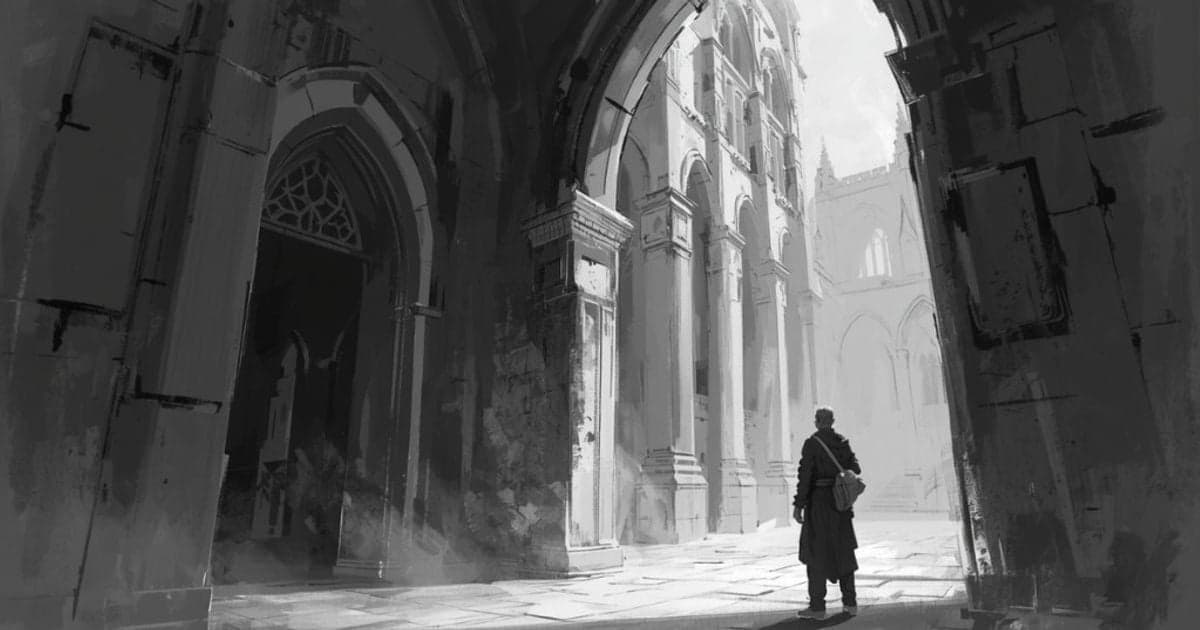
The next noteworthy move in Jude’s life was that in which he appeared gliding steadily onward through a dusky landscape of some three years’ later leafage than had graced his courtship of Arabella, and the disruption of his coarse conjugal life with her. He was walking towards Christminster City, at a point a mile or two to the south-west of it. He had at last found himself clear of Marygreen and Alfredston: he was out of his apprenticeship, and with his tools at his back seemed to be in the way of making a new start—the start to which, barring…
Public-domain chapter text, formatted for reading.
Master this chapter. Complete your experience
Purchase the complete book to access all chapters and support classic literature
Available in paperback, hardcover, and e-book formats
Now let's explore the literary elements.
Key Quotes & Analysis
"It seemed impossible that modern thought could house itself in such decrepit and superseded chambers."
Context: Jude explores ancient college buildings at night
Romantic expectation collides with crumbling physical reality.
In Today's Words:
Jude walks the colleges at night and cannot believe modern thought lives in such old, worn buildings. His dream city looks shabby up close. When a long-awaited place disappoints on arrival, check whether you chased an idea more than a place. The same pressure still runs through workplaces, families, and friendships when nobody names the.
"Knowing not a human being here, Jude began to be impressed with the isolation of his own personality"
Context: Alone among the shadows of the university
Proximity to learning deepens loneliness instead of curing it.
In Today's Words:
With no acquaintance in Christminster, Jude feels his personality isolated, almost like a ghost among the walls. The city full of minds makes him more alone. Arriving somewhere famous does not automatically grant belonging; plan for connection, not only arrival. The same pressure still runs through workplaces, families, and friendships when nobody names the cost.
"You’ve been a-settin’ a long time on that plinth-stone, young man. What med you be up to?"
Context: Finding Jude talking to the night air
Authority reduces mystical pilgrimage to suspicious loitering.
In Today's Words:
A policeman asks Jude what he is doing sitting so long on the plinth-stone in the college yard. The holy night walk becomes suspicious loitering in an officer's eyes. When your private pilgrimage meets public authority, expect the romance to get reclassified fast. The same pressure still runs through workplaces, families, and friendships when nobody.
"By Jove—I had quite forgotten my sweet-faced cousin, and that she’s here all the time!"
Context: Waking after the night's visions
Morning returns desire from the abstract dead to the living city.
In Today's Words:
Jude wakes and suddenly remembers his cousin Sue is in Christminster after a night spent with dead scholars. Practical morning pulls him from ghosts to a living face. Big visions matter, but notice which real person reappears once the spell of place fades. The same pressure still runs through workplaces, families, and friendships when nobody.
Thematic Threads
Class
In This Chapter
Jude's working-class hands touching aristocratic stone, his awareness of being an outsider in elite spaces
Development
Evolved from childhood dreams to adult confrontation with class barriers
In Your Life:
You might feel this when entering spaces where you worry you don't belong—hospitals, offices, schools—based on your background.
Identity
In This Chapter
Jude talks to imagined great thinkers, trying on intellectual identity while policeman reminds him of his actual status
Development
Deepened from earlier chapters showing tension between aspiration and reality
In Your Life:
You experience this when your professional self conflicts with how others see you or how you see yourself.
Isolation
In This Chapter
Jude alone at night, talking to ghosts and dreams because he has no real intellectual companions
Development
Intensified since marriage ended, now seeking connection through place rather than people
In Your Life:
You feel this when pursuing goals that separate you from your current community without guaranteeing new belonging.
Dreams vs Reality
In This Chapter
Magical nighttime communion with greatness dissolves in morning's practical concerns about work and Sue
Development
Consistent pattern of Jude's romantic idealization crashing against practical needs
In Your Life:
You see this in the gap between your vision of a new job, relationship, or life change and its daily reality.
Purpose
In This Chapter
Jude seeks meaning through connection to historical greatness and intellectual tradition
Development
Evolved from childhood religious calling to adult intellectual calling
In Your Life:
You might chase purpose through external validation rather than finding meaning in your current work and relationships.
You now have the context. Time to form your own thoughts.
Discussion Questions
This is not a test. Five prompts guide you through the chapter, from how it opens to how it closes, so you notice context and rhythm rather than facts to memorize. Sit with each question in your own words. When you see "One way to read it," treat it as a starting point, not the only answer.
- 1
What finally pushes Jude to travel to Christminster after Arabella leaves?
analysis • surfaceOne way to read it
Old scholarly intent returns, sharpened by seeing Sue's photograph at his aunt's house.
- 2
How does Christminster at night differ from what Jude imagined by day?
analysis • mediumOne way to read it
At night it feels haunted and welcoming to his mind; in daylight it will look worn, pompous, and economically real.
- 3
When have you treated reaching a place as the same as becoming someone new?
application • mediumOne way to read it
Recall a move, school, or job you hoped would rewrite you without changing habits or fears.
- 4
Why does the policeman's question matter to Jude's story?
application • deepOne way to read it
It punctures his mystical mood and shows the university sees him as an outsider, not a pilgrim.
- 5
What does Jude's waking thought about Sue suggest about his true motives?
reflection • deepOne way to read it
Intellectual hunger and romantic longing are intertwined; Sue gives the city a human pull books alone cannot.
Critical Thinking Exercise
Spot Your Own Pilgrimage Trap
Think of a goal you're currently pursuing or have recently achieved. Write down what you hope this goal will do for you beyond the obvious practical benefits. Then honestly assess: are you expecting this external change to fix internal problems like loneliness, self-doubt, or lack of purpose? Finally, identify one thing you could do right now, where you are, to address what you're really seeking.
Consider:
- •Be honest about the emotional needs you're hoping this goal will meet
- •Consider whether you're avoiding harder internal work by focusing on external achievements
- •Think about how you can build confidence and belonging in your current situation
Journaling Prompt
Write about a time when you reached a goal you thought would change everything. What actually happened? What did you learn about the difference between external success and internal satisfaction?
Coming Up Next...
Chapter 13: The Wall Between Dreams and Reality
Morning brings bread-and-cheese facts. Jude must find manual work among the colleges he worshiped by night, and daylight will show how thin the wall is between his hunger to learn and the students who pass him unseen.