Chapter 23
The Garden Proposal
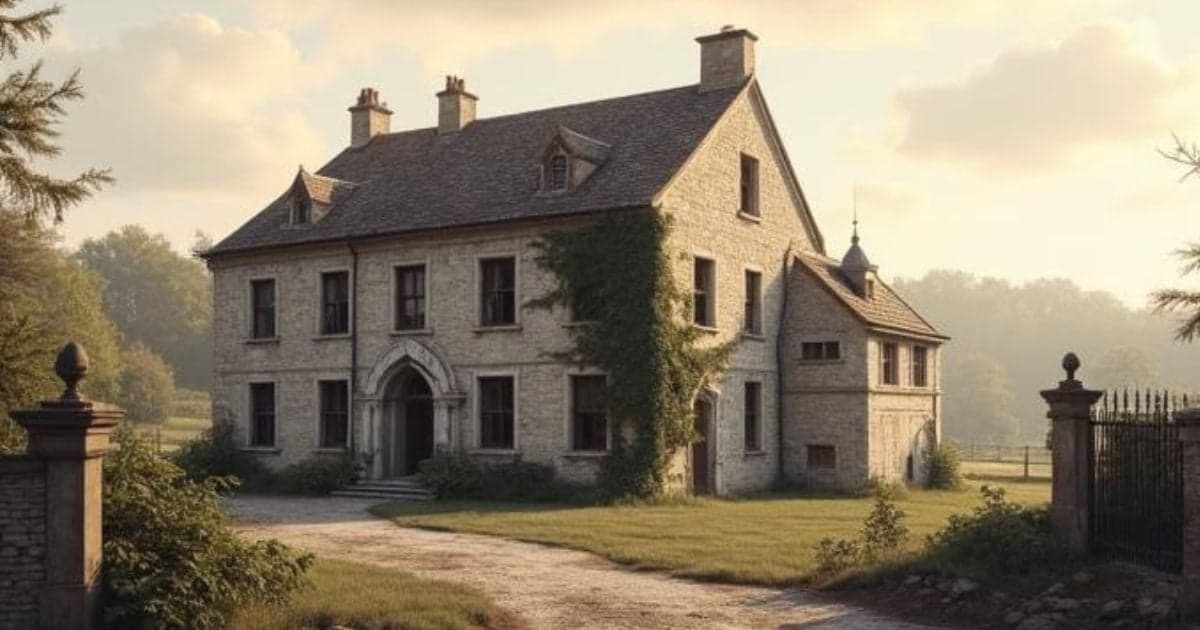
A splendid Midsummer shone over England: skies so pure, suns so radiant as were then seen in long succession, seldom favour even singly, our wave-girt land. It was as if a band of Italian days had come from the South, like a flock of glorious passenger birds, and lighted to rest them on the cliffs of Albion. The hay was all got in; the fields round Thornfield were green and shorn; the roads white and baked; the trees were in their dark prime; hedge and wood, full-leaved and deeply tinted, contrasted well with the sunny hue of the cleared meadows…
Public-domain chapter text, formatted for reading.
Master this chapter. Complete your experience
Purchase the complete book to access all chapters and support classic literature
Available in paperback, hardcover, and e-book formats
Now let's explore the literary elements.
Key Quotes & Analysis
"It is always the way of events in this life,” he continued presently: “no sooner have you got settled in a pleasant resting-place, than a voice calls out to you to rise and move on"
Context: Rochester preparing Jane for the news that she must leave Thornfield
In Today's Words:
Life has this frustrating pattern where right when you find your groove, circumstances shift and force you to begin again. It's like finally mastering a role, forming meaningful connections with colleagues and clients, then learning your department is being restructured. The comfortable phases never last as long as you need them to.
"Do you think, because I am poor, obscure, plain, and little, I am soulless and heartless? You think wrong!—I have as much soul as you,—and full as much heart!"
Context: Jane's declaration of equality when Rochester tells her she must stay while he marries Blanche
In Today's Words:
Being poor or plain doesn't make me less human. I feel love, have dreams, and deserve respect just like you. Whether you're cleaning offices or running companies, facing bias at work or in dating, remember this: your value isn't measured by your wallet or looks.
"My bride is here,” he said, again drawing me to him, “because my equal is here, and my likeness. Jane, will you marry me?” Still I did not answer, and still I writhed myself from his grasp: for I was still incredulous. “Do you doubt me, Jane?” “Entirely.” “You have no faith in me?” “Not a whit.” “Am I a liar in your eyes?” he asked passionately. “Little sceptic, you _shall_ be convinced. What love have I for Miss Ingram? None: and that you know. What love has she for me? None: as I have taken pains to prove: I caused a rumour to reach her that my fortune was not a third of what was supposed, and after that I presented myself to see the result; it was coldness both from her and her mother. I would not—I could not—marry Miss Ingram. You—you strange, you almost unearthly thing!—I love as my own flesh. You—poor and obscure, and small and plain as you are—I entreat to accept me as a husband.” “What, me!” I ejaculated, beginning in his earnestness—and especially in his incivility—to credit his sincerity: “me who have not a friend in the world but you—if you are my friend: not a shilling but what you have given me?” “You, Jane, I must have you for my own—entirely my own. Will you be mine? Say yes, quickly.” “Mr. Rochester, let me look at your face: turn to the moonlight.” “Why?” “Because I want to read your countenance—turn!” “There! you will find it scarcely more legible than a crumpled, scratched page. Read on: only make haste, for I suffer.” His face was very much agitated and very much flushed, and there were strong workings in the features, and strange gleams in the eyes. “Oh, Jane, you torture me!” he exclaimed. “With that searching and yet faithful and generous look, you torture me!” “How can I do that? If you are true, and your offer real, my only feelings to you must be gratitude and devotion—they cannot torture.” “Gratitude!” he ejaculated; and added wildly—“Jane accept me quickly. Say, Edward—give me my name—Edward—I will marry you.” “Are you in earnest? Do you truly love me? Do you sincerely wish me to be your wife?” “I do; and if an oath is necessary to satisfy you, I swear it.” “Then, sir, I will marry you.” “Edward—my little wife!” “Dear Edward!” “Come to me—come to me entirely now,” said he; and added, in his deepest tone, speaking in my ear as his cheek was laid on mine, “Make my happiness—I will make yours.” “God pardon me!” he subjoined ere long; “and man meddle not with me: I have her, and will hold her.” “There is no one to meddle, sir. I have no kindred to interfere.” “No—that is the best of it,” he said. And if I had loved him less I should have thought his accent and look of exultation savage; but, sitting by him, roused from the nightmare of parting—called to the paradise of union—I thought only of the bliss given me to drink in so abundant a flow. Again and again he said, “Are you happy, Jane?” And again and again I answered, “Yes.” After which he murmured, “It will atone—it will atone. Have I not found her friendless, and cold, and comfortless? Will I not guard, and cherish, and solace her? Is there not love in my heart, and constancy in my resolves? It will expiate at God’s tribunal. I know my Maker sanctions what I do. For the world’s judgment—I wash my hands thereof. For man’s opinion—I defy it.” But what had befallen the night? The moon was not yet set, and we were all in shadow: I could scarcely see my master’s face, near as I was. And what ailed the chestnut tree? it writhed and groaned; while wind roared in the laurel walk, and came sweeping over us. “We must go in,” said Mr. Rochester: “the weather changes. I could have sat with thee till morning, Jane.” “And so,” thought I, “could I with you.” I should have said so, perhaps, but a livid, vivid spark leapt out of a cloud at which I was looking, and there was a crack, a crash, and a close rattling peal; and I thought only of hiding my dazzled eyes against Mr. Rochester’s shoulder. The rain rushed down. He hurried me up the walk, through the grounds, and into the house; but we were quite wet before we could pass the threshold. He was taking off my shawl in the hall, and shaking the water out of my loosened hair, when Mrs. Fairfax emerged from her room. I did not observe her at first, nor did Mr. Rochester. The lamp was lit. The clock was on the stroke of twelve. “Hasten to take off your wet things,” said he; “and before you go, good-night—good-night, my darling!” He kissed me repeatedly. When I looked up, on leaving his arms, there stood the widow, pale, grave, and amazed. I only smiled at her, and ran upstairs. “Explanation will do for another time,” thought I. Still, when I reached my chamber, I felt a pang at the idea she should even temporarily misconstrue what she had seen. But joy soon effaced every other feeling; and loud as the wind blew, near and deep as the thunder crashed, fierce and frequent as the lightning gleamed, cataract-like as the rain fell during a storm of two hours’ duration, I experienced no fear and little awe. Mr. Rochester came thrice to my door in the course of it, to ask if I was safe and tranquil: and that was comfort, that was strength for anything. Before I left my bed in the morning, little Adèle came running in to tell me that the great horse-chestnut at the bottom of the orchard had been struck by lightning in the night, and half of it split away."
Context: Rochester revealing that he intends to marry Jane, not Miss Ingram
In Today's Words:
This is when your whole world flips. Your boss, who seemed completely out of reach, is actually picking you over someone wealthy and important. It feels surreal and impossible to process, like discovering you've inherited something you never expected. The most surprising relationships often succeed because they're founded on real, authentic understanding.
"Then, sir, I will marry you."
Context: Jane accepting Rochester after making him swear his offer is earnest
In Today's Words:
Life's most transformative moments often hinge on a single word: yes. After wrestling with uncertainty and endless deliberation, you finally embrace an opportunity that could reshape your entire world. Whether it's saying yes to love, a career change, or relocating somewhere new, there's profound strength in choosing to move forward despite your fears.
Thematic Threads
Social class barriers
In This Chapter
Development
In Your Life:
Have you ever felt like your background or social status created an invisible barrier between you and someone you cared about?
Economic dependence
In This Chapter
Development
In Your Life:
When have you had to weigh financial security against your personal values in a relationship or career decision?
Self-respect vs. desire
In This Chapter
Development
In Your Life:
Can you think of a time when you had to choose between what you desperately wanted and maintaining your self-worth?
Independence
In This Chapter
Development
In Your Life:
What would you be willing to sacrifice to maintain your independence in a romantic relationship?
You now have the context. Time to form your own thoughts.
Discussion Questions
This is not a test. Five prompts guide you through the chapter, from how it opens to how it closes, so you notice context and rhythm rather than facts to memorize. Sit with each question in your own words. When you see "One way to read it," treat it as a starting point, not the only answer.
- 1
Rochester tells Jane she must leave Thornfield for a post in Ireland, speaking calmly from a garden bench while she tries to receive the news with equal composure. Why does Brontë stage the most important conversation of the engagement arc in the garden at midsummer rather than inside the house?
analysis • analysisOne way to read it
The garden at its most beautiful makes the proposed separation more painful by contrast, and the outdoor setting removes the social armor of the house. Both characters speak more honestly than they could in a drawing room; the physical beauty of the evening makes emotional honesty feel possible and urgent at the same time.
- 2
When Rochester mentions the sea that would separate them, Jane asks 'From what, sir?' and he echoes the question back until she must repeat it. What shifts in Jane in that exchange?
interpretation • interpretationOne way to read it
Jane crosses from controlled composure into involuntary honesty. The tears that follow show that suppressed feeling has met its limit. She has moved from endurance to expression in three words, and once said the words cannot be retrieved. The crossing matters because it is what prompts the proposal; Rochester hears what she means.
- 3
Jane says 'I am no bird; and no net ensnares me: I am a free human being with an independent will' just before Rochester offers his hand. What makes this assertion of independence the thing that changes the conversation rather than ends it?
application • applicationOne way to read it
By insisting on her will at the moment she most wants to yield, Jane refuses to collapse into dependence. Paradoxically, the assertion that she is free is what persuades Rochester she is genuinely his equal, and it prompts a proposal made without conditions. He cannot dismiss her as one of his earlier amusements if she insists she is not one.
- 4
Jane makes Rochester turn his face to the moonlight before she will believe his proposal is genuine. Why does she demand visual evidence rather than simply accepting his word?
application • applicationOne way to read it
She has watched Rochester use deception deliberately throughout the Thornfield chapters and knows that words can be managed. Reading his face in unguarded light is her way of insisting on evidence beyond speech. She refuses romantic collapse in the dark when she has seen him lie by daylight.
- 5
By morning Adele reports the great chestnut tree in the orchard was struck by lightning and split in two. Why does Brontë close a chapter of joyful engagement with this detail?
reflection • evaluationOne way to read it
The lightning-struck tree introduces a shadow of doom in the height of joy, forecasting that the engagement will not proceed as promised. Brontë has used the orchard tree as a symbol for the relationship throughout: split but still rooted, altered permanently. The morning's discovery tells the reader what the night's happiness concealed.
Critical Thinking Exercise
Analyze the power dynamics in this chapter by examining the language both characters use, their physical positioning in the garden, and the assumptions each makes about the other's feelings and future. Consider how economic dependence shapes their interaction.
Coming Up Next...
Chapter 24: The Morning After: Love's Transformation
As I rose and dressed, I thought over what had happened, and wondered if it were a dream. I could not be certain of the reality till I had seen Mr. Rochester again, and heard him renew his words of love and promise....