Wide Reads
Literature MattersLife IndexEducators
Sign in
Where to Begin
Gulliver's Travels - The Cost of Endless Innovation

Jonathan Swift

Gulliver's Travels

The Cost of Endless Innovation

Home›Books›Gulliver's Travels›Chapter 20
Previous
20 of 39
Next

Summary

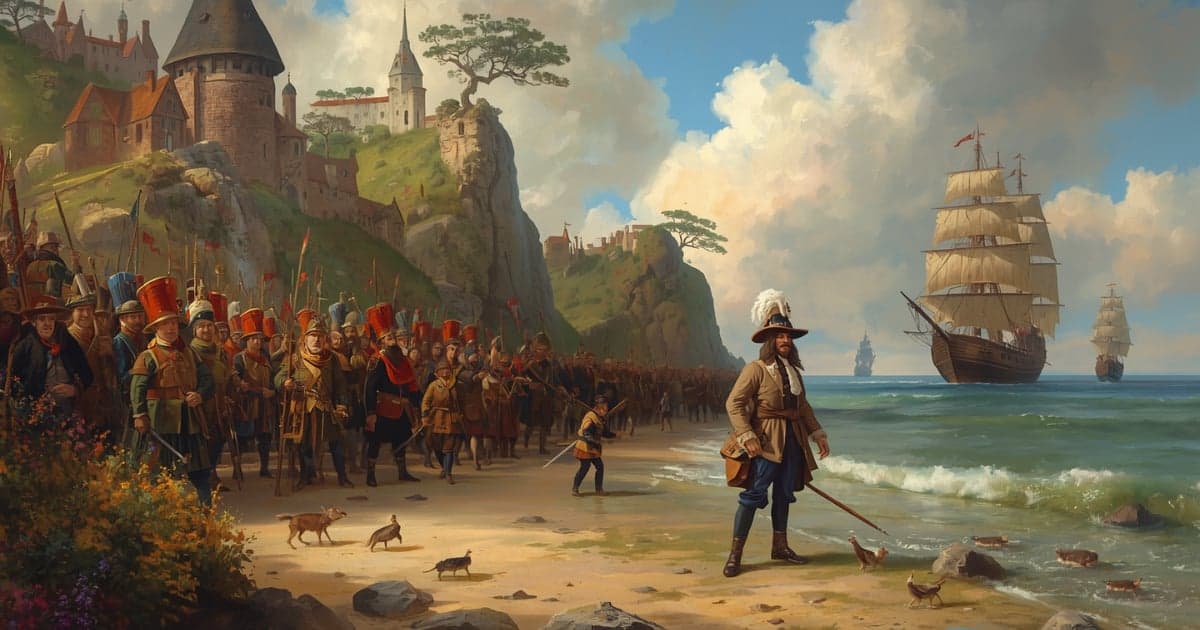
Gulliver finally escapes Laputa and lands in Balnibarbi, where he meets Lord Munodi, a refreshingly practical nobleman who becomes his guide. Unlike the abstract mathematicians above, Munodi shows genuine interest in Gulliver's experiences and treats him with real kindness. But as they tour the country, Gulliver discovers a troubling pattern: the cities are crumbling, the people look desperate, and the farmland lies barren despite excellent soil. The mystery deepens when they visit Munodi's estate, which stands out like an oasis of prosperity with well-maintained buildings, thriving crops, and content workers. Munodi reveals the devastating truth: forty years ago, visitors returned from Laputa obsessed with revolutionary new methods for everything from agriculture to construction. They established academies of 'projectors' throughout the kingdom, promising that one person could do the work of ten and palaces could be built in a week. The catch? None of these miraculous innovations actually work. While the entire country pursues these failed experiments, practical farmers like Munodi who stick to proven methods are scorned as backward and ignorant. Even Munodi faces pressure to abandon his successful traditional approaches or be seen as an enemy of progress. Swift's satire cuts deep here, showing how the pursuit of innovation for its own sake can destroy functioning systems. The chapter exposes the dangerous gap between theoretical brilliance and practical results, and how social pressure can make people abandon what works in favor of what sounds impressive.

Coming Up in Chapter 21

Gulliver is about to visit the Grand Academy of Lagado, where he'll witness firsthand the bizarre experiments that have brought a nation to ruin. Prepare for some of literature's most memorable examples of science gone wrong.

Share it with friends

Previous ChapterNext Chapter
GO ADS FREE — JOIN US
Original text
complete·2,135 words
T

he author leaves Laputa; is conveyed to Balnibarbi; arrives at the metropolis. A description of the metropolis, and the country adjoining. The author hospitably received by a great lord. His conversation with that lord.

Although I cannot say that I was ill treated in this island, yet I must confess I thought myself too much neglected, not without some degree of contempt; for neither prince nor people appeared to be curious in any part of knowledge, except mathematics and music, wherein I was far their inferior, and upon that account very little regarded.

On the other side, after having seen all the curiosities of the island, I was very desirous to leave it, being heartily weary of those people. They were indeed excellent in two sciences for which I have great esteem, and wherein I am not unversed; but, at the same time, so abstracted and involved in speculation, that I never met with such disagreeable companions. I conversed only with women, tradesmen, flappers, and court-pages, during two months of my abode there; by which, at last, I rendered myself extremely contemptible; yet these were the only people from whom I could ever receive a reasonable answer.

1 / 13

Master this chapter. Complete your experience

Purchase the complete book to access all chapters and support classic literature

Read Free on GutenbergBuy at Powell'sBuy on Amazon

As an Amazon Associate, we earn a small commission from qualifying purchases at no additional cost to you.

Available in paperback, hardcover, and e-book formats

GO ADS FREE — JOIN US

Why This Matters

Connect literature to life

Skill: Detecting Innovation Theater

This chapter teaches how to distinguish between genuine improvements and impressive-sounding changes that actually make things worse.

Practice This Today

This week, notice when someone promotes a 'revolutionary' solution—ask yourself if they can show concrete results from similar situations, not just theoretical benefits.

GO ADS FREE — JOIN US

Now let's explore the literary elements.

Key Quotes & Analysis

"I never met with such disagreeable companions"

— Gulliver

Context: Describing the Laputans after spending two months trying to have normal conversations with them

This captures the frustration of dealing with people who are brilliant in their narrow field but impossible to connect with as human beings. Swift is criticizing intellectuals who lose touch with common humanity.

In Today's Words:

These people were impossible to talk to - smart maybe, but totally out of touch with reality

"These were the only people from whom I could ever receive a reasonable answer"

— Gulliver

Context: Explaining that he could only have normal conversations with women, tradesmen, and servants - not the learned men

Swift points out that practical people who do real work often have more wisdom than those with fancy titles and theoretical knowledge. It's a dig at academic pretension.

In Today's Words:

The only people who made any sense were the ones actually doing the work, not the ones with the fancy degrees

"The cities lie in ruins, and the people look desperate"

— Narrator/Gulliver

Context: Gulliver's first impression of Balnibarbi after leaving the theoretical world of Laputa

This stark contrast shows the real-world consequences of abandoning practical methods for untested theories. The physical decay reflects the intellectual and social decay caused by impractical innovation.

In Today's Words:

Everything was falling apart and people looked miserable

Thematic Threads

Social Pressure

In This Chapter

Munodi faces scorn for using traditional farming methods that actually work, while failed innovations are celebrated as progressive

Development

Evolution from Lilliput's court politics—now showing how group pressure can override obvious evidence

In Your Life:

You might feel pressured to adopt workplace trends or parenting methods that don't fit your situation just to appear current

Class

In This Chapter

Intellectual theories from the floating elite destroy practical prosperity on the ground, creating visible class division between thinkers and workers

Development

Deepening from earlier books—now showing how abstract knowledge can become a tool of class oppression

In Your Life:

You might notice how people with advanced degrees sometimes dismiss practical experience or common-sense solutions

Identity

In This Chapter

Munodi struggles with being seen as backward despite his obvious success, questioning whether to maintain his identity as a practical person

Development

Continuing Gulliver's theme of identity crisis, but now showing how external pressure can make you doubt your own competence

In Your Life:

You might question your own judgment when everyone around you embraces something that doesn't feel right to you

Human Relationships

In This Chapter

Munodi shows genuine kindness to Gulliver while others are obsessed with their theories, demonstrating how practical people often make better companions

Development

Contrasting with the cold intellectualism of Laputa—showing that warmth and practicality often go together

In Your Life:

You might notice that the most helpful people in your life are often those focused on real problems rather than abstract ideas

GO ADS FREE — JOIN US

You now have the context. Time to form your own thoughts.

Discussion Questions

  1. 1

    Why is Lord Munodi's estate thriving while the rest of Balnibarbi is falling apart?

    analysis • surface
  2. 2

    What happens when an entire society adopts innovations that sound good but don't actually work?

    analysis • medium
  3. 3

    Where do you see people abandoning proven methods for trendy new approaches that create more problems than they solve?

    application • medium
  4. 4

    How do you distinguish between genuine innovation and fashionable complexity in your own life decisions?

    application • deep
  5. 5

    Why is it socially risky to stick with what works when everyone else is chasing the latest trend?

    reflection • deep

Critical Thinking Exercise

10 minutes

Innovation vs. Tradition Audit

Think of three areas in your life where you've been pressured to adopt new methods or technologies. For each one, write down what the old way accomplished, what the new way promises, and what it actually delivers. Then decide: are you keeping the change, going back, or finding a hybrid approach?

Consider:

  • •Consider whether the pressure to change came from genuine problems or social expectations
  • •Look for gaps between what was promised and what you actually experienced
  • •Think about whether you're afraid to go back to old methods because of how others might judge you

Journaling Prompt

Write about a time when you stuck with a traditional approach while others chased a trend. What happened, and what did you learn about trusting your own judgment?

GO ADS FREE — JOIN US

Coming Up Next...

Chapter 21: The Academy of Absurd Experiments

Gulliver is about to visit the Grand Academy of Lagado, where he'll witness firsthand the bizarre experiments that have brought a nation to ruin. Prepare for some of literature's most memorable examples of science gone wrong.

Continue to Chapter 21
Previous
The Science of Control
Contents
Next
The Academy of Absurd Experiments

Continue Exploring

Gulliver's Travels Study GuideTeaching ResourcesEssential Life IndexBrowse by ThemeAll Books

You Might Also Like

Jane Eyre cover

Jane Eyre

Charlotte Brontë

Explores personal growth

Great Expectations cover

Great Expectations

Charles Dickens

Explores personal growth

The Strange Case of Dr Jekyll and Mr Hyde cover

The Strange Case of Dr Jekyll and Mr Hyde

Robert Louis Stevenson

Explores personal growth

Don Quixote cover

Don Quixote

Miguel de Cervantes Saavedra

Explores personal growth

Browse all 47+ books

Share This Chapter

Know someone who'd enjoy this? Spread the wisdom!

TwitterFacebookLinkedInEmail

Read ad-free with Prestige

Get rid of ads, unlock study guides and downloads, and support free access for everyone.

Subscribe to PrestigeCreate free account
Intelligence Amplifier
Intelligence Amplifier™Powering Wide Reads

Exploring human-AI collaboration through books, essays, and philosophical dialogues. Classic literature transformed into navigational maps for modern life.

2025 Books

→ The Amplified Human Spirit→ The Alarming Rise of Stupidity Amplified→ San Francisco: The AI Capital of the World
Visit intelligenceamplifier.org
hello@widereads.com

WideReads Originals

→ You Are Not Lost→ The Last Chapter First→ The Lit of Love→ Wealth and Poverty→ 10 Paradoxes in the Classics · coming soon
Arvintech
arvintechAmplify your Mind
Visit at arvintech.com

Navigate

  • Home
  • Library
  • Essential Life Index
  • How It Works
  • Subscribe
  • Account
  • About
  • Contact
  • Authors
  • Suggest a Book
  • Landings

Made For You

  • Students
  • Educators
  • Families
  • Readers
  • Literary Analysis
  • Finding Purpose
  • Letting Go
  • Recovering from a Breakup
  • Corruption
  • Gaslighting in the Classics

Newsletter

Weekly insights from the classics. Amplify Your Mind.

Legal

  • Privacy Policy
  • Terms of Service
  • Cookie Policy
  • Accessibility

Why Public Domain?

We focus on public domain classics because these timeless works belong to everyone. No paywalls, no restrictions—just wisdom that has stood the test of centuries, freely accessible to all readers.

Public domain books have shaped humanity's understanding of love, justice, ambition, and the human condition. By amplifying these works, we help preserve and share literature that truly belongs to the world.

A Pilgrimage

Powell's City of Books

Portland, Oregon

If you ever find yourself in Portland, walk to the corner of Burnside and 10th. The building takes up an entire city block. Inside is over a million books, new and used on the same shelf, organized by color-coded rooms with names like the Rose Room and the Pearl Room. You can lose an afternoon. You can lose a weekend. You will find a book you have been looking for your whole life, and three you did not know existed.

It is a pilgrimage. We cannot find a bookstore like it anywhere on earth. If you read the classics, and you ever get the chance, go. It belongs on every reader's bucket list.

Visit powells.com

We are not in any way affiliated with Powell's. We are just a very big fan.

© 2026 Wide Reads™. All Rights Reserved.

Intelligence Amplifier™ and Wide Reads™ are proprietary trademarks of Arvin Lioanag.

Copyright Protection: All original content, analyses, discussion questions, pedagogical frameworks, and methodology are protected by U.S. and international copyright law. Unauthorized reproduction, distribution, web scraping, or use for AI training is strictly prohibited. See our Copyright Notice for details.

Disclaimer: The information provided on this website is for general informational and educational purposes only and does not constitute professional, legal, financial, or technical advice. While we strive to ensure accuracy and relevance, we make no warranties regarding completeness, reliability, or suitability. Any reliance on such information is at your own risk. We are not liable for any losses or damages arising from use of this site. By using this site, you agree to these terms.