Wide Reads
Literature MattersLife IndexEducators
Sign in
Where to Begin
Gulliver's Travels - Becoming the Show

Jonathan Swift

Gulliver's Travels

Becoming the Show

Home›Books›Gulliver's Travels›Chapter 10
Previous
10 of 39
Next

Summary

Gulliver finds himself completely dependent on a nine-year-old girl named Glumdalclitch, who becomes his protector, teacher, and only source of genuine care in this giant world. She teaches him the language, makes him clothes, and treats him with real affection—calling him Grildrig (little man) while he calls her his 'little nurse.' But this tender relationship exists within a harsh reality: her father sees Gulliver as a money-making opportunity. Despite Glumdalclitch's tears and protests, her father takes Gulliver to market towns as a performing curiosity, forcing him to walk, talk, and do tricks for paying crowds. The experience is exhausting and humiliating—Gulliver nearly gets his head knocked off by a hazelnut thrown by a schoolboy, since even small objects are dangerous at his size. What starts as local exhibitions grows into a grand tour toward the capital city, with Gulliver performing multiple shows daily in increasingly larger venues. The chapter reveals the complex dynamics of power and dependency—how those who care for us aren't always the ones making decisions about our lives. Glumdalclitch genuinely loves Gulliver, but she's powerless to protect him from her father's schemes. Meanwhile, Gulliver maintains his dignity by reframing his situation: he tells himself that even the King of England would face the same humiliation if shrunk down. This psychological survival strategy—finding ways to preserve self-respect in degrading circumstances—becomes crucial as his exploitation intensifies. The journey toward the capital represents his transition from private curiosity to public spectacle, setting up bigger challenges ahead.

Coming Up in Chapter 11

Arriving in the capital city brings Gulliver face-to-face with even larger crowds and greater dangers. His performances catch the attention of people far more powerful than country farmers—but will this mean rescue or an even more elaborate form of captivity?

Share it with friends

Previous ChapterNext Chapter
GO ADS FREE — JOIN US
Original text
complete·2,225 words
A

description of the farmer’s daughter. The author carried to a market-town, and then to the metropolis. The particulars of his journey.

1 / 9

Master this chapter. Complete your experience

Purchase the complete book to access all chapters and support classic literature

Read Free on GutenbergBuy at Powell'sBuy on Amazon

As an Amazon Associate, we earn a small commission from qualifying purchases at no additional cost to you.

Available in paperback, hardcover, and e-book formats

GO ADS FREE — JOIN US

Why This Matters

Connect literature to life

Skill: Reading Power Dynamics

This chapter teaches how to distinguish between those who care about you and those who control your circumstances—a crucial survival skill in hierarchical workplaces.

Practice This Today

This week, notice when someone expresses concern for you but can't actually change your situation—map who in your workplace or family actually makes the decisions that affect your life.

GO ADS FREE — JOIN US

Now let's explore the literary elements.

Key Quotes & Analysis

"She was very good-natured, and not above forty feet high, being little for her age."

— Narrator

Context: Gulliver describing Glumdalclitch with obvious affection

Shows how perspective completely changes everything - this 'little' girl is still eight times taller than Gulliver. It also reveals his genuine fondness for someone who treats him with kindness.

In Today's Words:

She was really sweet, and only about forty feet tall, which was small for a nine-year-old.

"My master, to avoid a crowd, would take me in his hand, and set me on a table, where I walked as he commanded."

— Narrator

Context: Describing how Gulliver is forced to perform for audiences

The word 'commanded' shows the complete power imbalance and how Gulliver has become a performing object. The clinical tone hides the humiliation of being treated like a trained animal.

In Today's Words:

My boss would put me on display and make me do tricks for the crowd.

"Nothing angered and mortified me so much as the queen's dwarf, who being of the lowest stature that was ever in that country, became insolent upon seeing a creature so much beneath him."

— Narrator

Context: Later in the chapter when Gulliver encounters someone who bullies him

Shows how people who are marginalized themselves often punch down at those with even less power. The dwarf uses Gulliver to feel superior, revealing how hierarchies of oppression work.

In Today's Words:

Nothing pissed me off more than this short guy who finally found someone smaller to pick on.

Thematic Threads

Power

In This Chapter

The father holds ultimate authority over Gulliver's fate despite Glumdalclitch's emotional bond with him

Development

Evolved from physical powerlessness in Lilliput to emotional powerlessness here

In Your Life:

You might see this when your supervisor wants to help you but can't override upper management decisions.

Dependency

In This Chapter

Gulliver depends on Glumdalclitch for care, but she depends on her father for permission

Development

Dependency has become more complex and emotionally layered than simple physical survival

In Your Life:

This appears when you rely on someone who themselves must answer to someone else.

Exploitation

In This Chapter

The father commodifies Gulliver as entertainment, forcing degrading performances for profit

Development

Shifted from political manipulation in Lilliput to economic exploitation here

In Your Life:

You experience this when family members or employers profit from your circumstances while you bear the costs.

Dignity

In This Chapter

Gulliver maintains self-respect by imagining even kings would face the same humiliation if miniaturized

Development

Introduced here as a psychological survival mechanism

In Your Life:

This shows up when you preserve your sense of self-worth despite being in demeaning situations.

Identity

In This Chapter

Gulliver transforms from private curiosity to public spectacle, losing control over how he's perceived

Development

Identity continues to be shaped by external forces rather than self-determination

In Your Life:

You might recognize this when your reputation or role gets defined by others rather than your own choices.

GO ADS FREE — JOIN US

You now have the context. Time to form your own thoughts.

Discussion Questions

  1. 1

    Why does Glumdalclitch's father ignore her tears and protests when he decides to take Gulliver on tour?

    analysis • surface
  2. 2

    How does the relationship between Glumdalclitch and her father create an impossible situation for Gulliver?

    analysis • medium
  3. 3

    Where do you see this pattern today—someone who cares about you lacking the power to protect you from someone who controls your situation?

    application • medium
  4. 4

    When you're caught between someone who loves you but can't help and someone with power who doesn't care, what's your best strategy?

    application • deep
  5. 5

    What does this chapter reveal about the difference between caring and controlling in relationships?

    reflection • deep

Critical Thinking Exercise

10 minutes

Map Your Power Triangle

Think of a current situation where you feel stuck or exploited. Draw three circles representing you, someone who genuinely cares about you, and someone who has decision-making power over your situation. Draw lines showing who depends on whom and who has authority over whom. Write one sentence describing each person's primary motivation.

Consider:

  • •The person with power may not be the obvious authority figure—sometimes it's whoever controls the money or information
  • •The caring person might be stuck in their own power triangle with someone else
  • •Your best strategy might involve building a direct relationship with the decision-maker rather than working through the caring person

Journaling Prompt

Write about a time when someone who cared about you couldn't protect you from someone else's decision. What did you learn about navigating these triangular power dynamics?

GO ADS FREE — JOIN US

Coming Up Next...

Chapter 11: From Slave to Court Favorite

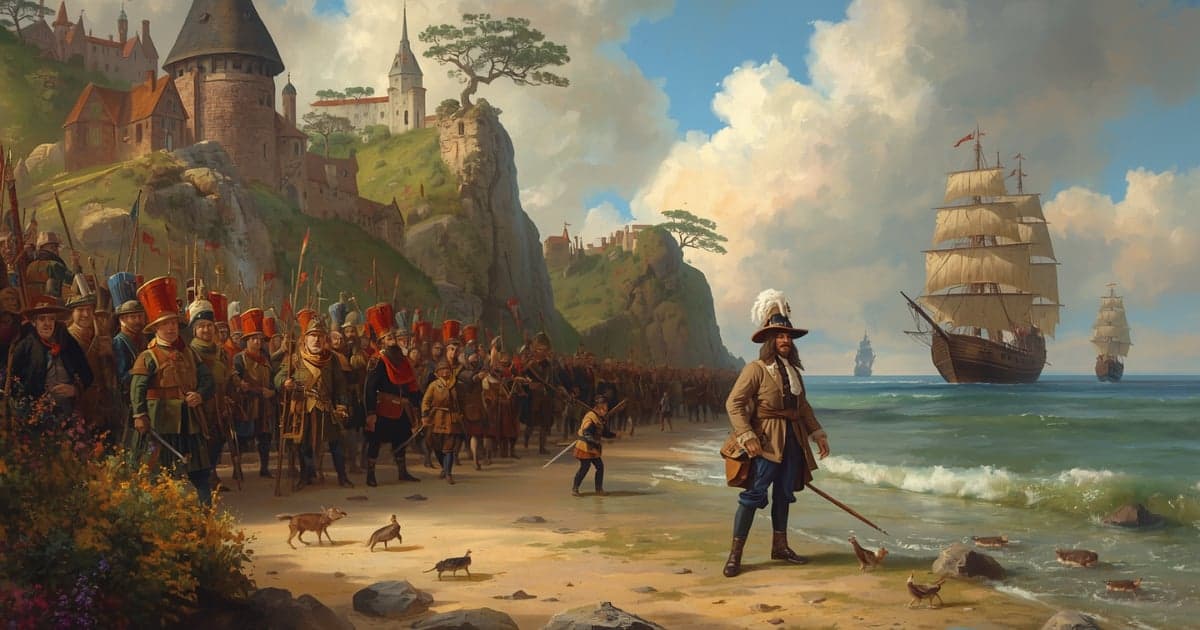
Arriving in the capital city brings Gulliver face-to-face with even larger crowds and greater dangers. His performances catch the attention of people far more powerful than country farmers—but will this mean rescue or an even more elaborate form of captivity?
Continue to Chapter 11
Previous
Giant Among Giants
Contents
Next
From Slave to Court Favorite

Continue Exploring

Gulliver's Travels Study GuideTeaching ResourcesEssential Life IndexBrowse by ThemeAll Books

You Might Also Like

Jane Eyre cover

Jane Eyre

Charlotte Brontë

Explores personal growth

Great Expectations cover

Great Expectations

Charles Dickens

Explores personal growth

The Strange Case of Dr Jekyll and Mr Hyde cover

The Strange Case of Dr Jekyll and Mr Hyde

Robert Louis Stevenson

Explores personal growth

Don Quixote cover

Don Quixote

Miguel de Cervantes Saavedra

Explores personal growth

Browse all 47+ books

Share This Chapter

Know someone who'd enjoy this? Spread the wisdom!

TwitterFacebookLinkedInEmail

Read ad-free with Prestige

Get rid of ads, unlock study guides and downloads, and support free access for everyone.

Subscribe to PrestigeCreate free account
Intelligence Amplifier
Intelligence Amplifier™Powering Wide Reads

Exploring human-AI collaboration through books, essays, and philosophical dialogues. Classic literature transformed into navigational maps for modern life.

2025 Books

→ The Amplified Human Spirit→ The Alarming Rise of Stupidity Amplified→ San Francisco: The AI Capital of the World
Visit intelligenceamplifier.org
hello@widereads.com

WideReads Originals

→ You Are Not Lost→ The Last Chapter First→ The Lit of Love→ Wealth and Poverty→ 10 Paradoxes in the Classics · coming soon
Arvintech
arvintechAmplify your Mind
Visit at arvintech.com

Navigate

  • Home
  • Library
  • Essential Life Index
  • How It Works
  • Subscribe
  • Account
  • About
  • Contact
  • Authors
  • Suggest a Book
  • Landings

Made For You

  • Students
  • Educators
  • Families
  • Readers
  • Literary Analysis
  • Finding Purpose
  • Letting Go
  • Recovering from a Breakup
  • Corruption
  • Gaslighting in the Classics

Newsletter

Weekly insights from the classics. Amplify Your Mind.

Legal

  • Privacy Policy
  • Terms of Service
  • Cookie Policy
  • Accessibility

Why Public Domain?

We focus on public domain classics because these timeless works belong to everyone. No paywalls, no restrictions—just wisdom that has stood the test of centuries, freely accessible to all readers.

Public domain books have shaped humanity's understanding of love, justice, ambition, and the human condition. By amplifying these works, we help preserve and share literature that truly belongs to the world.

A Pilgrimage

Powell's City of Books

Portland, Oregon

If you ever find yourself in Portland, walk to the corner of Burnside and 10th. The building takes up an entire city block. Inside is over a million books, new and used on the same shelf, organized by color-coded rooms with names like the Rose Room and the Pearl Room. You can lose an afternoon. You can lose a weekend. You will find a book you have been looking for your whole life, and three you did not know existed.

It is a pilgrimage. We cannot find a bookstore like it anywhere on earth. If you read the classics, and you ever get the chance, go. It belongs on every reader's bucket list.

Visit powells.com

We are not in any way affiliated with Powell's. We are just a very big fan.

© 2026 Wide Reads™. All Rights Reserved.

Intelligence Amplifier™ and Wide Reads™ are proprietary trademarks of Arvin Lioanag.

Copyright Protection: All original content, analyses, discussion questions, pedagogical frameworks, and methodology are protected by U.S. and international copyright law. Unauthorized reproduction, distribution, web scraping, or use for AI training is strictly prohibited. See our Copyright Notice for details.

Disclaimer: The information provided on this website is for general informational and educational purposes only and does not constitute professional, legal, financial, or technical advice. While we strive to ensure accuracy and relevance, we make no warranties regarding completeness, reliability, or suitability. Any reliance on such information is at your own risk. We are not liable for any losses or damages arising from use of this site. By using this site, you agree to these terms.