Chapter 29
The Return of Estella
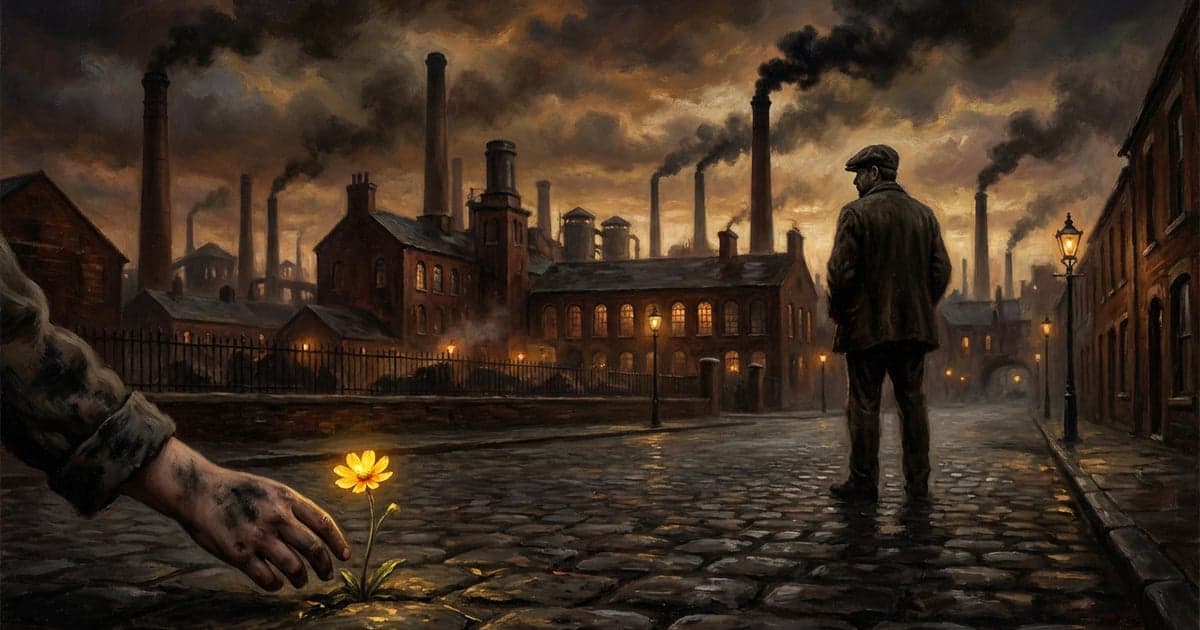
Betimes in the morning I was up and out. It was too early yet to go to Miss Havisham’s, so I loitered into the country on Miss Havisham’s side of town,—which was not Joe’s side; I could go there to-morrow,—thinking about my patroness, and painting brilliant pictures of her plans for me. She had adopted Estella, she had as good as adopted me, and it could not fail to be her intention to bring us together. She reserved it for me to restore the desolate house, admit the sunshine into the dark rooms, set the clocks a-going and the cold…
Public-domain chapter text, formatted for reading.
Master this chapter. Complete your experience
Purchase the complete book to access all chapters and support classic literature
Available in paperback, hardcover, and e-book formats
Now let's explore the literary elements.
Key Quotes & Analysis
"I loved her against reason, against promise, against peace, against hope, against happiness, against all discouragement that could be."
Context: Pip describes his obsessive love for Estella despite knowing it's destructive
This captures the essence of toxic obsession disguised as love. Pip recognizes his feelings go against everything logical and healthy, yet he can't stop. The repetitive 'against' structure shows how completely this dominates his thinking.
In Today's Words:
I was obsessed with her even though I knew it was bad for me and would never work out The same pressure shows up in workplaces and families when someone with more power passes a crisis down to the person who cannot refuse. The same pressure shows up in workplaces and families when someone with
"Betimes in the morning I was up and out."
Context: From the opening of the chapter
This line anchors the scene's pressure and shows how quickly Pip's world turns from ordinary fear into moral compromise.
In Today's Words:
In plain terms, the passage says: Betimes in the morning I was up and out. Readers still recognize the same dynamic when power, poverty, or secrecy forces a small person to act against their own conscience. The same pressure shows up in workplaces and families when someone with more power passes a crisis down to
"Miss Havisham’s side of town,—which was not Joe’s side; I could go there to-morrow,—thinking about my patroness, and painting brilliant pictures of her plans for me."
Context: From the opening of the chapter
This line anchors the scene's pressure and shows how quickly Pip's world turns from ordinary fear into moral compromise.
In Today's Words:
In plain terms, the passage says: Miss Havisham’s side of town, which was not Joe’s side; I could go there to-morrow, thinking about my patroness, and painting brilliant pict Readers still recognize the same dynamic when power, poverty, or secrecy forces a small person to act against their own conscience.
"She had adopted Estella, she had as good as adopted me, and it could not fail to be her intention to bring us together."
Context: From the opening of the chapter
This line anchors the scene's pressure and shows how quickly Pip's world turns from ordinary fear into moral compromise.
In Today's Words:
In plain terms, the passage says: She had adopted Estella, she had as good as adopted me, and it could not fail to be her intention to bring us together. Readers still recognize the same dynamic when power, poverty, or secrecy forces a small person to act against their own conscience.
Thematic Threads
Manufactured Desire
In This Chapter
Miss Havisham deliberately creates Estella as an object of desire specifically designed to cause pain
Development
Evolved from childhood games to adult psychological warfare
In Your Life:
You might see this in relationships where someone keeps you guessing about their feelings to maintain power.
Shame-Based Obsession
In This Chapter
Pip's shame about his origins makes him desperate to win Estella's approval to prove his worth
Development
His class consciousness has intensified since gaining wealth, making him more vulnerable
In Your Life:
You might chase approval from people who represent what you think you lack about yourself.
Inherited Trauma
In This Chapter
Miss Havisham passes her pain to Estella, who inflicts it on others in an endless cycle
Development
The wedding dress trauma now has a second generation victim and perpetrator
In Your Life:
You might find yourself repeating patterns of hurt that were done to you, even unconsciously.
Recognition Blindness
In This Chapter
Pip sees the manipulation clearly but cannot stop participating because his ego believes he'll be different
Development
His self-awareness has grown but his emotional control has weakened
In Your Life:
You might continue harmful patterns even when you intellectually understand they're bad for you.
Calculated Cruelty
In This Chapter
Estella's coldness isn't natural personality but trained behavior designed to maximize emotional damage
Development
Introduced here as the adult version of childhood teasing
In Your Life:
You might encounter people whose meanness feels too precise to be accidental.
You now have the context. Time to form your own thoughts.
Discussion Questions
This is not a test. Five prompts guide you through the chapter, from how it opens to how it closes, so you notice context and rhythm rather than facts to memorize. Sit with each question in your own words. When you see "One way to read it," treat it as a starting point, not the only answer.
- 1
What situation opens "The Return of Estella" for Pip, and what is at stake immediately?
analysis • surfaceOne way to read it
At Satis House, Estella's presence transforms everything.
- 2
How does the middle of "The Return of Estella" raise the cost of Pip's choices?
analysis • mediumOne way to read it
Her honesty should repel Pip, but instead it deepens his obsession, as if her very inability to love makes her more worthy of his devotion.
- 3
Where in "The Return of Estella" do you see shame, class, or loyalty pulling Pip in opposite directions?
application • mediumOne way to read it
Her honesty should repel Pip, but instead it deepens his obsession, as if her very inability to love makes her more worthy of his devotion.
- 4
What does the closing movement of "The Return of Estella" suggest about how small compromises grow?
application • deepOne way to read it
The entire visit weaves together hope (they're being pushed together), despair (she cannot love), and delusion (this must be leading somewhere), with Pip's capacity for self-deception reaching new heights.
- 5
After "The Return of Estella", what would you do differently if you were trying to protect both integrity and connection?
reflection • deepOne way to read it
The entire visit weaves together hope (they're being pushed together), despair (she cannot love), and delusion (this must be leading somewhere), with Pip's capacity for self-deception reaching new heights.
Critical Thinking Exercise
Map the Manipulation Triangle
Draw a triangle with Miss Havisham at the top, Estella and Pip at the bottom corners. For each person, write what they want, what they're getting, and what they're giving up. Then identify one relationship in your life where you might be in a similar dynamic - as the manipulator, the weapon, or the victim.
Consider:
- •Notice how each person thinks they're getting something valuable from this arrangement
- •Consider how Miss Havisham's past pain doesn't justify her current choices
- •Look for patterns where someone benefits from keeping you emotionally off-balance
Journaling Prompt
Write about a time when you realized someone was using your feelings to control your behavior. How did you recognize the pattern, and what did you do to protect yourself?
Coming Up Next...
Chapter 30: The Sting of Public Humiliation
Pip confides his concerns about Orlick to Jaggers, but his guardian's cynical response reveals uncomfortable truths about trust and human nature. Meanwhile, new developments threaten the careful balance of secrets surrounding Pip's mysterious benefactor.