Wide Reads
Literature MattersLife IndexEducators
Sign in
Where to Begin

The De Lacey Family's Fall from Grace — Frankenstein

Frankenstein - The De Lacey Family's Fall from Grace

Mary Shelley

Frankenstein

The De Lacey Family's Fall from Grace

Home›Books›Frankenstein›Chapter 18: The De Lacey Family's Fall from Grace
Previous
18 of 28
Next

Analysis by the Wide Reads editorial team·Reviewed against the source text·Updated December 1, 2025

Summary

The De Lacey Family's Fall from Grace

Frankenstein by Mary Shelley

0:000:00
Listen to Next Chapter

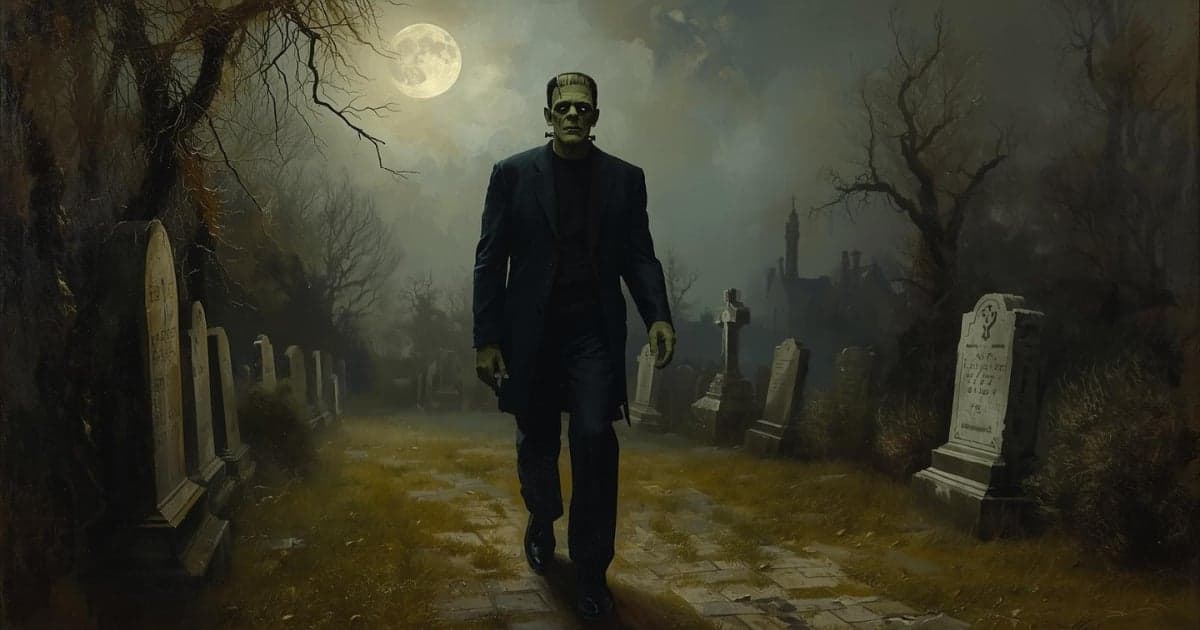
The creature finally tells his side of the story, and it's not what Victor expected. After being abandoned by his creator, the creature awakens alone and confused in the world. He describes his first experiences - learning to see, feel hunger and cold, discovering fire. Like a newborn, he has to figure out everything from scratch, but with the mind of an adult and the appearance of a nightmare.

He watches a family from hiding, learning language and human behavior by observing them. The De Lacey family becomes his window into human connection - he sees their kindness, their struggles, their love for each other. He even helps them secretly, chopping wood and clearing snow. But when he finally reveals himself, hoping for acceptance, they react with horror and violence. This rejection breaks something in him.

The creature's story reveals a tragic truth: he wasn't born evil. Society's fear and rejection transformed him into the monster everyone believes him to be. His eloquent storytelling shows intelligence and sensitivity, making his isolation even more heartbreaking. This chapter forces us to question who the real monster is - the creature who was abandoned and rejected, or the society that refused to show him compassion. It's a powerful reminder that our treatment of others, especially those who are different, has consequences.

In this chapter: Terms Characters Key Quotes Themes Modern Story

Why This Matters

Connect literature to life

Skill: Recognizing Cause and Effect in Relationships

Virtue punished by ingratitude can embitter even the gentlest soul. Felix risks everything to free Safie's father, then loses fortune and home when the Turk betrays him. Trace how systems reward rescue and still ruin rescuers before you judge someone's lasting sorrow.

Coming Up in Chapter 19

The creature's story continues as he reveals how his desire for companionship led to increasingly desperate acts. His tale of watching the De Lacey family will take a darker turn as his hope for acceptance crumbles.

Share it with friends

PreviousPrevious ChapterNextNext Chapter
Original text
1,852 wordscomplete

Chapter 18

The De Lacey Family's Fall from Grace

“Some time elapsed before I learned the history of my friends. It was one which could not fail to impress itself deeply on my mind, unfolding as it did a number of circumstances, each interesting and wonderful to one so utterly inexperienced as I was. “The name of the old man was De Lacey. He was descended from a good family in France, where he had lived for many years in affluence, respected by his superiors and beloved by his equals. His son was bred in the service of his country, and Agatha had ranked with ladies of the highest…

Public-domain chapter text, formatted for reading.

Master this chapter. Complete your experience

Purchase the complete book to access all chapters and support classic literature

Buy at Powell'sBuy on Amazon

Available in paperback, hardcover, and e-book formats

Now let's explore the literary elements.

Key Quotes & Analysis

"Such was the history of my beloved cottagers. It impressed me deeply."

— The Creature

Context: Opening his account of the De Lacey family's fall

The creature frames their story as foundational to his own formation. Their virtue and betrayal teach him how unjust the world can be to the generous.

In Today's Words:

That was the story of the family I loved from hiding, and it struck me to the core because their virtue and ruin were inseparable. Learning their past taught me that good people can lose everything while the ungrateful walk away richer, which made their present poverty feel like injustice rather than fate.

"The injustice of his sentence was very flagrant; all Paris was indignant;"

— Narrator (creature recounting)

Context: Describing the trial of Safie's father

Felix enters the story through outrage at obvious injustice, showing the creature admires moral courage even before he understands political systems fully.

In Today's Words:

The injustice of his sentence was obvious to all of Paris, and Felix could not stand by while an innocent man was condemned for religion and wealth rather than crime. Watching that courage made me admire humans even as I remained shut out from them, wishing I could be judged by action instead of face.

"They found a miserable asylum in the cottage in Germany, where I discovered them."

— Narrator (creature recounting)

Context: The family's reduced state after exile and betrayal

Connects their present poverty to past heroism. The creature watches survivors of virtue punished, which shapes his sense of how society treats the vulnerable.

In Today's Words:

They ended up in a miserable cottage in Germany, which is where I found them, exiled and impoverished after Felix's rescue was repaid with betrayal by the Turk he had saved. Their fall showed me how quickly fortune collapses when gratitude fails and how virtue can leave you with nothing but one another.

"The generous nature of Safie was outraged by this command; she attempted to expostulate with her father, but he left her angrily, reiterating his tyrannical mandate."

— Narrator (creature recounting)

Context: Safie refuses her father's order to abandon Felix

Safie's loyalty mirrors the devotion the creature longs for. Her courage to cross borders for love contrasts with the betrayals that broke Felix's family.

In Today's Words:

Safie's generous spirit rebelled when her father ordered her to abandon Felix, and she chose love over obedience even when it meant flight across countries alone with little money and less protection. Her loyalty was everything I hoped humans might one day offer me if they could see past my deformity.

Thematic Threads

Identity

In This Chapter

The creature's identity is shaped entirely by others' reactions to him, showing how external treatment becomes internal reality

Development

Evolved from Victor's identity crisis to show how society shapes who we become

In Your Life:

You might recognize this when you catch yourself becoming what others expect rather than who you want to be

Class

In This Chapter

The creature is permanently excluded from society based on appearance, like class barriers that seem impossible to cross

Development

Deepened from earlier hints to show how social exclusion creates permanent outsiders

In Your Life:

You see this when certain jobs, neighborhoods, or social circles feel forever out of reach

Human Relationships

In This Chapter

The creature's desperate need for connection and the De Lacey family's kindness show what he's been denied

Development

Contrasts Victor's isolation by choice with the creature's forced isolation

In Your Life:

This appears when you realize how much your behavior is shaped by whether people accept or reject you

Social Expectations

In This Chapter

Society expects the creature to be a monster based on appearance, and he eventually fulfills that expectation

Development

Shows the dark side of expectations that Victor couldn't meet in earlier chapters

In Your Life:

You experience this when you find yourself living up to others' low expectations instead of your own potential

Personal Growth

In This Chapter

The creature's self-education and emotional development show remarkable growth despite abandonment

Development

Contrasts with Victor's stunted growth, showing growth is possible even in isolation

In Your Life:

This reminds you that you can keep learning and growing even when others have given up on you

You now have the context. Time to form your own thoughts.

Discussion Questions

This is not a test. Five prompts guide you through the chapter, from how it opens to how it closes, so you notice context and rhythm rather than facts to memorize. Sit with each question in your own words. When you see "One way to read it," treat it as a starting point, not the only answer.

  1. 1

    How has the creature secretly helped the De Lacey family?

    ▶One way to read it

    He chops wood and clears snow at night—anonymous labor to ease their poverty without revealing himself.

    analysis • surface
  2. 2

    What happens when the creature finally reveals himself to the family?

    ▶One way to read it

    They react with horror and violence. The rejection shatters the hope built through months of observation and kindness.

    analysis • medium
  3. 3

    Why does the creature choose the blind De Lacey for his first direct conversation?

    ▶One way to read it

    Without sight, the old man might judge by words and need. The creature gambles on acceptance through language alone.

    application • medium
  4. 4

    How does this rejection change the creature's understanding of humanity?

    ▶One way to read it

    The people who taught him love also teach him exile. Benevolence offered in secret is answered with screams when seen.

    application • deep
  5. 5

    When have you risked vulnerability and been punished for the very identity you could not change?

    ▶One way to read it

    The cottage scene is the pivot from longing to rage—the creature's war against the species begins here.

    reflection • deep

Critical Thinking Exercise

10 minutes

Map Your Own Rejection Spiral

Think of a time when you were repeatedly rejected, dismissed, or treated as an outsider. Map the progression: What was your initial response? How did repeated rejection change your behavior? Did you eventually become what others expected? Write down the specific moments when your attitude shifted.

Consider:

  • •Look for the exact point where hope turned to resentment
  • •Notice how your behavior changed to match others' expectations
  • •Consider what different treatment might have produced different outcomes

Journaling Prompt

Write about someone you may have contributed to rejecting or isolating. How might your treatment have shaped their response? What would you do differently now?

Coming Up Next...

Chapter 19: The Creature Discovers Paradise Lost

The creature's story continues as he reveals how his desire for companionship led to increasingly desperate acts. His tale of watching the De Lacey family will take a darker turn as his hope for acceptance crumbles.

Continue to Chapter 19
Previous
The Creature's Education in Society
Contents
Next
The Creature Discovers Paradise Lost
Keep exploring

Continue Exploring

Study guides, teaching tools, themes, and the full library.More ways to read Frankenstein: study guides, teaching tools, and the wider library.

  • Frankenstein Study Guide
  • Teaching Resources
  • Essential Life Index
  • Browse by Theme
  • All Books

Life-skill deep dives in Frankenstein

  • Breaking Cycles of RevengeSee how Victor and the creature mirror each other in a revenge cycle that destroys both, and what Shelley shows about stopping mutual destruction.
  • Cost of IsolationExplore cost of isolation through Frankenstein by Mary Shelley. Life lessons from classic literature applied to modern challenges.
  • Dangerous AmbitionLearn to identify when healthy ambition transforms into destructive obsession through Victor Frankenstein\
  • Taking ResponsibilityExplore how Frankenstein teaches the critical lesson of taking responsibility for what you create—from products to relationships.
  • Understanding RejectionLearn how systematic rejection transforms innocent beings into dangerous threats through the creature\
Identity & Self-DiscoveryMoral Dilemmas & EthicsPower & Corruption

You Might Also Like

The Picture of Dorian Gray cover

The Picture of Dorian Gray

Oscar Wilde

Explores identity & self

The Strange Case of Dr Jekyll and Mr Hyde cover

The Strange Case of Dr Jekyll and Mr Hyde

Robert Louis Stevenson

Explores identity & self

Jude the Obscure cover

Jude the Obscure

Thomas Hardy

Explores identity & self

The Scarlet Letter cover

The Scarlet Letter

Nathaniel Hawthorne

Explores identity & self

Browse all 106+ books

Share This Chapter

Know someone who'd enjoy this? Spread the wisdom!

TwitterFacebookLinkedInEmail

Go further with Prestige

Unlock study guides and downloads, early access, and exclusive content — and support free access for everyone.

Subscribe to PrestigeCreate free account
Intelligence Amplifier
Intelligence Amplifier™Powering Wide Reads

Exploring human-AI collaboration through books, essays, and philosophical dialogues. Classic literature transformed into navigational maps for modern life.

2025 Books

→ The Amplified Human Spirit→ The Alarming Rise of Stupidity Amplified→ San Francisco: The AI Capital of the World
Visit intelligenceamplifier.org
hello@widereads.com

WideReads Originals

→ You Are Not Lost→ The Last Chapter First→ The Lit of Love→ Wealth and Poverty→ Wisdom for the Wounded
Arvintech
arvintechAmplify your Mind
Visit at arvintech.com

Navigate

  • Home
  • Library
  • Essential Life Index
  • How It Works
  • Subscribe
  • Account
  • About
  • Contact
  • Authors
  • Suggest a Book
  • Landings

Made For You

  • Trending
  • Students
  • Educators
  • Families
  • Readers
  • Literary Analysis
  • Finding Purpose
  • Letting Go
  • Recovering from a Breakup
  • Corruption
  • Gaslighting in the Classics

Newsletter

Weekly insights from the classics. Amplify Your Mind.

Legal

  • Privacy Policy
  • Terms of Service
  • Editorial Standards
  • Cookie Policy
  • Accessibility

Why Public Domain?

We focus on public domain classics because these timeless works belong to everyone. No paywalls, no restrictions—just wisdom that has stood the test of centuries, freely accessible to all readers.

Public domain books have shaped humanity's understanding of love, justice, ambition, and the human condition. By amplifying these works, we help preserve and share literature that truly belongs to the world.

A Pilgrimage

Powell's City of Books

Portland, Oregon

If you ever find yourself in Portland, walk to the corner of Burnside and 10th. The building takes up an entire city block. Inside is over a million books, new and used on the same shelf, organized by color-coded rooms with names like the Rose Room and the Pearl Room. You can lose an afternoon. You can lose a weekend. You will find a book you have been looking for your whole life, and three you did not know existed.

It is a pilgrimage. We cannot find a bookstore like it anywhere on earth. If you read the classics, and you ever get the chance, go. It belongs on every reader's bucket list.

Visit powells.com

We are not in any way affiliated with Powell's. We are just a very big fan.

© 2026 Wide Reads™. All Rights Reserved.

Intelligence Amplifier™ and Wide Reads™ are proprietary trademarks of Arvin Lioanag.

Copyright Protection: All original content, analyses, discussion questions, pedagogical frameworks, and methodology are protected by U.S. and international copyright law. Unauthorized reproduction, distribution, web scraping, or use for AI training is strictly prohibited. See our Copyright Notice for details.

Disclaimer: The information provided on this website is for general informational and educational purposes only and does not constitute professional, legal, financial, or technical advice. While we strive to ensure accuracy and relevance, we make no warranties regarding completeness, reliability, or suitability. Any reliance on such information is at your own risk. We are not liable for any losses or damages arising from use of this site. By using this site, you agree to these terms.