Wide Reads
Literature MattersLife IndexEducators
Sign in
Where to Begin
Frankenstein - The Creature's First Days—Learning to Exist

Mary Shelley

Frankenstein

The Creature's First Days—Learning to Exist

Home›Books›Frankenstein›Chapter 15
Previous
15 of 28
Next

Summary

The Creature's First Days—Learning to Exist

Frankenstein by Mary Shelley

0:000:00
Listen to Next Chapter

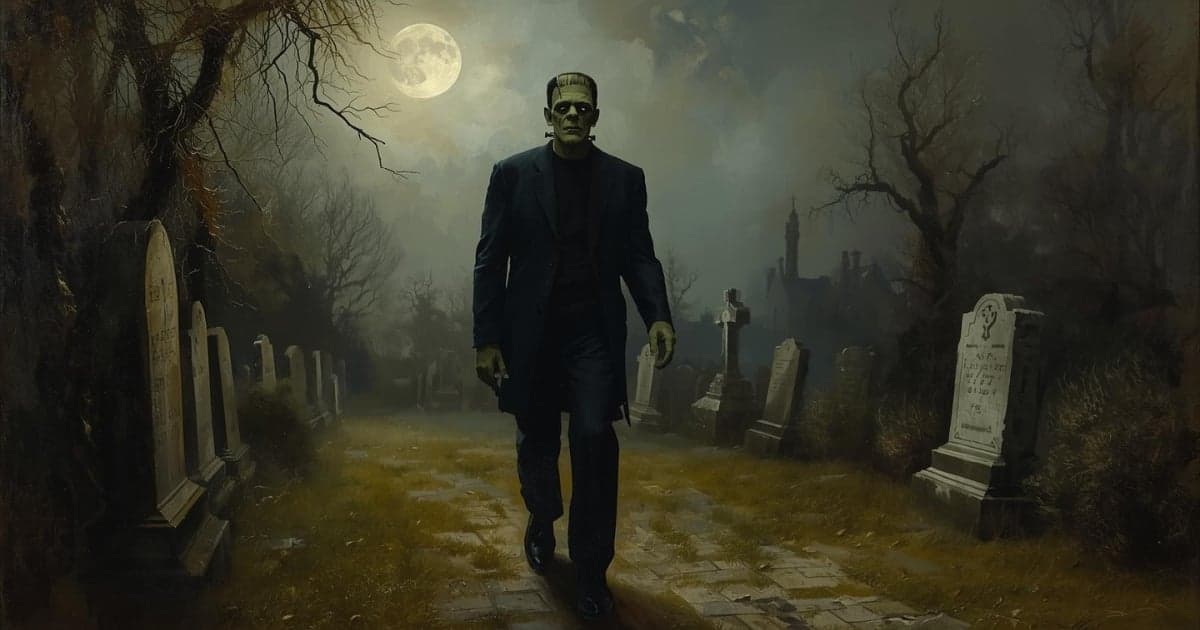
The creature begins his tale from his first moments of consciousness. His narrative is heartbreaking: he remembers confusion, overwhelming sensations, and pain. Born as an adult with no knowledge, he had to learn everything—how to see, how to distinguish sounds, even what hunger meant. He discovered fire, learned it gives warmth and light, burned himself learning its danger. Every human he encountered fled in terror. An old shepherd ran screaming from his hut. When the creature entered a village, children shrieked, women fainted, and villagers attacked him with stones. Bruised and bewildered, he fled to a hovel attached to a cottage, taking refuge from 'the barbarity of man.' This chapter reveals that the creature was not born evil—he was born innocent and curious, with the capacity for wonder and learning. His first instinct upon waking was to explore, not to destroy. His education came through pain and rejection. The creature's eloquent narration challenges Victor's assumption that he created a monster. Instead, Victor created a being capable of learning, feeling, and remembering—then abandoned it to learn that the world responds to ugliness with violence.

Coming Up in Chapter 16

The creature's secret education continues as he watches the cottage family more closely, beginning to understand language and human emotions. His longing to join them grows stronger, but so does his awareness of how different he is.

Share it with friends

Previous ChapterNext Chapter
GO ADS FREE — JOIN US
Original text
complete·2,905 words
I

“t is with considerable difficulty that I remember the original era of my being; all the events of that period appear confused and indistinct. A strange multiplicity of sensations seized me, and I saw, felt, heard, and smelt at the same time; and it was, indeed, a long time before I learned to distinguish between the operations of my various senses. By degrees, I remember, a stronger light pressed upon my nerves, so that I was obliged to shut my eyes. Darkness then came over me and troubled me, but hardly had I felt this when, by opening my eyes, as I now suppose, the light poured in upon me again. I walked and, I believe, descended, but I presently found a great alteration in my sensations. Before, dark and opaque bodies had surrounded me, impervious to my touch or sight; but I now found that I could wander on at liberty, with no obstacles which I could not either surmount or avoid. The light became more and more oppressive to me, and the heat wearying me as I walked, I sought a place where I could receive shade. This was the forest near Ingolstadt; and here I lay by the side of a brook resting from my fatigue, until I felt tormented by hunger and thirst. This roused me from my nearly dormant state, and I ate some berries which I found hanging on the trees or lying on the ground. I slaked my thirst at the brook, and then lying down, was overcome by sleep.

1 / 17

Master this chapter. Complete your experience

Purchase the complete book to access all chapters and support classic literature

Read Free on GutenbergBuy at Powell'sBuy on Amazon

As an Amazon Associate, we earn a small commission from qualifying purchases at no additional cost to you.

Available in paperback, hardcover, and e-book formats

GO ADS FREE — JOIN US

Why This Matters

Connect literature to life

Skill: Recognizing Environmental Influence

This chapter teaches how surroundings shape behavior—whether it's creatures, children, or AI systems.

Practice This Today

This week, notice when someone's 'bad' behavior might actually be a logical response to a toxic environment.

GO ADS FREE — JOIN US

Now let's explore the literary elements.

Key Quotes & Analysis

"I was a poor, helpless, miserable wretch; I knew, and could distinguish, nothing; but feeling pain invade me on all sides, I sat down and wept."

— The Creature

Context: His first moments of consciousness, overwhelmed by sensations he can't understand

Shows the creature's fundamental innocence and vulnerability. He's not born evil - he's born confused and in pain, like any newborn, but without anyone to comfort or guide him.

In Today's Words:

I was completely lost and everything hurt, so I just sat there and cried.

"No distinct ideas occupied my mind; all was confused. I felt light, and hunger, and thirst, and darkness."

— The Creature

Context: Describing his earliest sensory experiences

Emphasizes how we take basic understanding for granted. The creature has to learn from scratch what hunger means, what cold feels like, what darkness is.

In Today's Words:

I couldn't think straight - I just felt all these sensations hitting me at once.

"I learned to distinguish between the operations of my various senses."

— The Creature

Context: Gradually figuring out how his body works

Shows the creature's intelligence and capacity for learning. He's not a mindless monster - he's actively trying to understand his world and improve his situation.

In Today's Words:

I figured out the difference between what I could see, hear, smell, and touch.

Thematic Threads

Identity

In This Chapter

The creature's sense of self forms entirely through others' reactions—he has no internal reference point for who he is

Development

Introduced here as the creature gains consciousness and begins interacting with the world

In Your Life:

You might recognize this when you realize your self-doubt started with one person's criticism that you've been carrying for years

Social Expectations

In This Chapter

Humans expect certain appearances and behaviors—the creature's difference immediately marks him as 'other' and threatening

Development

Introduced here through the humans' instinctive fear and rejection

In Your Life:

You see this when people make assumptions about your capabilities based on your accent, appearance, or background

Human Relationships

In This Chapter

The creature observes the cottage family's warmth and realizes he lacks this fundamental human experience of belonging

Development

Introduced here as the creature first witnesses genuine human connection

In Your Life:

You might feel this watching other families' easy affection when your own family struggles to express love

Class

In This Chapter

The creature becomes an outsider not by choice but by appearance—he's automatically excluded from human society

Development

Introduced here as the creature experiences his first social rejection

In Your Life:

You experience this when you're treated differently in stores, restaurants, or professional settings based on how you look or sound

Personal Growth

In This Chapter

The creature learns through trial and error—fire burns, some berries poison—developing survival skills through direct experience

Development

Introduced here as the creature's education begins through observation and experimentation

In Your Life:

You see this when you realize your most valuable skills came from making mistakes and figuring things out yourself, not from formal education

GO ADS FREE — JOIN US

You now have the context. Time to form your own thoughts.

Discussion Questions

  1. 1

    What does the creature learn about survival in his first days of consciousness, and how does he learn it?

    analysis • surface
  2. 2

    Why do you think the humans flee when they see the creature, and how does their reaction affect him?

    analysis • medium
  3. 3

    Where do you see people today learning about themselves through others' reactions rather than their own self-knowledge?

    application • medium
  4. 4

    If you were advising the creature on how to handle rejection and build genuine connections, what would you tell him?

    application • deep
  5. 5

    What does this chapter reveal about how environment and early experiences shape who we become?

    reflection • deep

Critical Thinking Exercise

10 minutes

Mirror Audit: Track Your Reflection Sources

For the next 24 hours, notice when you form an opinion about yourself based on someone else's reaction. Keep a simple log: What happened? Whose reaction influenced you? How did it make you feel about yourself? At the end, look for patterns in whose opinions carry the most weight with you.

Consider:

  • •Pay attention to both positive and negative reactions that stick with you
  • •Notice if certain types of people (authority figures, peers, strangers) have more influence
  • •Consider whether the person's reaction says more about them or about you

Journaling Prompt

Write about a time when someone's first reaction to you was completely wrong. How did you handle it? What did you learn about the difference between how others see you and who you actually are?

GO ADS FREE — JOIN US

Coming Up Next...

Chapter 16: The Creature Learns About Humanity

The creature's secret education continues as he watches the cottage family more closely, beginning to understand language and human emotions. His longing to join them grows stronger, but so does his awareness of how different he is.

Continue to Chapter 16
Previous
Confrontation on the Glacier
Contents
Next
The Creature Learns About Humanity

Continue Exploring

Frankenstein Study GuideTeaching ResourcesEssential Life IndexBrowse by ThemeAll Books
Identity & Self-DiscoveryMoral Dilemmas & EthicsPower & Corruption

You Might Also Like

The Strange Case of Dr Jekyll and Mr Hyde cover

The Strange Case of Dr Jekyll and Mr Hyde

Robert Louis Stevenson

Explores identity & self

Jane Eyre cover

Jane Eyre

Charlotte Brontë

Explores identity & self

Wuthering Heights cover

Wuthering Heights

Emily Brontë

Explores identity & self

Crime and Punishment cover

Crime and Punishment

Fyodor Dostoevsky

Explores identity & self

Browse all 47+ books
GO ADS FREE — JOIN US

Share This Chapter

Know someone who'd enjoy this? Spread the wisdom!

TwitterFacebookLinkedInEmail

Read ad-free with Prestige

Get rid of ads, unlock study guides and downloads, and support free access for everyone.

Subscribe to PrestigeCreate free account
Intelligence Amplifier
Intelligence Amplifier™Powering Wide Reads

Exploring human-AI collaboration through books, essays, and philosophical dialogues. Classic literature transformed into navigational maps for modern life.

2025 Books

→ The Amplified Human Spirit→ The Alarming Rise of Stupidity Amplified→ San Francisco: The AI Capital of the World
Visit intelligenceamplifier.org
hello@widereads.com

WideReads Originals

→ You Are Not Lost→ The Last Chapter First→ The Lit of Love→ Wealth and Poverty→ 10 Paradoxes in the Classics · coming soon
Arvintech
arvintechAmplify your Mind
Visit at arvintech.com

Navigate

  • Home
  • Library
  • Essential Life Index
  • How It Works
  • Subscribe
  • Account
  • About
  • Contact
  • Authors
  • Suggest a Book
  • Landings

Made For You

  • Students
  • Educators
  • Families
  • Readers
  • Literary Analysis
  • Finding Purpose
  • Letting Go
  • Recovering from a Breakup
  • Corruption
  • Gaslighting in the Classics

Newsletter

Weekly insights from the classics. Amplify Your Mind.

Legal

  • Privacy Policy
  • Terms of Service
  • Cookie Policy
  • Accessibility

Why Public Domain?

We focus on public domain classics because these timeless works belong to everyone. No paywalls, no restrictions—just wisdom that has stood the test of centuries, freely accessible to all readers.

Public domain books have shaped humanity's understanding of love, justice, ambition, and the human condition. By amplifying these works, we help preserve and share literature that truly belongs to the world.

A Pilgrimage

Powell's City of Books

Portland, Oregon

If you ever find yourself in Portland, walk to the corner of Burnside and 10th. The building takes up an entire city block. Inside is over a million books, new and used on the same shelf, organized by color-coded rooms with names like the Rose Room and the Pearl Room. You can lose an afternoon. You can lose a weekend. You will find a book you have been looking for your whole life, and three you did not know existed.

It is a pilgrimage. We cannot find a bookstore like it anywhere on earth. If you read the classics, and you ever get the chance, go. It belongs on every reader's bucket list.

Visit powells.com

We are not in any way affiliated with Powell's. We are just a very big fan.

© 2026 Wide Reads™. All Rights Reserved.

Intelligence Amplifier™ and Wide Reads™ are proprietary trademarks of Arvin Lioanag.

Copyright Protection: All original content, analyses, discussion questions, pedagogical frameworks, and methodology are protected by U.S. and international copyright law. Unauthorized reproduction, distribution, web scraping, or use for AI training is strictly prohibited. See our Copyright Notice for details.

Disclaimer: The information provided on this website is for general informational and educational purposes only and does not constitute professional, legal, financial, or technical advice. While we strive to ensure accuracy and relevance, we make no warranties regarding completeness, reliability, or suitability. Any reliance on such information is at your own risk. We are not liable for any losses or damages arising from use of this site. By using this site, you agree to these terms.