Wide Reads
Literature MattersLife IndexEducators
Sign in
Where to Begin
Far from the Madding Crowd - When Leaders Fail, Someone Must Act

Thomas Hardy

Far from the Madding Crowd

When Leaders Fail, Someone Must Act

Home›Books›Far from the Madding Crowd›Chapter 36
Previous
36 of 57
Next

Summary

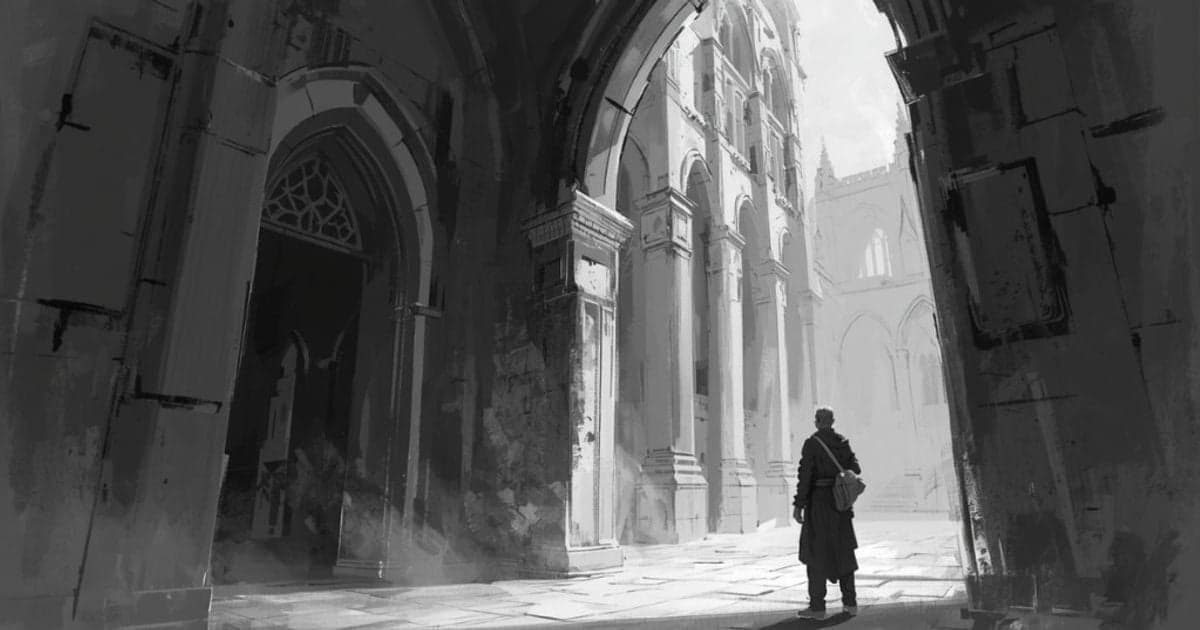
Gabriel stands alone in the stackyard at the end of August, reading the sky, while inside the great barn Troy holds a harvest supper and dance — a contrast that crystallizes one of the novel's central tensions: Troy as master of the house, and Gabriel as the man who actually keeps it alive. The signs are ominous: clouds travelling at right angles to the breeze, a lurid moon, fields sallow in monochrome light. The sheep have trailed in early, the rooks have behaved oddly, the horses moved with timidity. Oak goes to check the eight stacks of wheat and barley — uncovered, unprotected, worth seven hundred and fifty pounds in corn. He goes to the barn for help. Inside, the harvest dance is at its height. He returns later, after midnight, and looks through the chinks. Every worker on the farm is drunk on Troy's cider, lying across tables and chairs and floor in every conceivable attitude except upright. A water-jug has overturned and is dripping steadily into the open mouth of Mark Clark. Troy sits in the centre, "red and distinct," leaning back in his chair. Gabriel must save the ricks alone. He calculates: seven hundred and fifty pounds — "should the risk be run of deteriorating this bulk of corn to less than half its value, because of the instability of a woman? Never, if I can prevent it!" Hardy immediately undercuts this: "man, even to himself, is a palimpsest." Under Gabriel's utilitarian logic lies another text: "I will help to my last effort the woman I have loved so dearly." He collects tarpaulins, the granary key from a half-woken Susan Tall, and begins thatching the barley alone as the first signs of thunder gather overhead.

Coming Up in Chapter 37

The storm Oak predicted finally arrives with devastating force. As nature unleashes its fury, Oak faces his greatest test yet—and discovers he won't be fighting the elements entirely alone.

Share it with friends

Previous ChapterNext Chapter
GO ADS FREE — JOIN US
Original text
complete·2,936 words
W

EALTH IN JEOPARDY—THE REVEL

One night, at the end of August, when Bathsheba’s experiences as a married woman were still new, and when the weather was yet dry and sultry, a man stood motionless in the stockyard of Weatherbury Upper Farm, looking at the moon and sky.

The night had a sinister aspect. A heated breeze from the south slowly fanned the summits of lofty objects, and in the sky dashes of buoyant cloud were sailing in a course at right angles to that of another stratum, neither of them in the direction of the breeze below. The moon, as seen through these films, had a lurid metallic look. The fields were sallow with the impure light, and all were tinged in monochrome, as if beheld through stained glass. The same evening the sheep had trailed homeward head to tail, the behaviour of the rooks had been confused, and the horses had moved with timidity and caution.

1 / 18

Master this chapter. Complete your experience

Purchase the complete book to access all chapters and support classic literature

Read Free on GutenbergBuy at Powell'sBuy on Amazon

As an Amazon Associate, we earn a small commission from qualifying purchases at no additional cost to you.

Available in paperback, hardcover, and e-book formats

GO ADS FREE — JOIN US

Why This Matters

Connect literature to life

Skill: Reading Power Dynamics

This chapter teaches how to distinguish between positional authority and actual competence by watching who handles consequences.

Practice This Today

Next time someone dismisses your concerns, watch what happens when the crisis hits—who actually does the work reveals who really understands the situation.

GO ADS FREE — JOIN US

Now let's explore the literary elements.

Key Quotes & Analysis

"Seven hundred and fifty pounds in the divinest form that money can wear—that of necessary food for man and beast: should the risk be run of deteriorating this bulk of corn to less than half its value, because of the instability of a woman? 'Never, if I can prevent it!'"

— Narrator / Gabriel Oak's thought

Context: Gabriel's calculation in the stackyard as he surveys the uncovered ricks and decides to act alone

The phrase 'divinest form that money can wear' is characteristic Hardy: the corn is not money but sustenance, the grain that feeds people through winter. The word 'instability' applied to Bathsheba is Gabriel's private acknowledgment that Troy is making a ruin of things, but the instinct to protect overrides the judgment. 'Never, if I can prevent it' is the sentence of a man who will work all night in a thunderstorm for a woman who has chosen someone else.

In Today's Words:

Seven hundred and fifty pounds' worth of grain — standing uncovered in a gathering storm because of her husband's recklessness. Gabriel refused to let it be lost

"Such was the argument that Oak set outwardly before him. But man, even to himself, is a palimpsest, having an ostensible writing, and another beneath the lines. It is possible that there was this golden legend under the utilitarian one: 'I will help to my last effort the woman I have loved so dearly.'"

— Narrator

Context: Hardy's gloss on Gabriel's practical reasoning — the text beneath the text

The palimpsest metaphor is one of Hardy's finest: a manuscript scraped and rewritten over the original, but with the original still faintly legible beneath. Gabriel tells himself he is saving corn; Hardy shows the reader he is saving Bathsheba. The word 'golden' is pointed — the hidden legend has the higher value, though the ostensible text is the one Oak can look at without embarrassment.

In Today's Words:

Gabriel told himself he was saving the crop for practical reasons. Underneath that, he was simply doing everything he could for the woman he still loved

"Here, under the table, and leaning against forms and chairs in every conceivable attitude except the perpendicular, were the wretched persons of all the work-folk... In the midst of these shone red and distinct the figure of Sergeant Troy, leaning back in a chair."

— Narrator

Context: Gabriel looks through the chinks of the barn and sees the harvest revel's aftermath — every worker drunk and unconscious

Troy's position — upright, red-coated, at the centre of the wreckage he has created — is the visual summary of his management of Bathsheba's farm. He has not passed out with the others; he is merely indifferent to the consequences. The workers cannot be roused. Hardy notes dryly that 'Sergeant Troy had so strenuously insisted, glass in hand, that drinking should be the bond of their union' — he made it a social obligation no one could refuse.

In Today's Words:

Every farmworker was unconscious on the barn floor — and Troy sat upright among them, calm in the middle of the chaos he'd caused

Thematic Threads

Class

In This Chapter

Oak's working-class practicality versus Troy's aristocratic dismissiveness—class shapes who gets heard and who gets ignored

Development

Deepened from earlier exploration of social barriers to show how class affects crisis response

In Your Life:

Your expertise might be dismissed by someone with a fancier title but less real knowledge.

Responsibility

In This Chapter

The stark contrast between Troy's reckless abandonment of duty and Oak's solitary commitment to protecting what matters

Development

Introduced here as a major theme—who steps up when leadership fails

In Your Life:

You might find yourself cleaning up messes made by people who should know better.

Recognition

In This Chapter

Oak works through the night to save the harvest while Troy gets the authority and Bathsheba remains unaware of the sacrifice

Development

Introduced here—the gap between contribution and acknowledgment

In Your Life:

Your most important work might be the work nobody notices until it's not done.

Foresight

In This Chapter

Oak reads nature's warning signs while Troy ignores them—the ability to see consequences separates wisdom from folly

Development

Built on Oak's earlier pattern of careful observation and planning

In Your Life:

You might be the one who sees problems coming while others dismiss your concerns as pessimism.

GO ADS FREE — JOIN US

You now have the context. Time to form your own thoughts.

Discussion Questions

  1. 1

    What warning signs does Oak notice that Troy ignores, and what's at stake if the storm hits?

    analysis • surface
  2. 2

    Why does Troy dismiss Oak's concerns, and what does this reveal about how authority and expertise don't always align?

    analysis • medium
  3. 3

    Where have you seen this pattern of the responsible person carrying the load while the person in charge gets the credit or avoids consequences?

    application • medium
  4. 4

    If you were in Oak's position, how would you handle being the only one who sees a crisis coming while those in power ignore your warnings?

    application • deep
  5. 5

    What does this chapter teach us about the difference between having authority and being truly responsible?

    reflection • deep

Critical Thinking Exercise

10 minutes

Map Your Own Storm Warning System

Think of a situation in your life where you can see potential problems that others are ignoring. Write down the warning signs you're noticing, who has the power to act, and what's really at stake if nothing changes. Then identify what you can control versus what you can't.

Consider:

  • •Consider both work situations and personal relationships where this pattern might exist
  • •Think about whether you're the Oak (seeing clearly but powerless) or accidentally the Troy (in charge but not paying attention)
  • •Focus on what actions you can take that protect your interests without enabling others' irresponsibility

Journaling Prompt

Write about a time when you had to step up during someone else's crisis. What did you learn about setting boundaries while still doing what needed to be done?

GO ADS FREE — JOIN US

Coming Up Next...

Chapter 37: Working Through the Storm Together

The storm Oak predicted finally arrives with devastating force. As nature unleashes its fury, Oak faces his greatest test yet—and discovers he won't be fighting the elements entirely alone.

Continue to Chapter 37
Previous
The Morning After Truth
Contents
Next
Working Through the Storm Together

Continue Exploring

Far from the Madding Crowd Study GuideTeaching ResourcesEssential Life IndexBrowse by ThemeAll Books
Love & RelationshipsIdentity & Self-DiscoverySocial Class & Status

You Might Also Like

Jane Eyre cover

Jane Eyre

Charlotte Brontë

Explores personal growth

Great Expectations cover

Great Expectations

Charles Dickens

Explores personal growth

The Strange Case of Dr Jekyll and Mr Hyde cover

The Strange Case of Dr Jekyll and Mr Hyde

Robert Louis Stevenson

Explores personal growth

Don Quixote cover

Don Quixote

Miguel de Cervantes Saavedra

Explores personal growth

Browse all 47+ books
GO ADS FREE — JOIN US

Share This Chapter

Know someone who'd enjoy this? Spread the wisdom!

TwitterFacebookLinkedInEmail

Read ad-free with Prestige

Get rid of ads, unlock study guides and downloads, and support free access for everyone.

Subscribe to PrestigeCreate free account
Intelligence Amplifier
Intelligence Amplifier™Powering Wide Reads

Exploring human-AI collaboration through books, essays, and philosophical dialogues. Classic literature transformed into navigational maps for modern life.

2025 Books

→ The Amplified Human Spirit→ The Alarming Rise of Stupidity Amplified→ San Francisco: The AI Capital of the World
Visit intelligenceamplifier.org
hello@widereads.com

WideReads Originals

→ You Are Not Lost→ The Last Chapter First→ The Lit of Love→ Wealth and Poverty→ 10 Paradoxes in the Classics · coming soon
Arvintech
arvintechAmplify your Mind
Visit at arvintech.com

Navigate

  • Home
  • Library
  • Essential Life Index
  • How It Works
  • Subscribe
  • Account
  • About
  • Contact
  • Authors
  • Suggest a Book
  • Landings

Made For You

  • Students
  • Educators
  • Families
  • Readers
  • Literary Analysis
  • Finding Purpose
  • Letting Go
  • Recovering from a Breakup
  • Corruption
  • Gaslighting in the Classics

Newsletter

Weekly insights from the classics. Amplify Your Mind.

Legal

  • Privacy Policy
  • Terms of Service
  • Cookie Policy
  • Accessibility

Why Public Domain?

We focus on public domain classics because these timeless works belong to everyone. No paywalls, no restrictions—just wisdom that has stood the test of centuries, freely accessible to all readers.

Public domain books have shaped humanity's understanding of love, justice, ambition, and the human condition. By amplifying these works, we help preserve and share literature that truly belongs to the world.

A Pilgrimage

Powell's City of Books

Portland, Oregon

If you ever find yourself in Portland, walk to the corner of Burnside and 10th. The building takes up an entire city block. Inside is over a million books, new and used on the same shelf, organized by color-coded rooms with names like the Rose Room and the Pearl Room. You can lose an afternoon. You can lose a weekend. You will find a book you have been looking for your whole life, and three you did not know existed.

It is a pilgrimage. We cannot find a bookstore like it anywhere on earth. If you read the classics, and you ever get the chance, go. It belongs on every reader's bucket list.

Visit powells.com

We are not in any way affiliated with Powell's. We are just a very big fan.

© 2026 Wide Reads™. All Rights Reserved.

Intelligence Amplifier™ and Wide Reads™ are proprietary trademarks of Arvin Lioanag.

Copyright Protection: All original content, analyses, discussion questions, pedagogical frameworks, and methodology are protected by U.S. and international copyright law. Unauthorized reproduction, distribution, web scraping, or use for AI training is strictly prohibited. See our Copyright Notice for details.

Disclaimer: The information provided on this website is for general informational and educational purposes only and does not constitute professional, legal, financial, or technical advice. While we strive to ensure accuracy and relevance, we make no warranties regarding completeness, reliability, or suitability. Any reliance on such information is at your own risk. We are not liable for any losses or damages arising from use of this site. By using this site, you agree to these terms.