Chapter 35
The Morning After Truth
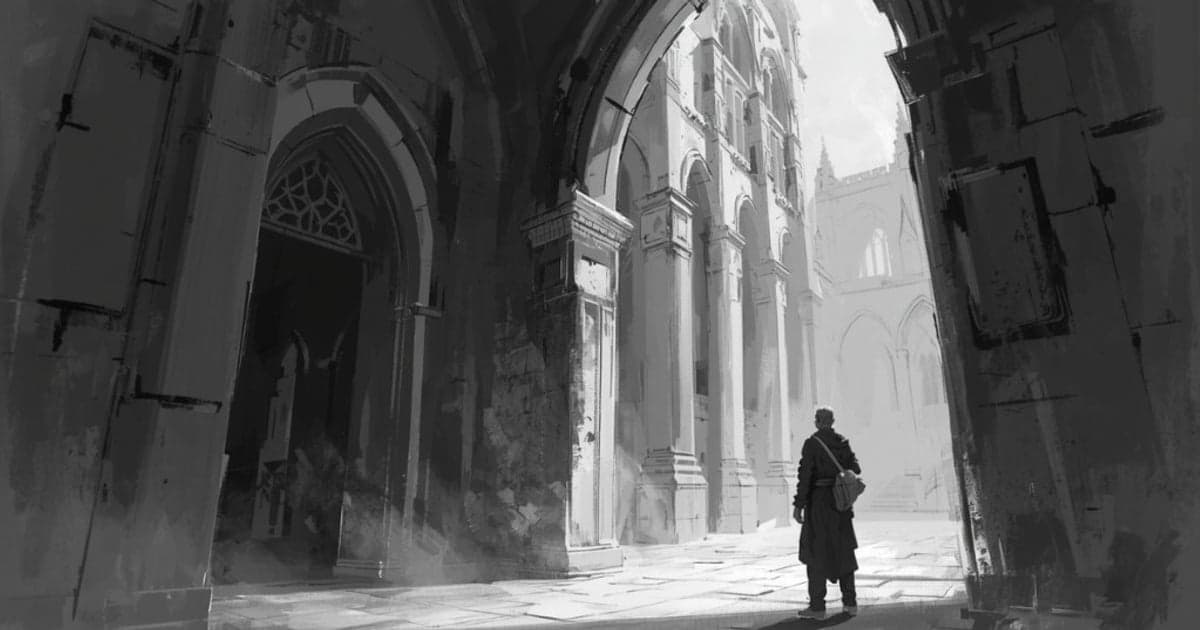
AT AN UPPER WINDOW It was very early the next morning—a time of sun and dew. The confused beginnings of many birds’ songs spread into the healthy air, and the wan blue of the heaven was here and there coated with thin webs of incorporeal cloud which were of no effect in obscuring day. All the lights in the scene were yellow as to colour, and all the shadows were attenuated as to form. The creeping plants about the old manor-house were bowed with rows of heavy water drops, which had upon objects behind them the effect of minute lenses…
Public-domain chapter text, formatted for reading.
Master this chapter. Complete your experience
Purchase the complete book to access all chapters and support classic literature
Available in paperback, hardcover, and e-book formats
Now let's explore the literary elements.
Key Quotes & Analysis
"very early the next morning"
Context: Hardy opens at dawn after the trick
Morning light does not erase overnight ruin.
In Today's Words:
Hardy begins very early the next morning with sun and dew while grief continues. Beauty does not negotiate with loss. When catastrophe arrives at night, dawn still demands work. The pattern is not abstract. It appears whenever charm, guilt, or pride quietly decide what people treat as love, duty, or escape.
"unutterable grief"
Context: Hardy on Boldwood's reaction to the marriage
Grief can be total yet almost wordless.
In Today's Words:
Hardy calls Boldwood's state unutterable grief, amazement notwithstanding prior suspicion. Some losses exceed speech. When someone goes quiet after news, do not confuse silence with acceptance. The pattern is not abstract. It appears whenever charm, guilt, or pride quietly decide what people treat as love, duty, or escape.
"deed was done"
Context: Gabriel decides how to respond
Repair begins by facing fact, not bargaining with it.
In Today's Words:
Gabriel decides that since the deed is done, he will put the best face upon it. That is not approval; it is stewardship. When you cannot reverse an outcome, choose whether to poison the field or keep it alive. The pattern is not abstract. It appears whenever charm, guilt, or pride quietly decide what people
"Boldwood"
Context: Gabriel encounters Boldwood on the road
Two men share news with opposite resources.
In Today's Words:
Gabriel meets Boldwood and learns the marriage is confirmed. One man grieves without structure; the other returns to duty. Shared catastrophe splits by habit, not merit. The pattern is not abstract. It appears whenever charm, guilt, or pride quietly decide what people treat as love, duty, or escape.
Thematic Threads
Class
In This Chapter
Troy's casual dismissal of workers' dignity through tossed coins reveals how class privilege operates through small humiliations
Development
Evolved from earlier subtle class tensions to overt power displays
In Your Life:
You might see this when new management treats longtime employees as disposable or when wealthy patients treat healthcare workers as servants.
Dignity
In This Chapter
Gabriel's refusal of Troy's money represents choosing self-respect over practical advantage
Development
Introduced here as active choice rather than passive endurance
In Your Life:
You face this choice when asked to laugh at jokes that demean you or accept 'favors' that come with strings attached.
Power
In This Chapter
Troy uses casual generosity as a dominance display, testing who will submit to his authority
Development
Evolved from Bathsheba's inherited power to Troy's seized power
In Your Life:
You might encounter this when someone offers help that makes you feel small or when new authority figures test boundaries through 'kindness.'
Survival
In This Chapter
Coggan's practical acceptance of money versus Gabriel's principled refusal shows different survival strategies
Development
Introduced here as conscious strategic choice
In Your Life:
You navigate this when deciding whether to speak up about workplace problems or keep quiet to protect your job security.
Grief
In This Chapter
Boldwood's eerie stillness reveals how profound loss can manifest as controlled emptiness rather than visible emotion
Development
Evolved from earlier passionate pursuit to devastating acceptance
In Your Life:
You might recognize this in yourself or others when major disappointments create a numb, controlled exterior hiding deep pain.
You now have the context. Time to form your own thoughts.
Discussion Questions
This is not a test. Five prompts guide you through the chapter, from how it opens to how it closes, so you notice context and rhythm rather than facts to memorize. Sit with each question in your own words. When you see "One way to read it," treat it as a starting point, not the only answer.
- 1
Why does Hardy emphasize early morning sun and dew?
analysis • surfaceOne way to read it
Natural renewal contrasts with human grief that dawn cannot cure.
- 2
What does Gabriel mean by putting the best face on it?
analysis • mediumOne way to read it
He will not pretend joy, but he will steward the farm instead of sulking or sabotaging.
- 3
How do Boldwood and Gabriel differ in processing the marriage?
application • mediumOne way to read it
Boldwood has unutterable grief; Gabriel returns to duty and practical repair.
- 4
When have you had to function after news you could not change?
application • deepOne way to read it
Accept examples where stewardship continued while grief stayed private.
- 5
Is Gabriel's choice healthy or self-denying?
reflection • deepOne way to read it
Answers may argue both: necessary for the farm, costly for his heart.
Critical Thinking Exercise
Decode the Power Play
Think of a recent situation where someone with authority over you made a gesture that felt like a test - maybe a boss offering unsolicited advice, a family member making a cutting joke, or a partner dismissing your concerns. Write down what they did, how you responded, and what message your response sent about your boundaries.
Consider:
- •Consider whether their gesture was truly generous or designed to establish dominance
- •Think about what they learned about you from your response
- •Reflect on whether you chose your response consciously or just reacted emotionally
Journaling Prompt
Write about a time when you had to choose between keeping the peace and standing up for yourself. What did you learn about your own boundaries from that experience?
Coming Up Next...
Chapter 36: When Leaders Fail, Someone Must Act
At August's end Gabriel reads storm signs in the stackyard while Troy hosts a drunken harvest revel inside the barn. The stacks stand exposed, the men are distracted, and Bathsheba must decide whether spectacle or stewardship will govern the night before the sky breaks..