Chapter 41
Secrets Hidden in Plain Sight
In this state of schemes, and hopes, and connivance, June opened upon Hartfield. To Highbury in general it brought no material change. The Eltons were still talking of a visit from the Sucklings, and of the use to be made of their barouche-landau; and Jane Fairfax was still at her grandmother’s; and as the return of the Campbells from Ireland was again delayed, and August, instead of Midsummer, fixed for it, she was likely to remain there full two months longer, provided at least she were able to defeat Mrs. Elton’s activity in her service, and save herself from being…
Public-domain chapter text, formatted for reading.
Master this chapter. Complete your experience
Purchase the complete book to access all chapters and support classic literature
Available in paperback, hardcover, and e-book formats
Now let's explore the literary elements.
Key Quotes & Analysis
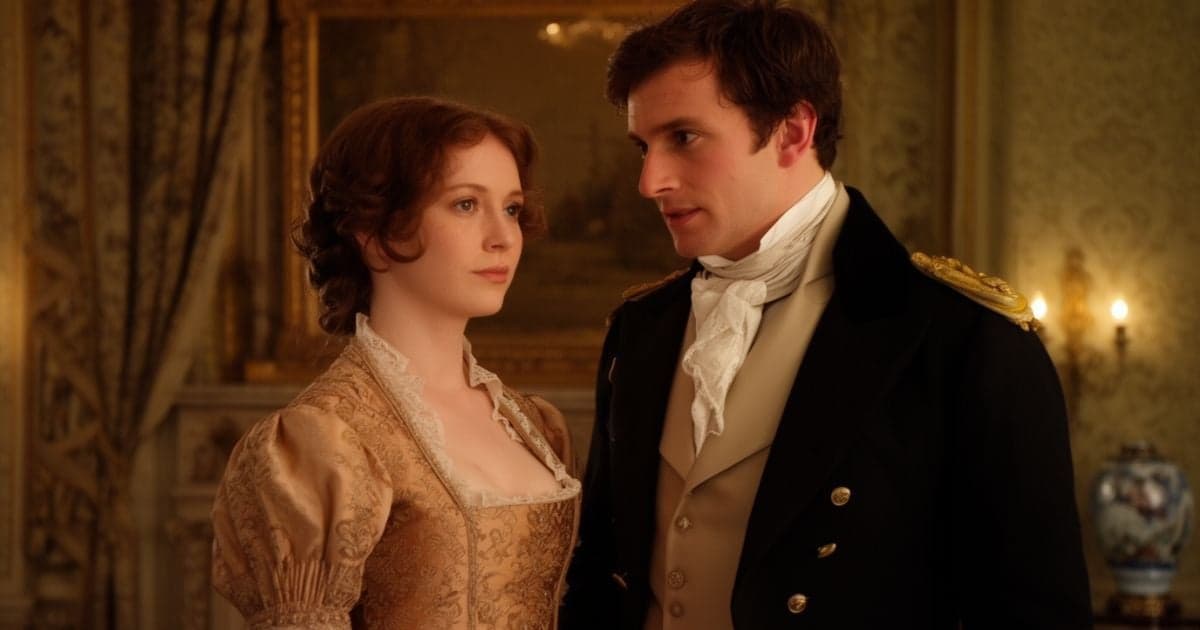
"He began to suspect him of some double dealing in his pursuit of Emma."
Context: Knightley's suspicion of Frank
Knightley doubts Frank's single aim.
In Today's Words:
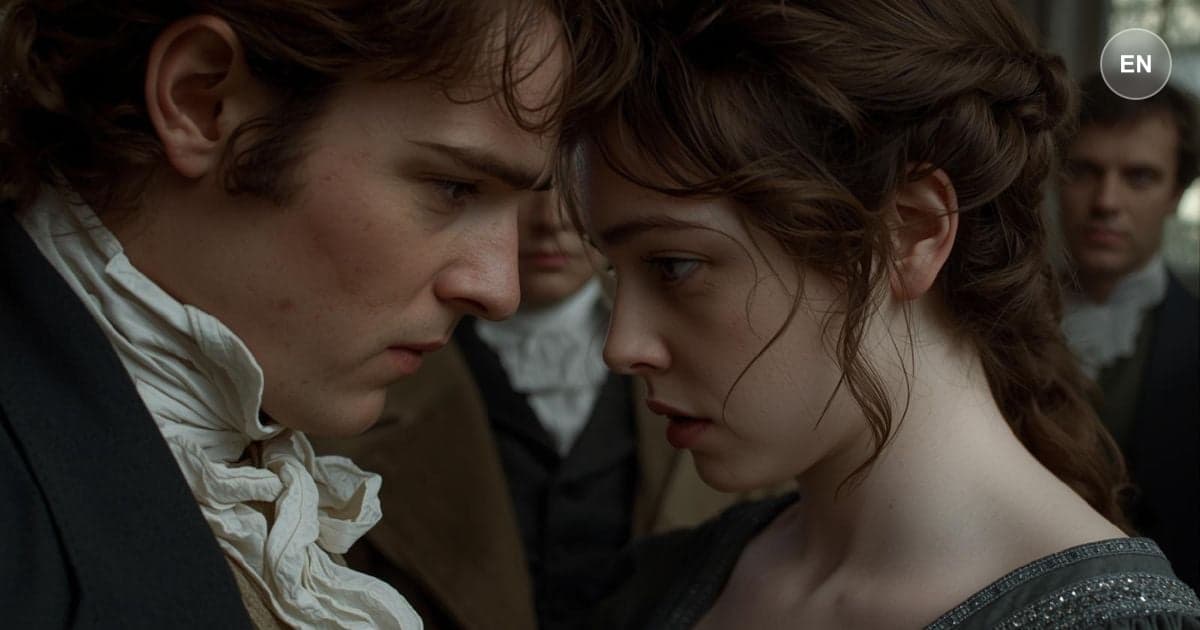
The narrator says Mr Knightley begins to suspect Frank Churchill of double dealing in his pursuit of Emma while also showing intelligence with Jane Fairfax. The moment matters because everyone in the room is watching how each person responds. What looks like small talk here actually tests loyalty, pride, and self-knowledge.
"These letters were but the vehicle for gallantry and trick. It was a child’s play, chosen to conceal a deeper game on Frank Churchill’s part."
Context: After the word game
Knightley interprets the game as concealment.
In Today's Words:
Watching the alphabet game, the narrator says Mr Knightley decides the letters are a vehicle for gallantry and trick, child's play concealing Frank Churchill's deeper game. The moment matters because everyone in the room is watching how each person responds. What looks like small talk here actually tests loyalty, pride, and self-knowledge.
"blunder_; and as Harriet exultingly proclaimed it, there was a blush on Jane’s cheek which gave it a meaning not otherwise ostensible."
Context: Frank gives Jane blunder
A game word lands as accusation.
In Today's Words:
When Harriet exultingly reads the word blunder Frank gave Jane Fairfax, Jane blushes in a way that gives it meaning not otherwise visible to the room. The moment matters because everyone in the room is watching how each person responds. What looks like small talk here actually tests loyalty, pride, and self-knowledge.
"Never, never!” she cried with a most open eagerness—“Never, for the twentieth part of a moment, did such an idea occur to me."
Context: Emma denies Frank admires Jane
Emma's certainty blocks Knightley's warning.
In Today's Words:
When Knightley asks if Frank admired Jane, Emma cries never with open eagerness and says such an idea never occurred to her for the twentieth part of a moment. The moment matters because everyone in the room is watching how each person responds. What looks like small talk here actually tests loyalty, pride, and self-knowledge.
Thematic Threads
Deception
In This Chapter
Frank uses word games to communicate secretly with Jane while appearing innocent to others
Development
Evolved from simple flirtation to deliberate manipulation and coded communication
In Your Life:
You might see this when someone uses jokes or 'harmless' comments to send messages they can't say directly
Class
In This Chapter
Secret information about Mr. Perry's carriage reveals how gossip flows differently through social levels
Development
Continues showing how information and access vary by social position
In Your Life:
You experience this when certain workplace information only reaches certain levels or social circles
Personal Growth
In This Chapter
Emma's inability to read social cues shows her lack of emotional intelligence development
Development
Her blindness to manipulation has grown more dangerous as stakes increase
In Your Life:
You might recognize this in your own moments of missing obvious social signals because you're focused on your own narrative
Human Relationships
In This Chapter
Mr. Knightley tries to warn Emma but she dismisses his concerns about Frank
Development
Their dynamic shifts as he becomes more protective and she becomes more resistant
In Your Life:
You see this when friends try to warn you about someone but you're not ready to hear it
Identity
In This Chapter
Jane's angry reaction to the word game reveals her struggle between public composure and private feelings
Development
Her mask is slipping as the pressure of maintaining her secret intensifies
In Your Life:
You experience this when maintaining a professional or social facade becomes exhausting under stress
You now have the context. Time to form your own thoughts.
Discussion Questions
This is not a test. Five prompts guide you through the chapter, from how it opens to how it closes, so you notice context and rhythm rather than facts to memorize. Sit with each question in your own words. When you see "One way to read it," treat it as a starting point, not the only answer.
- 1
Why does Mr Knightley dislike Frank Churchill more?
analysis • surfaceOne way to read it
He suspects double dealing, believing Frank pursues Emma while showing intelligence and admiration toward Jane Fairfax.
- 2
What slip does Frank make about Mr Perry?
analysis • mediumOne way to read it
He claims a dream that Mrs Weston wrote about Perry setting up his carriage, though she never heard of it and Miss Bates knows the secret was real.
- 3
How does the word game expose Frank and Jane?
application • mediumOne way to read it
Frank sends Jane blunder and Dixon; she blushes, grows angry, refuses proper names, and leaves early while Knightley reads trickery.
- 4
How does Emma respond to Knightley's warning?
application • deepOne way to read it
She denies any attachment with eager confidence, calls his idea nonsense, amuses herself, and will not hear his suspicions.
- 5
When have you dismissed a pattern someone else could see clearly?
reflection • deepOne way to read it
One honest answer might recall Emma laughing away Knightley's reading of Frank and Jane at the alphabet game.
Critical Thinking Exercise
Map Your Blind Spots
Think of a current situation where you might be experiencing willful blindness—ignoring warning signs because facing them would disrupt something you want to believe. Write down what you're invested in believing, what evidence you might be dismissing, and what an objective observer might see. Then identify one person in your life who could serve as your 'Mr. Knightley'—someone with no emotional stake who might see clearly.
Consider:
- •Consider areas where you have strong emotional investment: relationships, career decisions, family dynamics
- •Look for patterns where you've dismissed concerns from trusted friends or advisors
- •Think about situations where you've said 'I should have seen that coming' in hindsight
Journaling Prompt
Write about a time when you ignored obvious warning signs because acknowledging them would have meant giving up something you wanted. What did you learn from that experience, and how do you create space for objective feedback now?
Coming Up Next...
Chapter 42: Party Planning and Social Maneuvering
Chapter VI delays the Sucklings, settles Box Hill anyway, and turns Mr Knightley's Donwell strawberry invitation into Mrs Elton's next social takeover while Jane Fairfax flees the governess talk on foot.